Toy Buying Guide for Babies Under $10: Affordable Fun That Supports Development
Introduction
Becoming a parent is a journey filled with joy, wonder, and — let's be honest — an endless list of expenses. From diapers and formula to clothing and medical bills, the costs can quickly add up. Yet every parent wants to give their baby the best start in life, including stimulating toys that encourage cognitive, motor, and sensory development. The good news is that you do not need to spend a fortune to provide your little one with engaging, safe, and beneficial playthings. This comprehensive toy buying guide for babies under $10 will help you navigate the world of budget-friendly infant toys, ensuring you make smart, informed choices that support your baby's growth without breaking the bank. Whether you are a first-time parent on a tight budget or simply looking for practical gift ideas, this guide covers everything from safety considerations to developmental benefits, specific toy categories, and money-saving tips. By the end, you will feel confident in your ability to select high-quality, affordable toys that your baby will love.
Why Budget Toys Can Be Just as Good as Expensive Ones
Many parents fall into the trap of believing that price equals quality when it comes to baby toys. Premium brands often market their products as "essential" for brain development, but research shows that what matters most is not the price tag but the toy's design, safety, and how it engages a baby's senses. Infant toys priced under $10 can be outstanding choices because they often focus on simple, fundamental play patterns that align perfectly with a baby's developmental stage. For example, a $5 set of stacking cups might provide the same learning opportunities as a $30 electronic toy, but without the distractions of flashing lights and loud noises. These simple toys encourage babies to explore cause and effect, practice fine motor skills, and develop problem-solving abilities at their own pace. Furthermore, budget toys are often made with minimal plastic and fewer electronic components, which can be a plus for parents concerned about environmental impact and passive screen-time exposure from an early age. In essence, the best cheap toys are those that are thoughtfully designed, durable, and versatile — qualities that do not require a high price point.
Safety First: What to Look for in Any Toy Under $10
When buying toys for babies — especially for infants who love to put everything in their mouths — safety is non-negotiable. Just because a toy is inexpensive does not mean it should be flimsy or hazardous. Here are the key safety features to inspect, regardless of the toy's cost.
Avoid Small Parts and Choking Hazards
Babies under one year old explore primarily through oral senses. Any toy with small detachable parts, beads, buttons, or loose pieces that can fit through a toilet paper roll (the standard choking hazard test) should be avoided. Always check the age recommendation on the packaging, and if it says "for ages 3+" because of small parts, do not purchase it for a baby, even if it looks cute.
Choose Non-Toxic Materials
Because babies chew on toys, you want materials that are free from harmful chemicals like BPA, phthalates, lead, and phthalates. Look for labels that say "non-toxic," "BPA-free," and "phthalate-free." Wooden toys should be painted with water-based or food-safe paints. Soft fabric toys should have securely stitched seams and no loose fibers that could be ingested.
Check for Sturdy Construction
A cheap toy that breaks easily can create sharp edges or expose internal parts. Give the toy a gentle shake, pull on seams, and compress soft parts. If it feels flimsy or if pieces seem likely to detach, skip it. Many excellent $8 toys are made from solid, one-piece plastic or well-finished wood that can withstand rough handling.
Avoid Strings and Cords Longer Than 12 Inches
Cords, ribbons, or strings longer than 12 inches pose a strangulation risk for babies. If a toy includes a pull string, make sure it is securely attached and short enough to be safe. Alternatively, opt for toys without any long dangling parts.
Read Reviews from Other Parents
One of the best ways to gauge safety and durability is to read online reviews from other parents. Look for comments about the toy's sturdiness, whether any parts fell off, and if the baby's reaction was positive. Amazon, Walmart, and parenting forums often have honest feedback that can save you from a bad purchase.
Types of Developmental Toys You Can Find Under $10
Now that safety is covered, let's explore the specific categories of toys that are affordable, available for under $10, and highly beneficial for babies from birth to about 12 months. Each category supports different areas of development, so a well-rounded toy collection includes a mix.
Sensory Toys for Newborns to 3 Months
In the first few months, a baby's world is mostly about absorbing sensory input. Their vision is still blurry, but they respond to high-contrast patterns, gentle sounds, and different textures. Excellent under-$10 options include:
- High-contrast black-and-white soft books or flashcards: These stimulate visual development and can be clipped to a car seat or stroller. Often priced around $5 to $8.
- Soft rattles and crinkle toys: Look for fabric rattles that make a gentle jingling or crinkling sound. They help a baby begin to understand cause and effect. Many are sold in multi-packs for under $10.
- Baby-safe mirrors: Unbreakable, non-glass mirrors that a baby can look at during tummy time. They encourage self-awareness and visual tracking. Great ones are available for about $7.
- Sensory balls with bumps or ridges: Soft, small balls (no smaller than a tennis ball) with different textures. Babies enjoy feeling them and later trying to grasp them. Prices range from $5 to $10 for a set of two.
Grasping and Teething Toys for 3 to 6 Months
Around three months, babies begin to develop hand-eye coordination and start reaching for objects. This is the perfect time for toys that are easy to grasp and safe to mouth.
- Rubber teething rings or teethers: Classic options like the ones with different textures and easy-to-hold handles. Many are sold individually for $4 to $6, or in pairs. Avoid those with liquid-filled centers that could leak.
- Wooden or silicone teething beads: These come on a short string or as a handheld ring. They are excellent for massaging sore gums. Ensure the beads are securely attached and large enough not to be swallowed. Prices hover around $8.
- Oball or similar mesh balls: A lightweight, flexible ball with holes that tiny hands can easily grab. It can be rolled, shaken, and chewed. Typically around $7 to $9.
- Soft stacking cups: A set of colorful cups that nest inside each other or stack into a tower. They are ideal for learning size relationships, pouring, and building. A basic set of six cups can be found for as low as $5.
Cause-and-Effect and Interactive Toys for 6 to 9 Months
As babies become more mobile, they love toys that react to their actions. These toys support cognitive development and problem-solving.
- Simple pop-up toys or push-button toys: Look for toys where pressing a button or sliding a lever produces a result — a character pops up, a sound plays, or a flap opens. Many are sold for $8 to $10. Avoid ones with very loud or scary noises; choose gentle sounds.
- Fabric or soft blocks: A small set of lightweight blocks allows a baby to practice grasping, stacking, and knocking down. They also build spatial awareness. A set of four to six fabric blocks can cost around $8.
- Rings on a post or easy stacking rings: A classic toy where a baby places colored rings onto a central post. This develops fine motor skills and hand-eye coordination. Budget versions are often around $7.
- Simple pull toys (with short strings): A small plush toy on wheels that a baby can pull as they start crawling. Make sure the string is under 12 inches. Prices start around $6.
Early Pretend Play and Movement Toys for 9 to 12 Months
By 9 months, babies are more interactive and may enjoy toys that mimic real-life objects. They also love cause-and-effect involving movement.
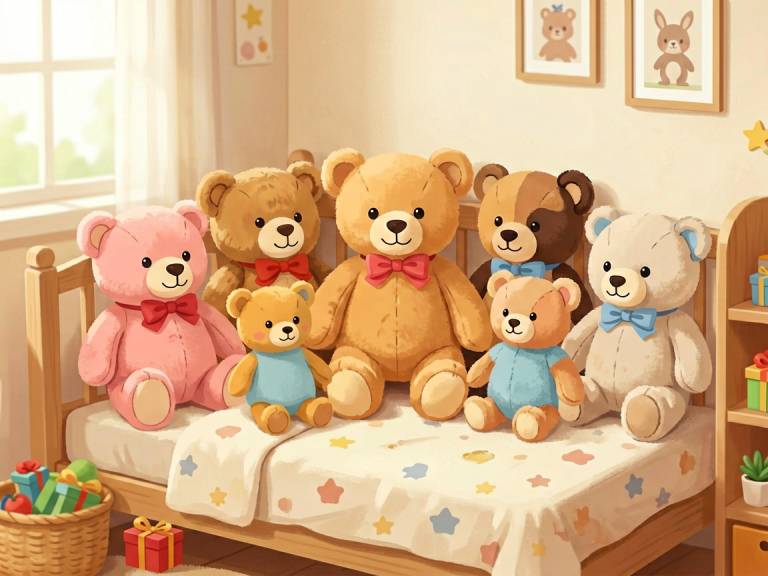
- Mini soft dolls or plush animals: A small, soft, washable doll without small accessories like buttons or bows. A baby can hug it, chew it, and practice nurturing. Many are available for $8 to $10.
- Bath toys: Simple cups, rubber ducks, or squirt toys that make bath time educational. Look for ones with no holes where mold can grow, or open ones that are easy to dry. A two-pack often costs under $10.
- Toy telephones (basic): Small, plastic handheld phones with simple buttons that make sounds and light up — but not too complex. These encourage imitation and language development. Basic models are around $7.
- Balls for rolling and chasing: A medium-sized, lightweight ball (about the size of a softball) that a baby can roll across the floor. When baby begins to crawl, chasing a ball provides great physical exercise. Prices range from $5 to $10.
Where to Find the Best Cheap Baby Toys
Finding quality toys under $10 requires knowing where to look. Here are the most reliable sources:
Major Online Retailers (Amazon, Walmart, Target)
These platforms have dedicated sections for baby toys with price filters. You can sort by "price low to high" and then read reviews. Look for listings that mention "BPA-free" or "non-toxic" in the description. Be wary of unknown brands with no reviews; stick to brands with a track record, like Sassy, Fisher-Price, Munchkin, and Infantino, all of which have many items in the $5-$10 range.
Discount Stores (Dollar Tree, Five Below, Big Lots)
Physical discount stores often stock surprisingly good baby toys. At Dollar Tree, you can find sensory books, small stacking cups, and simple puzzles for $1 each. Five Below has a baby aisle with items like teething toys and rattles for $5. Always inspect these toys carefully for safety labels — some may not carry proper certification. If the packaging lacks any safety information, it is better to skip.
Thrift Stores and Consignment Shops
Gently used toys are another budget-friendly option. Before buying, check for recalls. Also sanitize thoroughly: wash fabric toys in hot water, wipe plastic with disinfectant, and let wooden items air dry. Many families donate toys that were barely used because their babies outgrew them quickly. You can often find name-brand toys like Sophie la Girafe teethers or Oballs for $2 to $5.
Baby registries and Parenting Groups
Facebook Marketplace, local Buy Nothing groups, and parenting swap groups are goldmines. Many parents post free or very cheap bags of baby toys when their children no longer play with them. This is also a great way to meet other families in your community.
Tips for Maximizing Value from Under-$10 Toys
To get the most out of your limited budget, follow these strategies:
Rotate Toys Instead of Buying More
Babies quickly become bored with the same toys. Instead of constantly buying new ones, put away half of the toys in a closet. After two to three weeks, swap them out. The "new" old toys will feel exciting again, saving you money and reducing clutter.
Look for Multi-Use Toys
A set of stacking cups can be used for bath play, sand play, building towers, and even as a sorting game when the baby gets older. Similarly, a simple set of blocks works for years. Choose toys that grow with your child.
Combine Toys for Creative Play
You don't need expensive playsets. A few magnetic letters (under $10) can be stuck on any magnetic surface like a refrigerator. A baby-safe mirror placed near a soft blanket creates a tummy-time gym. A cardboard box decorated with non-toxic markers can become a car, a house, or a tunnel. Imagination is free.
Repair Before Replacing
If a cheap toy loses a stitch or a piece becomes loose, try repairing it with hot glue (for adults only, not near the baby) or by sewing. Many toys are salvageable with minimal effort, extending their life for months.
Read Age Recommendations but Use Your Judgment
Age recommendations are guidelines, not rules. Some babies master skills earlier or later. A toy marked for 6+ months might be perfect for a 4-month-old who is already grasping, while a 9-month-old might still enjoy a simple rattle. Trust your observations of your baby's abilities.
Common Mistakes to Avoid When Buying Cheap Baby Toys
While budget shopping is smart, a few pitfalls can undermine your good intentions.
Buying Too Many "Busy" Toys
Avoid overloading your baby with toys that have lights, sounds, and multiple buttons. Research suggests that excessive electronic stimulation can actually shorten attention spans. Instead, choose one or two quality toys per developmental stage. A simple wooden rattle can be more beneficial than a $10 electronic gadget with 20 sounds.
Ignoring Cleaning Instructions
Inexpensive toys are often harder to clean than expensive ones. Soft fabric toys may require hand washing, and wooden toys cannot be submerged in water. If a toy cannot be easily sanitized (e.g., has a small fabric cover that traps mold), reconsider. Choose toys that are dishwasher-safe or machine-washable when possible.
Overlooking the "Boredom" Factor
Some very cheap toys are also very boring. A single ball is fine, but a baby might lose interest quickly. Pair it with a simple activity: roll it back and forth, hide it under a blanket, or use it to knock down a tower of cups. The toy alone is just a prop; your interaction is what makes it valuable.
Buying Ahead Too Far
It is tempting to buy toys for future ages when you see a bargain. However, babies develop at varied rates and may have different preferences. A $8 toy purchased now might not interest your child in six months, and you may end up with a drawer full of unused items. Stick to toys appropriate for your baby's current stage.
Conclusion: Smart Spending for a Shining Start
Selecting toys for your baby does not have to be a source of financial stress. With careful consideration of safety, developmental benefits, and versatility, you can build a wonderful collection of engaging playthings for well under $10 per item. Remember that the most expensive toy in your house is your own attention and interaction. A simple rattle becomes magical when you shake it and smile. A set of stacking cups becomes a collaborative game as you build a tower together. By focusing on quality over quantity and making informed choices, you give your baby exactly what they need: the freedom to explore, learn, and grow through safe, affordable play. Whether you are a parent on a tight budget or someone who simply values simplicity, this guide empowers you to shop wisely. So go ahead — browse the dollar aisle, scroll through online deals, and discover that the best toys for babies are often the ones that cost the least but are built with the most love.