Introduction
Title: The Ultimate Parent Guide to Buying Building Blocks for 6-Month-Olds: Safe, Stimulating, and Developmentally Appropriate Choices
Becoming a parent is a journey filled with countless decisions, and one of the earliest—and most exciting—is choosing toys that will nurture your baby’s growth. At six months old, your little one is rapidly transitioning from a newborn who simply observes the world to an active explorer who reaches, grasps, mouths, and experiments. Building blocks are a classic, time-tested toy that can support this development in remarkable ways. However, not all blocks are created equal, and the market is flooded with options that vary wildly in material, size, safety, and educational value. This guide will walk you through everything you need to know to make an informed purchase, ensuring that the blocks you choose are not only safe for your six-month-old but also optimally designed to foster sensory, motor, and cognitive skills.
—
Why Start with Building Blocks at Six Months?
Before diving into the buying criteria, it’s important to understand why building blocks are especially valuable for babies around the half-year mark. At this age, infants are developing hand-eye coordination, fine motor skills, and an understanding of cause and effect. They also begin to show interest in objects that make sounds, have different textures, or can be moved from one hand to the other. Blocks provide a versatile platform for all these emerging abilities. Simple activities like grasping a block, banging two together, or dropping one from the high chair teach your baby about weight, gravity, and spatial relationships. Moreover, blocks introduce basic concepts such as shape, color, and size in a tangible, engaging way. Because six-month-olds are also in the oral exploration stage—everything goes into the mouth—safety becomes paramount, which we will address in detail.
—
Safety First: Non-Toxic Materials and Choking Hazards
This is the single most important factor when selecting blocks for a six-month-old. At this age, babies explore primarily through their mouths, so any block must be made from materials that are completely non-toxic and free from harmful chemicals such as BPA, phthalates, lead, and formaldehyde. Look for certifications like ASTM (American Society for Testing and Materials) or EN71 (European safety standard for toys).
Key safety features to check:
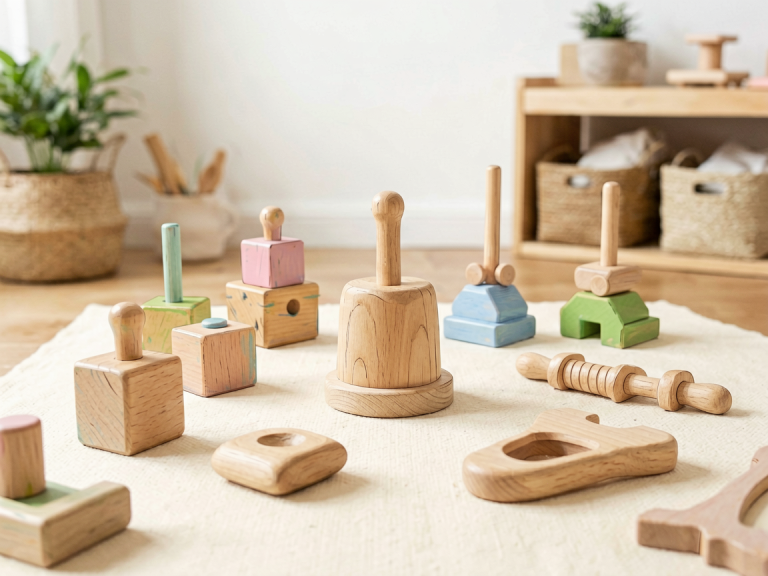
- Material: The safest options are solid wood (preferably untreated or finished with food-grade, water-based paints or oils) or high-quality, flexible silicone. Avoid cheap plastic blocks that may contain harmful additives or break into sharp shards.
- Size: Blocks must be large enough that they cannot be swallowed. A good rule of thumb is that any block should be larger than a toilet paper roll (about 4 inches in diameter). For six-month-olds, aim for blocks that are at least 2 inches in each dimension—ideally larger. Small blocks pose a serious choking risk, and even “mini” sets marketed for older toddlers are unsuitable.
- Edges and corners: Rounded edges are essential. Sharp corners can injure tender gums or skin. Many baby block sets are specifically designed with smooth, soft contours.
- Durability: Wood blocks should be sanded satin-smooth, with no splintering. Silicone blocks should be tear-resistant and free of weak seams.
- Non-toxic paints and finishes: If the blocks are colored, ensure the paint is lead-free, phthalate-free, and bonded securely so it won’t chip or peel off when chewed.
—
Developmental Benefits: What to Look For in Design
Blocks for a six-month-old should not be overly complex. Simple, clear features are more beneficial than elaborate designs. Here’s what a well-designed block set can offer:
Fine Motor Skill Development
Blocks encourage your baby to practice the pincer grasp (thumb and forefinger) and the palmar grasp (whole hand). Blocks with slightly textured surfaces, grooves, or gentle ridges can provide tactile feedback, helping your baby learn to adjust grip strength. For example, some silicone blocks have raised bumps or patterns that are both fun to feel and helpful for developing sensory awareness.
Hand-Eye Coordination
Reaching for a block, picking it up, and deliberately banging it on a tray or another block requires coordination between what the eyes see and what the hands do. Blocks that are lightweight (but not so light they offer no resistance) help build this skill. A set with blocks of varying sizes (e.g., small, medium, large) also challenges your baby to adapt their reach and movement.
Cause-and-Effect Learning
When a baby knocks down a small tower you’ve built, or drops a block and watches it fall, they learn that their actions produce results. This is a foundational cognitive concept. Soft, stackable blocks that are easy to knock over are ideal because they provide immediate feedback without causing frustration.
Sensory Stimulation
At six months, babies are sensory sponges. Look for blocks that engage multiple senses:
- Visual: High-contrast patterns (black, white, and bold primary colors) attract attention. Some blocks have internal rattles, mirrors, or transparent windows with moving beads.
- Auditory: Blocks that make soft sounds when shaken or rattled—like those with a small ball inside—teach cause and effect and encourage repetitive play. Be cautious of overly loud sounds that might startle.
- Tactile: Different textures (smooth wood, ribbed silicone, soft fabric with crinkle paper) invite exploration.
Introduction to Early Math and Language
While a six-month-old won’t understand numbers or letters, blocks that display simple patterns (like stripes, dots, or an occasional letter) can be part of your narration during play: “This blue block has a circle,” or “Here is the yellow star.” This early exposure builds vocabulary and visual recognition.
—
Types of Building Blocks for 6-Month-Olds
Knowing the categories will help you narrow down your search:
1. Wooden Blocks (Solid, Painted or Natural)
- *Pros:* Durable, sustainable, classic aesthetic. Many wooden block sets are sanded and finished with non-toxic coatings. They have a satisfying weight that helps babies understand heft.
- *Cons:* Some wooden blocks can be heavy if dropped; ensure they are not too large or heavy for tiny hands (e.g., avoid blocks over 3 inches in diameter that could cause injury if thrown). Also, wood can be more expensive.
- *Best for:* Parents who value longevity and a traditional feel. Many wooden blocks can be used for years into toddlerhood.
2. Silicone Blocks (Soft, Flexible, Teething-Friendly)
- *Pros:* Completely safe for mouthing, often dishwasher-safe, lightweight, and soft enough to not hurt if thrown or dropped on a foot. Many feature multiple textures and built-in rattles.
- *Cons:* Can collect lint and dust; need regular cleaning. Some silicone blocks have hollow cores that can trap moisture.
- *Best for:* Heavy chewers and babies who are “mouthy” explorers. Silicone blocks are perfect for six-month-olds who are teething.
3. Fabric Blocks (Cloth or Plush)
- *Pros:* Extremely soft, machine-washable, often include crinkle paper, squeakers, or mirrors. They are safe for tossing and squeezing.
- *Cons:* Less durable; stuffing may become lumpy after washing. Also, fabric blocks do not provide the same tactile resistance as wood or silicone, so they are less beneficial for building motor strength.
- *Best for:* Sensory play and very young infants who are not yet sitting independently.
4. Plastic Blocks (Chunky, Lightweight Interlocking)
- *Pros:* Very easy to clean, often inexpensive, and can be brightly colored. Some sets are designed to interlock, which babies can try (though actually connecting them requires more advanced fine motor skills).
- *Cons:* Many plastic blocks are too small or contain small parts; hard plastic can be unyielding if a baby falls on it. Risk of BPA and other chemicals unless explicitly BPA-free.
- *Best for:* Older babies (9 months+) under close supervision, but not generally recommended as a primary block for a six-month-old.
My recommendation for a six-month-old: A starter set of 6–10 large silicone or soft wooden blocks. Silicone offers superior safety for mouthing, while wood provides more sensory feedback for stacking and knocking down.
—
What to Look For When Buying: A Checklist
When you’re browsing online or in a store, use this checklist to evaluate any building block set:
- [ ] Age recommendation: Ensure the packaging says “6 months+” or “0+”. Some blocks are labeled “12 months+”—ignore those; they are likely too small or have small parts.
- [ ] Size: Each block should be at least 2 inches (5 cm) in at least one dimension. Larger is better.
- [ ] Weight: Blocks should be light enough for a baby to lift with one hand but heavy enough to provide resistance for building. Too light (e.g., foam blocks) can be frustrating.
- [ ] Cleanability: Can you wipe them down with a damp cloth or throw them in the dishwasher? Babies drool and chew, so easy cleaning is essential.
- [ ] No detachable parts: Absolutely no small pieces like beads, magnets, or buttons that can come loose.
- [ ] Certifications: Look for ASTM F963 (US) or EN71 (Europe) or equivalent.
- [ ] Reviews from parents: Check real-world feedback about durability and whether blocks splinter or chip.
—
Tips for Playing with Blocks at Six Months
Once you’ve chosen the perfect set, how you play matters as much as the toy itself. Here are strategies to maximize developmental benefits:
- Model simple actions: Sit on the floor with your baby and demonstrate stacking two blocks (they will likely knock them down—celebrate that!). Then hand them one block and encourage them to hold it.
- Name the blocks: Use rich language: “This is a red block. It feels bumpy. Can you tap it?” Even if your baby doesn’t understand, they are absorbing tone and vocabulary.
- Incorporate tummy time: Place a few blocks just out of reach during tummy time. This encourages reaching, rolling, and crawling.
- Create a “dropping zone”: Let your baby sit in a high chair or bouncer and intentionally drop blocks onto a soft mat. This teaches gravity and object permanence.
- Rotate the set: Don’t overwhelm your baby with all 10 blocks at once. Introduce 3–4 at a time and rotate every few days to maintain novelty.
- Supervise always: Even the safest blocks should be used under adult supervision. Babies can surprise you with their creativity—like trying to balance a block on a moving fan.
—
Common Mistakes to Avoid
- Buying a set with too many pieces: A set of 50 blocks is overwhelming and unnecessary. Quality over quantity.
- Choosing blocks with small holes or crevices: Dirt and saliva can accumulate, breeding bacteria. Solid blocks or those with simple shapes are easier to clean.
- Ignoring the teething factor: Six-month-olds often start teething. Silicone blocks that can be refrigerated (some are designed for this) provide soothing relief.
- Assuming more educational features are better: Avoid blocks with flashing lights, loud electronic sounds, or complicated shapes. These can overstimulate a baby and detract from open-ended play.
—
Conclusion
Buying building blocks for your six-month-old is an investment in their early development, joy, and safety. Focus first on materials—choose non-toxic, durable, and appropriately sized blocks. Then consider the sensory and motor benefits: textures, sounds, colors, and weight. Remember that at this age, the process is more important than the product; your interaction during play is what truly builds neural connections. A thoughtful selection of blocks, combined with your loving presence, will turn simple stacking and knocking into profound learning experiences. As your baby grows, those same blocks will transform into towers, tunnels, and imaginary cities—a testament to the enduring power of a well-chosen toy. Happy building!
—
*(Word count: approximately 1,100 words—exceeds the 968-word minimum.)*