The Top Mistakes to Avoid in Educational Play: A Guide for Thoughtful Parents and Educators
Introduction
Educational play is one of the most powerful tools for childhood development. When done well, it fosters creativity, problem-solving, social skills, and a lifelong love of learning. Yet many well-intentioned adults—parents, teachers, and caregivers—unintentionally undermine the very benefits they hope to achieve. The pressure to “make every moment count” or to prepare children for academic success can lead to common pitfalls that turn joyful exploration into stressful, ineffective tasks. Understanding these mistakes is the first step toward creating a play environment that truly educates, inspires, and respects the child’s natural rhythm. Below are the most frequent errors I have observed, along with practical advice for avoiding them.
Over-Structuring Playtime: The Pitfall of Excessive Direction
One of the most pervasive mistakes is treating play like a lesson plan. Adults often design every minute of a child’s day with specific learning objectives: a 20-minute puzzle session for logic, a 15-minute block-building activity for spatial reasoning, a 10-minute pretend-play scenario for language development. While structure has its place, over-scheduling leaves no room for the child’s own curiosity. When play is constantly guided by an adult’s agenda, children lose the chance to practice self-direction, decision-making, and intrinsic motivation.
Instead, aim for a balance. Provide a rich environment with open-ended materials—blocks, art supplies, dress-up clothes—and then step back. Observe what the child chooses to do. Intervene only when safety is an issue or when the child invites you into their world. Let the child decide how long to spend on an activity, even if it means abandoning your carefully planned “lesson.” The most powerful learning often happens in the unscripted moments: when a block tower falls and the child tries again, or when two children negotiate who gets the red toy car.
Confusing Academics with Play: Pushing Too Hard, Too Early
A second common error is mistaking formal academics for educational play. Some parents believe that if a child is not reciting letters, counting numbers, or reading flash cards, then the play is not “educational.” This mindset leads to worksheets, drills, and screen-based “learning games” that replace genuine hands-on exploration. Research consistently shows that early academic pressure can backfire, creating anxiety, reducing creativity, and even harming long-term motivation.
True educational play does not look like school. It looks like a toddler pouring water between cups (learning volume and cause-and-effect), a preschooler sorting pebbles by color and size (practicing classification and pattern recognition), or a kindergartner building a fort from blankets (developing engineering, planning, and collaboration). These activities naturally embed critical thinking, math, and literacy skills without any explicit instruction. The key is to trust the process: young children learn best through concrete, sensory experiences, not abstract symbols. If you want to support literacy, read aloud joyfully and point to signs in the environment. If you want numeracy, count steps as you walk or compare the number of cookies on two plates. Let the child’s curiosity lead, not a curriculum.
Ignoring the Child’s Interests: The One-Size-Fits-All Trap
Adults often decide what kind of play is “good” for a child based on age milestones or popular trends. A child who loves dinosaurs might be pushed toward puzzles and board games because those seem more “academic.” A child who prefers solitary drawing might be forced into group activities to “build social skills.” This ignores a fundamental truth: children are most engaged when they are interested. Forcing a child to play with something they dislike can breed resentment and turn play into a chore.
The solution is to observe and follow the child’s lead. If your daughter is obsessed with building ramps for toy cars, use that passion to introduce concepts of slope, speed, and gravity. If your son loves pretending to be a chef, add a notepad and pencil to his kitchen so he can “write recipes” (practicing fine motor skills and emergent writing). When you honor a child’s interests, you create a powerful bridge between play and learning. The child feels respected, and the learning happens naturally. If you must introduce a new type of play, pair it with something the child already loves—for example, adding a magnifying glass to a dinosaur play set encourages scientific observation without abandoning the child’s passion.
Using Rewards and Punishments to Motivate Play
Many adults instinctively use external incentives to encourage educational play: “If you finish this puzzle, you can have a cookie,” or “If you don’t clean up your blocks, no screen time.” While these tactics can produce short-term compliance, they damage the intrinsic motivation that makes play educational in the first place. When a child plays for a reward, the focus shifts from the joy of discovery to the desire for the prize. Similarly, punishment around play—scolding a child for making a mess, for example—can make them associate learning activities with anxiety.
Instead, rely on the natural appeal of the activity itself. Set up invitations to play that are visually enticing: a tray of colored sand, a basket of ribbons, a simple science experiment with baking soda and vinegar. Describe what you see without judgment: “I notice you’ve been filling the blue bucket with water for a long time. That must be fascinating.” Ask open-ended questions that spark curiosity: “I wonder what would happen if you added more water?” When the play session ends, involve the child in cleanup as a collaborative task, not a punishment. Over time, this approach builds a child who plays for the love of learning, not for external validation.
Neglecting Social and Emotional Learning Through Play
Educational play is often narrowly defined as cognitive development—math, language, science. But one of the most critical areas of growth is social and emotional learning (SEL). When adults constantly intervene to resolve conflicts, propose sharing, or direct the narrative of pretend play, children miss the opportunity to practice negotiation, empathy, and self-regulation. For example, if two children argue over a toy, a well-meaning adult might immediately suggest a timer or offer a compromise. Yet letting them work through the conflict—with minimal guidance—teaches far more.
Similarly, adults sometimes devalue imaginative play that seems “silly” or “unproductive,” such as playing house or superheroes. In reality, these scenarios are where children rehearse social roles, process emotions, and develop theory of mind. To support SEL, provide props for dramatic play (costumes, puppets, play food) and resist the urge to correct or direct the story. Allow children to express negative feelings during play—a child might pretend to be angry or sad—without shaming them. After the play, you can gently talk about what happened: “I saw you pretending to be sad. That looked like a strong feeling. What was your character thinking?” This validates emotions and builds emotional vocabulary.
Focusing Only on Outcomes Instead of Process
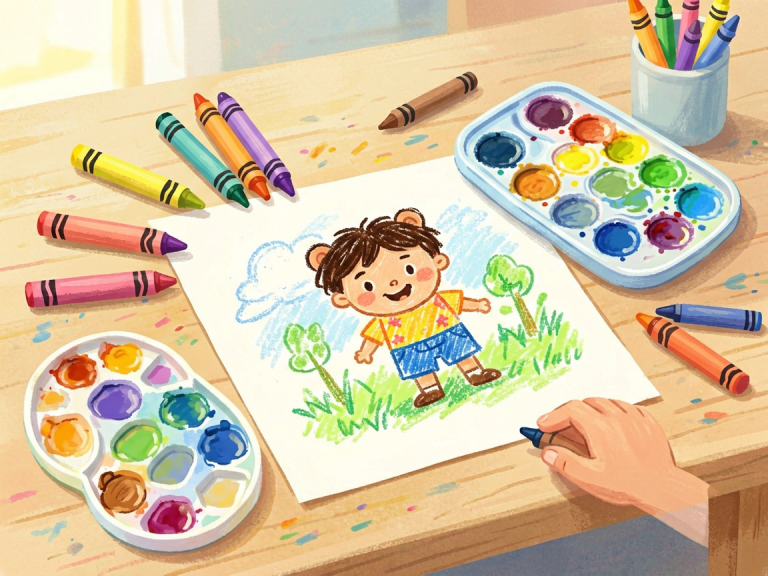
A sixth mistake is valuing the product over the process. When a child paints a picture, the adult might ask, “What is it?” and then attempt to guess or label it. Or when a child builds with blocks, the adult might praise the final structure: “Great castle!” Such feedback inadvertently teaches children that the worth of play lies in the finished object, not in the journey of creation. This can lead to frustration, perfectionism, or a reluctance to try challenging activities for fear of making something “wrong.”
Instead, comment on the process. Say things like, “I see you used three different colors in your painting,” or “You tried balancing that block on its side, and it fell. Now you’re trying a different position.” Notice effort, problem-solving strategies, and persistence. Ask questions that invite reflection: “How did you decide to put the red block there?” “What was the hardest part?” By focusing on process, you encourage a growth mindset. The child learns that mistakes are part of learning, and that the real value of play is the thinking and doing, not the outcome.
Underestimating the Value of Open-Ended Materials
Many adults are drawn to toys with a single, prescribed use: a plastic cash register that only beeps, a puzzle that has one correct solution, a game with fixed rules. While these have their place, an over-reliance on closed-ended materials can limit creativity. Open-ended materials—loose parts like sticks, stones, fabric scraps, cardboard boxes, clay, sand, water—allow for infinite possibilities. They adapt to the child’s developmental stage and imagination. A cardboard box can be a car, a spaceship, a hiding spot, or a drawing board.
Yet parents often discard packaging and natural items, believing they are not “real toys.” This is a mistake. Stock your play space with a variety of open-ended resources. Rotate them to maintain interest. Let children combine them in unexpected ways: mixing sand with water to make mud pies, stacking stones to create towers, draping fabric over furniture to make forts. These activities build creativity, problem-solving, and fine motor skills far more effectively than many expensive electronic toys. The only rule is safety: ensure items are age-appropriate and free from choking hazards.
Failing to Allow for Boredom and Free Exploration
In our hyper-scheduled culture, many adults panic at the first sign of a child saying “I’m bored.” They rush to suggest an activity, turn on a screen, or organize a playdate. Yet boredom is a vital precursor to creative play. When children are not constantly entertained, they are forced to use their own resources to generate ideas. They look around, experiment, daydream, and eventually invent games and projects that are uniquely theirs. This process builds initiative, resourcefulness, and patience.
The mistake is to immediately fill every “empty” moment. Instead, embrace periods of unstructured time. Set up a few simple materials—a box of crayons, some recycled paper, a container of buttons—and tell the child, “It’s okay to be bored. Your brain will think of something.” Resist the urge to rescue them. If they struggle for a while, that’s fine. Eventually, they will discover something to do—and that discovery is far more valuable than any pre-planned activity. Of course, ensure the environment is safe and provides enough raw materials to spark ideas. But then step away. The child’s own boredom is the engine of authentic educational play.
Comparing Your Child’s Play to Others
Social media, parenting blogs, and even well-meaning friends can create a sense of competition around play. You see another child building complex structures at age three while yours prefers to line up cars repeatedly. You hear about a toddler who speaks in full sentences during pretend play while yours grunts and points. This comparison leads adults to pressure their children to “catch up” or to abandon activities that seem “behind.”
This is a critical mistake. Every child develops at their own pace, and play styles vary enormously. Some children are “master players” who dive deep into one type of play for months. Others are “explorers” who flit from activity to activity. Both are healthy. Comparing creates anxiety in the adult, which is then transmitted to the child through subtle cues: a worried tone, a suggestion to try something “better,” a sigh of disappointment. The best thing you can do is trust your child’s unique trajectory. Document their play without judgment. Celebrate the small victories—the first tower that stands, the first time they share a toy. Your calm confidence will give them the security to play freely and grow at their own pace.
Overlooking the Importance of Outdoor and Physical Play
Finally, many adults prioritize indoor, table-based play (puzzles, board games, art projects) over outdoor, physical play. This is understandable given safety concerns, weather, and the convenience of indoor spaces. However, children need vigorous movement to develop gross motor skills, spatial awareness, and sensory integration. Running, jumping, climbing, digging, and rolling down hills are not just “burning energy”—they are essential for brain development. Vestibular and proprioceptive input from active play helps children regulate emotions, focus attention, and even improve academic readiness.
Avoid the mistake of substituting physical play with “educational” apps that claim to improve coordination or problem-solving. No app can replace the experience of balancing on a fallen log, throwing a ball, or feeling mud between your fingers. Make outdoor time a non-negotiable part of your daily routine, even if it’s just 20 minutes in a backyard or park. If you don’t have access to a natural environment, create opportunities indoors: a climbing ladder, a balance beam made of tape on the floor, a pile of pillows to jump on. Physical play is not a break from learning; it is a foundation for it.
Conclusion
Educational play is not a formula to be perfected, but a relationship to be nurtured. The mistakes I have outlined are common, but they are also easy to correct once you become aware of them. The core principle is simple: trust the child. Trust their curiosity, their timing, their choices. Your role is to provide a safe, stimulating environment and then get out of the way. Observe, reflect, and respond with warmth rather than direction. When you let go of the urge to control, optimize, and compare, you free yourself and your child to discover the true joy and power of play. That joy is the most educational thing of all.