Stacking Up the Evidence: Are Building Blocks Worth It for Kindergarteners?
Introduction: The Timeless Toy Under the Microscope
In an era dominated by glowing screens, battery-operated robots, and subscription-based educational apps, the humble set of building blocks might appear almost quaint. Yet, few toys have endured as steadfastly in early childhood classrooms and living rooms as the simple wooden cube or the interlocking plastic brick. For parents of kindergarteners—children typically aged four to six—the question is both practical and philosophical: Are building blocks truly worth the investment of money, space, and time? The answer, supported by decades of developmental psychology, neuroscience, and Montessori-inspired pedagogy, is a resounding yes—but with important nuances. This article unpacks the multifaceted value of building blocks for kindergarteners, examining cognitive, motor, social, and emotional benefits, while also addressing practical concerns about cost, clutter, and alternatives. Whether you are a parent debating a birthday gift or an educator evaluating classroom resources, the evidence suggests that blocks are not merely worth it; they are foundational.
Cognitive Development: More Than Just Play
Spatial Reasoning and Early Mathematics
One of the most robustly documented benefits of block play for kindergarteners is the enhancement of spatial reasoning. When a child tries to balance a block atop a wobbly tower or figures out why a triangular piece won't fit into a square hole, they are engaging in complex mental rotations, visual comparisons, and proportional thinking. A landmark study by Caldera et al. (1999) found that preschoolers who engaged frequently with blocks scored significantly higher on spatial visualization tests than those who did not. These skills are directly linked to later success in STEM fields (science, technology, engineering, and mathematics). For kindergarteners, block play introduces concepts such as symmetry, balance, gravity, and geometric classification in a tactile, low-stakes environment. Even simple counting—"How many blocks did you use?"—reinforces number sense.
Problem-Solving and Executive Function
Building is inherently trial-and-error. A tower that collapses teaches resilience and hypothesis testing: "Did the base need to be wider? Should I use larger blocks at the bottom?" This iterative process hones executive function skills—working memory, cognitive flexibility, and inhibitory control—that are critical for academic readiness. A 2018 study published in *Early Childhood Research Quarterly* found that kindergarteners who engaged in structured block play demonstrated improved self-regulation and the ability to follow multi-step instructions compared to peers engaged in free-form drawing. The key is that blocks provide immediate, concrete feedback: the structure either stands or falls, and the child must adjust their strategy accordingly.
Early Literacy and Language Development
Surprisingly, block play also supports literacy. As children build, they narrate their actions ("I'm making a castle for the princess"), negotiate with peers ("We need a red block for the roof"), or follow pictorial instructions. These verbal exchanges build vocabulary, narrative skills, and syntactic complexity. Teachers often report that children who are reluctant to speak during circle time become animated while describing their block creations. Furthermore, sorting blocks by color or shape reinforces classification, a precursor to categorizing letters and sounds.
Motor Skills and Physical Development
Fine Motor Precision and Hand-Eye Coordination
Kindergarteners are at a crucial stage of fine motor development, laying the groundwork for handwriting, buttoning, and using scissors. Building blocks require pincer grasps, controlled wrist rotation, and steady hand-eye coordination. Unlike passive toys, blocks demand active manipulation: picking up a small wooden cube, aligning it precisely, and releasing it without toppling the structure. This repeated action strengthens the intrinsic hand muscles and promotes bilateral coordination (using both hands together). Research from occupational therapy literature consistently lists block construction as a therapeutic activity for children with fine motor delays.
Gross Motor and Spatial Awareness
Larger blocks—such as cardboard bricks or foam building sets—encourage gross motor movement: carrying, bending, crouching, and stretching. Even standard-sized blocks require children to move their bodies around a building area, judging distances and angles. This physical engagement is especially valuable for kinesthetic learners who struggle with sedentary tasks. Moreover, navigating around a shared block structure teaches children spatial awareness of their own bodies in relation to others, reducing collisions and fostering safer play.
Social and Emotional Growth: The Unseen Curriculum
Collaboration and Turn-Taking
In a kindergarten classroom, block corners are often the noisiest and most socially dynamic zones. Here, children must negotiate for limited resources, share ideas, and resolve conflicts when a prized block is taken. A longitudinal study by the University of Denver (2015) observed that block play significantly predicted positive peer interactions and prosocial behaviors such as sharing and helping. Unlike competitive games, block building is inherently cooperative—children often work toward a common goal ("Let's build the tallest tower in the class"). This collaborative process teaches essential social skills: listening to others, compromising, and managing frustration when plans go awry.
Emotional Regulation and Self-Esteem
Blocks provide a safe space for failure. A tower collapsing in front of friends can be devastating, but the child quickly learns that the blocks are not damaged and can be rebuilt. This controlled exposure to disappointment builds emotional resilience. Conversely, successfully completing a complex structure—especially one that wins praise from a teacher or peer—delivers a powerful boost to self-efficacy. Children develop a "can-do" attitude that transfers to academic challenges. Additionally, block play offers a sense of control in a world where kindergarteners often have limited autonomy; the child is the architect, the engineer, and the designer.
Creativity and Open-Ended Exploration
Unlike a puzzle with one correct solution, building blocks are open-ended. A set of 100 unit blocks can become a castle, a spaceship, a zoo, a bridge, or a pirate ship—each creation representing the child’s unique imagination. This fosters divergent thinking, a key component of creativity. The American Academy of Pediatrics emphasizes that open-ended toys like blocks are superior to battery-operated ones because they require the child to generate the action rather than simply respond to stimuli.
Practical Considerations: Cost, Space, and Alternatives
Is the Expense Justified?
Building blocks vary wildly in price, from a $10 bucket of plastic bricks to a $200 set of handcrafted maple unit blocks. For kindergarteners, the investment is generally worthwhile because blocks are one of the most durable toys on the market. A high-quality set can last through multiple children and even grandkids. Compare that to electronic toys that break, require batteries, or lose appeal after a few months. However, parents on a tight budget should not despair: basic interlocking blocks or even homemade blocks from recycled cardboard boxes offer many of the same benefits. The educational value lies in the *play*, not the brand.
Storage and Mess Concerns
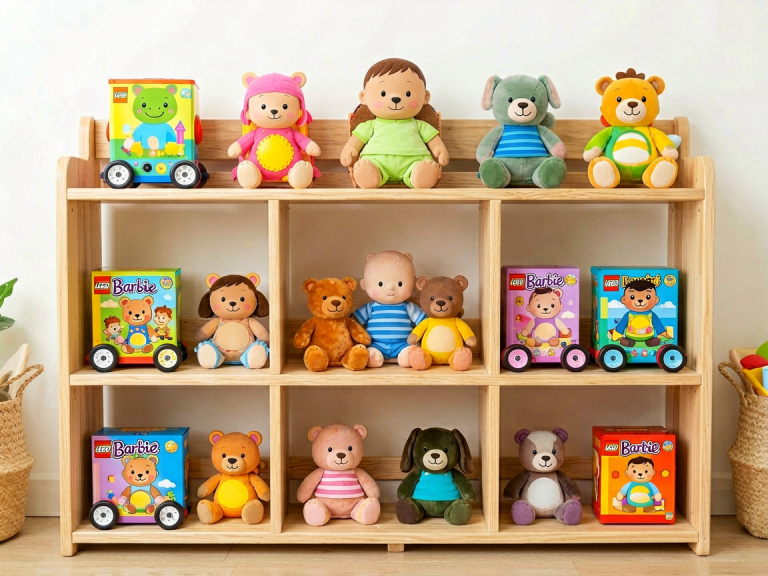
Practicality matters. Blocks can clutter a living room or classroom if not managed. A simple bin or shelf with labeled cubbies teaches children organizational skills—cleaning up becomes part of the play cycle. Many Montessori-inspired classrooms use low, open shelves where blocks are accessible yet neatly arranged. The mess is temporary, but the learning is permanent.
Comparing with Digital Alternatives
A natural counterargument is that educational apps on tablets can also teach shapes, counting, and problem-solving. While apps have some value, they lack the kinesthetic and social dimensions of block play. A screen cannot offer the sensory feedback of wood grain, the weight of a block, or the three-dimensional physics of a collapsing tower. Moreover, excessive screen time in kindergarten has been linked to attention difficulties and reduced imaginative play. Thus, blocks offer a holistic experience that digital tools cannot replicate.
Conclusion: A Foundation for Lifelong Learning
So, are building blocks worth it for kindergarteners? The evidence is overwhelming: yes, with caveats. They are not a magic bullet; a child who only plays with blocks in isolation may miss out on other important experiences like reading, music, or outdoor play. But as one component of a balanced early childhood environment, blocks provide unparalleled opportunities for cognitive, motor, social, and emotional development. They teach patience, creativity, and collaboration—skills that cannot be measured on a standardized test but are essential for school and life. The next time you see a kindergartener carefully placing a block on a precarious tower, remember: they are not just playing. They are building a foundation for their future minds, hands, and hearts. And that, for a modest investment, is worth every penny.