Screen Time or Screen-Free: Rethinking the Best Learning Tools for Preschoolers
Introduction
In the past decade, the landscape of early childhood education has been transformed by digital technology. Young children, some as young as two years old, now swipe, tap, and scroll through interactive apps on learning tablets marketed specifically for preschoolers. Meanwhile, a counter-movement has gained momentum, championing screen-free toys—wooden blocks, puzzles, sensory bins, and open-ended play materials—as the true foundation of cognitive and social development. Parents and educators find themselves caught between two compelling narratives: the promise of personalized, adaptive digital learning versus the timeless virtues of hands-on, imagination-driven play.
This article explores the evidence, arguments, and practical considerations surrounding learning tablets and screen-free toys for preschoolers. By examining developmental science, educational outcomes, and real-world parenting experiences, I aim to provide a balanced, evidence-informed perspective that helps families make thoughtful choices. The goal is not to declare a winner, but to understand how each tool fits into a holistic early learning environment—and where the dangers and opportunities truly lie.
—
The Rise of Learning Tablets: Convenience and Customization
Learning tablets designed for preschoolers, such as Amazon Fire Kids Edition, LeapFrog products, and various Android-based devices with child-friendly interfaces, have become ubiquitous. Their appeal is undeniable. These devices offer thousands of apps that claim to teach letters, numbers, phonics, problem-solving, and even foreign languages, often with colorful animations, rewards, and adaptive algorithms that adjust difficulty based on a child’s performance.
Immediate Engagement and Personalized Pacing
One of the strongest arguments for learning tablets is their ability to capture and hold a child’s attention. Interactive touchscreens respond instantly to a toddler’s tap, providing immediate feedback—a feature that can be highly motivating for young learners. Many apps are designed to scaffold skills incrementally, allowing a child to progress at their own speed without the pressure of a group setting. For parents who are short on time or lack confidence in teaching academic basics, a well-chosen app can feel like an educational safety net.
Digital Literacy as a Modern Necessity
Proponents also argue that early exposure to digital interfaces builds foundational digital literacy. In a world where screens dominate work, communication, and daily life, some believe that preschoolers should begin to develop comfort with technology early. Learning tablets can introduce children to cause-and-effect relationships (e.g., “if I tap this letter, it makes a sound”), visual scanning, and fine motor control on a touch surface—skills that may translate to later academic and technical success.
The Evidence Gap: What Research Actually Shows
Despite the marketing claims, research on the educational effectiveness of learning tablets for preschoolers is mixed at best. A 2020 meta-analysis published in *JAMA Pediatrics* found that interactive touchscreen apps can improve certain literacy and numeracy outcomes in children aged 3–5, but the effect sizes were small compared to high-quality human interaction. More concerning, the same study noted that screen time was associated with reduced vocabulary growth when it replaced face-to-face conversation. The quality of the app matters enormously; many so-called educational apps are little more than digital worksheets or passive video consumption, offering minimal cognitive engagement.
Furthermore, the American Academy of Pediatrics (AAP) recommends limiting screen time for children aged 2–5 to one hour per day of high-quality programming, co-viewed with a caregiver. Learning tablets, if used in isolation without adult interaction, risk becoming a babysitting tool rather than a learning tool. The interactive feedback of an app cannot replicate the nuanced, responsive, and emotionally attuned interaction that a parent or teacher provides.
—
The Case for Screen-Free Toys: Deep Play and Real-World Learning
Screen-free toys—everything from wooden blocks and clay to puzzles, dolls, and water tables—have been the bedrock of early childhood for generations. In recent years, a growing body of developmental research has reaffirmed their profound importance, especially in an age of increasing screen saturation.
Sensorimotor Development and Physical Interaction
Preschoolers learn through their bodies. When a child stacks blocks, they feel the weight, texture, and balance of each piece. When they pour water from one container to another in a sensory bin, they experience volume, gravity, and cause-and-effect in a tangible, three-dimensional way. These experiences stimulate the development of fine and gross motor skills, proprioception (awareness of body position), and spatial reasoning. A tablet screen, by contrast, offers only visual and auditory input, with limited haptic feedback. The richness of real-world sensory input cannot be replicated by pixels.
Imagination, Creativity, and Unstructured Play
Screen-free toys are often open-ended. A set of wooden blocks can become a castle, a spaceship, a farm, or a bridge—limited only by a child’s imagination. This kind of symbolic play is critical for cognitive development. It fosters creativity, problem-solving, social negotiation (when playing with peers), and emotional regulation. Research from the University of Cambridge’s Centre for Play suggests that unstructured, child-led play is the single most important activity for developing executive functions—the set of cognitive skills that include self-control, working memory, and cognitive flexibility. Learning tablets, even with creative apps, tend to constrain play within predetermined boundaries. The app’s designer decides what is possible; the child merely chooses from a menu of options.
Language, Social Interaction, and Emotional Growth
Perhaps the most compelling argument for screen-free toys is the way they naturally invite human interaction. A puzzle worked on with a parent encourages conversation: “Where does this piece go? Can you find the corner with the blue sky?” These exchanges build vocabulary, listening skills, and relational bonds. Screen time, especially solo use, reduces opportunities for back-and-forth dialogue. The “serve and return” interaction—where a child makes a sound or gesture and an adult responds—is the biological foundation of language acquisition, as highlighted by Harvard’s Center on the Developing Child. Even the most sophisticated tablet cannot replicate this.
—
Cognitive and Developmental Implications: What the Science Tells Us
Attention and Executive Function
One of the most debated topics is the effect of screen time on attention. Fast-paced, constantly shifting visual stimuli on tablets can overstimulate a developing brain. A 2019 study in *Scientific Reports* found that preschoolers who used touchscreen devices more frequently showed greater distractibility and lower delay of gratification compared to those with limited screen exposure. The concern is that habitual use of interactive screens may condition children to expect immediate, high-intensity rewards, making them less tolerant of slower-paced, real-world challenges like completing a puzzle or listening to a story. Screen-free toys, by contrast, often require sustained focus and patience—a block tower does not automatically correct itself if it wobbles.
Memory and Transfer of Learning
Another crucial issue is transfer—whether skills learned on a tablet transfer to real-world contexts. A child may tap the letter “A” on an app and hear its sound, but does that improve their ability to recognize a printed “A” on a cereal box? Research on “transfer deficit” in young children suggests that learning from screens is often context-bound. Preschoolers have difficulty applying information from a two-dimensional screen to a three-dimensional world, especially before age 3. Hands-on manipulation of physical letters, such as magnetic alphabet sets or sandpaper letters, provides multimodal sensory input (sight, touch, movement) that strengthens neural connections and improves later reading readiness.
Sleep and Physical Health
Exposure to screens, particularly in the evening, suppresses melatonin production and disrupts sleep patterns—a serious concern given that preschoolers need 10–13 hours of sleep per day. Screen-free toys naturally encourage active, physical play, which supports healthy growth, motor development, and energy regulation. The sedentary posture associated with tablet use, if prolonged, can contribute to childhood obesity and postural issues. The AAP’s guidelines emphasize that screen time should not replace sleep, physical activity, or social interaction.
—
Practical Considerations for Parents and Educators
Quality Over Quantity: Making Choices
The reality is that many families will use both learning tablets and screen-free toys. The key is intentionality. When choosing a tablet app, look for those that are slow-paced, encourage interaction with a caregiver, require problem-solving (not just tapping), and avoid advertising or in-app purchases. The best apps are extensions of real-world play—for example, an app that lets a child “take a picture” of a real object and then label it, rather than a passive video.
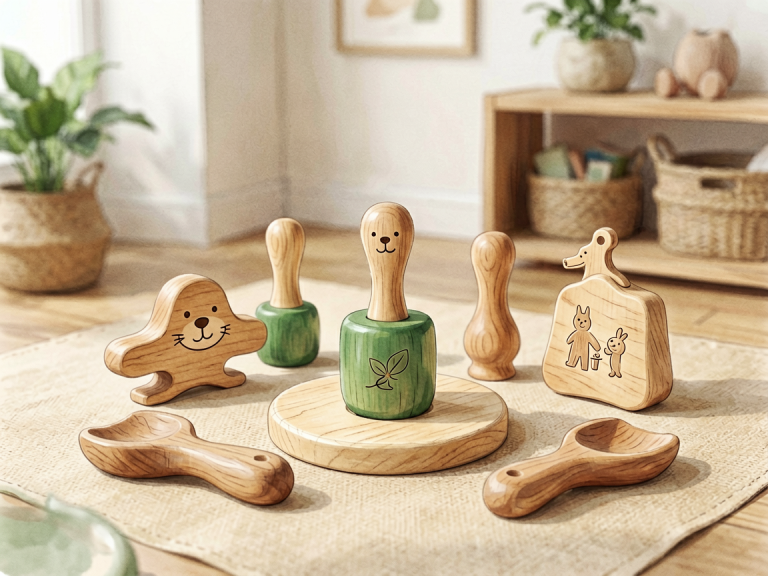
For screen-free toys, prioritize open-ended materials that grow with the child: wooden blocks, play dough, magnetic tiles, art supplies, dress-up clothes, and simple musical instruments. Avoid toys that are overly prescriptive or electronic themselves. The Montessori approach, which emphasizes self-directed, hands-on learning with carefully designed materials, offers a useful framework.
Setting Boundaries and Co-Engagement
The AAP recommends that screen time for preschoolers be “high-quality” and occur with a parent or caregiver present to talk about what the child sees. This co-engagement transforms passive viewing into an interactive, language-rich experience. Similarly, even with screen-free toys, parents should be present to scaffold learning—asking questions, extending play, and modeling vocabulary. The parent’s role is not to direct, but to support and enrich.
Age Matters: The Under-3 Threshold
Most experts agree that children under 2 should have no screen time except for video calls with family. For 2- and 3-year-olds, the priority should be physical play, social interaction, and language exposure from real people. Learning tablets may have a limited role for 4- and 5-year-olds, used sparingly for specific purposes (e.g., reinforcing letter sounds, exploring a digital art tool). But even then, screen time should be a small fraction of a child’s waking hours—ideally no more than one hour daily, balanced with at least three hours of active, unstructured play.
—
A Balanced Approach: Integrating Both Worlds Thoughtfully
Rather than framing the debate as a binary choice, we can view learning tablets and screen-free toys as complementary tools with distinct strengths and limitations. The ideal early childhood environment is rich in sensory experiences, social interaction, and opportunities for self-directed exploration. A learning tablet, when used judiciously, can offer targeted practice and introduce concepts that might otherwise be inaccessible. But it should never replace the messier, slower, and more meaningful learning that happens through hands-on play.
The Role of the Adult as Mediator
The most important variable is the presence of a thoughtful adult. A parent who sits with a child, talks about what they are doing on the tablet, and connects it to real-world experiences—for example, counting apples after an app about numbers—can dramatically enhance learning. Conversely, a parent who hands a child a screen-free toy without any interaction does not automatically guarantee deep learning. The quality of interaction, not the medium, is paramount.
Recommendations for Families
- For children under 3: Prioritize screen-free toys almost exclusively. Focus on sensory play, movement, and face-to-face conversation.
- For children 3–5: Limit screen time to 30–60 minutes per day of high-quality, co-viewed content. Choose apps that are interactive, slow-paced, and educational in the truest sense—those that require thinking, not just clicking.
- Ensure that screen time never replaces sleep, outdoor play, or family interaction.
- Regularly rotate screen-free toys to maintain novelty and interest. A small, curated collection of open-ended materials is far more valuable than a room full of passive, battery-powered toys.
—
Conclusion
The debate between learning tablets and screen-free toys for preschoolers is not really about technology versus tradition. It is about what we value in childhood learning: speed versus depth, convenience versus engagement, passive consumption versus active creation. Both tools have a place, but not equal weight. The evidence overwhelmingly supports the primacy of hands-on, sensory-rich, socially embedded play for children under six. Learning tablets, like any tool, should be used sparingly, deliberately, and always in the context of warm, responsive human relationships.
In the end, the best “learning device” is not a tablet or a wooden block—it is a caring adult who pays attention, who talks, who plays, and who trusts that a child’s natural curiosity, given the right environment, will flourish. No app can replace that. And no toy, however clever, can rival the power of a parent’s voice, a grandparent’s lap, or the simple joy of building a tower together and watching it tumble.
*(Word count: approximately 1,320)*