Building Solitude: Are LEGO-Style Bricks Truly Conducive to Independent Play?
Introduction
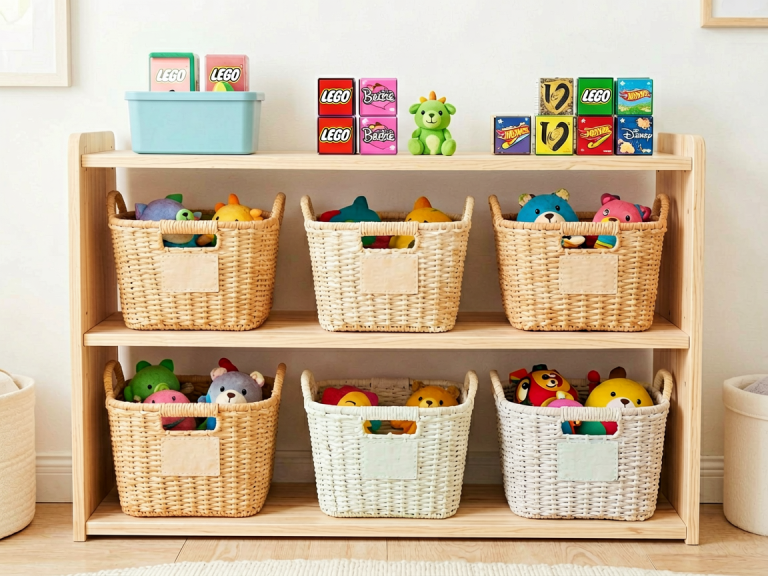
Independent play—the kind where a child engages with toys, imagination, and problem-solving without adult direction or peer cooperation—is a cornerstone of healthy development. It fosters creativity, resilience, self-regulation, and the capacity for deep focus. Among the vast universe of playthings, LEGO-style bricks hold a special, almost iconic status. They are celebrated for encouraging open-ended construction, spatial reasoning, and storytelling. Yet a lingering question persists: Are these interlocking plastic bricks truly *good* for independent play, or do they sometimes work against the very autonomy they promise? This essay examines the multifaceted relationship between LEGO-style bricks and solitary play, balancing their empowering qualities against potential pitfalls. By exploring how these toys can both nurture and hinder independent engagement, we arrive at a nuanced understanding of their role in a child’s solo world.
The Nature of Independent Play: Why It Matters
Before evaluating any toy, it is essential to understand what independent play demands. True independent play is self-directed, intrinsically motivated, and free from external scaffolding. A child chooses a goal—be it building a castle, creating a narrative, or simply experimenting—and pursues it with their own resources. The toy must therefore be a tool for agency, not a script. It should invite exploration without imposing a rigid framework. LEGO-style bricks, in their purest form, seem ideal: they are modular, combinable, and infinitely reconfigurable. Yet the reality is more complex. The same bricks that empower a child to build a spaceship can also overwhelm them with choice, or worse, seduce them into following a pre-printed instruction booklet that robs them of decision-making. The question is not whether LEGO can be used independently—clearly it can—but whether it *optimally* supports the cognitive and emotional benefits of solitary play.
How LEGO Bricks Foster Creativity and Autonomy
One of the strongest arguments in favor of LEGO-style bricks for independent play is their capacity to anchor creativity. A single brick is a simple cube with studs, but an array of bricks becomes a language of geometry and engineering. A child playing alone can spend an hour perfecting a symmetrical tower, discovering that a 2×4 brick is weaker when placed horizontally, or learning that a baseplate can serve as a foundation for a city. These discoveries happen organically, driven by trial and error. The bricks do not talk back, do not praise, and do not interfere—they simply react to physical laws. This teaches patience, cause-and-effect reasoning, and the satisfaction of self-corrected mistakes. Moreover, the absence of a predetermined narrative (unlike, say, a pre-programmed electronic toy) forces the child to become the author of their own story. A pile of bricks becomes a dragon’s lair, a post-apocalyptic shelter, or a futuristic laboratory. That narrative ownership is the essence of independent play.
Furthermore, LEGO-style bricks offer a low barrier to entry. Even a toddler can snap two bricks together, experiencing a moment of mastery. That success fuels further exploration. For older children, the complexity scales: they can build functional mechanisms like gears and levers using LEGO Technic elements, or create mosaics using only 1×1 plates. Each success reinforces a sense of competence that is entirely self-generated. In contrast, many modern toys—especially digital ones—provide immediate rewards through lights, sounds, or level-ups, which can create a dependency on external validation. LEGO bricks, being silent and inert, demand that the child produce their own motivation. This is precisely the kind of internal drive that independent play is meant to cultivate.
Potential Drawbacks: The Double-Edged Sword of Instructions and Complexity
Despite these strengths, LEGO-style bricks have a dark side when it comes to independent play—and it is largely tied to the prescriptive instruction booklet that accompanies most commercial sets. Many children, especially those between ages five and ten, are drawn to the elaborate models depicted on the box: a 3,000-piece replica of the Millennium Falcon, a detailed floral bouquet, or a working Ferris wheel. The instruction booklet lays out a step-by-step sequence, and the child’s role becomes one of an assembler rather than a creator. In this mode, the play is anything but independent: it is a complex task of following directions, sorting pieces, and matching images. While this does build literacy and fine motor skills, it does *not* foster the autonomous decision-making that defines independent play. The child is executing someone else’s vision, not their own. Once the model is completed, it often sits on a shelf as a static display, discouraging further manipulation—the very opposite of open-ended play.
Another potential drawback is choice paralysis. A massive bin of loose bricks can be overwhelming. Without any constraint, a child may struggle to begin, flitting from one half-formed idea to another, never achieving the depth of engagement that deep independent play requires. Research in developmental psychology suggests that moderate constraints—such as a limited set of colors or a specific theme—actually boost creativity by reducing the cognitive load. A child facing 2,000 bricks of every shape and size may feel lost. In such cases, the toy becomes a source of anxiety rather than freedom. Additionally, the very aesthetic perfection of LEGO bricks can be inhibiting. Because each piece is precisely molded and fits perfectly, any deviation from the intended geometry (e.g., a crooked window) feels like a mistake. Some children become perfectionists, endlessly restarting a tower that leans slightly, which can lead to frustration and abandonment of the play session.
The Role of Open-Ended Building and Modifications
To maximize the benefits of LEGO-style bricks for independent play, the open-ended approach must be consciously prioritized. This means deliberately setting aside the instruction booklet (or buying only supplementary “loose brick” packs) and encouraging free building. When children are given the freedom to create their own designs, they engage in what psychologists call “divergent thinking”—generating multiple solutions to a problem. For example, a child who wants to build a car might struggle to make wheels that turn. Through independent trial and error, they might discover that a 2×4 plate with a round technic pin allows rotation. That discovery belongs entirely to the child, and it is far more valuable than simply attaching the pre-made wheel assembly from a kit. Moreover, open-ended building extends the “play life” of the bricks. A child can build a castle today, demolish it tomorrow, and rebuild a space station. The toy is never finished; it is perpetually renewed.
Another powerful strategy is cross-modality play—using LEGO bricks as props in a larger imaginative world. A child alone in their room might construct a small house for a toy dinosaur, then use other bricks to represent a forest, a river, and a volcano. The bricks become a language for storytelling, and the child directs the entire narrative. This kind of play is deeply independent: it requires internal planning, character development, and problem-solving (e.g., “How do I make the dinosaur fit through the door?”). In this context, LEGO bricks are not the focus—they are a medium. This is arguably the highest form of independent play that LEGO can support, and it is available to any child who has access to a variety of bricks and the freedom to ignore the instructions.
Comparing LEGO to Other Construction Toys for Solitary Play
To sharpen our understanding, it is useful to compare LEGO-style bricks with other popular construction toys. Wooden unit blocks, for instance, are often considered the gold standard for independent play in early childhood. They are heavier, require a sense of balance rather than interlocking, and do not have studs. When a wooden block tower falls, it crashes loudly, teaching consequences with immediate feedback. However, wooden blocks lack the precision and reversibility of LEGO—you cannot attach a small piece to the side of a wooden block without adhesive. LEGO bricks offer a unique combination of stability and reconfigurability. Meanwhile, magnetic tiles (like Magna-Tiles) are translucent and lightweight, encouraging symmetrical, gravity-defying structures, but they do not allow for the same level of fine detail. K’NEX and erector sets involve rods, connectors, and screws, which demand more dexterity and often require adult help for tightening. For a child playing alone, LEGO bricks strike an admirable balance: they are forgiving (pieces can be easily detached and reused), precise, and endlessly variable. However, they are also small and can be frustrating for children with underdeveloped fine motor skills—a fact that may discourage independent play in younger children.
Another crucial factor is social versus solitary appeal. LEGO bricks are famously social; many children prefer to build with siblings or friends, sharing ideas and comparing designs. That is wonderful for cooperative play, but it can make solitary building feel lonely or less exciting. A child who primarily associates LEGO with group activities may lose interest when playing alone. This is not a flaw of the toy itself, but a contextual issue. Parents can mitigate this by establishing a special “independent building time” and celebrating the child’s solo creations with the same enthusiasm they would show for a collaborative project.
Age and Developmental Considerations
The suitability of LEGO-style bricks for independent play varies significantly with age. For a two-year-old, large DUPLO bricks are excellent for stacking and knocking down—a primitive form of independent exploration. At this stage, the child is learning cause and effect, and the blocks are simply objects to manipulate. Instructions are irrelevant. For a six-year-old, a small set with maybe 50 pieces and a simple instruction booklet can be a satisfying independent challenge, but only if the child is intrinsically motivated to complete it. Many six-year-olds prefer to use the pieces to build their own things, ignoring the booklet entirely. By age ten, a child may find deep satisfaction in following a complex 1,000-step instruction booklet alone, but this is a different kind of solitary activity: it is closer to a puzzle or a craft project than to open-ended imaginative play. It builds concentration and perseverance, but not necessarily the creative autonomy that is the hallmark of independent play.
The key insight is that LEGO bricks are a tool, not a solution. They can be used for both dependent play (following instructions) and independent play (free building). Whether they are “good” for independent play depends on how they are presented, the child’s temperament, and the environment. A child who is naturally inclined toward solitary, systematic work may thrive on instruction-following; a child who is a free-spirited creator may find instructions oppressive. The toy itself is neutral.
Conclusion: Empowering the Solo Builder
So, are LEGO-style bricks good for independent play? The answer is a nuanced yes—but with important caveats. They are excellent when used in open-ended, non-prescriptive ways that allow a child to exercise full creative control. They offer a tactile, forgiving, and infinitely variable medium that encourages deep focus, problem-solving, and narrative-building. However, they can hinder independent play when dominated by detailed instructions, when the sheer volume of pieces overwhelms a child, or when the child associates them only with collaborative or goal-oriented projects. To maximize their benefits, caregivers and educators should provide ample loose bricks, resist the urge to dictate how they should be used, and celebrate the messy, asymmetrical, and ad-hoc creations that emerge from a child’s solitary imagination. Ultimately, LEGO bricks are a mirror: they reflect the autonomy—or dependence—that we impose upon them. In the hands of a child who is free to build their own world, they are one of the finest tools for independent play ever invented.