Remote Control Cars vs Robot Toys: Which Sparks More Creativity?
Introduction: The Great Playtime Debate
Walk into any toy store, and you will find two towering aisles: one filled with sleek, wheeled remote control cars, and the other with blinking, beeping robot kits. Both promise hours of fun, but parents and educators increasingly ask a deeper question: which type of toy actually nurtures a child's creativity? While remote control cars offer immediate, visceral excitement through speed and agility, robot toys engage children in building, coding, and problem-solving. This article compares the two through the lens of creative development, examining how each encourages open-ended play, cognitive growth, and imaginative expression. The answer is not simply that one is “better,” but rather that they cultivate different facets of creativity—and understanding those differences helps us choose the right tool for the right kind of creative spark.
The Nature of Play: Fixed Action vs Open-Ended Exploration
Remote Control Cars: Mastery of Motion
A remote control car is a closed system. It comes fully assembled, with a controller, a battery, and a predetermined set of functions: forward, backward, left, right, and maybe turbo. The child’s creativity is primarily expressed through physical manipulation—crafting obstacle courses, racing against friends, or performing stunts. This is a form of *kinesthetic creativity*, where imagination operates in space and time. A child might pretend the car is a monster truck conquering a mountain of pillows, or direct a miniature highway chase across the living room. However, the toy itself does not change. Its behavior is fixed by its motors and wheels. Once a child masters the controls, the novelty fades unless the environment is redesigned. The creative ceiling is low in terms of the object itself, but high in terms of the narratives and scenarios you can build around it. In that sense, remote control cars resemble paintbrushes—they are simple tools, but the canvas (the world) is infinitely variable.
Robot Toys: A World of Construction and Code
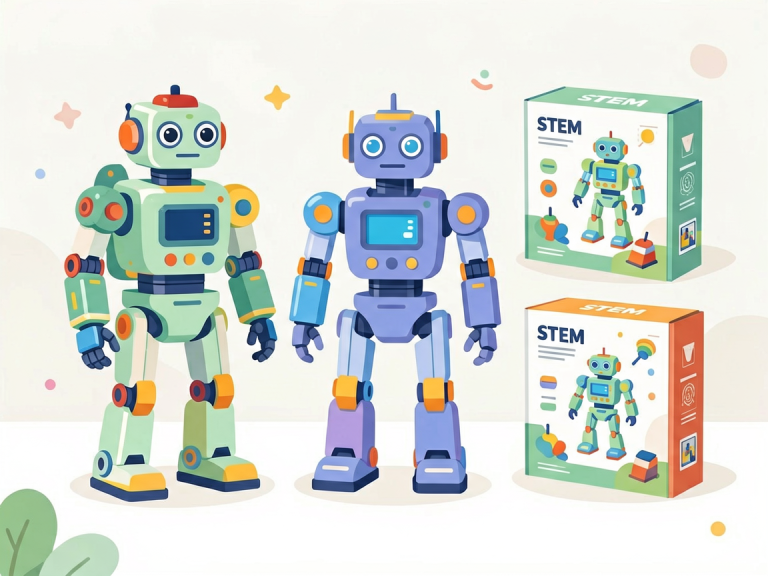
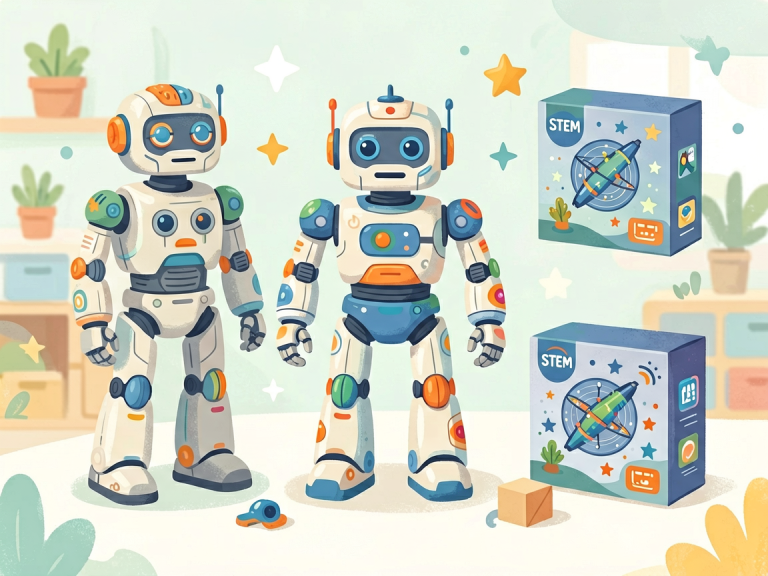
Robot toys, by contrast, are often modular. They come as kits with sensors, motors, gears, and programmable brains. Some require assembly; others allow rebuilds into different shapes—a humanoid, a spider, a rover. Advanced models support block-based coding or even Python. This creates a fundamentally different kind of play: *constructive and computational creativity*. The child does not just operate a machine; they design, test, and iterate. They ask: “What if I attach this arm here? How can I make the robot follow a line? Why did my program cause it to spin in circles?” This process mirrors the engineering and scientific method. Creativity here is not about imagining stories but about solving problems and inventing mechanisms. The robot is a reactive partner—it can sense light, avoid obstacles, respond to sound—which means the child's creative input directly changes the robot’s behavior. That feedback loop is thrilling in a quieter, more cerebral way than a speeding car.
Cognitive Development: Reflexes vs Computational Thinking
Spatial Reasoning and Reaction Time in RC Cars
Driving a remote control car requires hand-eye coordination, spatial awareness, and quick reaction time. When a car zooms toward a wall, the child must judge distance, adjust speed, and angle the wheels—all in seconds. This develops what psychologists call *executive function*, particularly planning and inhibitory control. For younger children, RC cars help build a mental map of three-dimensional space: how objects move relative to one another, how inertia works, how turning affects trajectory. This is a valuable form of intelligence, closely linked to sports and driving skills. But does it expand creative thinking? Indirectly, yes. When a child invents a new trick—like doing a 180-degree spin off a ramp—they are applying physical intuition in a novel way. However, the cognitive demands are largely procedural, not symbolic or abstract.
Robot Toys: Deeper Cognitive Layers
Robot toys engage higher-order thinking. Assembling a robot from parts fosters mental rotation—the ability to imagine how a piece looks when turned upside down. Programming a sequence of actions requires decomposition (breaking a task into steps), pattern recognition, and debugging. These are the same skills used in writing essays, designing experiments, and composing music. For example, a child who wants the robot to dance must plan a series of motor commands, test them, observe the result, and revise. This is *iterative creativity*, where failure is an expected part of the process. Robot toys also introduce children to abstraction: they learn that a symbol (like a loop icon) represents a repeated action. This symbolic thinking is the foundation of all higher creativity, from mathematical proofs to poetic metaphors. In contrast, remote control cars rarely demand this level of cognitive abstraction—the child’s mind is focused on the concrete here-and-now of motion.
The Role of Customization and Personal Expression
RC Cars: Limited Modification, Rich Narrative
Most RC cars allow some customization, such as changing the body shell, wheels, or spoiler. But those modifications are cosmetic and have minimal impact on performance. The child’s personal expression lies in the *stories* they create. A single car can be a hero, a villain, a race champion, or a rescue vehicle. In this way, RC cars act as props in socio-dramatic play, which is a powerful form of social creativity. Children often project emotions onto their vehicles—making the car “angry” when it crashes, “excited” when it speeds. This is akin to how a child uses a doll or a stuffed animal. The limitation is that the play script eventually repeats. A car will always do the same thing; only the context changes. For some children, this simplicity is liberating. For others, it becomes boring.
Robot Toys: Infinite Possible Configurations
Robot toys, particularly those based on modular platforms like LEGO Mindstorms or Makeblock, offer near-infinite customization. A child can build a robot that draws, a robot that picks up objects, a robot that mimics a pet, or a robot that solves a maze. Each new configuration is a fresh creative act. Moreover, the child can program unique behaviors—starting with simple remote control and moving to autonomous actions driven by sensors. This allows for genuine personal expression: one child might code a robot to move like a crab; another might build a robot that shakes hands. The robot becomes an extension of the child’s imagination in a much deeper way than an RC car, because the child creates the robot’s *program*—its “personality.” This type of open-endedness is widely regarded by educators as the gold standard for creative toys.
Long-Term Engagement and Depth of Play
The Short Thrill of Speed
RC cars are undeniably fun. The burst of dopamine from accelerating across a driveway is gratifying. However, research on play suggests that high-arousal activities with low variability tend to lose their appeal after repeated exposure. Unless a child invests in building elaborate tracks or entering competitive races, an RC car often ends up in the closet after a few months. The creativity is *episodic*—it surges during intense play sessions but does not accumulate skill over time. There is no progression from novice to expert in the same way there is with robotics. You do not gain new abilities with an RC car beyond faster reflexes. Thus, as a long-term creativity tool, it is limited.
Robot Toys: A Journey of Escalating Challenges
Robot toys naturally escalate in complexity. A beginner starts by snapping together a few pieces and pressing a “go” button. Later, they learn to modify code, add sensors, and design custom parts. This is a *ladder of creativity*—each level builds on the last. The child’s mastery grows, and with it their confidence to tackle even harder problems. This kind of engagement aligns with the psychological concept of *flow*, where the challenge matches the skill level, producing deep immersion. A robot toy can entertain a child for years, evolving from a simple motor toy into a gateway to engineering, design, and computer science. The creativity is not just about playing; it is about creating tools that play for you.
Social Creativity: Racing vs Collaborative Building
RC Cars Foster Competitive Play
Playing with remote control cars is often a social activity. Two children racing produce a shared narrative of competition, negotiation (whose turn is it?), and even cooperative stunt planning. This develops social creativity—the ability to create shared imaginary worlds and rules. But the collaboration is usually shallow because the cars cannot be modified to create new interactions. The social script is fixed: race, chase, crash.
Robot Toys Foster Collaborative Problem-Solving
Robot toys, on the other hand, naturally encourage *co-creation*. When children build a robot together, they must communicate ideas, divide tasks, and combine different design visions. They argue about where the sensor should go, whether the robot should use wheels or legs, and what program will make it do something impressive. This negotiation requires flexibility, empathy, and creative compromise. Moreover, many robot kits are designed for group activities in classrooms, where children brainstorm solutions to challenges like “get the robot through a maze without touching the walls.” This type of collaborative creativity is far richer and more aligned with real-world innovation than racing.
Affordability and Accessibility: Which is More Creative per Dollar?
Interestingly, affordability affects creativity. Remote control cars are generally cheaper. A decent RC car can be had for $30–$50, while a quality robot kit often starts at $100 and goes much higher. But the cost-effectiveness in terms of creative development may be reversed. A cheap RC car offers only a few weeks of play. A slightly more expensive robot kit, if supported by tutorials or online communities, can provide months of creative challenges. Furthermore, many robot kits are compatible with recycled materials—you can add cardboard, tape, and household items to expand the robot’s abilities. This encourages *resourceful creativity*, where children learn to see everyday objects as components. An RC car, being sealed, discourages such tinkering. So while the upfront price of robot toys is higher, their creative “yield” per dollar is often greater.
Gender and Stereotype Considerations
Both RC cars and robot toys have historically been marketed toward boys, but the creative implications are different. RC cars reinforce a stereotypically masculine play pattern of speed, dominance, and physical mastery. Robot toys, especially those that allow artistic modifications or social storytelling, can transcend gender stereotypes more easily. A robot can be a helper, a companion, or a fashion accessory with a colorful 3D-printed cape. That flexibility invites a broader range of interests and creative expressions. For children who do not gravitate toward high-speed motion, robot toys offer a gentler, more thoughtful entry point. For children who love motion, robots can be programmed to mimic that motion in unexpected ways—so the imaginative scope is wider.
The Verdict: Different Creativities for Different Minds
In the end, comparing remote control cars and robot toys for creativity is like comparing a sketchbook with a musical instrument. The RC car excels at *improvising in physical space*—it is a tool for storytelling, athletics, and immediate fun. It nurtures spatial awareness, reaction, and social play. The robot toy excels at *constructing, coding, and iterating*—it is a tool for engineering, logic, and abstract thought. It nurtures computational creativity, patience, and collaborative problem-solving. A child who plays with both benefits from a richer cognitive toolkit. If you must choose based on creativity alone, robot toys offer more depth, longevity, and open-ended potential. But if you want to spark a child's love of speed and story, an RC car is an unrivalled spark. The ideal playroom contains both—but for the kind of creativity that leads to invention, innovation, and self-directed learning, the robot toy is the clear winner. It teaches children that creativity is not just about moving fast, but about dreaming big and building even bigger.