Remote Control Cars and Robot Toys for Kindergarteners: Steering Fun into Early Development
Introduction
When a four-year-old’s eyes light up at the sight of a tiny car zipping across the living room floor, or a friendly robot wobbling and beeping in response to a button press, it is hard not to smile. Remote control cars and robot toys have long been staples of toy stores, but for kindergarteners—children roughly between the ages of three and six—these gadgets are far more than simple entertainment. They are windows into early learning, motor skill development, and social interaction. Yet many parents hesitate, wondering whether such toys are age-appropriate, safe, or genuinely educational. This article explores why remote control cars and robot toys deserve a place in a kindergartener’s playroom, how to choose the right ones, and how to turn playtime into a rich developmental experience.
The Developmental Power of Tiny Wheels and Tiny Bots
Building Fine and Gross Motor Skills
At first glance, driving a remote control car seems like a simple hand-eye coordination task. But for a kindergartener, it is a monumental exercise in precision. Holding a controller, pressing triggers or turning a steering wheel requires fine motor control that is still developing at this age. When a child guides a car under a chair or around a pillow, they are learning to adjust their thumb and finger movements in real time, based on what their eyes see. This feedback loop—seeing the car veer left, then correcting the controller—strengthens neural connections that support handwriting, drawing, and even using scissors later on.
Robot toys add another layer. Many robots for young children are not fully remote controlled; they may include simple programming buttons that make the robot move forward, turn, or dance. Pressing these buttons in a sequence, then watching the robot perform the sequence, teaches sequential thinking and fine motor control simultaneously. Some robots require children to place physical tiles or cards in a row to set a path, which involves grasping, orienting, and placing objects accurately—all excellent exercises for little hands.
Boosting Spatial Awareness and Problem-Solving
When a kindergartener navigates a remote control car through a maze of blocks or tries to make a robot follow a chalk line, they are engaging in spatial reasoning. They must mentally map the distance, direction, and speed required to reach a goal. What happens if the car is going too fast? It crashes. Too slow? It stalls. Children quickly learn to adjust their actions based on outcomes—a fundamental problem-solving skill.
Robot toys designed for early coding, such as simple floor robots with arrow buttons, teach children to plan a route before executing it. "If I press forward twice and turn right once, will the robot reach the teddy bear?" The child must visualize the robot’s movement in space, make a prediction, and then test it. This is not just play; it is an early introduction to computational thinking, which researchers link to improved reading comprehension and mathematics performance in later years.
Social and Emotional Growth Through Play
Encouraging Cooperation and Language
Remote control cars and robot toys are rarely played with in complete isolation. Even when a child plays alone, they often narrate their actions: "Vroom vroom! The car is going to the garage!" This self-talk is crucial for language development. But when two or three kindergarteners play together with such toys, the benefits multiply. They must take turns with the controller, negotiate whose turn it is, and communicate about the rules of the game. "Let’s race to the door!" "No, you go first." Such interactions build social competence, patience, and emotional regulation.
Robot toys, in particular, invite collaborative problem-solving. A child may ask a friend, "How do we make the robot go around the table?" Together, they plan a sequence of commands, disagree, test, and refine. This collaborative process teaches children to share ideas, listen to others, and work toward a common goal—skills that are far more valuable than the ability to press a button.
Building Confidence and Resilience
There is a special joy when a kindergartener successfully makes a remote control car perform a "stunt" off a small ramp, or when a robot finally completes a complicated loop. That triumphant "I did it!" is a powerful boost to self-esteem. Conversely, when the car flips over or the robot crashes into a wall, children experience mild frustration. With supportive adults nearby, they learn that failure is not the end. They try again, adjusting their approach. This resilience—the ability to cope with small setbacks and keep trying—is a life skill that begins in early childhood. Remote control toys provide a safe, low-stakes environment for practicing perseverance.
Safety and Age-Appropriateness: What Parents Must Know
Avoiding Hazards: Small Parts and Speed
Not all remote control cars and robot toys are suitable for kindergarteners. Parents must check age recommendations carefully. Many high-end hobby-grade RC cars are too fast, too fragile, and contain small parts that pose choking hazards. For a three-year-old, look for toys labeled for ages 3 or 4. These will typically have larger controllers, slower speeds, and no parts smaller than the standard choke-test cylinder. Robot toys should be sturdy enough to withstand drops and throws, as young children are not yet gentle.
Speed is another critical factor. A car that zooms at 15 miles per hour is dangerous both for the child and for furniture. For kindergarteners, a maximum speed of 3 to 5 miles per hour is plenty. Slow speed gives the child time to react, reducing frustration and crashes. It also makes the toy easier to control, which builds confidence.
Battery Safety and Supervision
Many remote control toys use small lithium-ion batteries or button cells. These require adult supervision during charging and replacement. Button cell batteries are extremely dangerous if swallowed, so toys that use them should have secured battery compartments. Rechargeable toys should be charged by an adult, away from young children, and never left charging overnight unattended. Additionally, the toy itself should meet local safety standards, such as CE or ASTM marks. When in doubt, read reviews from other parents or consult consumer safety websites.
Choosing the Right Toy for Your Kindergartener
For the Car-Loving Child: Simplicity and Durability
If your child is obsessed with cars, start with a simple remote control car that has a 2-channel controller (forward/backward and left/right). Look for models with soft rubber tires, shock absorbers (even basic ones), and a body made of flexible plastic that can survive collisions. Cars with a "turbo" button might seem fun, but for this age group, a steady speed is better. Also consider a car with a built-in USB charging cable rather than bulky AA batteries—though replaceable batteries have the advantage of quick swapping when the power runs out. A good beginner car needs no complex assembly, and the controller should be shaped to fit small hands, with large buttons that require only light pressure.
For the Curious Builder: Robot Toys That Teach Coding
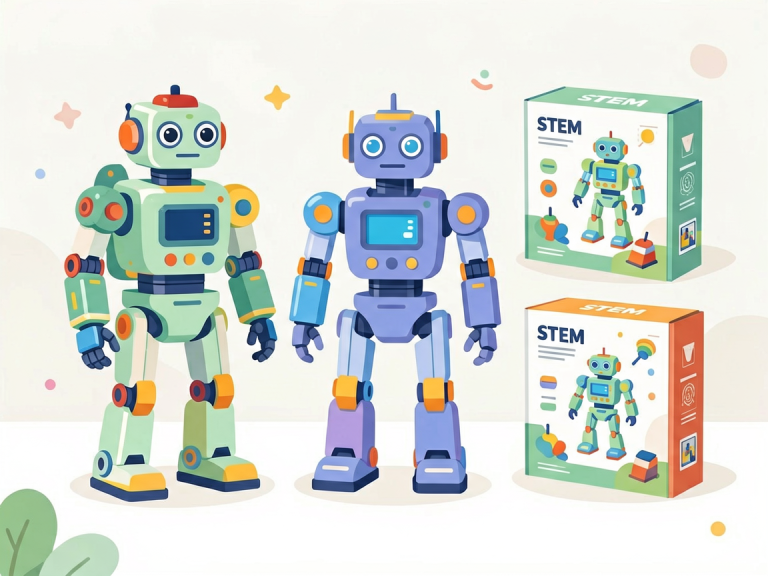
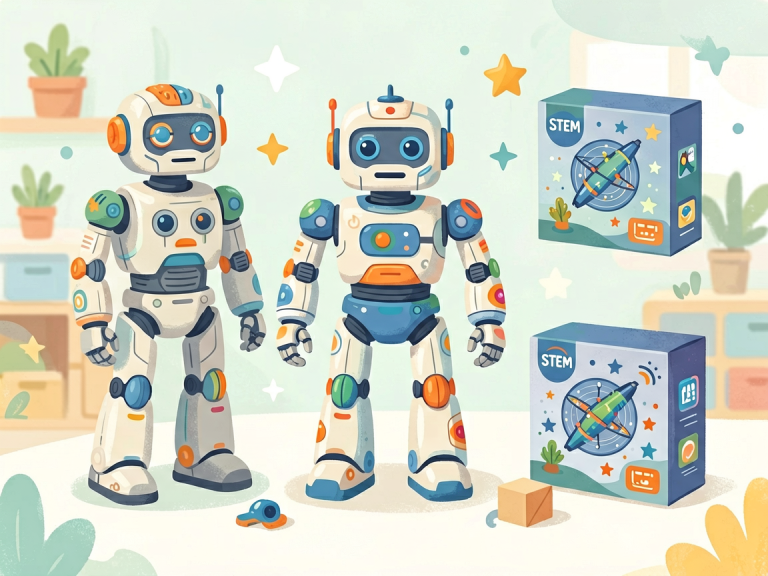
Robot toys for kindergarteners come in many forms. Some, like the popular Bee-Bot or Code-a-Pillar, use arrow buttons or detachable segments to create a sequence of movements. These are excellent for teaching logic without a screen. Others, like small interactive robot pets that respond to clapping or touch, encourage imaginative play and empathy. When choosing a robot, consider whether it has a clear, visible output (moving, lights, sounds) that helps the child understand cause and effect. Avoid robots with too many features that can overwhelm a young child. A robot that does a few things well—moving, turning, beeping, flashing—is more educational than one with fifty random functions.
Another factor is expandability. Some robot toys come with additional activity mats or puzzle challenges that grow with the child. These can extend the toy’s lifespan from months to years. But even without expansion packs, a simple robot can be used in endless home-made activities: build a road out of cardboard, create obstacles, or make the robot deliver a "message" to a stuffed animal.
Tips for Making the Most of Playtime
Create a Play Environment That Encourages Thinking
Instead of handing over the remote control and walking away, take a few minutes to set up a mini-course. Use pillows, books, or building blocks to create a track or maze. Ask your child, "Can you drive the car around the red block and park it under the chair?" For a robot toy, draw a large grid on the floor with chalk (if indoors, use masking tape). Write simple commands like "forward," "backward," "turn left" on cards. Let your child plan a route and then "program" the robot using the cards as a visual guide. This kind of play extends the toy’s educational value far beyond simple pressing.
Join the Fun—But Let the Child Lead
It is tempting for parents to take over the controller to show "how it’s done." Resist that urge. Let the child explore, make mistakes, and discover solutions on their own. Your role is to offer gentle prompts: "What do you think will happen if you press the left button?" "Why do you think the car didn’t turn?" "Try putting the ramp a little closer." This kind of guided questioning helps children develop metacognitive skills—thinking about their own thinking—which is a strong predictor of academic success.
Balance Screen-Based and Physical Toys
Some remote control cars and robot toys are controlled via smartphone apps. While these can be engaging, for kindergarteners, physical controllers are generally better. Touchscreen controls are too abstract for young children; they lack tactile feedback and require visual attention to the screen, which reduces spatial awareness. If you do use an app-controlled toy, limit screen time and pair it with physical maps or obstacles that keep the child’s eyes on the real world. The goal is to make the toy a bridge between digital commands and physical outcomes, not just another screen activity.
Include Rotational Play with Other Toys
Finally, remember that remote control cars and robot toys are not substitutes for traditional toys like blocks, dolls, or art supplies. They are most valuable when used in combination. A remote control car can deliver a block to a construction site. A robot can be a character in a dollhouse story. By integrating these high-tech toys into imaginative play, kindergarteners learn that technology is a tool, not a destination. They also develop cognitive flexibility—the ability to see an object as multiple things—which is a cornerstone of creativity.
Conclusion
Remote control cars and robot toys are much more than noisy gadgets that entertain for an hour. For kindergarteners, they are instruments of growth. Through them, children refine motor skills, practice spatial reasoning, learn to collaborate, and build resilience. With careful selection based on safety and age-appropriateness, and with thoughtful adult involvement that encourages exploration rather than direction, these toys can become powerful allies in early childhood education. The next time you see a remote control car zooming across the floor, remember: behind the wheel is a young engineer, a problem-solver, and a future creator in the making. All they need is a safe space to play, a caring adult nearby, and just enough speed to make the journey exciting.