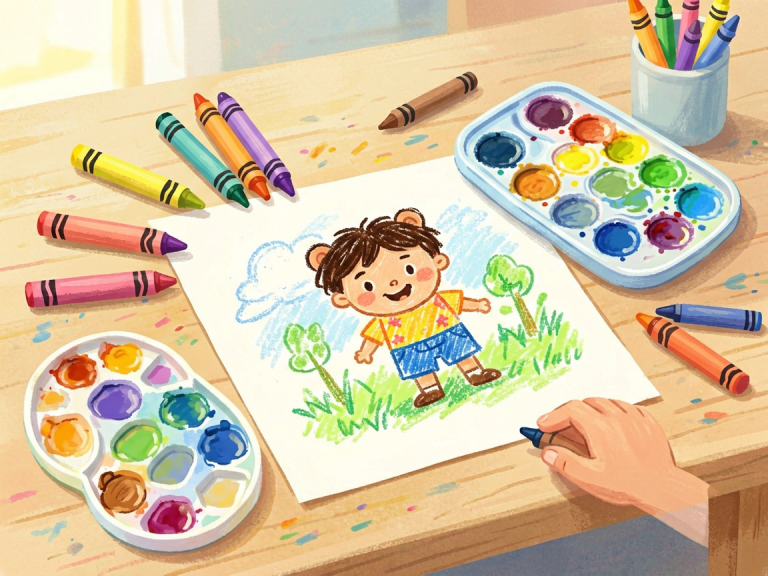
Rediscovering Play: Practical Screen-Free Tips for Parents
Introduction
In an age where digital devices are woven into nearly every aspect of daily life, parents often find themselves wrestling with a familiar anxiety: how much screen time is too much? While technology offers undeniable benefits for learning and connection, an over-reliance on screens can erode children’s creativity, physical health, and social skills. The antidote is not to ban screens entirely but to intentionally carve out space for screen-free play. Such play is not a luxury—it is a vital ingredient for healthy development. It sparks imagination, strengthens parent-child bonds, and teaches children how to navigate boredom, solve problems, and collaborate with others. This article offers a comprehensive set of tip- based strategies for parents who want to cultivate a rich, screen-free play environment. From redesigning your home space to embracing outdoor adventures and tailoring activities to different ages, these practical suggestions will help you rediscover the joy of unplugged play.
—
The Case for Screen-Free Play: Why It Matters
Before diving into specific tips, it is essential to understand *why* screen-free play deserves a prominent place in childhood. Research consistently shows that excessive screen exposure—especially passive consumption like watching videos or playing fast-paced games—can impair attention spans, disrupt sleep patterns, and reduce opportunities for face-to-face interaction. In contrast, unstructured, screen-free play engages the whole child: physically, cognitively, and emotionally.
When children build a fort with blankets, they are practicing spatial reasoning and engineering. When they pretend to be shopkeepers or astronauts, they are developing language, empathy, and narrative skills. When they climb a tree or chase a ball, they are strengthening gross motor coordination and learning risk assessment. Moreover, screen-free play often invites parents to participate as co-players, which deepens emotional security and communication. By prioritizing this kind of play, parents give children the gift of a slow, rich childhood where discovery happens at a natural pace.
—
Setting the Stage: Creating an Inviting Screen-Free Environment
Children naturally gravitate toward whatever environment makes play easy and appealing. If screens are always on, or if toys are buried under clutter, children will default to the path of least resistance—usually a tablet or television. Parents can proactively design their homes to encourage unplugged fun.
Designate a “play zone” – Choose a corner of the living room, a section of the basement, or even a large hallway where toys and materials are accessible without adult intervention. Use low shelves or open bins to display blocks, art supplies, puzzles, and dress-up clothes. Rotating items every few weeks keeps novelty alive without requiring constant purchases.
Limit screen triggers – Keep televisions and tablets out of bedrooms and common play areas if possible. Create a simple rule: no screens before certain hours (e.g., before 4 p.m. on school days) and no screens at the dinner table. These boundaries help children internalize that playtime is, by default, screen-free time.
Embrace open-ended materials – The best toys don’t dictate a single use. Cardboard boxes, fabric scraps, wooden blocks, play-dough, and loose parts (buttons, pebbles, bottle caps) invite endless creativity. Investing in a few high-quality, open-ended items is far more effective than a houseful of electronic gadgets that sing and flash.
—
Outdoor Adventures: Nature as the Ultimate Playground
Nature provides a sensory-rich, ever-changing environment that no app can replicate. The outdoors offers unlimited opportunities for movement, exploration, and wonder—and it costs nothing but a willingness to get a little messy.
Go on a “treasure hunt” – Give each child a small bag and a simple list: find something smooth, something bumpy, something shaped like a heart, a leaf with a specific color, or a stick that is exactly as long as your arm. This activity builds observation skills and keeps children engaged for an hour or more.
Create an outdoor obstacle course – Use tree stumps, logs, rocks, and old tires to design a simple course. Add crawling, balancing, and jumping challenges. Children love timing each other or racing against a stopwatch. It develops gross motor skills, coordination, and resilience when they fall and try again.
Try “nature art” – Collect fallen leaves, flowers, pinecones, and pebbles, then arrange them into patterns, mandalas, or animal shapes on the ground. This encourages artistic expression without any plastic or batteries. For added fun, photograph the finished artwork and allow children to share it with relatives (a controlled, positive use of a screen).
Gardening and digging – Even a small patch of dirt or a few pots on a balcony can become a screen-free science lab. Plant fast-growing seeds like beans or radishes; let children water, weed, and observe daily changes. The patience and responsibility learned from gardening are profound.
—
Indoor Creativity: Arts, Crafts, and Imaginative Play
When weather keeps children indoors, screen-free activities can still be dynamic and captivating. The key is to have a few go-to ideas that require minimal setup but invite deep engagement.
The cardboard-box revolution – Never throw away a large cardboard box. Turn it into a rocket ship, a castle, a car, or a puppet theater. Add markers, tape, and old fabric; then step back and watch the story unfold. This type of play can last for days and evolves as children add new details.
Sensory bins – Fill a shallow bin with rice, beans, sand, or water beads. Add scoops, funnels, small toys, and containers. For toddlers this is a calming, exploratory activity; for older children, you can add math challenges (how many scoops to fill a cup?) or storytelling prompts (who lives in this underwater world?).
Story dice and collaborative tales – Create or purchase foam cubes with pictures (e.g., a cat, a mountain, a key, a spaceship). Roll the dice and take turns building a story using the images shown. This builds oral language, creativity, and listening skills. It also works wonderfully for a family game night.
Cooking and baking together – Measuring flour, cracking eggs, and stirring batter are not only practical life skills but also lessons in math, science, and patience. Let children choose a simple recipe, read the instructions aloud, and take responsibility for each step. The bonus is enjoying a treat together afterward.
—
Social Play: Building Connections Without Screens
One of the greatest losses of excessive screen time is the reduction in real-time, face-to-face social interaction. Children need practice reading facial expressions, negotiating rules, and resolving conflicts. Screen-free play with siblings, friends, or parents provides that practice naturally.
Board games and card games – A weekly family game night can become a cherished tradition. Classic games like Candy Land, Uno, Checkers, or Jenga teach turn-taking, sportsmanship, and strategic thinking. For older children, try cooperative games where everyone works together against the game itself.
“Obstacle course” inside – Rearrange pillows, chairs, sofa cushions, and blankets to create a living-room obstacle course. Children can crawl under tables, hop over pillows, and balance on a strip of tape on the floor. Doing this with a friend or sibling adds a social dimension: they can race, take turns, or design the course together.
Impromptu theater – Set up a “stage” using a sheet over a doorway. Children can invent characters, write a short script (or make it up on the spot), and perform for family members. Costumes are optional but fun. This builds confidence, cooperation, and emotional expression.
“Expedition” games – Encourage children to build a blanket fort and declare it their “base camp.” They can pack imaginary supplies, draw maps, and plan adventures. Group play allows for rich negotiation: who is the leader? What happens when you encounter a “wild animal”? These unstructured scenarios teach social dynamics far better than any app.
—
Age-Appropriate Ideas: From Toddlers to Teens
No single set of suggestions fits every child. Tailoring screen-free play to developmental stages ensures that activities remain engaging and appropriately challenging.
Toddlers (1–3 years) – Focus on sensory and motor play. Simple activities like stacking blocks, pouring water from one cup to another, rolling a ball back and forth, or scooping sand provide foundational learning. Avoid overly complex rules; toddlers thrive on repetition and cause-and-effect exploration.
Preschoolers (3–5 years) – Imaginative play is at its peak. Encourage dress-up, pretend kitchens, doctor kits, and puppets. This age also enjoys simple puzzles, matching games, and building with large LEGO Duplo. Outdoor play should include running, jumping, swinging, and digging.
School-age children (6–12 years) – They can handle more complex projects: building models, constructing marble runs, learning to sew or knit, playing chess or checkers, and engaging in longer narrative pretend play. They also benefit from cooperative challenges like building a tent from sheets or creating a scavenger hunt for a sibling.
Teens (13+ years) – Screen-free time for teens can feel unnatural, but it is still essential. Encourage hobbies like woodworking, baking, photography (with a real camera), playing a musical instrument, writing a short story, or hiking with friends. Family board games or a weekly “no-device evening” can help teens reconnect with family members without digital distraction.
—
Conclusion
The goal of screen-free play is not to eliminate technology entirely or to turn parents into full-time entertainers. Rather, it is to restore balance—to give children the time and space they need to explore, create, and connect in ways that screens cannot replicate. The tips in this article are starting points, not rigid prescriptions. Some days a messy art project will feel overwhelming; other days a simple walk outside will be exactly what everyone needs. What matters is the intention: to prioritize play that is open-ended, hands-on, and driven by the child’s own curiosity.
Parents who embrace this approach often find a surprising side effect—they themselves rediscover the simple pleasures of play. Laughter, cooperation, and shared moments of wonder become more frequent. And in a world that constantly demands speed and productivity, that is a gift worth giving to the whole family. So put away the screens, pull out the cardboard box, and let the play begin.