Pretend Play Sets vs. Dress-Up Costumes for 8-Year-Olds: Which Sparks Deeper Development?
Introduction: The Power of Pretend at Age Eight
At eight years old, children stand at a remarkable crossroads of cognitive and social development. Their imaginations are vivid, their language skills are rapidly expanding, and their understanding of the world is becoming sophisticated enough to mimic complex adult roles, professions, and scenarios. For parents, educators, and gift-givers, the question of which toy to choose often comes down to two beloved categories: pretend play sets (elaborate kits with miniature props, tools, and settings) and dress-up costumes (complete outfits that transform a child into a character). Both promise hours of immersive fun, but they nurture different aspects of a child’s growth. Understanding the nuances between these two play experiences can help adults make informed decisions that align with a child’s interests, temperament, and developmental needs.
Understanding Pretend Play Sets: Building Worlds from Scratch
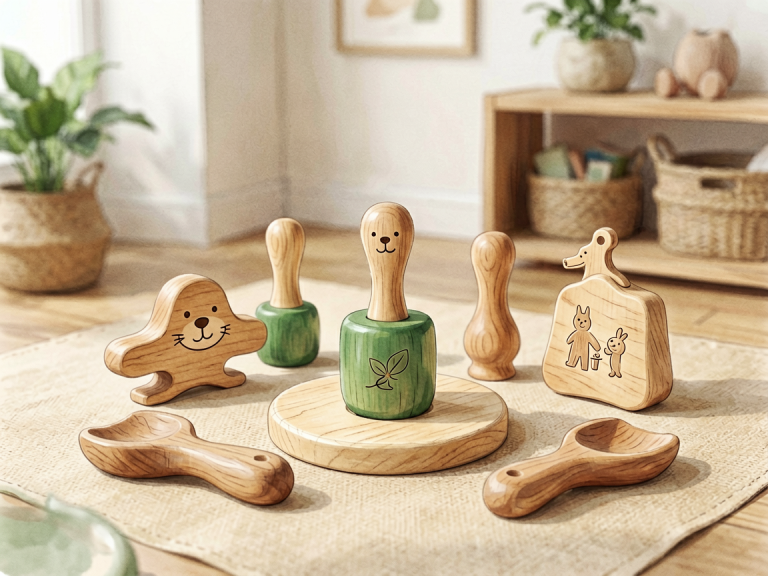
Pretend play sets are structured kits that provide a miniature environment for role-playing. For an 8-year-old, these might include a doctor’s office with stethoscopes, syringes, and patient charts; a kitchen set with play food, utensils, and a cash register; or a construction site with tools, hard hats, and building blocks. The defining feature of a play set is its ability to create a scenario — a complete miniature world that the child must populate with characters, rules, and narratives.
Cognitive and Problem-Solving Benefits
When an 8-year-old engages with a pretend play set, they are not merely imitating; they are planning sequences of events. For instance, a child playing with a veterinary clinic set must decide which animal comes in first, what symptoms they have, how to treat them, and how to bill the imaginary owner. This requires executive functioning skills such as working memory (remembering the sequence), cognitive flexibility (adapting to an unexpected “emergency”), and impulse control (waiting to treat the second patient until the first is done). Studies in developmental psychology have shown that such structured pretend play enhances logical reasoning and spatial awareness. The physical manipulation of miniature objects also strengthens fine motor control — crucial for handwriting, buttoning, and other 8-year-old milestones.
Social and Language Development
Play sets often encourage collaborative play. Two 8-year-olds sharing a restaurant set might assign roles: one is the chef, the other the customer. Negotiating these roles requires language skills — asking permission, making suggestions, and resolving conflicts (“No, I want to be the waiter this time”). This social negotiation is far more complex than simply wearing a costume, because the play set provides a world of objects that demand interaction. The child must use language to describe actions, ask for props (“Pass me the spatula”), and create dialogue. For a child who is shy or struggles with social cues, a play set can serve as a structured bridge — the props themselves guide the interaction, reducing the anxiety of open-ended creativity.
Creativity Within Constraints
A potential drawback of play sets is that they come with pre-defined expectations. A pirate ship set includes a treasure chest, a cannon, and a map; the child may feel pressured to play “pirate” in a way that matches the toy’s design. While many children are perfectly happy to invent new plots (e.g., the pirate becomes a treasure-loving astronaut), others may find their imagination constrained by the props. For an 8-year-old who thrives on absolute open-ended play — inventing a story from scratch with no physical aids — a play set might feel limiting.
—
The World of Dress-Up Costumes: Stepping into Another Skin
Dress-up costumes, by contrast, are personal transformation tools. A single outfit — a royal queen’s gown, a superhero’s cape and mask, a firefighter’s jacket and helmet — allows a child to become someone else entirely. For an 8-year-old, costumes are not just about appearance; they are about embodying a character’s traits, emotions, and power. The costume is the catalyst; the imagination does the rest.
Identity Exploration and Emotional Growth
At age eight, children are beginning to form a stronger sense of self. Dress-up allows for safe identity experimentation. A child who feels small and powerless in real life might choose to wear a knight’s armor and pretend to vanquish dragons. This psychological role-taking helps children process fears, develop empathy (by imagining what it feels like to be the hero or the villain), and practice complex emotional regulation. Unlike a play set, a costume offers no props and no pre-set scenario. The child must generate the entire story from their mind — a process that demands higher levels of abstract thinking and narrative construction. For example, a child wearing a doctor’s coat but no medical kit has to imagine the tools, the patients, and the treatment. This is a more demanding form of pretend play, but one that can yield tremendous creativity.
Physical Activity and Kinesthetic Learning
Costumes encourage full-body movement. A child wearing a superhero cape is likely to run, jump, and strike poses. This kinesthetic energy is especially beneficial for 8-year-olds, who often need outlets for their growing physicality. Dressing up also engages the senses: the rustle of a princess skirt, the weight of a firefighter helmet, the stretch of a superhero suit. These sensory inputs help a child connect emotionally with the role. Compare this to a play set, which often involves sitting or kneeling at a table — a more sedentary activity. For children who are high-energy or tactile learners, dress-up costumes provide a richer physical engagement.
Social Challenges and Emotional Safety
However, costumes come with their own social pitfalls. An 8-year-old in a full unicorn costume may feel self-conscious if peers laugh at them. Unlike a play set, which can be used privately, a costume is a public statement of identity. Some children may avoid dressing up because they fear judgment or feel that the costume does not “fit” their emerging sense of self. Additionally, costumes can encourage stereotyped play — a child might insist on playing a princess who must be rescued, or a superhero who must fight. Without props or a setting to guide the narrative, the child’s imagination may fall back on familiar, media-driven scripts (e.g., movies, TV shows). This can limit the originality of the play unless an adult or another child introduces a twist.
—
Direct Comparison: Which Is Better for an 8-Year-Old?
The choice between pretend play sets and dress-up costumes is not about superiority; it is about alignment with a child’s current needs. Let us break down key developmental areas:
1. Cognitive Challenge
- Play sets offer built-in problem-solving through their props and settings. A child must figure out how to use a pretend cash register, how to organize a “patient” chart, or how to build a structure from blocks. This is excellent for children who thrive on logical and sequential thinking.
- Costumes require the child to invent the entire circumstance from zero. This demands higher-level divergent thinking — the ability to generate multiple ideas without external clues. Great for children who are naturally imaginative and enjoy storytelling.
2. Social Interaction
- Play sets often require multiple actors to function fully (a restaurant needs a chef, a waiter, and a customer). They teach cooperative play with defined roles and tasks.
- Costumes can be used solo or in groups, but group play with costumes often leads to more chaotic, improvisational interaction (e.g., a queen and a superhero meeting in a magical forest). This fosters flexible social negotiation but may be harder for less socially skilled children.
3. Physical Engagement
- Play sets are generally stationary and fine-motor focused.
- Costumes are gross-motor focused, encouraging running, jumping, and gesturing.
4. Longevity and Replay Value
- Play sets may lose appeal once the child has mastered all the possible scenarios. A doctor’s kit might feel boring after the tenth check-up. However, adding new elements (like a new “patient” or a blank chart) can refresh the set.
- Costumes can be combined with other clothes, accessories, and other children’s costumes, offering near-infinite combinations. A simple white dress can be a ghost, a princess, a bride, a ghost-princess, or a scientist in a lab coat. This open-endedness gives costumes longer relevance.
5. Representation and Confidence
- Costumes allow a child to visually and physically embody a role, which can boost confidence. An 8-year-old who puts on a police officer uniform may stand taller and speak more assertively.
- Play sets provide a mirror of the real world — they help children understand how systems work (e.g., how a store runs, how a clinic operates). This can build practical knowledge and reduce anxiety about real-life experiences (e.g., a child who plays doctor may be less afraid of a real doctor’s visit).
—
Practical Guidance for Parents and Gift-Givers
When choosing between these two types of pretend play for an 8-year-old, consider the following factors:
- Your child’s personality: Is she a meticulous planner who loves organizing props? A play set might be perfect. Is he a dramatic performer who loves acting out stories? A costume (or a trunk of costumes) may better suit his style.
- Social needs: If your child often plays alone, a play set offers structured engagement. If she plays with a mix of friends, a costume collection invites spontaneous group storytelling.
- Space and storage: Play sets come with many small pieces that can get lost. Costumes take up closet space but are easier to maintain.
- Budget: A high-quality play set can cost $50–100, while a single costume might be $30–50. However, a bin of mixed costumes (thrifted or hand-me-down) can be more cost-effective and versatile.
A Hybrid Approach
The most powerful option is to combine both. For example, give an 8-year-old a costume (like an astronaut suit) plus a small play set (like a DIY cardboard spaceship control panel). The costume provides the identity; the play set provides the tools for interaction. This hybrid approach leverages the strengths of each: the transformative power of wearing the costume and the tactile, structured engagement of the play set.
Rotating Play and Open-Ended Materials
Finally, remember that the best playthings for an 8-year-old are often not store-bought sets but open-ended materials that can be combined with costumes. A cardboard box becomes a spaceship, a castle, or a time machine. Fabric scraps become capes or curtains. Encouraging your child to build their own pretend play environment from household items — while wearing a costume — maximizes creativity, problem-solving, and fine motor skills.
—
Conclusion: No Contest, Only Context
Pretend play sets and dress-up costumes are not rivals; they are complementary tools in a child’s developmental toolkit. For the 8-year-old mind, both offer invaluable opportunities to practice cognitive functions, social skills, emotional regulation, and physical coordination. The “better” choice depends on the child’s unique profile — their learning style, social comfort, and current interests. As adults, our role is not to declare one winner but to observe, offer variety, and trust the child’s innate drive to play. Whether she is organizing a miniature grocery store or flying across the living room in a superhero cape, the true magic lies not in the toy itself, but in the world of possibilities the child creates from it.