The Power of Pretend: Why Dress-Up and Play Sets Matter for 1-Year-Olds
The first year of life is a whirlwind of discovery. By the time a baby reaches their first birthday, they have transformed from a helpless newborn into a curious, mobile explorer who is beginning to understand the world through imitation, observation, and simple cause-and-effect. One of the most delightful and developmentally significant milestones in this period is the emergence of pretend play. While many parents associate dress-up costumes and pretend play sets with preschoolers, introducing age-appropriate versions of these toys to a 1-year-old can unlock a treasure trove of cognitive, social, and motor skill benefits. But how do we choose the right items for a child who is still putting everything in their mouth, toddling unsteadily, and just beginning to grasp symbolic thinking? This article explores the surprising importance of pretend play for the youngest toddlers, offers safety guidelines, and provides practical suggestions for incorporating dress-up and play sets into the daily life of a 1-year-old.
Understanding Pretend Play at 12 Months
At first glance, the idea of a 1-year-old engaging in pretend play might seem far-fetched. After all, true symbolic play—where a child uses one object to represent another—usually emerges between 18 and 24 months. However, the roots of pretend play begin much earlier. Around their first birthday, babies start to imitate adult actions in a simplified, repetitive way. They may pretend to drink from an empty cup, hold a toy phone to their ear and babble, or push a toy stroller. These early acts are not full-blown fantasies but rather functional imitations that lay the groundwork for later imagination.
A 1-year-old’s capacity for pretend is closely tied to their rapidly developing sense of agency and object permanence. They are learning that objects have specific uses—a hat goes on the head, a spoon is for eating, a brush is for hair. When they put on a soft, oversized hat or a simple cape, they are not yet playing a character; they are experimenting with how clothing changes appearance and sensation. The mirror becomes a fascinating tool as they watch their own reflection wearing something new. This self-exploration is the very beginning of identity formation and empathy, as they start to understand that they are a separate person with their own choices.
Moreover, the physical act of putting on a costume—even something as simple as a pair of fuzzy animal ears or a lightweight bib apron—requires fine motor coordination, bilateral coordination, and problem-solving. A 1-year-old may struggle to pull a hood over their head or snap a Velcro strap, and these struggles are precisely what build neural connections. So while the play may look clumsy and brief, it is far from meaningless. It is the infant’s first step into the world of “let’s pretend.”
Safety First: Choosing the Right Dress-Up Costumes and Play Sets for Toddlers
When selecting pretend play items for a 1-year-old, safety must be the absolute priority. Unlike older children who can reliably avoid choking hazards or entanglement risks, a toddler’s natural curiosity and oral exploration mean that any costume or play set must meet rigorous safety standards. Here are the key considerations:
No Small Parts or Loose Pieces. Buttons, sequins, ribbons, zippers, or any detachable decorations are dangerous for a 1-year-old who will inevitably try to mouth them. Look for costumes made from a single piece of fabric with no appliqués that can be chewed off. Velcro closures should be firmly sewn and large enough not to be pulled apart by tiny teeth. Avoid costumes with strings, drawstrings, or long ties that could pose a strangulation risk.
Soft, Breathable, and Non-Toxic Materials. Babies’ skin is sensitive, and they may wear a costume for only a few minutes before becoming fussy. Choose fabrics that are 100% cotton, organic bamboo, or other natural fibers. Avoid costumes with synthetic dyes or chemical finishes. Check for certifications like OEKO-TEX or CPSIA compliance. Also, ensure that any painted designs are lead-free and non-toxic, as toddlers may suck on the edges of a hat or collar.
Proper Fit and Ease of Movement. A costume that is too tight can restrict a toddler’s awkward movements, causing frustration or even falls. Conversely, an overly loose costume can bunch up and trip them. The best options for 1-year-olds are simple, one-piece items like a hooded towel animal costume, a soft vest, or a pair of fabric booties in the shape of animal paws. These allow for unhindered crawling, standing, and early walking. Also, consider that a 1-year-old’s attention span is extremely short—a costume should be easy to put on and take off, preferably with simple Velcro or elastic waistbands.
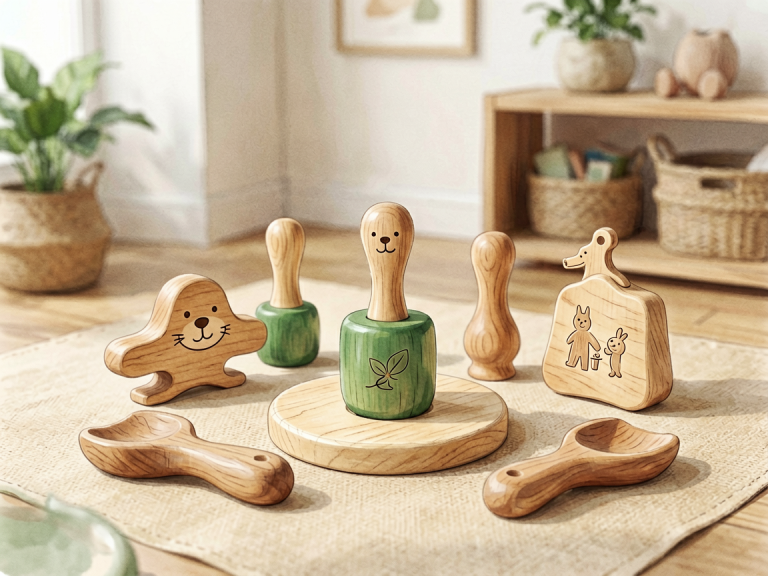
Play Sets: Chunky, Unbreakable, and Sensory-Rich. Pretend play sets for this age are not about tiny plastic food or miniature teacups. Instead, choose chunky wooden or silicone kitchen utensils, large nesting bowls, a soft doll with simple features, or a toy tool set made from thick, smooth-edged pieces. The best play sets encourage open-ended exploration rather than prescribed scripts. For example, a set of three different-sized stacking cups can be a “kitchen” set or a “bathroom” set or a “construction” set depending on the child’s whim.
Developmental Benefits: Beyond Fun and Games
The value of dress-up and pretend play sets for 1-year-olds extends far beyond fleeting entertainment. These experiences actively shape the developing brain in multiple domains:
Cognitive Development and Symbolic Thinking. When a 1-year-old puts a chef’s hat on and bangs a wooden spoon on an empty pot, they are practicing the basic precursor to symbolic thought. They are learning that an object can represent something else, even if just for a moment. This kind of play primes the brain for later language development, as words themselves are symbols. Additionally, the repetition of actions—putting on a hat, taking it off, putting it on again—helps reinforce neural pathways for memory and sequencing.
Language and Communication. Dress-up play is a natural context for introducing new vocabulary. A parent can say, “You’re wearing a red cape! You’re a little superhero!” while pointing to the cape. The child hears the words, sees the object, and feels the sensation, creating a multi-sensory language experience. Furthermore, when a toddler holds a toy phone and babbles, they are practising the rhythm and turn-taking of conversation, which is foundational for social communication.
Gross and Fine Motor Skills. Pulling a costume over the head requires shoulder stability and arm coordination. Snapping a Velcro strap builds hand strength and precision. Holding a play spatula and stirring an imaginary soup refines the pincer grasp and wrist rotation. All of these movements are essential for later skills like writing, dressing themselves, and using utensils. The open-ended nature of pretend play also encourages a child to move their body in different ways—crouching to pick up a dropped toy crown, reaching up to hang a pretend cape on a hook.
Social-Emotional Growth. Even at 1 year old, children are beginning to understand emotions and social roles. Wearing a costume can help them explore different identities in a safe, controlled way. They might feel powerful in a firefighter hat or nurturing with a baby doll. This exploration builds self-confidence and empathy. Moreover, engaging in pretend play with a caregiver—where the adult pretends to drink from an empty cup or laugh at the child’s silly hat—strengthens the attachment bond and teaches the child that their actions can influence another person’s reactions.
Top Recommendations for Pretend Play Sets and Costumes
Not all toys are created equal for the 1-year-old set. Here are some tried-and-true options that balance safety, developmental appropriateness, and fun:
- Animal Hooded Towels or Soft Costume Capes. These are perhaps the easiest entry point. A hooded fox towel that the toddler wears after a bath instantly becomes a “fox costume.” The hood has ears, and the body is a warm cape. Similarly, a simple sleeveless cape made of soft fleece with a Velcro closure at the neck allows the child to feel “dressed up” without the hassle of full-body suits.
- Mirror Play with Costume Accessories. A small, unbreakable mirror placed on the floor or low wall near a basket of simple accessories—silk scarves, large wooden rings, soft hats, and finger puppets—invites the toddler to experiment with how they look. The mirror adds a layer of self-awareness that makes the pretend play more meaningful.
- Chunky Wooden Kitchen Sets. Look for sets with one or two large wooden pots, a wooden spoon, and a silicone spatula. Avoid sets with dozens of tiny pieces. A single pot with a lid can be a “stove,” a “drum,” or a “storage bin.” Toddlers love to put objects in and out, so a simple set encourages motor skills and classification.
- Simple Dolls or Stuffed Animals. A soft-bodied doll with painted-on eyes (no hard plastic eyes that could come loose) and a removable fabric diaper offers rich pretend possibilities. The 1-year-old can feed the doll, give it a bath (with a cloth), or put it to sleep. This builds empathy and nurturing behavior.
- Costume Booties or Wristbands. Soft fabric booties shaped like dinosaur feet or cat paws that slip over the child’s own shoes (or bare feet) provide a sensory and kinetic dress-up experience without restricting movement. Similarly, elastic wristbands with a small jingle bell or a soft fabric flower can be a “magic bracelet.”
How to Engage Your 1-Year-Old in Pretend Play
Parents and caregivers play a crucial role in nurturing early pretend play. Here are some practical tips:
Follow the Child’s Lead. A 1-year-old will not follow a script. If they want to wear a chef’s hat on their foot instead of their head, let them. They are exploring the concept of “hat” in their own way. Resist the urge to correct or instruct. Simply observe and narrate: “Oh, the hat is on your foot! That’s a foot hat!” This validates their creativity.
Keep Sessions Short and Sweet. A 1-year-old’s attention span for a single activity is often less than five minutes. Do not force dress-up play. Simply have the costumes and play sets accessible on a low shelf or in a basket. When the child gravitates toward them, join in for a minute or two, then let them move on. The goal is positive associations, not prolonged performance.
Model Simple Pretend Actions. Pick up a play cup, hold it to your mouth, and say “Mmmm, yummy!” then offer it to the child. They may imitate you immediately, or they may watch and do it later. Be patient. Your modeling is like a seed that will grow over the coming months.
Use Language That Enriches. Label objects, actions, and emotions. “You put on the red cape. Now you feel very brave! Can you pretend to roar like a lion?” Even if the child does not understand all the words, they absorb the tone and rhythm. Repetition helps solidify vocabulary.
Create a Safe, Minimally Distracting Space. Choose a corner of the playroom or living room with a soft rug and a mirror. Remove any overly tempting but unsafe items. The simpler the environment, the more the child can focus on the pretend play itself.
Conclusion
The idea of a 1-year-old wearing a dress-up costume or playing with a pretend kitchen set might seem premature to some, but in reality, it is a developmentally rich and deeply joyful experience. Early pretend play lays the foundation for symbolic thought, language, motor coordination, and emotional intelligence. By choosing safe, simple, and sensory-friendly items—and by engaging with our toddlers in a patient, playful manner—we give them the gift of exploring the world of imagination long before they can speak in full sentences. So go ahead: place that soft superhero cape in the toy basket, snap a Velcro crown onto your toddler’s head, and watch as the first glimmers of “let’s pretend” light up their eyes. It is a journey that begins at one and lasts a lifetime.