The Perils of Purchasing Advanced Toys for Six-Month-Olds: Why Simplicity Matters
Introduction
Walking into a brightly lit baby store, new parents are often overwhelmed by walls of blinking, beeping, and singing gadgets designed to “stimulate” an infant’s developing brain. The packaging promises enhanced cognitive skills, early language acquisition, and even the seeds of genius. Yet hidden behind these glossy promises is a troubling reality: many toys marketed for babies aged six months and older are actually too advanced for them. In the rush to give our children every possible advantage, we may be doing more harm than good. This article explores why buying overly complex toys for six-month-olds is a misstep, drawing on developmental science, safety concerns, and practical wisdom.
The Developmental Reality of a Six-Month-Old
At six months, a baby is a marvel of emerging abilities—but these abilities are still very limited. Most six-month-olds can sit with support, roll over, reach for objects, and transfer items from one hand to another. Their vision has matured enough to track moving objects, and they are beginning to understand cause and effect in the simplest terms: shake a rattle and it makes noise; drop a spoon and it falls. However, their attention span is fleeting—measured in seconds, not minutes. They have no concept of pretending, no ability to follow multi-step instructions, and limited short-term memory.
Advanced toys often assume cognitive skills that simply do not exist at this age. For example, a toy that requires pressing a specific sequence of buttons to activate a song or light show demands a level of planning and memory that a six-month-old cannot perform. Instead of engaging the baby, such a toy becomes a source of confusion. The infant may randomly slap at the toy, produce no result, and lose interest—or worse, become frustrated. Developmental psychologists emphasize that infants learn best through repetition of simple actions: grasping, shaking, mouthing, and dropping. A toy that offers instantaneous, predictable feedback (e.g., a rattle that always sounds the same when shaken) builds foundational neural pathways far more effectively than one that requires a complex algorithm.
The Hidden Dangers of Complexity
Beyond cognitive mismatch, advanced toys can pose physical and emotional risks. Many “smart” toys come with small parts, detachable pieces, or sharp edges that are not appropriate for a baby who explores everything by putting it in the mouth. A six-month-old lacks the coordination to safely navigate a toy with multiple components, increasing the risk of choking hazards. Furthermore, electronic toys often feature bright flashing lights and loud, high-pitched sounds. While these may attract attention, they can overstimulate an infant’s delicate sensory system. Studies have shown that excessive exposure to rapidly changing visual and auditory stimuli can lead to increased cortisol levels (the stress hormone) in babies, manifesting as fussiness, poor sleep, and difficulty self-soothing.
Another overlooked danger is the impact on parent-child interaction. When a toy is too complex, parents often feel the need to “demonstrate” how it works or intervene frequently to help the baby “use it correctly.” This turns playtime into a tutorial rather than a shared, joyful experience. The baby does not need instruction; they need the freedom to explore at their own pace. Advanced toys inadvertently train parents to become directors rather than observers, robbing both parties of the simple pleasure of discovery.
Overstimulation and Its Consequences
The concept of “overstimulation” is often underestimated. A six-month-old’s brain is processing an enormous amount of new information every second—the feel of a blanket, the sound of a voice, the sight of a moving hand. Adding a toy that offers multiple sensory inputs (flashing lights, three different melodies, and a talking voice) can overload the neural circuits. The baby may show signs of distress: turning away, crying, or becoming hyperactive. In the long term, repeated overstimulation may contribute to attention difficulties and a reduced tolerance for calm, quiet play.
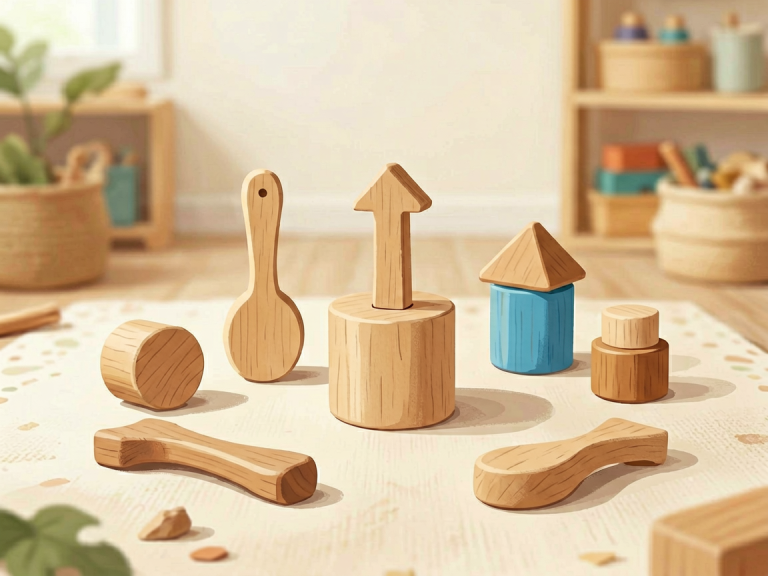
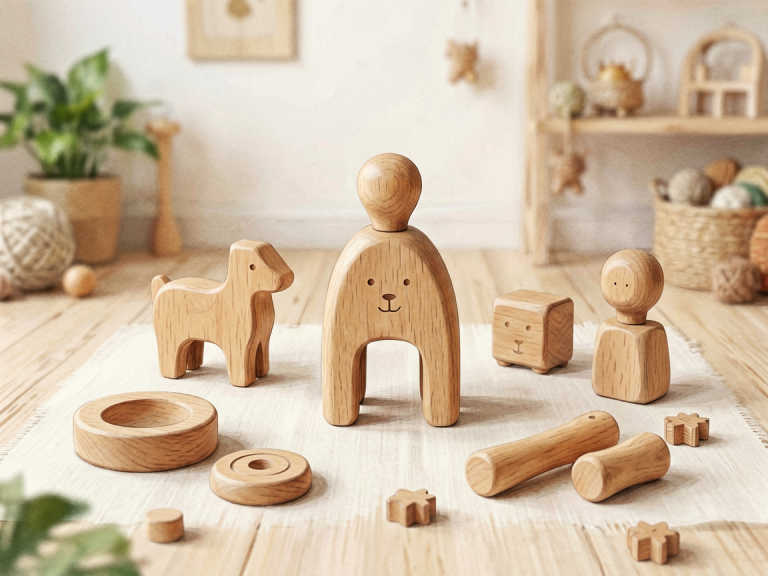
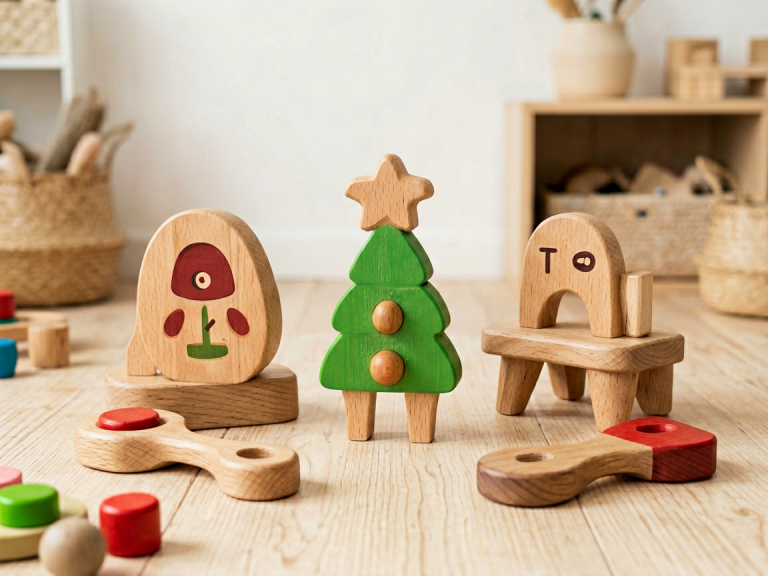
Contrast this with the benefits of simple toys. A wooden block, for instance, can be looked at, chewed, banged, and dropped. Each action produces a predictable, limited sensory response. The baby’s brain is not forced to process competing stimuli; instead, it can focus on one sensation at a time, strengthening the neural connections associated with that specific experience. Montessori educators and child development experts have long championed this principle: less is more.
The Marketing Trap
Why, then, do parents continue to buy advanced toys? The answer lies in the powerful grip of marketing. Toy manufacturers know that parents are anxious about their child’s development. Ads for “smart” toys often use phrases like “accelerates learning,” “builds vocabulary,” or “boosts IQ.” A six-month-old cannot yet speak, but the parent imagines that a toy that “talks” in English and Spanish will give them a head start. In reality, language acquisition at this age comes from human interaction—the rhythm of a mother’s voice, the repetition of nursery rhymes, the back-and-forth of babbling. No electronic toy can replace that.
Moreover, the social pressure to keep up with other parents cannot be dismissed. When a friend posts a picture of their baby surrounded by a glowing, musical activity center, the recipient may feel that their own simple rattle collection is inadequate. This peer-driven consumption leads to a house full of toys that are rarely used, or used in ways never intended by the manufacturer (like chewing on the antenna of a robot). Parents would be better served by spending their money on experiences—a baby music class, a subscription to a board book library, or simply a set of soft nesting cups.
What to Look for Instead
So what should a parent choose for a six-month-old? The answer is grounded in the concept of “open-ended play.” Look for toys that are:
- Safe and simple: Large enough not to be swallowed, made of non-toxic materials, with no small detachable parts.
- Responsive but predictable: A classic rattle, a rubber teether, or a textured ball that makes a gentle sound when rolled.
- Multi-sensory yet calm: A wooden ring with different fabric textures, a crinkle cloth, or a soft doll with a simple face.
- Encouraging of motor development: Items that promote reaching, grasping, and transferring, such as stacking cups (which do not require stacking skill—just mouthing and banging).
Books are also excellent. Board books with high-contrast images, simple shapes, and one object per page support visual development without overwhelming the child. A six-month-old will not “read” the story, but they will love the act of turning pages (or crumpling them) and hearing a parent’s voice.
Conclusion
In the end, the most advanced toy for a six-month-old is an engaged, responsive caregiver. A cardboard box, a set of measuring spoons, or a scarf can provide hours of fascination because the baby interacts with them through the loving presence of a parent who narrates, smiles, and responds to their cues. Buying toys that are too advanced not only wastes money but also risks frustration, overstimulation, and missed opportunities for genuine learning. Simplicity is not a limitation—it is a gift. By choosing age-appropriate, open-ended toys, we allow our babies to lead their own development, one rattle shake at a time. And that is a gift far more valuable than any glowing, talking, singing gadget could ever provide.