When Should Parents Buy Wooden Blocks? A Developmental Guide for Modern Families
Introduction: The Timeless Toy Question
Every parent, at some point, faces the simple yet surprisingly complex question: “When should I buy wooden blocks for my child?” In an era flooded with flashing screens, battery-powered robots, and subscription-based educational kits, the humble wooden block seems almost anachronistic. Yet pediatricians, child development experts, and Montessori educators consistently rank wooden blocks among the most valuable toys a child can ever own. The question is not *whether* to buy them, but *when* — and the answer is far more nuanced than “as soon as they can grasp.” This article explores the optimal timing across different developmental stages, the cognitive and physical milestones that justify introducing blocks, and the practical considerations families should weigh before making the purchase. By understanding the “when,” parents can maximize the educational and emotional benefits of this timeless plaything while avoiding frustration for both child and caregiver.
The First Six Months: Laying the Sensory Foundation
Why Babies Under Six Months Don’t Need Blocks Yet
Newborns and young infants live in a world of sensory exploration. Their primary tools are their mouths, their eyes, and their increasingly coordinated hands. While it might be tempting to invest in a beautiful set of wooden blocks early — perhaps as a decorative nursery item — the truth is that babies under six months lack the motor control and cognitive ability to interact meaningfully with blocks. At this stage, a block is simply a hard, mouthable object. The risks outweigh the benefits: blocks can be too heavy for tiny hands to lift safely, and if a young baby accidentally drops a block on their face, it can cause distress or injury. Furthermore, babies at this age are still developing the ability to transfer objects from one hand to the other, a prerequisite for stacking or even holding a block securely.
The Exception: Sensory Blocks for High-Contrast Exploration
However, a specific type of wooden block — large, lightweight, smooth-edged, and high-contrast — *can* be introduced around four to five months, but only in a supervised, floor-based setting. These blocks serve as visual and tactile stimuli rather than construction tools. For example, a block painted in bold black-and-white patterns can capture a baby’s visual attention during tummy time. The weight and texture provide sensory feedback when the baby bats at them or mouths them (assuming they are made from nontoxic, untreated wood). But parents should not expect any stacking or intentional play. The purchase at this stage is best described as an investment in sensory diversity, not in block-building skills. Most experts agree that a high-quality, simple rattle or a grasping ring offers similar developmental benefits with less risk.
The Critical Window: Six to Eighteen Months
The Grasping and Banging Phase (6–12 Months)
Between six and twelve months, a dramatic shift occurs. Babies develop a pincer grasp, sit independently, and begin to understand cause and effect. This is the earliest appropriate time to introduce a small, safe set of wooden blocks. At this stage, the child will not stack blocks; they will mouth them, bang them together, drop them from the high chair, and watch them roll away. Each of these actions is a vital learning experience. Banging blocks teaches the concept of sound production and force. Dropping them explores gravity and object permanence. Mouthing them provides oral-motor feedback crucial for speech development.
The key for parents is to choose blocks that are large enough to prevent choking — at least 1.5 inches in diameter — and made from smooth, unfinished or beeswax-finished wood. Avoid painted blocks at this stage because babies may chew off paint flakes. The purchase should happen when the baby shows interest in banging toys together or actively reaches for objects during play. Typically, this occurs around seven or eight months. Buying blocks earlier than this risks them being ignored or becoming a hazard. Waiting too long (beyond twelve months) means missing out on the rich sensory exploration period.
The First Stacking Attempts (12–18 Months)
Around the first birthday, a child’s cognitive abilities leap forward. They begin to imitate actions, recognize patterns, and attempt two-block actions. This is the magical “first tower” moment. A twelve-month-old might struggle to place one block on top of another, but by fourteen months, many toddlers can stack two or three blocks. By eighteen months, six-block towers are common among well-practiced children. This is the ideal time for parents to invest in a slightly larger set of blocks, perhaps twenty to thirty pieces, with a variety of shapes beyond just cubes — rectangles, triangles, and cylinders.
Why is this timing so critical? Because the act of stacking requires hand-eye coordination, spatial reasoning, and fine motor control. The toddler must align the block, judge distance, and apply the right amount of pressure without knocking over the structure. Failure is frequent, and that is exactly the point. Learning to deal with a toppled tower builds emotional resilience and perseverance. Parents who introduce blocks at this stage will also notice the beginning of symbolic play: the block becomes a “car,” a “phone,” or a “cookie.” This representational thinking is the foundation of all later cognitive skills.
The Preschool Years: Eighteen Months to Four Years
From Stacking to Structuring (18–36 Months)
Between eighteen months and three years, wooden blocks transform from a simple stacking toy into a complex construction medium. This is when the purchase of a substantial block set — consisting of fifty to a hundred pieces, including arches, half-circles, and ramps — becomes a wise investment. The child now has the attention span to build elaborate structures: bridges, castles, towers, and enclosures. They begin to experiment with balance, symmetry, and weight distribution. A two-year-old might place a heavy block on top of a narrow one, watch it fall, then adjust their approach. This trial-and-error process is a real-world physics lesson.
Moreover, social play emerges during this period. Two toddlers with a shared block set will negotiate, imitate, and occasionally argue over blocks. These interactions teach language skills, sharing, and conflict resolution. Parents should consider buying blocks specifically when they observe their child showing interest in building with other materials — such as pillows, cardboard boxes, or Legos — or when the child begins to ask “why” about how things stay up. The purchase should coincide with a growing desire for control and creation.
The Golden Age of Imaginative Play (3–4 Years)
By age three, the child’s imagination is in full bloom. Blocks become props for complex narratives: a row of blocks is a train, a cluster becomes a zoo, a tall tower is a princess’s castle. This is the peak window for wooden block play. Cognitive research shows that children who engage in regular block building score higher on measures of spatial visualization, math readiness, and language development. At this stage, the purchase of a premium block set — perhaps including natural wood tones, different sizes, and even wooden figures or animals — can yield returns that last through elementary school.
Parents should buy blocks before the child enters a structured preschool environment if possible. The reason is that block play is often a solitary or small-group activity that demands focused attention — a skill that is increasingly rare in screen-saturated households. Introducing a high-quality block set at age three gives the child a full year of free exploration before formal schooling introduces constraints. If parents wait until the child is already in school, peer pressure and academic demands may reduce the time available for open-ended play.
Beyond Preschool: Why Older Children Still Benefit
The Engineering and Logic Phase (5–7 Years)
Many parents assume that by kindergarten, blocks are “baby toys.” This is a mistake. Between five and seven years old, children develop the ability to plan ahead, follow blueprints, and collaborate on large-scale projects. A set of blocks becomes a tool for engineering challenges: Can you build a bridge that spans two chairs? A tower that is as tall as your little brother? These questions foster mathematical thinking, problem-solving, and teamwork. Parents should consider buying a more advanced block set — such as unit blocks (standardized sizes that fit together mathematically) or even a set with wheels and axles — when the child shows interest in building “real” things or asks about how buildings stand up.
The Creative Keepers (8+ Years)
Even older children can benefit from wooden blocks, though the purchase might take a different form. A set of geometric wooden blocks — such as those used in Montessori classrooms — can help with understanding fractions, geometry, and symmetry. Architects and designers have long used wooden blocks as design tools. For a child who loves drawing, building, or constructing, blocks can remain a source of inspiration well into adolescence. The key is to choose blocks that invite complexity: larger sets, unusual shapes, or blocks that can be combined with other materials like string, fabric, or clay.
Practical Considerations for the Purchase
Quality Over Quantity
When deciding when to buy, parents must also consider the quality of the blocks. Cheap, splintery, or painted blocks can be dangerous and frustrating. The ideal time to invest in a premium set — solid hardwood, sanded edges, nontoxic finish — is during the toddler years when the child will use them most intensively. A single high-quality set can last for decades, passing from one child to the next.
Storage and Space
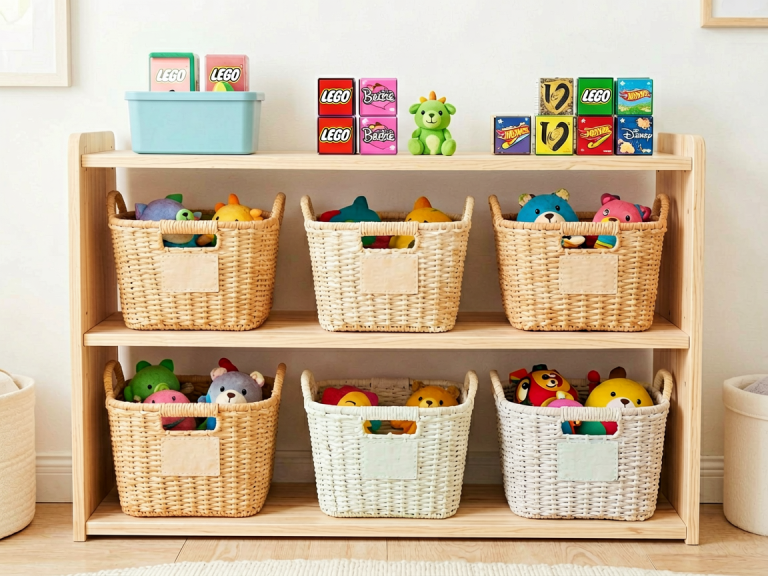
Before buying, parents should assess their living space. A large block set requires a low shelf or a designated play area. The best time to purchase is when the family has a dedicated playroom or at least a corner of the living room where blocks can remain set up for days. Constant packing and unpacking kills the creative momentum.
The Child’s Readiness, Not the Calendar
Ultimately, the “when” is not a single date on a calendar but a readiness indicator. Parents should watch for these signs: the child shows interest in stacking anything (cups, pillows, books), can sit independently, and can grasp and release objects deliberately. If these signs appear at eight months, buy blocks then. If they appear at fourteen months, that is fine too. Every child develops at their own pace, and wooden blocks should be a friend, not a stressor.
Conclusion: The Right Time Is Now — But Not Too Early
Wooden blocks are a rare example of a toy that grows with the child, offering new challenges at every stage from infancy through early adolescence. There is no single perfect age to buy them; rather, there is a developmental arc. For the youngest infants (under six months), blocks serve little purpose and may even be hazardous. For babies between six and twelve months, a small set of large, safe blocks provides essential sensory and motor exploration. For toddlers, a more substantial set fuels stacking, problem-solving, and early symbolic play. For preschoolers, blocks become a canvas for imagination and social interaction. And for older children, they remain a tool for engineering and geometry.
The best advice for parents is this: do not buy wooden blocks as a newborn gift for a baby who cannot yet use them. Instead, wait until the child begins to reach, bang, and grasp — usually around seven or eight months — and then invest in a quality set that will last through the preschool years. If you miss that window, the next best time is when the child first attempts to stack anything. The final best time is today, because a child of any age can discover the boundless joy of building, knocking down, and building again — a metaphor for life itself.