The Complete Parent’s Guide to Buying Plush Toys for 1-Year-Olds: Safety, Development, and Joy
Introduction
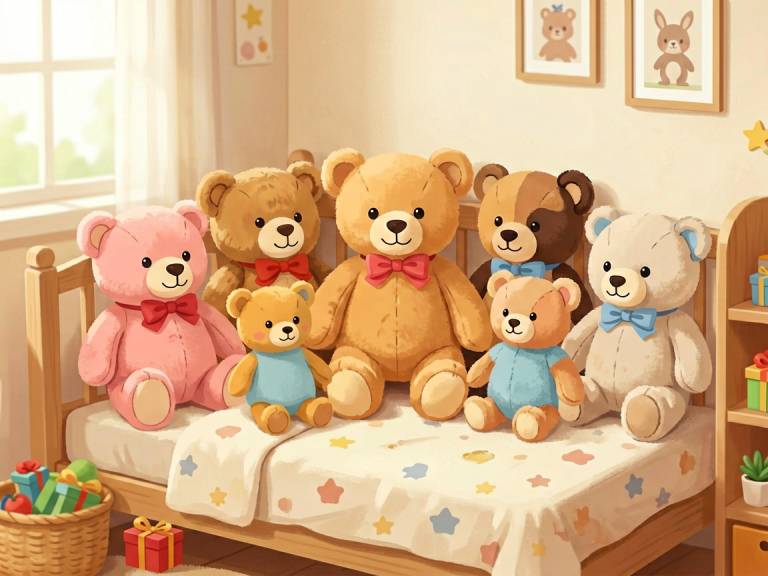
Selecting the first plush toy for your one-year-old is a milestone that blends excitement with anxiety. At twelve months, toddlers are rapidly developing—they crawl, pull themselves up, take tentative steps, and explore the world with their mouths. Plush toys, often called “stuffies” or “soft toys,” become their first comfort objects, playmates, and learning tools. However, the market is flooded with colorful, cuddly options that may not all be safe or developmentally appropriate for a child of this age. A poorly chosen plush can pose choking hazards, trigger allergies, or simply fail to engage a growing toddler’s curiosity. This guide is designed to help parents navigate the choices with confidence. We will cover essential safety criteria, developmental considerations, material selection, size and weight guidelines, washability requirements, and even educational aspects—all tailored specifically for the unique needs of a one-year-old. By the end, you will have a clear checklist to ensure that the plush toy you bring home is not only adorable but also a source of comfort, stimulation, and safe play for your little one.
Safety First: Non‑Negotiable Rules for One-Year-Olds
When it comes to buying a plush toy for a one-year-old, safety is the absolute top priority. At this age, babies still explore objects primarily by putting them in their mouths. Any small part that can be detached—such as plastic eyes, buttons, ribbons, or tags—becomes a choking hazard. Look for plush toys with embroidered eyes and noses, or those that are securely sewn and cannot be pulled off even with significant force. The U.S. Consumer Product Safety Commission (CPSC) and international standards require toys for children under three to have no small parts that fit into a choke tube. Always check the label for an age recommendation; if it says “3+” or warns of small parts, avoid it entirely for a one-year-old.
In addition to choking, toxic materials are a serious concern. Many cheap plush toys may contain phthalates, lead, formaldehyde, or other harmful chemicals in their dyes, stuffing, or synthetic fur. Look for toys that are certified by reputable testing organizations such as ASTM International, EN71 (European standard), or Oeko‑Tex Standard 100. Organic cotton or bamboo fiber plush toys reduce the risk of chemical exposure and are gentler on sensitive skin. Also, consider the stuffing: beads or pellets can leak out if the toy rips, creating both a choking hazard and a mess. Opt for polyester fiberfill that is hypoallergenic and non‑toxic.
Another often‑overlooked safety element is flame retardancy. Many plush toys are treated with flame‑retardant chemicals that can be endocrine disruptors. Some countries have banned such treatments in children’s products, but not all manufacturers comply. Seek out brands that state “no flame retardants added” or use naturally flame‑resistant fabrics like untreated wool. Finally, inspect the toy for long loops of thread, loose stitching, or any rough seams that could trap little fingers or be chewed off. A well‑constructed plush should have double‑stitched seams and no exposed raw edges.
Sensory and Developmental Benefits: More Than Just a Cuddly Friend
A plush toy for a one-year-old is not merely a decoration or a sleep aid—it is a tool for sensory exploration and cognitive growth. At twelve months, babies are in the midst of a sensory‑motor stage. They learn by touching, squeezing, shaking, and mouthing objects. A high‑quality plush toy can stimulate multiple senses simultaneously. Look for toys with varied textures: soft tufts of fur, crinkly fabric in the ears or feet, satin ribbons that feel smooth, or corduroy patches. These different tactile experiences help develop the neural pathways associated with touch discrimination. Some plush toys incorporate gentle rattles, squeakers, or chime sounds when squeezed. Such auditory feedback teaches cause‑and‑effect—a foundational concept for problem‑solving. However, ensure the sound mechanism is fully enclosed and cannot be accessed, and that the sound level is not too loud, which could startle or damage hearing.
Colors also matter. One-year-olds are drawn to high‑contrast patterns (black and white, red and blue) but are also beginning to recognize and name common colors. Bright, primary‑color plush toys can catch their attention and encourage visual tracking as they move the toy from hand to hand. Some plush toys are designed as “quiet books” with attached flaps, tags, or mirror elements. These encourage fine motor skills like pincer grasp (using thumb and index finger) and hand‑eye coordination. A toy that has a small ring or a loop for a baby to hold helps develop grip strength—important later for holding a spoon or crayon.
Emotionally, a plush toy often becomes a transitional object, providing comfort during separation anxiety or at bedtime. The familiar smell, softness, and feel of a well‑loved stuffie can soothe a one-year-old who is learning to self‑regulate. Research shows that toddlers who have a comforting object (like a teddy bear or blanket) tend to fall asleep more easily and show lower stress levels during daycare transitions. Therefore, choose a plush that is easy for small hands to hug—neither too bulky nor too flat. A size of about 10 to 14 inches in seated height is ideal, allowing a baby to wrap their arms around it.
Choosing the Right Size and Weight: Ergonomics for Toddlers
One-year-olds have limited strength and coordination, so the physical dimensions of a plush toy are crucial. A toy that is too large can overwhelm or even pose a suffocation risk—if a baby rolls and the toy lies on top of their face, it could impede breathing. The American Academy of Pediatrics (AAP) recommends that for infants under 12 months, cribs should be free of pillows, blankets, and toys. For one-year-olds who are moving to a toddler bed or playpen, a plush toy should be small enough that they can easily push it away if it covers their face. A good rule of thumb: the plush should not exceed the length of the baby’s arm from shoulder to fingertips.
Weight is equally important. A heavy plush toy can be difficult for a one-year-old to lift, carry, or toss. This may lead to frustration and reduce the toy’s play value. Look for lightweight stuffing; some plush toys are made with hollow fiber or “cloud stuffing” that is airy and soft. Avoid toys filled with beanbag‑type beads, which add weight and can be a choking hazard if the casing tears. Also, consider the toy’s center of gravity. Plush toys with limbs that are loosely attached can flop around, making them awkward for a toddler to hold. A well‑balanced, slightly bottom‑heavy design (like a classic teddy bear with wide feet) stays upright when placed and is easier for a baby to interact with.
Washability and Durability: The Realities of a One-Year-Old’s Life
Let’s be honest: a plush toy given to a one-year-old will inevitably get drooled on, dragged through food, dropped on the floor, and possibly chewed. Therefore, machine‑washable is not just a nice feature—it is a necessity. Look for plush toys that clearly state “surface washable” or “machine washable in cold water, tumble dry low.” Some high-end toys have removable covers, but for simplicity, a fully washable construction is best. Check the care label: toys with glued‑on elements (like plastic eyes or rhinestones) are not truly washable and should be avoided. Embroidered features hold up best.
Durability extends beyond washing. One-year-olds love to pull, twist, and yank. Seams must be reinforced. Some manufacturers use double‑sewn or lockstitch techniques. Also, consider the durability of the fabric itself. Long‑pile fur can mat or shed after repeated washing, while short‑pile corduroy or velour is more resilient. Choose a fabric that does not pill easily. If the toy has any decorative elements like a bow, ribbon, or label, ensure they are securely sewn and not just glued. A loose ribbon can become a strangulation hazard.
Another aspect: smell. Some new plush toys have a strong chemical odor from packaging or manufacturing. Always open and sniff before giving it to your child. If there is any smell, wash the toy according to instructions before use. Odors from synthetic materials can cause headaches or allergic reactions in sensitive toddlers.
Incorporating Educational Elements: Beyond Cuddles
While comfort is key, a plush toy can also serve an educational purpose for a one-year-old. At this age, babies are beginning to understand object permanence—the idea that objects continue to exist even when out of sight. A plush toy that has a hidden pocket, a flap that reveals a different fabric, or a removable (but safely tethered) accessory can engage this concept. For instance, a soft bear with a detachable scarf (sewn on with a short, safe ribbon) can help teach the concepts of “on” and “off.”
Many plush toys today incorporate early learning themes such as animal sounds, numbers, or letters through pressure‑activated speakers. However, for a one‑year‑old, electronic features can be overstimulating and may break easily if drooled on. If you do choose a musical plush, ensure the battery compartment is secured with a screw and is impossible for a child to open. Better yet, opt for a simple crinkle or rattle mechanism that is purely mechanical and requires no batteries.
Shape and color recognition can be supported by choosing a plush that is a familiar animal (dog, cat, bear) and talking to your child about it while playing: “This is a soft bunny. Bunny has long ears. Can you touch the ears?” Such interaction builds vocabulary and bonding. Some plush toys come with textured tags that list the name of the animal in multiple languages—a simple way to introduce language diversity.
A final educational note: avoid plush toys with small mirrors (unless they are securely fastened and shatterproof). Mirrors can stimulate self‑awareness, but a loose mirror is dangerous. Instead, look for toys with reflective, safe metallic fabric patches that simulate a mirror effect without the risk.
Top Tips for Buying: A Quick Checklist for Parents
To wrap up the guide, here is a concise checklist you can take to the store or keep open while shopping online:
- Age label – Must say “0+ months” or “suitable from birth” (though many such labels are voluntary; use your own judgment).
- No small parts – All eyes, noses, and decorations must be embroidered, not plastic or glued.
- Hypoallergenic fill – Polyester fiberfill is safe; avoid foam beads or pellets.
- Machine washable – Check the care label for cold water and low heat drying.
- Short or tight fabric pile – Avoid long fur that can be chewed off or trap dirt.
- Flame retardant‑free – Look for explicit “no added flame retardants” claims.
- No strings or ribbons longer than 6 inches – Strangulation hazard.
- Size 10–14 inches – Easy to hug but not too large to risk suffocation.
- Lightweight – Your baby should be able to lift it with one hand.
- Soft and pliable – Not stiff; it should yield to a hug.
- Certified by ASTM, EN71, or Oeko‑Tex – Proof of safety testing.
- Brand reputation – Established companies like Jellycat, GUND, or organic brands like Under the Nile often meet stricter safety standards.
Conclusion
Choosing a plush toy for your one-year-old is an act of love that requires careful thought. Safety must always come first, but beyond that, a well‑selected plush can become a cherished companion that nurtures sensory development, emotional security, and early learning. By following the guidelines in this guide—prioritizing embroidered features, hypoallergenic materials, appropriate size and weight, machine washability, and durability—you can confidently select a toy that will bring smiles without worries. Remember that every child is different; watch your little one’s reactions to textures, sounds, and shapes, and let their curiosity guide you. A plush toy that makes their eyes light up is more than a purchase—it is the beginning of a beautiful friendship. So, take your time, do your research, and enjoy the journey of finding that perfect cuddly companion for your growing toddler.