Nurturing Hearts and Minds: A Guide to Choosing Toys That Foster Emotional Learning in One-Year-Olds
Introduction
The first year of life is a whirlwind of discovery. At twelve months, a child is no longer a passive infant but an active explorer, crawling, cruising, and perhaps taking those first wobbly steps. Alongside this physical explosion comes a profound emotional awakening. One-year-olds begin to experience a rich tapestry of feelings—joy, frustration, fear, curiosity, and attachment—yet they have no words to express them. This is where the right toys become indispensable. Choosing toys for a one-year-old is not merely about entertainment or developmental milestones like fine motor skills; it is a powerful opportunity to lay the foundation for emotional intelligence. Emotional learning at this age encompasses recognizing and naming feelings, developing self-regulation, building secure attachments, and understanding social cues. The toys we offer can either nurture these skills or neglect them. This article provides a comprehensive, research-backed guide on how to select toys that support emotional learning for one-year-olds, ensuring that playtime becomes a safe space for heart and mind to grow together.
Understanding Emotional Development at Age One
Before diving into toy selection, it is essential to understand the emotional landscape of a one-year-old. At this stage, children are in the midst of what psychologists call the “attachment” phase, where they form deep bonds with primary caregivers. They experience separation anxiety, stranger wariness, and intense joy when reunited with loved ones. Their emotional range is expanding, but they lack impulse control. A one-year-old may laugh one moment and tantrum the next because they cannot communicate their needs. Key emotional competencies being developed include: the ability to recognize basic emotions in others (through facial expressions and tone of voice), the beginning of empathy (e.g., crying when another baby cries), and early self-soothing behaviors (like thumb-sucking or holding a lovey). Toys that encourage these competencies are not “educational” in a traditional sense; they are relational. For example, a simple wooden mirror allows a child to see their own expressions and begin to associate feelings with facial cues. Understanding these developmental milestones is the first step in curating a toy collection that supports emotional growth.
Safety and Sensory Grounding: The Non-Negotiable Foundation
Any discussion of toys for one-year-olds must begin with safety. However, safety also plays a direct role in emotional learning. A child who feels physically safe is more open to emotional exploration. Toys should be free of small parts that pose choking hazards, made from non-toxic materials (look for BPA-free, phthalate-free plastics or natural wood), and have no sharp edges or long cords. But beyond physical safety, consider sensory safety. One-year-olds are highly sensitive to sensory input. Overstimulation—loud electronic noises, flashing lights, or chaotic patterns—can trigger anxiety and frustration, hindering emotional regulation. Instead, prioritize toys that offer gentle, predictable sensory feedback. For instance, a simple wooden rattle with a soft, even sound provides auditory comfort without overwhelming the nervous system. Soft knitted balls, crinkly fabric books, and textured silicone teethers invite safe exploration while helping the child build a sense of emotional predictability—the toy behaves in a consistent way, which teaches the brain that the world can be trusted. This trust is the bedrock of secure emotional attachment.
Toys That Promote Emotional Recognition: The Mirror of the Self
One of the most profound emotional tasks for a one-year-old is learning to recognize and differentiate emotions—both their own and others’. The right toys can act as mirrors for emotional expression. Unbreakable safety mirrors are a classic choice. Place a mirror at floor level where the child can see their own reflection. This is not just about self-awareness (the “rouge test” typically comes later); it is about seeing joy, surprise, frustration, or curiosity played out on their own face. You can sit with them, make exaggerated happy or sad faces, and say, “Look, you are happy!” This pairing of visual and verbal cues begins the process of emotional vocabulary.
Another excellent tool is a set of simple wooden emotion pegs or blocks with painted faces showing basic emotions: happy, sad, angry, surprised. At one year, the child may not name these, but they can point to the “happy face” when you smile. Playing face-to-face peek-a-boo with a puppet that has a changeable expression (e.g., a sock puppet with a removable grin) teaches that emotions are temporary and can change. Soft dolls or plush toys with embroidered faces are also invaluable. A child can hug the doll when it is “sad,” practicing empathy long before they can articulate it. The key is simplicity: avoid overly detailed or cartoonish expressions that confuse a developing brain. Clear, large, simple features are best.
Toys for Self-Regulation and Comfort: The Inner Anchor
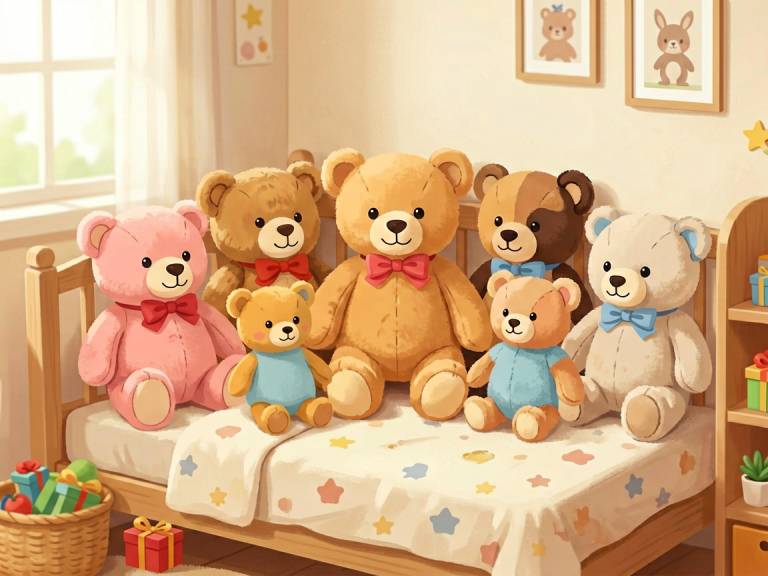
One-year-olds are famously prone to meltdowns, not because they are naughty, but because their emotional regulation systems are immature. They need external help to calm down. This is where “transitional objects” or comfort toys come into play. A soft, huggable stuffed animal or a small, safe blanket (called a “lovey”) can become a powerful tool for self-soothing. When choosing such a toy, opt for one that is machine-washable and has no hard eyes or buttons that could be chewed off. The child will form a deep attachment to this object; it represents safety and the caregiver’s presence. This is not a sign of weakness but a healthy emotional coping mechanism.
Other self-regulation toys include “sensory bottles” (a clear, sealed plastic bottle filled with water, glitter, and a few drops of food coloring, glued shut). When shaken, the glitter swirls and slowly settles. A one-year-old can watch this calming visual pattern, which helps lower arousal levels. Similarly, weighted lap pads or small beanbags (supervised) can provide proprioceptive input that grounds a child who is overexcited or upset. Musical instruments like a gentle rainmaker or a softly chiming bell also regulate mood; the predictable sound creates a rhythm that soothes. Importantly, avoid toys that force a child to “perform” for a reward (like singing toys that only activate when buttons are pressed in sequence). One-year-olds need passive or interactive toys that invite calming repetition, not goals.
Interactive Toys for Social Emotional Skills: The Dance of Relationships
Emotional learning is inherently social. Toys that encourage back-and-forth interaction teach the fundamental skills of turn-taking, joint attention, and shared joy. For a one-year-old, the simplest interactions are the most powerful. Balls of various sizes—soft, squishy, or textured—are perfect for rolling back and forth with a caregiver. Each roll says, “I see you; I am with you.” This builds the neural circuits for reciprocity, a cornerstone of emotional connection.
Shape sorters and nesting cups, while often seen as cognitive toys, are also emotional tools. When a child struggles to fit the square block into the round hole, they feel frustration. Having a calm adult nearby who says, “Oh, you are trying so hard! It’s tricky,” and then models a successful attempt, teaches the child that frustration is manageable and that help is available. This is emotional coaching in real time. Blocks that stack and tumble are equally valuable. When a tower falls, a one-year-old may cry. Instead of immediately fixing it, the caregiver can acknowledge the upset feeling (“You are sad it fell”), then invite the child to rebuild together. This builds resilience.
Puppets and dolls are unparalleled for emotional role-play. A simple hand puppet can “talk” to the child, ask to be hugged, pretend to cry, or show excitement. The child learns that emotions can be expressed, acknowledged, and responded to. For example, the puppet says, “Boo hoo, I fell down,” and the child instinctively pats the puppet’s head. This is early empathy in action. Choose puppets with neutral or gentle expressions so the child can project their own feelings onto them.
Practical Tips for Parents and Caregivers
Even the best toys are ineffective without mindful adult involvement. Here are actionable guidelines for choosing and using toys for emotional learning:
- Observe before selecting. Watch your child’s emotional triggers. Do they get anxious with loud sounds? Choose quieter toys. Do they seek deep pressure? Consider soft, squeezable toys. Every child’s emotional wiring is unique.
- Rotate toys, don’t overwhelm. A one-year-old can become dysregulated by having too many choices. Offer only three to five toys at a time, rotating them weekly. This allows the child to form deeper attachments to each toy and reduces decision fatigue.
- Narrate the emotions you see. While playing, use simple emotional language: “The ball is rolling away. You look surprised!” This builds an emotional vocabulary and validates the child’s experience.
- Be present, not didactic. You don’t need to “teach” emotions every moment. Simply playing alongside your child, mirroring their joy or sadness, is the most powerful emotional learning tool. Your face and voice are the best “toys” they have.
- Resist the lure of “educational” screens. Electronic toys that talk, sing, or ask questions often overstimulate and discourage the quiet, relational play that builds emotional skills. Stick to open-ended, low-tech toys.
- Let the child lead. If your one-year-old wants to hold the same stuffed bunny all day, let them. That bunny is their security blanket—a vital emotional tool. Don’t rush to “teach” them to share or let go. Secure attachment to objects is a healthy phase.
Conclusion
Choosing toys for a one-year-old is an act of profound love and intentionality. While colorful gadgets and flashing screens may catch a parent’s eye in a store, the toys that truly serve a child’s emotional development are often the simplest: a soft lovey, a wooden mirror, a set of stacking cups, a gentle puppet. These toys do not demand performance; they invite connection, curiosity, and the slow, beautiful process of learning to feel. Emotional learning in the first year is not about mastering skills but about building a secure inner world where feelings are recognized, named, and soothed. By selecting toys that prioritize safety, sensory grounding, emotional recognition, self-regulation, and social interaction, we give our children the greatest gift: the confidence that their emotions matter and that they are loved, exactly as they are. As you walk through the toy aisle or browse online, remember that the best toy for a one-year-old is one that makes them feel seen, safe, and understood. That feeling will last a lifetime.