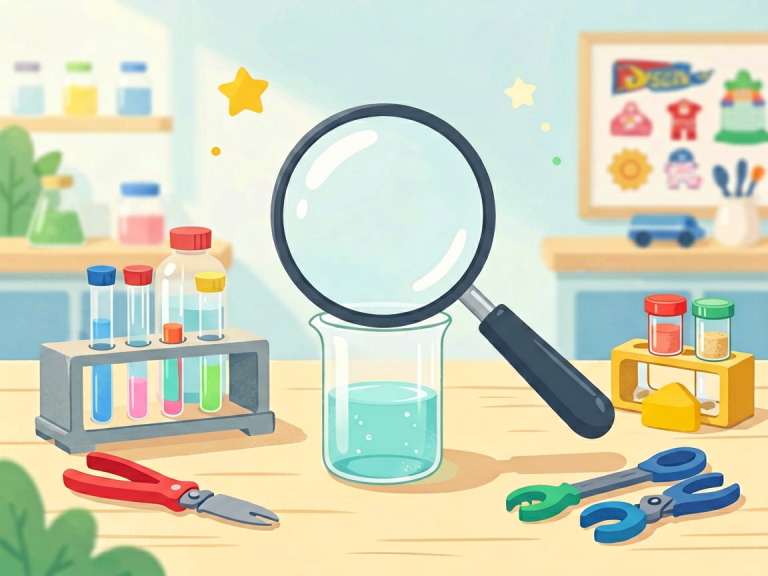
Navigating Toy Safety: A Parent Decision Guide for ASTM F963 Compliance
—
Introduction: Why ASTM F963 Matters to Every Parent
Every year, millions of toys enter households worldwide, bringing joy, learning, and creativity to children. Yet behind the bright colors and cheerful packaging lies a critical question: *Is this toy safe?* For parents, the answer is not always obvious. Hidden hazards—sharp edges, toxic chemicals, choking risks, and mechanical failures—can turn a beloved plaything into a source of injury. That is where ASTM F963 comes in. Developed by ASTM International (formerly the American Society for Testing and Materials), this standard is the cornerstone of toy safety in the United States. It sets rigorous requirements for mechanical, physical, electrical, thermal, and flammability properties, as well as chemical content limits. But what does that mean for a busy parent standing in a toy aisle? This guide is designed to decode ASTM F963, empower you with practical decision-making tools, and help you confidently choose toys that meet the highest safety benchmarks.
Whether you are shopping for a toddler’s first rattle or a school-age child’s science kit, understanding ASTM F963 can prevent accidents and give you peace of mind. Let’s break it down step by step.
—
What Is ASTM F963? A Comprehensive Safety Standard
ASTM F963 is not a single test but a collection of requirements that manufacturers must meet for toys intended for children under 14 years of age. It is recognized by the U.S. Consumer Product Safety Commission (CPSC) as a mandatory consumer safety specification. The standard covers everything from the physical integrity of the toy to the chemical composition of its materials.
Core Areas Covered by ASTM F963:
- Mechanical & Physical Hazards: Sharp edges, small parts, pinch points, projectiles, and stability.
- Flammability: Resistance to ignition and burning rate for soft toys, costumes, and other materials.
- Chemical Content: Limits on heavy metals (lead, mercury, cadmium) and phthalates in plastic, paints, and textiles.
- Electrical & Thermal Safety: Battery compartments, overheating components, and insulated wiring.
- Labeling & Warnings: Age grading, choking hazard warnings, and instructions for proper use.
Because ASTM F963 is updated periodically (the current version as of 2025 is F963-23), manufacturers are required to test their products against the latest edition. Toys that pass earn a certification—often indicated by a mark or a statement on the packaging. For parents, this mark is an immediate signal of due diligence.
—
How to Identify ASTM F963-Compliant Toys: A Step-by-Step Decision Guide
As a parent, you do not need to become a toy-safety engineer. Instead, you can rely on a few simple strategies to verify compliance.
Step 1: Look for the Conformance Statement or Mark
The most straightforward clue is a label stating “Conforms to ASTM F963” or “Meets ASTM F963 requirements.” This statement is often printed on the product’s packaging, the instruction manual, or the toy itself. Some manufacturers also display third-party certification marks from recognized labs such as UL, Intertek, or SGS. If you see this language, you can be confident that the toy has undergone rigorous testing.
Pro Tip: For toys sold online, scroll down to the product description or the “Safety Information” section. Reputable sellers will explicitly mention ASTM F963 compliance.
Step 2: Check the Age Recommendation
ASTM F963 requires that all toys have an age-grading label (e.g., “Ages 3+”). This is not arbitrary marketing; it is based on developmental abilities and potential hazards. For example, toys with small parts must be labeled for children over 3 years due to choking risks. When you see a toy labeled “0–3 months,” it must pass even stricter small-parts testing. Always match the age recommendation with your child’s actual stage—and ignore any temptation to “size up” prematurely.
Step 3: Examine the Physical Design Yourself
While no substitute for lab testing, your eyes and hands are powerful tools. Before buying, check for:
- Sharp edges or points: Run your finger along seams, joints, and plastic edges.
- Small parts: Can any component (eyes, buttons, wheels) be removed or swallowed? A toy that fits entirely inside a standard choke tube (about 1.25 inches in diameter) is a danger for children under 3.
- String length: Any cord longer than 12 inches can pose a strangulation risk for infants.
- Battery compartment: Must be secured with a screw or locking mechanism to prevent child access.
If a toy fails any of these visual inspections, do not purchase it, even if it claims to be ASTM F963 compliant—defects can slip through manufacturing.
Step 4: Use Online Databases and Recall Alerts
The CPSC maintains a searchable recall database. Before buying a used toy or a new model, glance at recent recalls. Many recalls involve toys that failed ASTM F963 standards due to choking hazards, excessive lead, or flammability. Bookmark CPSC.gov or use apps like Recalls Plus to stay informed.
—
Understanding Chemical Safety: Phthalates, Lead, and More
One of the most anxiety-inducing aspects of toy safety is chemical exposure. ASTM F963 sets strict limits for substances that can harm a child’s developing body. Here is what you need to know:
Heavy Metals (Lead, Cadmium, Mercury, Antimony, etc.)
- Lead is banned in accessible toy parts at levels above 100 ppm (parts per million) for paints and coatings, and 300 ppm for other materials. Chronic lead exposure can cause developmental delays and cognitive impairment.
- Cadmium and mercury have similar limits. Cheap, imported toys sometimes violate these limits because of low-quality manufacturing.
Phthalates
Phthalates are plasticizers used to soften PVC. They can leach out when a child mouths a toy. ASTM F963 restricts six phthalates (including DEHP, DBP, BBP) to no more than 0.1% by weight in any accessible plastic component. “Phthalate-free” marketing claims are common, but not all are verified. The safest approach is to choose toys made from alternative materials such as silicone, wood, or food-grade silicone for teething items.
What Parents Can Do: Avoid toys with a strong chemical smell. Wash new toys (especially plush items and hard plastic) with mild soap and water before first use. For older children, encourage hand washing after playing with painted or molded toys.
—
Age-Specific Considerations: From Infants to Pre-Teens
ASTM F963 tailors its requirements to different age groups because risks change as children grow.
Infants (0–12 Months)
- Key Hazards: Choking, suffocation, strangulation, and chemical ingestion.
- What to Look For: Seek toys with no small parts, no long cords, and smooth surfaces. Soft rattles, teething rings, and fabric blocks should be made from non-toxic materials and pass the “mouth test” (no parts that can be bitten off). Avoid toys with loose batteries or sharp corners.
- ASTM F963 Tip: Look for the “age 0+” label and ensure the toy has no accessible small parts or removable components that could fit in a baby’s mouth.
Toddlers (1–3 Years)
- Key Hazards: Small parts still dominate; also impact hazards from hard toys.
- What to Look For: Larger building blocks, push/pull toys, and simple vehicles should have edges that are rounded or padded. Music toys and shape sorters must not contain any detachable pieces smaller than 1.25 inches. Check that electronic toys have secure battery covers (screw-fastened is best).
- ASTM F963 Tip: The “small parts” test is especially critical here. Even a plastic bead that comes off a rattle can be fatal.
Preschool (3–5 Years)
- Key Hazards: Projectiles, sharp points, and magnets.
- What to Look For: Toy guns, archery sets, or any projectile must have soft tips and limited kinetic energy. Magnets must be either too large to swallow or completely encased—swallowed magnets can perforate intestines. Check for phthalate-free markers, crayons, and modeling clay.
- ASTM F963 Tip: Toys labeled “3+” may contain small parts that are safe for some but not all children. Use your judgment based on your child’s tendency to mouth objects.
School-Age (6–12 Years)
- Key Hazards: Electrical malfunction, chemical kits, and choking from craft components.
- What to Look For: Science and craft kits should list all ingredients and warn about chemical hazards. Electric toys (e.g., remote-control cars, drones) must comply with ASTM F963’s thermal and electrical sections. Batteries must be inaccessible or permanently sealed.
- ASTM F963 Tip: Even older children can be harmed by low-grade plastics containing BPA or phthalates. Choose wooden, metal, or certified BPA-free plastic toys when possible.
—
The Role of Third-Party Testing and Certification
ASTM F963 compliance is not self-declared; it requires testing by an independent, CPSC-accredited laboratory. Reputable manufacturers will submit samples to recognized bodies such as:
- Intertek
- SGS
- Bureau Veritas
- UL
These labs perform drop tests, torque tests, tension tests, chemical extraction, and flammability burns. A toy that passes all tests receives a certification report. Parents cannot access every report, but they can look for the lab’s logo or mention on the packaging. If a toy’s packaging is vague or lacks any compliance statement, proceed with caution.
Online Shopping: When buying from platforms like Amazon or eBay, prioritize sellers that explicitly list ASTM F963 compliance in the product specifications. Be wary of unbranded or extremely cheap toys from unknown sources—they may cut corners to reduce cost.
—
Common Misconceptions and Pitfalls
Even well-informed parents can be misled. Let’s clarify a few myths:
- “It says ‘non-toxic’ so it’s safe.” Non-toxic is not a regulated term. Only a lab test confirming ASTM F963 limits gives you real assurance.
- “Used toys are fine if they look clean.” Older toys (pre-2009) may contain lead paint or phthalates. The ASTM F963 standard has been updated multiple times; a used toy likely does not meet current limits. If you must buy secondhand, search for the model number and check CPSC recall lists.
- “Handmade or artisanal toys are exempt.” Even handmade or small-batch toys sold in the U.S. must comply with ASTM F963 if they are intended for children under 14. The responsibility lies with the seller, but you can ask the maker for their certification documents.
—
Final Checklist: Your Quick Decision Card
Here is a one-page checklist to take with you when shopping:
- [ ] Does the packaging state “Conforms to ASTM F963” or bear a certification mark?
- [ ] Is the age recommendation appropriate for my child’s current development?
- [ ] Does the toy have any small removable parts that could be swallowed?
- [ ] Are sharp edges, pinch points, or long cords absent?
- [ ] For electronic toys, is the battery compartment secured with a screw?
- [ ] Is the toy free of strong chemical odors?
- [ ] For plastic toys, is it labeled BPA-free or phthalate-free (with verification)?
- [ ] Have I checked the CPSC recall database for this product in the last 12 months?
If you answered “yes” to all questions, the toy is highly likely to be safe. If any answer is “no” or “unsure,” put it back on the shelf.
—
Conclusion: Empowering Your Parental Instincts
ASTM F963 is not a guarantee of absolute safety—no standard can eliminate every risk—but it is the strongest tool we have to reduce preventable injuries. By learning to spot compliance markers, understanding key hazards at each age, and staying informed through CPSC resources, you move from passive consumer to empowered protector. The next time your child reaches for a shiny new toy, you will know exactly what questions to ask. And when that toy passes the test, you can watch them play with the joy that only childhood can bring, secure in the knowledge that their safety is backed by rigorous science.
Remember: Safe toys are not the most expensive ones; they are the ones that meet ASTM F963. Use this guide to make every toy purchase a confident one.