Introduction: The Age of Why?
Title: The Blueprint of Wonder: Why Science and Engineering Kits Are Essential for 7‑Year‑Olds and How to Choose the Right One
At age seven, a child stands at a unique crossroads of cognitive development. Piaget called this the “concrete operational stage” – a time when logic begins to replace magical thinking, but abstract concepts still need tangible anchors. The world is no longer just a place to explore with the senses; it is a puzzle to be solved, a machine to be taken apart, and a question to be answered. This is precisely the moment when the right science kit or engineering kit can transform natural curiosity into a lifelong habit of inquiry.
The market, however, is flooded with colorful boxes promising to turn your child into a “little Einstein.” Many are overpriced, underwhelming, or developmentally inappropriate. In this article, we will dissect what makes a great kit for a 7‑year‑old, why hands‑on STEM learning matters at this age, and how parents and educators can use these tools to build confidence, resilience, and a genuine love for discovery.
The Neuroscience of Hands‑On Learning
Before diving into product recommendations, it is important to understand *why* a kit – rather than a textbook or a screen – is so powerful for a seven‑year‑old. At this age, the prefrontal cortex – the part of the brain responsible for planning, impulse control, and abstract reasoning – is still developing rapidly. However, the motor cortex and the sensory integration areas are already quite mature. This means that learning by doing, by touching, by assembling, and by failing is not a luxury; it is a biological necessity.
When a child connects two wires to make a light bulb glow, their brain fires in a pattern that no video or lecture can replicate. The kinesthetic feedback – the warmth of the bulb, the click of the connector, the sudden illumination – creates a multisensory memory trace that cements the concept of a closed circuit far more effectively than any diagram. Furthermore, the act of troubleshooting – “Why didn’t the bulb light? Is the wire loose? Are the batteries dead?” – exercises executive function. The child must hold a hypothesis in mind, test it, observe the result, and adjust. This iterative process is the very heart of scientific thinking, and it is best practiced with a physical kit that offers instant, unambiguous feedback.
What to Look for in a Kit for a 7‑Year‑Old
Not all kits are created equal. A 7‑year‑old is too advanced for the chunky plastic blocks of a toddler set but not yet ready for the fine‑motor demands of a high‑school soldering kit. Here are the key criteria:
1. Real Mechanisms, Not Just Play Pretend
The best kits use actual scientific principles, not just themed stickers. For example, a kit that builds a real working crank‑and‑axle car teaches mechanical advantage. A kit that uses a small motor to spin a propeller teaches energy conversion. Avoid kits where the only “science” is a plastic microscope that cannot focus or a chemistry set with only baking soda and vinegar. At age seven, children can handle small gears, simple circuits, and basic levers – provided the parts are large enough to manipulate safely.
2. Open‑Ended Possibilities vs. Step‑by‑Step Recipes
Many kits come with a single project – build a volcano, make a rocket. While these are fun, they often lead to a single “wow” moment and then sit on a shelf. The strongest kits offer a platform: a collection of components that can be assembled in multiple ways. For instance, a motorized building block system that allows the child to create a fan, a car, or a crane encourages creative problem‑solving. The best instruction manuals show a few examples and then say, “Now try your own design!”
3. Safety and Durability
Seven‑year‑olds are still learning impulse control. Kits should have no small parts that could be swallowed (though choking laws usually prevent this) and no toxic chemicals. Batteries should be secured in a protective housing. Sharp edges are unacceptable. More importantly, the kit must be robust enough to survive a drop or a forceful twist. A flimsy plastic gear that breaks on the first use teaches frustration, not science.
4. Clear, Visual Instructions with Minimal Text
While reading skills are improving at age seven, lengthy paragraphs are discouraging. The best instructions use exploded diagrams, numbered steps, and color‑coding. Some kits now include augmented reality apps that show a 3D model of the assembly. This is excellent – it bridges the spatial reasoning gap that some children struggle with.
The Engineering Mindset: Building a Bridge (Literally)
Let us examine a specific category: engineering kits. While science kits often focus on observation and experimentation (e.g., growing crystals, testing pH), engineering kits emphasize design, construction, and optimization. For a 7‑year‑old, engineering kits have a special appeal because they produce a tangible object that can be shown off and played with.
Consider a classic engineering challenge: building a bridge that can hold weight. A good kit for this age would include wooden or plastic beams, connectors, and a method for testing load (e.g., a small bucket and weights). The child is not just following steps; they are making decisions. *How many supports? Should I use a truss or an arch? Why did my bridge collapse at 200 grams but my friend’s held 500?* This is pure engineering logic, and it is deeply satisfying.
One of the most effective engineering kits on the market for this age group is the “Engino” system. It uses a slot‑and‑pin connection that is easy for small hands, yet the mechanical principles – gears, pulleys, levers – are real. Another excellent option is “Thames & Kosmos” series, which often combines a story (e.g., “Build a submarine to rescue a lost treasure”) with genuine physical principles like buoyancy and pressure. The key is that the child is required to think in three dimensions and to iterate.
The Science of Curiosity: Chemistry and Biology Kits
While engineering kits engage the builder, science kits engage the observer. For a 7‑year‑old, chemistry and biology kits can be magical – but they require careful supervision. The best ones avoid dangerous chemicals entirely. For example, a kit that uses red cabbage juice as a pH indicator, or that grows “worms” of polymer gel, is safe and fascinating. Biology kits that include a high‑quality magnifying glass or a simple microscope with prepared slides can open up a hidden world.
A standout is the “Kids First” line from Thames & Kosmos, which uses a storybook format to guide the child through experiments. Each experiment is tied to a character and a narrative, which helps maintain engagement. For instance, one kit teaches about the five senses by having the child perform taste tests, build a stethoscope, and create a “scent jar.” This is ideal because it respects the child’s developmental need for context and narrative.
However, a warning is necessary: many “chemistry sets” aimed at this age are little more than color‑changing powders and foam. The child learns that mixing things looks cool, but not *why* the reaction occurs. A truly educational kit will include a simple explanation – for example, that the foam is produced because a gas (carbon dioxide) is released. At age seven, children can grasp that gas takes up space and pushes the foam out. Do not underestimate their mental capacity; they just need the language simplified.
The Role of Failure and Resilience
Perhaps the most underrated benefit of a good science or engineering kit is that it teaches productive failure. In school, children are often punished for wrong answers. In a kit, the wrong answer is simply a data point. The bridge collapses; the circuit doesn’t light; the rocket doesn’t fly. Each failure is a clue. The child learns to ask: *What was different this time? What did I change?*
Parents can maximize this by sitting with the child and modeling the language of experimentation. Instead of saying, “You did it wrong,” say, “Interesting! Let’s look at what happened. Do you think the gear was too small?” This reframes the experience as a puzzle rather than a test. Over time, the child internalizes a growth mindset – a belief that intelligence is not fixed, but built through effort and iteration.
Screen Time vs. Kit Time: A False Dichotomy
Some parents worry that physical kits are old‑fashioned in an age of coding apps and iPads. The reality is that physical kits and digital tools are complementary, not competing. Many excellent kits now integrate a digital component – for example, a programming kit that uses physical blocks to control a robot. The “LEGO Boost” or “Sphero” systems allow a 7‑year‑old to build a physical model and then code its behavior on a tablet. This hybrid approach capitalizes on the best of both worlds: the tactile satisfaction of building and the logical precision of coding.
The danger arises only when the screen replaces the hands‑on experience entirely. A child who only swipes and taps misses the kinesthetic learning that wires the brain for spatial reasoning and fine‑motor control. A balance is essential. A good rule of thumb is that for every 30 minutes of screen‑based learning, the child should have at least 30 minutes of unplugged, hands‑on building or experimenting.
How to Choose the Right Kit for Your 7‑Year‑Old
Given the vast array of options, here is a practical decision tree:
- If your child loves taking things apart: Look for a disassembly kit (e.g., a “take apart” toy clock or a simple machine with visible gears). The “4M” brand has a “Tin Can Robot” that teaches recycling and mechanics.
- If your child is artistically inclined: Choose a kit that blends science and art, such as a “spin art” machine that teaches centrifugal force, or a “crystal growing” kit where the crystals are used to make ornaments.
- If your child is a tinkerer: Go for an open‑ended building set like “K’NEX” or “Magna‑Tiles” (though the latter is better for ages 4–6, the larger sets are still engaging for 7‑year‑olds with more complex builds).
- If your child is a perfectionist: A kit with a high success rate, like a simple circuit kit that lights up an LED, will build confidence. Avoid kits with fragile parts that break easily.
- If your child loves animals: A “cross‑section” model of a shark or a frog, or a life‑cycle kit that includes a real (safe) insect habitat, can be riveting.
Conclusion: The Gift That Keeps Discovering
A science or engineering kit for a 7‑year‑old is not a toy. It is a tool for thinking. It is a laboratory in a box, a workshop on a table. When chosen carefully, it can spark a passion that lasts a lifetime – whether that passion becomes a career in engineering, a hobby in robotics, or simply the confidence to ask “why” and “what if” in every aspect of life.
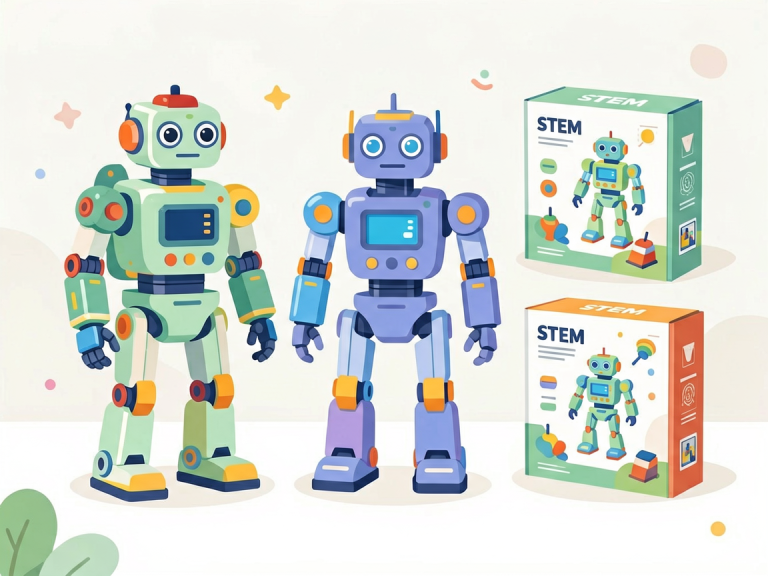
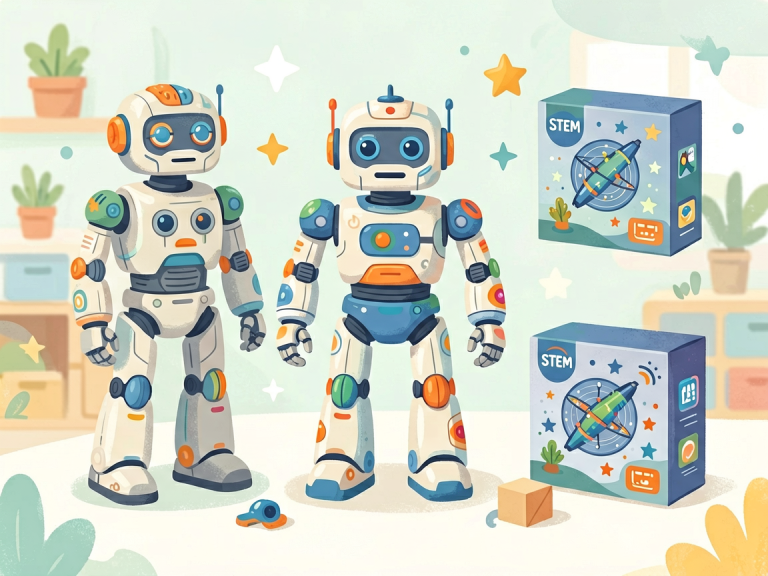
The best kit does not come with a manual that says “follow these steps.” It comes with a manual that says, “Here is how the world works. Now, what do you want to build?” In an era of standardized tests and passive entertainment, that gift is priceless. So next time you see a box labeled “STEM,” look inside not at the parts, but at the possibilities. For a 7‑year‑old, those possibilities are infinite – and they are just waiting to be connected, one wire, one gear, one hypothesis at a time.