Less Is More: How Parents Can Benefit from Choosing Fewer Toys
Introduction
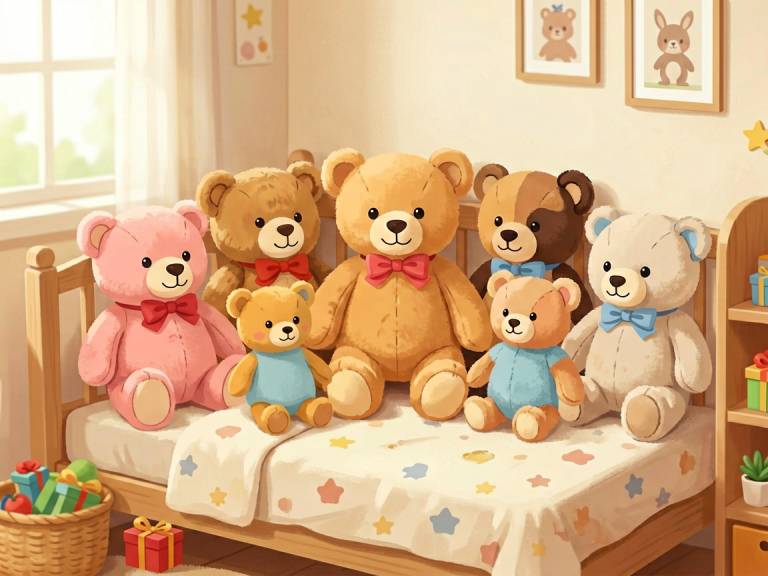
Every parent knows the scene: a birthday party ends, and the living room floor disappears under a mountain of plastic, blinking, and beeping objects. Within a week, most of these toys are abandoned in corners, their novelty worn off. In an age of consumer abundance, children often own dozens—even hundreds—of toys. Yet a growing body of child development research suggests that less truly can be more. The key lies not in how many toys a child possesses, but in how parents can use the deliberate act of choosing fewer toys to foster deeper focus, creativity, independence, and gratitude. This article explores the powerful strategies parents can adopt to transform their children’s play environments and developmental outcomes by intentionally limiting toy quantity while maximizing quality.
The Case for Fewer Toys: Why Quality Trumps Quantity
Boosting Attention Span and Deeper Engagement
One of the most immediate benefits of fewer toys is a measurable improvement in a child’s ability to sustain attention. When a room is cluttered with dozens of options, the child’s brain is constantly scanning, switching focus from one item to the next. Researchers at the University of Toledo found that toddlers in a room with only four toys played nearly twice as long with each toy, demonstrating richer, more complex play patterns compared to peers in a room with sixteen toys. With fewer distractions, children are more likely to enter a state of “flow”—that immersive, joyful concentration where learning happens naturally. Parents who adopt the strategy of rotating a small selection of toys can directly nurture this capacity for deep engagement, a skill that translates directly into better academic performance and self-regulation later in life.
Fueling Creativity and Problem-Solving
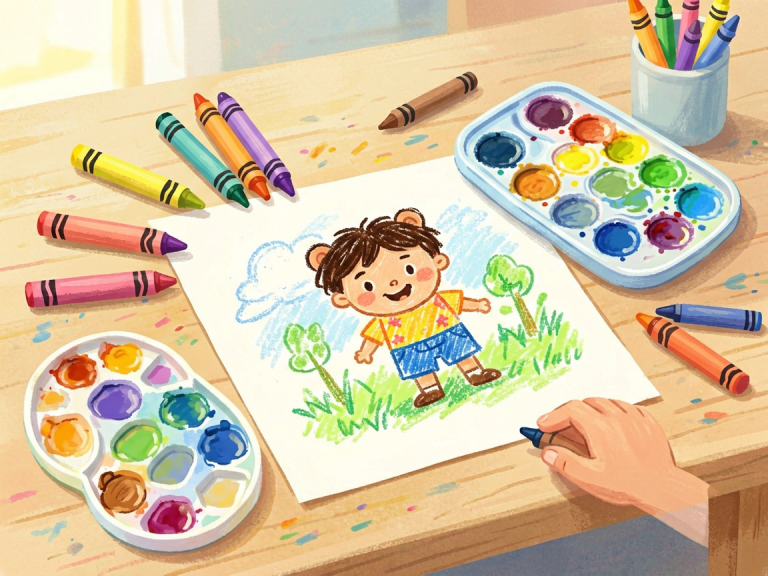
Paradoxically, limiting toys often expands the imagination. When a child has only a few open-ended items—blocks, a set of figurines, art supplies—they must invent stories, transform objects, and solve problems without relying on pre-programmed functions. A plastic dragon that breathes fake fire offers only one way to play; a simple set of wooden blocks can become a castle, a spaceship, a bridge, or a pet’s bed. By choosing fewer toys, parents force children to become active creators rather than passive consumers. This type of play builds executive function skills such as planning, flexibility, and self-directed learning. In a world that increasingly demands innovation, the ability to make something out of nothing is a priceless gift.
Reducing Overwhelm and Promoting Calm
Toys are not just playthings; they are visual and cognitive stimuli. An overloaded play area can cause sensory overwhelm, leading to irritability, shorter play sessions, and even tantrums. Many parents have noticed that their children play more peacefully after a major toy purge. The minimalism movement in parenting—often called “toy minimalism”—is built on the observation that an orderly, quiet space helps children feel secure and focused. By actively choosing fewer toys, parents create a physical environment that supports emotional regulation. Moreover, when children can easily see and access each toy, they are more likely to take care of it, put it away, and feel a sense of ownership over their belongings.
Strategies for Choosing Fewer Toys: A Practical Guide for Parents
Adopt the “Open-Ended” Test
Not all toys are created equal. The most powerful criterion for selection is whether a toy can be used in multiple ways. Open-ended toys—blocks, play dough, dolls, art paper, loose parts (like stones and pine cones), building systems, and simple vehicles—invite endless variation. Parents should ask: “Can my child use this toy to create a new game every day, or does it dictate only one activity?” For example, a remote-control car largely does one thing; a set of magnetic tiles can become a house, a robot, a tower, or a maze. Prioritizing open-ended toys ensures that a small number of items provides a large scope of play possibilities. This is the essence of choosing fewer toys wisely.
Implement a Rotation System
One highly effective method is the toy rotation system. Parents divide their child’s toys into several curated sets—say, four or five sets—stored out of sight. Only one set is available at a time, rotated every week or two. This keeps play fresh and exciting without requiring new purchases. Children often engage with a rotated toy as if it were new, rediscovering its possibilities. Parents can use this system to align toys with developmental stages or seasonal interests. For example, a spring set might include outdoor exploration tools, while a winter set focuses on puzzles and art. The rotation system naturally enforces the principle of fewer toys at any given moment, and parents can carefully curate each set to maximize learning and fun.
Involve Children in the Selection Process
Parents often make the mistake of imposing toy reduction unilaterally, which can provoke resistance. A more successful approach is to collaborate with the child. Even young children can participate in sorting: “Which toys do you play with the most? Which ones are broken or missing pieces?” Turn it into a game—a “toy audit” where each item is evaluated for its current value. For toys that are outgrown or unused, parents can involve children in donating them to other children in need. This teaches generosity and emotional detachment from material possessions. By giving children a voice, parents help them internalize the value of fewer, more meaningful toys rather than feeling punished.
Establish Clear Gift-Giving Boundaries
A major source of toy overload comes from well-meaning relatives and friends. Parents need to proactively manage this by communicating their philosophy. For example, they can create a “wish list” of specific, high-quality toys that align with their family values, or request contributions to experiences (museum passes, zoo memberships, art classes) instead of physical gifts. Another tactic is to suggest a “one in, one out” rule: when a new toy enters the home, an old one must leave. This keeps the total number stable and teaches children that every new acquisition has a cost. By setting these boundaries, parents exercise control over the toy environment without appearing ungrateful.
Implementing the Change: A Step-by-Step Process
Step 1: Declutter with Purpose
Begin by removing all toys from the play area. Sort them into three categories: keep, donate, and discard. The “keep” pile should be ruthlessly curated. Ask: Does this toy spark joy? Is it age-appropriate? Is it in good condition? Does it encourage active, creative play? A good rule of thumb is to keep no more than 15–20 types of toys (not individual pieces) for a preschooler. For older children, the number may be slightly higher but should still fit easily into one or two bins. Parents should store the keep pile in a closet or basement, then bring out only a small subset.
Step 2: Create an Inviting Play Space
After decluttering, arrange the chosen toys in clear, low containers with labels or pictures. A tidy, aesthetically pleasing space sends a message of respect and calm. Avoid large toy boxes where items become buried and forgotten. Use open shelving with each toy category visible. The fewer toys on display, the easier it is for the child to choose and clean up. A well-organized space also makes it easier for parents to observe which toys are truly loved and which can be removed in the next rotation.
Step 3: Introduce the Concept Gently
Explain to the child, using simple language, that you are giving some toys a “vacation” to make room for more fun playing. “We are going to keep just a few special toys out so you can really enjoy them. The others will come back later.” The first few days may involve some protest, but parents should hold firm. Most children adapt quickly and begin to show greater creativity and focus. Parents can reinforce the positive change by praising deep play: “I love how you spent a whole hour building that tower!”
Step 4: Replace Boredom with Experiences
When children complain of boredom (a common early reaction), resist the urge to buy more toys. Instead, offer experiences: bake cookies, go for a nature walk, build a fort with blankets, do a science experiment. Boredom is actually a creative catalyst—it forces children to invent their own entertainment. By reducing toys, parents are indirectly teaching their children to find joy in the world around them, not just in packaged products. Over time, children learn to rely on their own imagination, which is the most powerful toy of all.
The Long-Term Impact: What Fewer Toys Really Give Children
Cultivating Gratitude and Care
When a child has fewer possessions, each one becomes more precious. A child who owns only six dolls will treat each one with more affection and responsibility than a child who owns thirty. Parents report that after reducing toy numbers, children are more likely to fix broken toys, keep them organized, and express genuine appreciation for new gifts. This sense of stewardship is a foundational life skill. In a culture of abundance, the deliberate act of choosing fewer toys teaches children that value is not measured by quantity but by how we use and respect what we have.
Strengthening Family Connections
Interestingly, fewer toys often lead to more family interaction. When electronic, battery-powered toys are minimized, children are more likely to seek out parents for games, reading, and conversation. The home becomes a place of shared projects rather than isolated consumption. Parents who embrace the fewer-toys approach often find themselves spending less time cleaning up messes and more time playing alongside their children. The quality of these interactions—full of laughter, storytelling, and connection—cannot be replaced by any number of shiny packages.
Preparing for a Sustainable Future
Finally, modeling conscious consumption is a valuable lesson for the next generation. By choosing fewer toys, parents demonstrate that happiness does not come from accumulation. Children raised with this mindset are more likely to become adults who make thoughtful purchasing decisions, appreciate experiences over things, and care for the environment. In an era of climate crisis and waste, teaching children to love and preserve what they have is an act of profound responsibility.
Conclusion
Choosing fewer toys is not about deprivation; it is about intention. Parents who embrace this approach are not withholding joy from their children—they are expanding the capacity for joy in deeper, more meaningful ways. By curating a small collection of high-quality, open-ended toys, implementing rotation systems, involving children in decisions, and setting firm gift boundaries, families can transform playtime into a rich developmental experience. The result is a child who plays longer, imagines bigger, cares more deeply, and connects more authentically with the people around them. In the end, the best toy any child can have is a parent who understands that sometimes, the greatest gift is the wisdom to give less.