Less Is More: 8 Critical Mistakes to Avoid When Choosing Fewer Toys for Your Child
Introduction
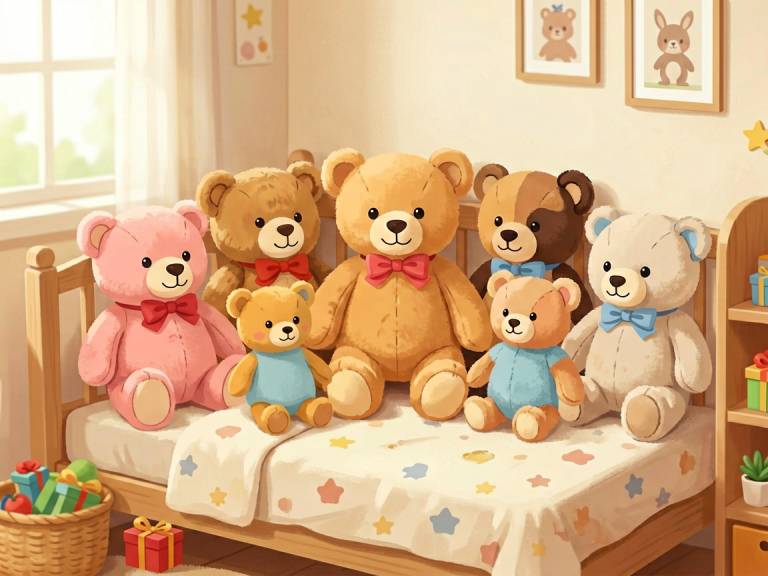
In recent years, the concept of “fewer toys” has gained significant traction among parents, educators, and child development experts. The idea is simple: a smaller, more intentional collection of playthings can foster deeper creativity, longer attention spans, and less overwhelming clutter. Many families have embraced toy rotation systems, minimalist nurseries, and the “one in, one out” rule. Yet, despite good intentions, the process of reducing toys is often fraught with missteps. Parents may inadvertently create frustration, resistance, or even a sense of deprivation in their children. Choosing fewer toys is not merely about discarding plastic dinosaurs or donating half-filled bins; it is a psychological, emotional, and developmental shift. To make this transition successful, it is essential to understand the common pitfalls—and how to avoid them. This article explores eight key mistakes that parents frequently make when paring down their children’s toy collections, offering practical, research-backed solutions for each. By sidestepping these errors, you can transform your child’s playroom into a space of calm discovery, where every toy truly matters.
—
Mistake #1: Confusing “Fewer” with “Boring”
One of the most pervasive misconceptions is that a smaller number of toys automatically leads to boredom, whining, or a lack of stimulation. In reality, the opposite is often true. When children are surrounded by dozens of options, their brains become overloaded, leading to shallow engagement and rapid switching between activities. Reducing toys can actually enhance focus and imaginative play. However, many parents, anxious that their child will feel deprived, replace quantity with “boring” or overly simple items. For instance, they might keep only wooden blocks and a single doll, discarding anything that lights up or makes noise. While simplicity has its merits, stripping away all novelty can backfire.
How to avoid it: Aim for a curated selection that balances open-ended toys (like blocks, art supplies, and loose parts) with a few high-interest items that align with your child’s current passions. If your child loves trains, keep a small set of tracks and a couple of engines rather than a sprawling railway empire. The goal is not to eliminate joy but to reduce noise. Introduce the reduction gradually, and observe your child’s play: if they seem genuinely disengaged, you may have removed too many “spark” toys. A well-chosen smaller collection should feel *inviting*, not sterile.
—
Mistake #2: Making the Reduction a Sudden, Top-Down Decision
Picture this: one Saturday morning, while your child is at a playdate, you fill three garbage bags with toys and haul them to the donation center. When your child returns, they are greeted by a half-empty shelf and a sense of betrayal. This approach—abrupt and unilateral—is perhaps the most common error in the “fewer toys” movement. Children, especially those between the ages of two and eight, form strong attachments to their belongings. Even toys they haven’t touched in months can carry emotional significance. A sudden purge can trigger anxiety, resentment, and territorial behavior. Moreover, it denies the child an opportunity to learn about decision-making and letting go.
How to avoid it: Involve your child in the process from the start. Explain that your family is going to “make the toy collection more special” by keeping only the ones that are truly loved and played with. Use a three-box system: “Keep,” “Maybe,” and “Give Away.” Let your child decide where each toy goes, offering gentle guidance (“Remember, this puzzle is missing pieces—should it go to the ‘give away’ box so another child can enjoy the pieces it still has?”). For the “Maybe” box, store it out of sight for a month. If your child doesn’t ask for any of those toys, they can be donated together. This approach respects their autonomy and builds decision-making skills while achieving the same minimal end result.
—
Mistake #3: Focusing Only on “Educational” Toys and Ignoring Play Value
In the quest to choose fewer toys, some parents swing to the opposite extreme: they keep only what they deem “educational” or “developmental.” Magnetic tiles, phonics flashcards, and science kits take center stage, while stuffed animals, action figures, and toy cars are banished. This is a critical error. Play is not merely a vehicle for learning letters and numbers; it is a vehicle for emotional processing, social role-play, and pure joy. A teddy bear might teach empathy; a plastic dinosaur might inspire a story about volcanoes. By removing whimsy and imaginative props, you risk turning the playroom into a classroom, which can lead to resistance and burnout.
How to avoid it: Evaluate each toy not just for its “learning potential” but for its *play potential*. Ask: Does this toy invite open-ended use? Does it support multiple types of play (e.g., solitary, parallel, cooperative)? Does it bring a smile to my child’s face? A healthy, reduced collection should include a mix of categories: building/construction, pretend play, art, movement, and comfort objects. Even a simple set of plastic animals can spark hours of storytelling. Remember that “educational” toys are only effective if they are actually used—and an unused phonics game takes up space that could hold a beloved puppet.
—
Mistake #4: Overlooking the Importance of Toy Rotation
Choosing fewer toys does not mean keeping the same seven items out forever. Without variety, even the most thoughtfully selected collection can become stale. Children’s interests wax and wane; a toy that was fascinating in January may feel invisible by March. Many parents who reduce toys make the mistake of assuming that a static, small set will suffice indefinitely. Instead, they end up witnessing their child repeatedly sigh and say, “I have nothing to play with,” because the available items no longer spark curiosity.
How to avoid it: Implement a toy rotation system. Divide your child’s total collection into three or four groups (based on category, complexity, or theme) and store the extras in a closet or bin. Rotate the groups every two to four weeks, or whenever you notice a dip in engagement. This keeps the available choices fresh while still maintaining the overall principle of “fewer toys.” The child experiences novelty without accumulation. Moreover, rotation helps you identify which items are truly beloved—if a toy is consistently ignored across multiple rotations, it may be time to let it go. The key is to maintain a small *active* inventory while still having a broader pool to draw from.
—
Mistake #5: Neglecting the Child’s Age and Developmental Stage
A one-size-fits-all approach to toy reduction can lead to frustration. A toddler’s play needs differ dramatically from a six-year-old’s. For example, a very young child thrives on cause-and-effect toys, sensory objects, and simple manipulatives. If you strip those away in favor of advanced board games or craft kits, the child may become irritable or disengaged. Conversely, an older child may outgrow the rattles and stacking cups that once fascinated them. Keeping age-inappropriate toys not only wastes space but can also hinder development by either under-challenging or overwhelming the child.
How to avoid it: Conduct a periodic “age audit” of your child’s toy collection. Sort toys into three piles: “still developmentally appropriate,” “too advanced but will be useful later,” and “outgrown.” Donate or pass along the outgrown items immediately. Store the “too advanced” items in a clearly labeled box for future rotation. For the toys that stay, ensure they match your child’s current abilities and interests. For instance, a three-year-old benefits from simple puzzles with large knobs, while a five-year-old may enjoy 24-piece puzzles. Similarly, a seven-year-old might relish a complex building set, but a toddler would only become frustrated. Tailoring the collection to the child’s stage ensures that “fewer toys” means “better fits.”
—
Mistake #6: Banishing All “Junk” Toys Too Aggressively
The minimalist movement often demonizes certain categories: plastic fast-food giveaways, cheap party favors, or battery-operated trinkets. While it is true that these items often lack durability and open-ended play value, eliminating them entirely can be a mistake. These “junk” toys frequently hold sentimental value for children—a toy from a birthday party, a prize from a carnival, a happy meal figure from a special outing. More importantly, children often use such items in highly creative ways, transforming a cheap plastic ring into a treasure map marker or a tiny dinosaur into the hero of an epic saga.
How to avoid it: Instead of a blanket ban on low-cost or novelty toys, apply a reasonable limit. For instance, allow your child to keep a small “treasure box” (e.g., a shoebox) specifically for these sentimental items. They can have up to 10–15 pieces. If the box overflows, your child must choose which to keep and which to pass along. This teaches prioritization and respect for memories while preventing a sea of plastic clutter. It also avoids the emotional backlash that comes from confiscating a cherished memento.
—
Mistake #7: Ignoring the Child’s Input on What Stays
Even when parents involve children in the donation process, they sometimes override the child’s preferences. “No, you can’t keep that broken truck—it’s useless,” or “That dress-up cape is too small, you’ll never wear it.” Such statements dismiss the child’s emotional connection to the object. A worn-out stuffed animal with a missing eye may be the child’s most trusted confidant. A scratched plastic sword might be a symbol of bravery. If the parent makes all final decisions, the child feels powerless and may become distrustful of the whole “fewer toys” initiative.
How to avoid it: Establish a clear rule together: the child gets the final say on a small number of “special” items (e.g., five favorite toys that cannot be given away without their agreement). For the rest, you can negotiate. Ask questions: “What do you love most about this toy?” or “If we keep it, can you think of a game you’ll play with it today?” This dialogue helps children articulate their attachments and often leads them to voluntarily release items they realize they don’t actually need. Respect their choices, even if they seem illogical to you. Over time, they will learn to become more selective on their own.
—
Mistake #8: Failing to Replace Quantity with Quality of Experience
Finally, the most profound mistake is to reduce toys without enhancing the *context* of play. Fewer toys alone do not guarantee deeper engagement. If a child has only a few blocks but no time, no parental interaction, and no space to spread out, the blocks will gather dust. The purpose of owning fewer toys is to create room—physical and mental—for richer play experiences. Parents who simply toss out half the toys and then continue with screen-heavy schedules or over-structured afternoons miss the point entirely.
How to avoid it: Use the newfound space to create inviting play zones. A small rug, a basket of books, a low table for art, and a clear area for building can make a few toys feel abundant. Most importantly, dedicate time for unstructured play. Join your child on the floor occasionally, not to instruct but to observe and participate. Ask open-ended questions: “What is your castle’s story today?” or “Can you build a bridge tall enough for this car?” The real magic of fewer toys unfolds when they are placed in a nurturing, unhurried environment. Remember that the goal is not a barren playroom but a *meaningful* one.
—
Conclusion
Choosing fewer toys is an act of curation, not deprivation. It is a conscious decision to value depth over breadth, imagination over accumulation, and connection over clutter. Yet, as with any meaningful change, the path is lined with potential errors. From sudden purges and rigid educational biases to ignoring a child’s emotional attachments, these mistakes can undermine the very benefits you seek. By recognizing and avoiding these eight pitfalls, you can create a play environment that is both minimal and rich—a space where each toy earns its place, and where your child’s creativity can truly flourish. The fewer toys you choose, the more attention you must pay to the *how* of your selection. Do it thoughtfully, and the rewards will be measured not in square feet of empty shelf space, but in hours of absorbed, joyful play. After all, less is not merely more—it can be everything.
*(Word count: ~1,560)*