Introduction
Title: Building Curiosity or Constructing Solutions? A Comparative Guide to Science Kits vs. Engineering Kits for Five-Year-Olds
The preschool years are a golden window for cognitive development, and parents today are flooded with educational toys promising to turn their little ones into little Einsteins or budding engineers. Among the most popular categories are science kits and engineering kits, often marketed side by side on toy store shelves. But are they interchangeable for a five-year-old? Not at all. While both aim to foster STEM learning, they engage fundamentally different modes of thinking, play, and skill-building. Understanding the distinction is crucial for parents, educators, and gift-givers who want to match the right kit to the child’s developmental stage, temperament, and learning goals. This article will dissect the two types of kits, compare their strengths and weaknesses, and offer practical guidance for choosing the most appropriate one for a lively, curious five-year-old.
Defining the Two Worlds: Science Kits vs. Engineering Kits
Before diving into comparisons, it is essential to define what these kits typically contain and what kind of play they inspire.
What Are Science Kits for Five-Year-Olds?
Science kits for young children are designed to introduce basic scientific concepts through observation, experimentation, and wonder. They lean heavily on cause-and-effect relationships and often involve elements like mixing colors, growing crystals, observing insects, or simple chemical reactions (e.g., baking soda and vinegar volcanoes). At age five, these kits rarely require precise measurement or complex procedures. Instead, they emphasize open-ended exploration and the joy of asking “What happens if…?” A typical science kit might include a plastic magnifying glass, test tubes, pipettes, colorful powders, and a guide with simple experiments. The focus is on *discovery* rather than *construction*.
What Are Engineering Kits for Five-Year-Olds?
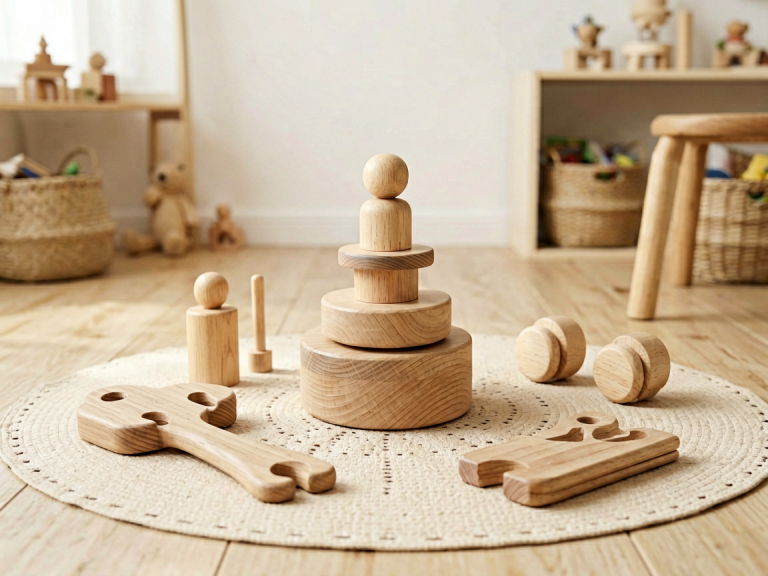
Engineering kits, in contrast, are about building, designing, and problem-solving under constraints. They introduce foundational concepts of structural integrity, balance, mechanical advantage, and spatial reasoning. For a five-year-old, these kits often take the form of large, safe building blocks (like LEGO Duplo or wooden plank sets), magnetic tile builders, or simple gear-and-pulley sets. Some kits include instructions to build a specific model—a bridge, a car, a crane—while others are entirely open-ended. The core activity involves assembling parts into a functional whole, testing it, and iterating. Engineering play is about *creation* and *function*, not just observation.
How They Align with a Five-Year-Old’s Developmental Stage
A child of five is in a vibrant stage of preoperational thinking, as described by Piaget. They are highly imaginative, beginning to understand symbolic representation, but still struggle with logical reasoning and conservation of matter. Let’s see how each kit type interacts with these cognitive traits.
Science Kits: Fueling Wonder and Vocabulary
Science kits are particularly effective at cultivating a sense of awe. When a five-year-old sees water “magically” change color, or a balloon inflate without air, their natural curiosity is ignited. These kits do not demand sustained logical reasoning; rather, they rely on sensory engagement and repetitive surprise. They also introduce rich vocabulary: *evaporate*, *dissolve*, *observe*, *predict*. At this age, a child may not fully grasp the underlying chemistry, but they learn that the world has invisible laws waiting to be discovered. One potential drawback is that some children may become passive observers—watching mom or dad perform the experiment—rather than active participants. The best science kits for five-year-olds include child-safe materials and simple steps that the child can perform themselves, with minimal adult intervention.
Engineering Kits: Building Persistence and Spatial Skills
Engineering kits challenge a five-year-old’s fine motor skills and executive function. To snap two blocks together or balance a tower, a child must plan, adjust, and persist through failure. This is not always easy for a five-year-old, whose frustration tolerance is still developing. However, this is precisely where engineering kits shine: they teach resilience. When a tower collapses, the child learns that it’s not a catastrophe—it’s a clue. They try a different base, a different arrangement. Engineering kits also dramatically improve spatial reasoning—the ability to visualize how objects relate in three dimensions. Research shows that early spatial play predicts later success in math and science. Furthermore, engineering kits often produce a tangible, usable result: a working car, a stable house. This gives the child a clear sense of accomplishment.
Key Differences in Learning Outcomes
Let’s break down the core learning outcomes of each kit type for a five-year-old.
Curiosity vs. Creativity
Science kits primarily stimulate curiosity—the desire to ask questions. “Why is this slime stretchy?” “Where did the water go?” They nurture a scientific mindset of inquiry. Engineering kits, on the other hand, stimulate creative problem-solving. “I want to make a bridge that holds my toy dinosaur. How can I make it stronger?” While both are valuable, a child who naturally loves asking “why” may gravitate toward science, while a child who loves building may prefer engineering. The best scenario is exposure to both.
Structured vs. Unstructured Play
Most science kits for this age come with step-by-step instructions for specific experiments. This is beneficial for developing following directions but can be limiting if the child wants to deviate. Engineering kits often offer more flexibility. A magnetic tile set, for instance, can be used to build a castle today and a rocket tomorrow. However, some engineering kits (like those that build a single model) are equally structured. Parents should look for kits that allow for open-ended construction in addition to guided builds.
Social and Emotional Growth
Science experiments often work well as a parent-child shared activity because the parent can explain concepts and supervise safety. This builds communication and bonding. Engineering play can be solitary or collaborative. When children build together, they learn negotiation, turn-taking, and shared problem-solving. Both are beneficial, but engineering kits may contribute more directly to collaboration skills because children have to physically share space and materials to create a joint structure.
Age-Specific Considerations for Safety and Frustration
Five-year-olds are notorious for putting things in their mouths, and small parts are a choking hazard. Science kits may contain powders, liquids, or small measuring spoons. Parents must ensure that all materials are non-toxic and that the child understands not to taste anything. Engineering kits often contain dozens of small pieces—magnetic tiles, plastic screws, wooden blocks. While much safer than chemistry sets, they still require supervision to prevent scattering or loss. Additionally, engineering kits that require precise alignment (like some gear sets) can frustrate a five-year-old whose fine motor control is still maturing. A kit that is too difficult can lead to tears and abandonment. Parents should look for engineering kits labeled “starter” or “beginner” with large, easy-to-handle components (e.g., Duplo gears, large magnetic rods, or cardboard building challenges).
Which One Should You Choose? A Practical Decision Guide
There is no one-size-fits-all answer. The choice depends on the child’s current interests, temperament, and the learning environment. Here are a few scenarios to help you decide.
Choose a Science Kit If…
- Your child constantly asks “why” and loves mixing food coloring in water.
- You want to introduce the scientific method in a very loose, playful way.
- Your child enjoys sensory play—slime, goo, sand, water.
- You are looking for a activity that you can do together with clear, short steps (5–10 minutes per experiment).
- The child is easily frustrated by physical construction and prefers watching things happen.
Choose an Engineering Kit If…
- Your child already enjoys stacking blocks, puzzles, and building forts.
- You want to improve patience, spatial reasoning, and fine motor skills.
- The child prefers creating something they can play with afterward (a car, a house, a robot).
- You want to encourage independent play—many engineering kits (like magnetic tiles or LEGO) allow a child to build alone for 20–30 minutes.
- The child is ready to handle occasional failure and try again with gentle encouragement.
The Ideal Combination: A Balanced STEM Diet
Ultimately, the most developmentally appropriate approach is not to pick one over the other, but to rotate both types of kits throughout the year. A five-year-old’s brain thrives on variety. One week they can explore the magic of melting ice cubes with salt (science), and the next week they can construct a marble run (engineering). Some kits even blend both—for example, a water science kit that includes pipes and cups to build a water course. Look for hybrid kits that require the child to build a structure (engineering) and then conduct an experiment with it (science). This integration mirrors how real-world problem-solving works: scientists build instruments, and engineers test hypotheses.
Conclusion: More Than Just a Toy
Selecting between a science kit and an engineering kit for a five-year-old is not about ranking one as “better.” It is about understanding the unique developmental gifts each one offers. Science kits open the door to wonder, observation, and the joy of discovering how the natural world works. Engineering kits lay the foundation for logical thinking, perseverance, and the satisfaction of turning an idea into a physical reality. Both are essential seeds for future STEM literacy. The most important factor is the quality of the adult–child interaction: the parent who sits beside the child, asks open-ended questions, and celebrates both success and failure will turn any kit—science or engineering—into a powerful learning experience. So don’t worry too much about the label. Pick the kit that makes your five-year-old’s eyes light up, and then sit down and play alongside them. That is where the real magic happens.