Introduction
Title: The Power of Independent Play: A Comprehensive Guide for Parents to Cultivate Self-Reliance, Creativity, and Emotional Resilience
In the bustling rhythm of modern parenting, it is all too easy to fall into the trap of constant engagement. Many parents feel that their role is to be a perpetual playmate, entertainer, and problem-solver for their children. Yet a growing body of developmental research points to a different, profoundly valuable practice: independent play. Independent play refers to the time a child spends alone, self-directed, and without adult intervention. It is not about neglect or isolation; rather, it is a deliberate strategy that allows children to explore their own interests, develop problem-solving skills, and build an inner world of imagination. For parents, learning how to use independent play effectively is not only a gift to their children but also a pathway to a more balanced family life. This article offers a detailed, research-backed roadmap for parents who wish to harness the power of independent play, from setting up the right environment to navigating common challenges.
—
Why Independent Play Matters: The Developmental Benefits
Independent play is far more than a convenient way for parents to get chores done. It is a critical component of healthy child development that supports cognitive, emotional, and social growth.
Cognitive Development and Executive Function
When a child plays alone, they must make decisions, set goals, and self-regulate their attention. For instance, a toddler stacking blocks without guidance learns to experiment with balance, cause and effect, and spatial reasoning. A preschooler building a fortress with cushions organically practices planning and sequencing. These activities strengthen executive functions—the brain’s command center for impulse control, working memory, and mental flexibility. Studies have shown that children who engage in frequent independent play demonstrate stronger self-regulation and better academic readiness.
Emotional Resilience and Self-Soothing
Independent play teaches children to tolerate mild frustration and boredom. When a puzzle piece doesn’t fit or a tower collapses, there is no adult to instantly fix it. The child must decide: try again, adjust, or move on. This process builds grit and emotional regulation. Moreover, playing alone can be a powerful self-soothing tool. A child who learns to retreat into imaginative play when feeling overwhelmed gains a lifelong coping mechanism for stress.
Creativity and Intrinsic Motivation
Without an adult directing the narrative, children become the architects of their own worlds. A cardboard box can become a spaceship, a castle, or a time machine. This free-form creativity is the foundation of innovative thinking. Independent play also fosters intrinsic motivation—children play because they *want* to, not because they are praised or rewarded. This internal drive is essential for long-term passion and perseverance.
Social Skills (Counterintuitively)
Paradoxically, children who are comfortable playing alone often become more socially competent. They learn to entertain themselves, reducing clinginess and allowing them to approach peer interactions from a place of security rather than neediness. They also develop the ability to take turns in their own imaginative scripts, which later translates into better collaboration with others.
—
Creating an Environment That Invites Independent Play
Parents cannot simply tell a child to “go play” and expect immediate results. The physical and psychological environment must be intentionally designed to support solo exploration.
Designate a Safe, Accessible Play Space
The area should be child-proofed so that parents can step back without constant worry. A corner of the living room, a dedicated playroom, or even a well-organized bedroom can work. The key is that the child feels ownership of the space. Use low, open shelves with a limited selection of toys—too many options overwhelm young children and actually discourage sustained play. Rotate toys weekly to keep interest alive.
Choose Open-Ended Toys Over Prescriptive Ones
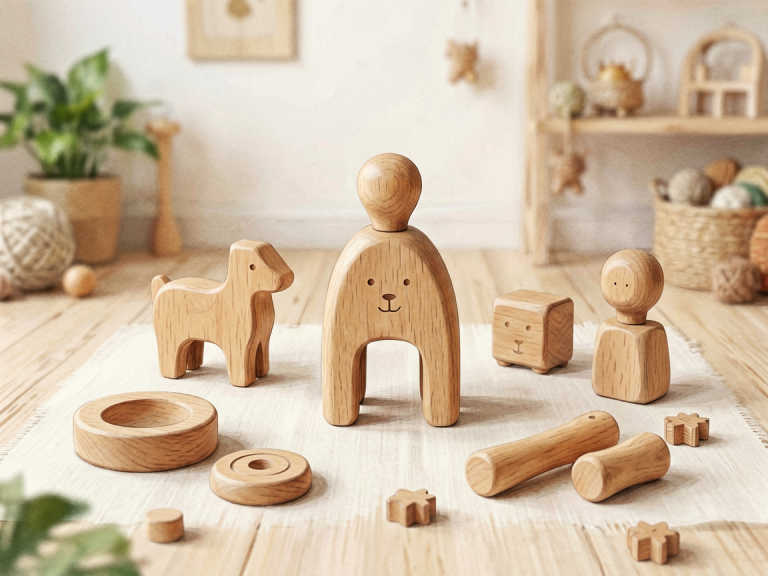
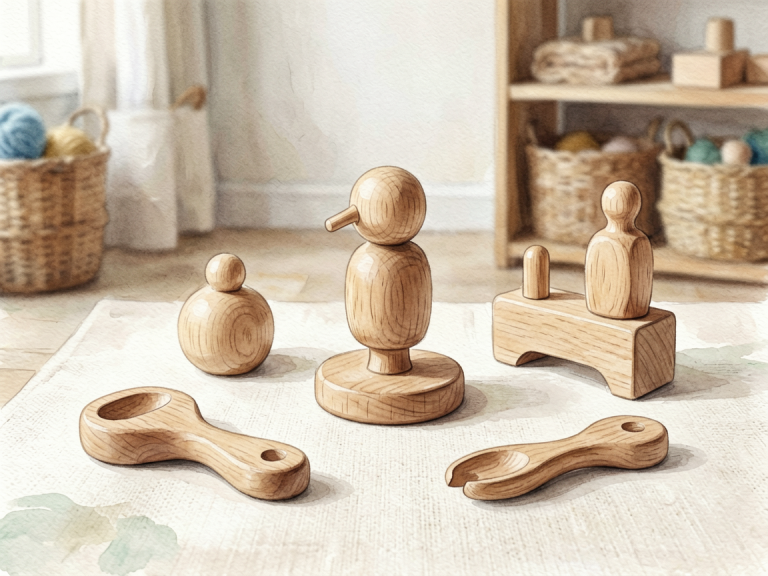
Toys that have a single, fixed purpose (like a battery-operated singing toy) often limit creativity. Instead, stock up on open-ended materials: blocks, wooden figures, fabric scraps, play dough, art supplies, cardboard boxes, and natural objects like pinecones or stones. These items can be used in countless ways, inviting the child to invent their own scenarios. A set of plain wooden blocks, for example, can become a bridge, a cake, or a telephone depending on the child’s whim.
Minimize Digital Distractions
Screens are the enemy of independent play. A television in the background or a tablet within reach pulls the child’s attention away from the tangible world. If possible, keep screens out of the play area entirely. That said, a few low-tech, sensory-rich items like a musical instrument or a listening station with audiobooks can gently support solo engagement.
Establish Routines and Visual Cues
Children thrive on predictability. Set a daily “quiet play time” where the expectation is that the child will play alone for a set duration. For toddlers, this might be ten minutes; for preschoolers, twenty to thirty minutes; for school-age children, up to an hour. Use a visual timer or a simple picture chart to signal the start and end. Over time, the routine itself becomes a cue that prepares the child’s brain for focused, self-directed activity.
—
Strategies for Introducing Independent Play to Reluctant Children
Some children naturally gravitate toward solo play, while others are more resistant, especially if they are used to constant attention. The transition requires patience and a gradual, gentle approach.
Start with Parallel Play
Begin by sitting nearby and engaging in your own quiet activity—reading a book, knitting, or writing a list. Say to your child, “I’m going to read for a while. You can play with your cars nearby.” This signals that you are present but not available for interaction. Many children will feel secure enough to begin playing once they see you are calmly occupied. Over several sessions, slowly increase the physical distance between you.
Use a “Connection First” Approach
Before asking a child to play independently, invest ten minutes of focused, warm, one-on-one attention. Play what *they* want in a fully engaged way. This fills their “attachment bucket,” making them more willing to separate. Then, clearly state, “Now I need to do my own work. You can keep playing here. I will check on you in a little while.” The key is to leave before the child becomes bored, while they are still happily engaged.
Introduce a “Play Prompt” or Invitation
Sometimes children need a gentle nudge. Lay out an intriguing setup before they enter the room: a tray of colored rice with scoops and small toys, a cardboard box with markers and stickers, or a small world scene with animals and a blanket. The invitation should be complete but not over-engineered—leave enough room for the child to modify it. Then simply walk away and let discovery happen.
Acknowledge and Validate Their Independence Onced It Happens
When a child does play alone, avoid interrupting to praise. Praise can break their flow and shift focus to pleasing you. Instead, wait until after the session and comment matter-of-factly: “I saw you were building with blocks all by yourself for a long time. That looked like fun.” This reinforces the behavior without making it about external reward.
—
Age-Appropriate Approaches for Independent Play
The way parents use independent play must evolve as the child grows. What works for a one-year-old will not work for a six-year-old.
Infants (6–12 months)
Independent play for babies is very short, measured in minutes. Place them on a safe mat with two or three simple toys—a rattle, a teether, a crinkly cloth. Sit nearby and occasionally make eye contact but do not engage. Let them explore mouthing, shaking, and batting. The goal is not duration but the experience of self-discovery.
Toddlers (1–3 years)
Toddlers are just beginning to engage in symbolic play. Provide simple, cause-and-effect toys: stacking cups, shape sorters, push toys, and picture books. Set up a “yes” environment where they can safely roam. If they become distressed, respond calmly but do not immediately rescue. Try to wait a few seconds to see if they self-soothe or redirect. Gradually stretch the time from five minutes to fifteen.
Preschoolers (3–5 years)
This is the golden age of independent play. Their imaginations are blossoming. Offer dress-up clothes, stuffed animals, blocks, and art supplies. You can also introduce “play invitations” like a basket of wooden animals and a blue blanket (representing water) and say, “I wonder what stories these animals will tell.” Stay nearby but busy. If they call for you, use a simple phrase: “You’ve got this. I’ll be right here.” Over time, they will learn to solve small problems without your input.
School-Age Children (6–10 years)
Independent play now morphs into independent projects. Encourage long-term activities: building a LEGO set without instructions, writing a comic book, creating a fort, or learning a simple craft from a book. Provide materials and space, but step back. At this age, children can also benefit from “alone time” that includes quiet reading, journaling, or listening to audiobooks. The parent’s role shifts to being a resource (e.g., “I can help you find the glue, but you’ll need to decide how to use it”).
Teens (11+ years)
For adolescents, independent play often takes the form of hobbies, coding, music composition, or solitary sports practice. Parents can support this by respecting their privacy and providing tools, lessons, or subscriptions without hovering. The greatest gift is trust: allowing teens to manage their own time and pursue passions that may not involve the family.
—
The Parent’s Role: Observation and Support Without Interference
One of the hardest skills for parents to learn is when *not* to intervene. Independent play requires a delicate balance: you are present enough to ensure safety but invisible enough to allow the child’s own narrative to unfold.
Practice “Sit-and-Watch” Time
Once a week, simply sit in the same room as your playing child and do nothing except watch. Resist the urge to comment, ask questions, or redirect. Observe what interests them, what challenges them, how they solve problems. This quiet attention sends a powerful message: “I am here, I see you, but I trust you to lead.” Over time, you will notice patterns that help you choose better toys and adjust your approach.
Learn the Difference Between a Cry for Help and a Minor Hiccup
A child who is truly frightened or hurt needs immediate attention. But a child who is frustrated by a stuck zipper or a fallen tower is learning. If you rush in every time, you deprive them of the chance to persevere. Before intervening, ask yourself: “Is this dangerous? Is the child asking for help, or just expressing frustration?” Often, waiting thirty seconds reveals that the child has already moved on or found a solution.
Be a “Stage Manager,” Not a Director
Your job is to set the stage—prepare the space, offer materials, establish the routine—and then step into the wings. If the child asks for help, you can offer minimal assistance (“Would you like to try turning the piece sideways?”) rather than doing it for them. If the play stalls, resist the urge to jump in with a suggestion. Instead, allow boredom to do its creative work. Many breakthrough play ideas emerge from a period of apparent “nothing” happening.
Model Independent Activity Yourself
Children learn by imitation. If they see you reading, writing, gardening, or cooking with focused attention, they internalize that independent engagement is normal and valuable. Conversely, if you spend your free time scrolling on a phone, they will mimic that behavior. Make your own independent activities visible and joyful. Let them see you struggle a little and persevere—you are modeling the very resilience you want to cultivate in them.
—
Overcoming Common Challenges
No matter how well you prepare, obstacles will arise. Here are solutions to frequent struggles.
“My child won’t stay alone for more than two minutes.”
Start smaller. Aim for one minute of independent play, then re-engage warmly. Gradually increase. Also check if your expectations match their temperament. Some children need more connection before they can separate. Increase the “connection first” time and reduce the demand until they feel safe.
“My child only wants screen time.”
Screens deliver high-intensity, low-effort stimulation that can make real play feel dull. The solution is not to ban screens entirely but to create a clear boundary. For example, no screens during the designated independent play time. Also, ensure that the analog alternatives are genuinely appealing—sometimes we need to refresh the toy rotation or set up a more inviting play invitation. Be patient: the child may whine at first, but after a few days of consistent boundaries, they will rediscover the joy of hands-on play.
“I feel guilty leaving my child alone.”
This guilt is common but often misplaced. Remember that independent play is not abandonment; it is a developmental gift. You are teaching your child that they are capable, that the world is interesting without you, and that you trust them. Additionally, taking a few minutes for yourself—to drink a cup of coffee, read a paragraph, or breathe—makes you a more patient and present parent later. Self-care and independent play go hand in hand.
“What if my child has special needs or developmental delays?”
The principles still apply, but the approach may need modification. For children with sensory processing differences, anxiety, or attention difficulties, start with extremely short sessions in a calm, predictable environment. Use sensory-friendly materials and stay closer initially. Work with an occupational therapist or developmental specialist to tailor the strategies. Independent play can be especially powerful for these children because it allows them to control their own sensory input and pace.
—
Conclusion
Independent play is not a luxury or a parenting shortcut; it is a vital nutrient for a child’s growing mind and heart. By creating the right environment, gradually introducing solo time, and learning to step back with trust, parents can unlock a world of self-discovery, creativity, and resilience in their children. The journey requires patience—there will be days of resistance, tears, and frustration. But the long-term rewards are immense: a child who can sit with their own thoughts, solve their own problems, and find joy in their own imagination is a child prepared not only for school but for life. Moreover, parents gain something invaluable: the space to recharge, reflect, and reconnect with their own identity beyond parenting. In the quiet hum of a child playing alone, both parent and child grow. The art of using independent play is, at its core, the art of letting go—and in that letting go, everyone finds something they never expected.