Should I Buy Building Blocks for My Preschooler? A Parent’s Guide to Smart Play
Introduction
Every parent of a preschooler faces an overwhelming aisle of toys, each promising to make their child smarter, happier, or more creative. Among the most classic and enduring options are building blocks—simple, colorful, and deceptively versatile. But with so many modern alternatives like tablets, electronic gadgets, and expensive STEM kits, you might wonder: *Should I buy building blocks for my preschooler?* The short answer is yes, but the real value lies in understanding *why* they matter, *how* they support development, and *what* to look for when choosing them. This article explores the multifaceted benefits of building blocks for children aged three to five, addresses potential concerns, and offers practical guidance to help you make an informed decision. After reading, you will not only feel confident about your purchase but also gain insight into how to maximize the learning potential of this timeless toy.
The Developmental Power of Open-Ended Play
Preschoolers are at a critical stage of cognitive, physical, and social growth. Their brains are forming connections at an astonishing rate, and the type of play they engage in directly shapes those neural pathways. Building blocks are a quintessential example of open-ended play—toys that have no single correct outcome. Unlike a puzzle that has one solution or a battery-powered robot that performs a fixed set of actions, blocks allow children to create, destroy, and rebuild endlessly. This freedom is precisely what fuels deep learning.
Research in early childhood education consistently shows that open-ended play fosters executive function skills, including working memory, cognitive flexibility, and self-control. When a preschooler stacks blocks and watches them tumble, they are not just making a mess; they are experimenting with cause and effect, learning to manage frustration, and developing persistence. These are foundational abilities that predict later academic success far more reliably than early literacy drills. So, when you ask, “Should I buy building blocks?” you are really asking, “Should I invest in my child’s long-term cognitive resilience?” The evidence strongly says yes.
Cognitive Skills: Problem-Solving and Spatial Reasoning
One of the most profound benefits of building blocks is their ability to enhance spatial reasoning—the capacity to visualize and manipulate objects in two- and three-dimensional space. This skill is closely linked to later achievement in mathematics, science, and engineering. When a preschooler tries to balance a block on a narrow edge or figure out how to create a stable tower, they are engaging in hands-on geometry and physics. They learn instinctively that a wider base provides stability, that weight distribution matters, and that symmetry can be both functional and aesthetic.
Moreover, blocks promote problem-solving in a low-stakes environment. A child who wants to build a bridge tall enough for a toy car must plan, test, revise, and sometimes start over. This iterative process mirrors the scientific method: hypothesis, experiment, observation, and adjustment. Unlike a screen-based game that offers instant feedback and preset solutions, physical blocks require the child to generate their own strategies. Over time, this builds executive function and a growth mindset—the belief that effort and persistence lead to improvement. For a preschooler, every toppled tower is a lesson in resilience, not failure.
Fine Motor Skills and Hand-Eye Coordination
Preschool-aged children are still refining their fine motor control—the small muscle movements in their fingers, hands, and wrists that are essential for writing, buttoning clothes, and using utensils. Building blocks are an excellent tool for this development. Grasping, lifting, aligning, and pressing blocks together require precise coordination between the eyes and hands. The very act of picking up a small wooden cube and placing it precisely on top of another demands concentration and control.
Different types of blocks offer varying levels of challenge. Large, lightweight foam blocks are great for initial exploration, while smaller wooden or plastic interlocking bricks (like Duplo or Mega Bloks) require more delicate finger movements. As children progress, they learn to apply just the right amount of pressure—too little and the block topples, too much and they might crush the structure. This sensory feedback is invaluable. Occupational therapists often recommend building blocks for children with fine motor delays because the activity is both engaging and therapeutic. So, if you are concerned about your child’s readiness for kindergarten handwriting, blocks are a playful way to build those foundational skills without worksheets or drills.
Social and Emotional Learning Through Collaborative Play
While building blocks are often seen as a solitary activity, they are equally powerful in social contexts. When two or more preschoolers work on a shared block structure, they must negotiate, communicate, share resources, and resolve conflicts. One child may want to build a castle while another insists on a spaceship; they learn to compromise or come up with a hybrid idea. They practice taking turns, offering help, and giving compliments—a natural social-emotional curriculum that no app can replicate.
Blocks also provide a safe space for emotional expression. A child who feels frustrated or angry might build a tall tower and delight in knocking it down—a physically acceptable way to release tension. Conversely, a child who feels proud will want to show their creation to an adult, seeking validation and building self-esteem. As a parent, you can use block play to teach emotional vocabulary: “I see you feel disappointed that your tower fell. Let’s see if we can make it stronger together.” This type of guided interaction strengthens the parent-child bond and fosters emotional regulation. Given the rising rates of anxiety and social challenges among young children, the relational benefits of block play are not trivial.
Are There Any Downsides?
No toy is perfect, and building blocks do have potential drawbacks—though they are manageable with awareness. The most obvious concern is safety. Small blocks or those with sharp edges can pose choking hazards or cause injuries if thrown. Always choose age-appropriate sets: for preschoolers, blocks should be large enough to prevent swallowing and made from non-toxic materials. Wooden blocks should be splinter-free, and plastic blocks should be BPA-free.
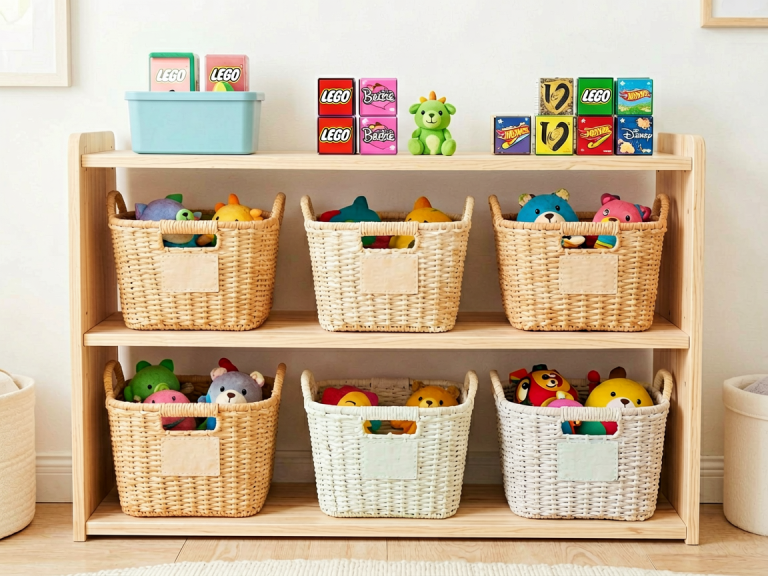
Another consideration is clutter. Blocks can occupy significant floor space, and incomplete sets with missing pieces can be frustrating. To mitigate this, designate a clear storage area and involve your child in cleanup routines—this also teaches responsibility. Some parents worry that blocks are too “simple” compared to tech toys, but simplicity is actually their strength. Electronic toys often do the thinking for the child, while blocks demand active engagement. Finally, there is the issue of cost. High-quality wooden block sets can be pricey, but they are durable and can last through multiple children. Alternatively, budget-friendly plastic options are widely available and still effective. The key is to invest in a set that grows with your child—from simple stacking to complex constructions.
How to Choose the Right Building Blocks for Your Preschooler
If you have decided to buy building blocks, the next question is *which kind?* The market offers a bewildering array: classic wooden unit blocks, interlocking plastic bricks (Duplo, Mega Bloks, Plus-Plus), magnetic tiles (Magna-Tiles, PicassoTiles), foam blocks, and even cardboard brick-like sets. Each has unique features, and the best choice depends on your child’s age, interests, and developmental needs.
For a three-year-old just starting, large, lightweight blocks that are easy to grip are ideal. Foam or cardboard blocks allow for dramatic play without the risk of injury, and they encourage gross motor movement. As the child approaches age four, wooden unit blocks—the classic rectangular, cylindrical, and triangular shapes—are excellent for teaching balance, symmetry, and basic architecture. They are also more durable and have a satisfying weight that gives sensory feedback. For children who love pretend play, consider adding themed sets like farm animal blocks or castle-building kits, but avoid sets that are too prescriptive (e.g., only one specific model). The best blocks are those that can be combined and recombined.
Interlocking plastic bricks (like Duplo) are another top choice because they allow for more stable, vertical constructions and can later be combined with smaller Lego bricks as the child grows. Magnetic tiles are especially good for spatial reasoning and color recognition, and they appeal to children who are drawn to patterns and symmetry. Whichever type you choose, look for sets with a variety of shapes and colors, and avoid those with too many specialized pieces that limit creativity. A simple set of 50 to 100 basic pieces will offer more play value than a kit with hundreds of single-use parts.
Tips for Encouraging Meaningful Block Play
Simply buying blocks is not enough; parents play a crucial role in nurturing constructive play. First, create a dedicated play space—a flat, open area on a rug or mat where constructions can be left undisturbed for days. This allows children to revisit and extend their creations, deepening their engagement. Second, resist the urge to “teach” too much. Let your child lead. Your job is to observe, ask open-ended questions (“What do you think would happen if you put a bigger block on top?”), and occasionally model a new technique without dominating the play.
Third, embrace mess and imperfection. Towers will fall, and that is part of the learning. Avoid rushing to fix or rebuild for your child; instead, offer empathy and encouragement. Finally, integrate blocks with other toys. Small figurines, cars, or animal toys can be added to block structures, turning a construction project into a rich imaginative story. This cross-play builds narrative skills and extends attention spans. Over time, you will notice your child developing not just building skills but also patience, creativity, and a sense of accomplishment.
Conclusion: A Worthy Investment in Your Child’s Future
So, should you buy building blocks for your preschooler? The evidence overwhelmingly supports a resounding yes. Building blocks are not merely a nostalgic toy—they are a scientifically backed tool for cognitive, physical, social, and emotional development. They require no batteries, no screens, and no subscription fees. They adapt to the child’s imagination, offering infinite possibilities for growth. While no single toy can guarantee a genius, blocks provide a rich environment for crucial skills that translate directly into academic and life success.
Moreover, block play is a shared experience that can unite generations. Parents, grandparents, and siblings can sit together on the floor, building and laughing. In a world increasingly dominated by digital isolation, the simple act of stacking wooden cubes becomes a profound act of connection. So go ahead—buy the blocks. Clear a corner of the living room. Let the towers rise and fall. And watch as your preschooler, one block at a time, constructs not just castles but the architecture of a capable, curious, and resilient mind.