To Block or Not to Block: A Comprehensive Guide on Buying Building Blocks for Toddlers
Word Count: 1,126 words
—
Introduction
Every parent has faced the dizzying aisle of toys, wondering which ones are genuinely worth the investment. Among the endless options, building blocks stand out as a timeless classic. But with so many modern, flashy, and electronic toys on the market, you might find yourself asking: *Should I buy building blocks for my toddler?* The short answer is a resounding yes—but the longer answer involves understanding why, how, and what kind of blocks best support your child’s development. This article explores the multifaceted benefits of building blocks, addresses common concerns, and offers practical advice to help you make an informed decision.
—
The Developmental Power of Building Blocks
Cognitive Growth and Problem-Solving Skills
Building blocks are far more than simple playthings. When a toddler stacks, sorts, and balances blocks, they are engaging in complex cognitive processes. They learn cause and effect: *If I place this block too far to the edge, it will fall.* They experiment with spatial relationships, understanding concepts like size, shape, symmetry, and balance. This type of hands-on, open-ended play fosters critical thinking and problem-solving abilities that form the foundation for later academic skills, especially in mathematics and science. Research published in the journal *Early Childhood Education* has shown that children who frequently play with blocks demonstrate stronger spatial reasoning, which is closely linked to success in STEM fields.
Fine Motor Skills and Hand-Eye Coordination
Toddlers are in a crucial period of developing fine motor control. Picking up a small block, rotating it to fit into a specific position, and carefully placing it without toppling the structure requires precision. These actions strengthen the small muscles in the hands and fingers, improve dexterity, and enhance hand-eye coordination. Unlike passive toys that do things *for* the child, building blocks require active participation. Every grasp, release, and alignment is a mini-workout for developing motor pathways. Over time, this leads to better control when using utensils, drawing, and eventually writing.
Language and Communication Development
Block play naturally invites conversation. As your toddler builds a tower, you might hear them say, “Up… up… oh no, fall down!” or “My big castle!” These moments are rich opportunities for language development. Parents and caregivers can introduce new vocabulary such as “balance,” “tall,” “short,” “behind,” “on top,” and “together.” When children play with others, they learn to negotiate, share ideas, and describe their creations. According to the American Academy of Pediatrics, this type of interactive play significantly boosts vocabulary and narrative skills compared to solitary screen time.
—
Social and Emotional Benefits
Fostering Patience and Resilience
Building blocks are unpredictable. A tower that took ten minutes to build can collapse in a second. This frustration is actually a gift. Through block play, toddlers learn to manage disappointment, try again, and adapt their strategies. They develop resilience—the ability to bounce back from failure. Moreover, the process of building and then knocking down (a favorite toddler activity) teaches cause and effect in a safe, controlled environment. It also gives children a sense of agency: they are the architects of their own tiny world.
Encouraging Cooperative Play and Empathy
While toddlers are naturally egocentric, block play can gently nudge them toward social awareness. When two toddlers build together, they must share blocks, decide where each piece goes, and sometimes compromise. “I want the red one!” “No, that’s mine!” These mini-conflicts are essential social lessons. With gentle adult guidance, children learn to take turns, express their needs verbally, and even praise another child’s creation. This cooperative play lays the groundwork for empathy and teamwork in later childhood.
—
Potential Concerns and How to Address Them
Safety: Choking Hazards and Sharp Edges
One of the first worries for any parent is safety. Traditional wooden blocks are generally safe, but small blocks can be a choking hazard for infants under one year old. Always choose blocks that are large enough that they cannot fit through a toilet paper roll (a standard safety test). Also avoid blocks with sharp corners, splinters, or toxic paints. Many modern blocks are made from BPA-free plastic or sustainably sourced wood with non-toxic finishes. Look for certifications like ASTM (American Society for Testing and Materials) or EN71 (European safety standard). Supervision is always recommended, especially when toddlers are still mouthing objects.
The Mess Factor
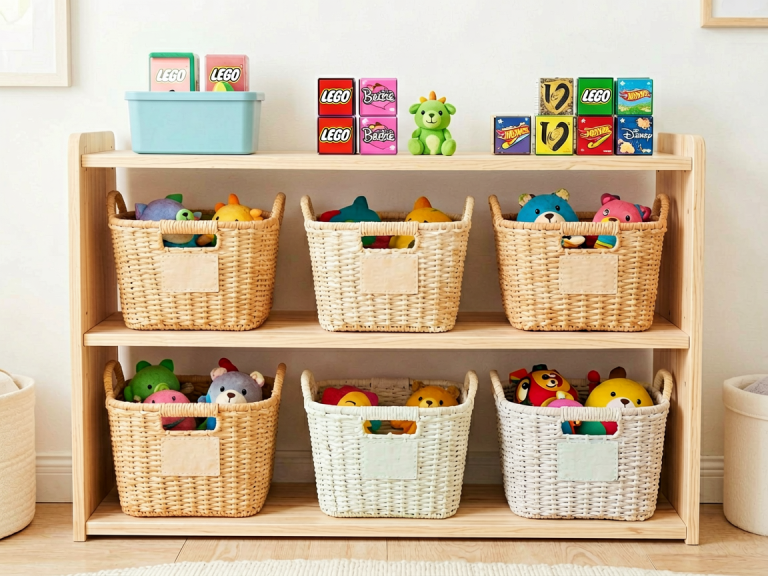
Blocks inevitably end up scattered across the floor. For some parents, the mess is a dealbreaker. However, consider that the mess is a sign of active learning. Instead of banning blocks, create a designated play area with a rug or a low shelf where blocks are stored. Teach your toddler the “clean-up game”—sing a song while putting blocks away. This turns tidying into a positive routine and teaches responsibility. The mess is temporary, but the developmental gains are lasting.
Overstimulation vs. Open-Ended Play
Some parents worry that blocks are too simple and that toddlers will quickly lose interest. But the beauty of blocks lies in their open-ended nature. Unlike battery-operated toys that have one fixed function, blocks can be used in infinite ways: a tower, a bridge, a road, a spaceship, or even a pretend cake. This flexibility keeps the brain engaged far longer than a toy that does the same thing every time. If your toddler seems bored, try introducing a new challenge: “Can you build a house that fits this toy car inside?” or “Let’s make a pattern with colors.”
—
How to Choose the Right Building Blocks for Your Toddler
Age-Appropriate Sizes and Materials
For toddlers aged 12–24 months, choose chunky blocks that are easy to grasp—typically 2–4 inches in size. Soft fabric or foam blocks are ideal for the youngest toddlers because they are lightweight, safe, and quiet. For children aged 2–3 years, wooden or plastic interlocking blocks (like Duplo, the larger version of Lego) work well because they allow for more complex structures. Avoid magnetic blocks until the child is past the mouthing stage, as small magnets can be dangerous if swallowed.
Variety and Educational Value
Look for sets that include different shapes (cubes, rectangles, triangles, arches) and colors. Some sets include numbers, letters, or animal faces, adding an early literacy or numeracy component. Natural wooden blocks that show wood grain are excellent for sensory development, while brightly colored plastic blocks can aid in color recognition. Consider also sets that include wheels and axles, allowing your toddler to create moving vehicles—this adds a whole new dimension of imaginative play.
Durability and Sustainability
Given that blocks will be thrown, dropped, and possibly chewed, durability matters. High-quality hardwood blocks (like those from brands such as Melissa & Doug or Hape) can last for years and even become family heirlooms. Plastic blocks should be free of phthalates and lead. If you are environmentally conscious, look for blocks made from recycled materials or sustainably harvested wood. Remember, you are making an investment in a toy that can grow with your child, from simple stacking to advanced city-building.
—
Practical Tips for Maximizing the Block Experience
Join the Play—But Don’t Take Over
Your presence during block play is invaluable. Sit on the floor with your toddler and build together, but let them lead. Ask open-ended questions: “What are you making?” “How can we make it taller?” “What happens if we put the big block on top?” Avoid correcting or directing too much. The goal is to support their creativity, not to impose your adult logic. If they want to put a block sideways, let them discover why it might not work.
Rotate Blocks with Other Toys
To keep block play fresh, mix blocks with other open-ended toys: toy animals, cars, dolls, or fabric pieces. A few wooden people can transform a block tower into a village. A small scarf can become a roof. This cross-play encourages symbolic thinking, a key milestone in toddler development. Also, consider taking blocks outdoors—building a tower in the sandbox or on a grassy hill adds new challenges like uneven surfaces.
Incorporate Learning Naturally
You don’t need to turn playtime into a lesson. But subtle learning happens when you casually count the blocks as they are stacked: “One, two, three, four—look, you have four blocks!” Or when you compare sizes: “This block is longer than that one.” These moments build number sense and comparison vocabulary without pressure. Over time, your toddler will internalize these concepts through joyful repetition.
—
Conclusion
So, should you buy building blocks for your toddler? Absolutely. Building blocks are not just a classic toy—they are a comprehensive developmental tool that nurtures cognitive, motor, social, emotional, and language skills simultaneously. They are safe when chosen wisely, durable when made well, and endlessly versatile in play. Unlike many modern gadgets that promise educational benefits but deliver passive entertainment, blocks require active engagement from your child. They teach patience, resilience, creativity, and problem-solving in a way that no screen ever can. As your toddler stacks one block upon another, they are not just building a tower—they are building the foundation for a lifetime of learning. Invest in a quality set, join them on the floor, and watch their imagination soar. The answer, in short, is a resounding yes.