The Hidden Perils of Buying Second-Hand Toys for 18-Month-Olds: A Parents Guide to Safety
Introduction
Every parent wants to give their child the world, but the rising cost of living has made many families turn to second-hand markets for baby toys. A gently used wooden block set or a pre-loved plush elephant seems like a smart, eco-friendly bargain. However, when the child in question is a curious 18-month-old—an age characterized by mouthing, chewing, and relentless exploration—the purchase of unsafe second-hand toys can lead to devastating consequences. While the thrift economy offers undeniable financial and environmental benefits, it also conceals hidden dangers that are often invisible to the untrained eye. This article examines the critical risks associated with buying second-hand toys for toddlers, provides a systematic approach to identifying hazards, and offers practical strategies for parents to make informed decisions. Understanding these risks is not about discouraging thrift but about empowering caregivers to protect their children while still enjoying the benefits of the circular economy.
The Unique Vulnerabilities of an 18-Month-Old
At 18 months, a child is in a developmental sweet spot—they are mobile, curious, and eager to explore their environment through all five senses, with the mouth being the most dominant. This oral phase means that any toy that fits into a toddler’s mouth becomes a potential choking hazard or a vector for toxic substances. Moreover, their immune systems are still maturing, making them more susceptible to bacterial infections from uncleaned surfaces, mold, or old food residue hidden in crevices. Their coordination is improving but still clumsy, meaning they are prone to falls and may accidentally hit themselves with a toy that has sharp edges or loose parts. Unlike older children, an 18-month-old cannot articulate discomfort or alert a parent if something tastes bitter or smells strange. These developmental factors make them uniquely vulnerable to the dangers lurking in second-hand toys—dangers that original owners may have long forgotten or intentionally concealed.
The Silent Dangers: Chemical and Physical Hazards in Pre-Owned Toys
Regulatory Gaps and Enoded Safety Standards
One of the most alarming aspects of second-hand toys is that they predate modern safety regulations. Many toys manufactured before the introduction of strict lead and phthalate limits in jurisdictions like the European Union (REACH), the United States (CPSIA), or China (GB standards) may still be in circulation. For example, a vintage wooden puzzle from the 1990s might have been painted with lead-based paint, which was then legally permissible. Even if the paint appears intact, normal wear and tear—scratching, chewing, or simply handling—releases lead dust that a toddler can ingest. Similarly, soft plastic toys made before 2008 may contain phthalates, chemical additives used to soften PVC, which are endocrine disruptors linked to developmental and reproductive harm. These chemicals do not have a warning label on the toy itself, and most thrift stores do not test for them. The parent who buys a charming, retro toy may unknowingly expose their child to cumulative toxic exposure.
Wear and Tear That Creates Acute Hazards
Second-hand toys often show signs of age that directly translate into safety risks. Loose screws or batteries can be swallowed, causing intestinal blockages or chemical burns if battery acid leaks. Cracks in hard plastic can pinch tiny fingers or break into sharp shards. Stuffed animals may have torn seams that release stuffing, which is a choking hazard, and the stuffing itself can harbor dust mites, mold spores, or even bed bugs. Another often-overlooked danger is the presence of small magnets. High-powered rare-earth magnets found in some older building sets or toy components can cause catastrophic internal injuries if a child swallows two or more; the magnets attract each other through intestinal walls, leading to perforations, sepsis, or death. An 18-month-old, who lacks the dexterity to avoid swallowing small objects, is at high risk. Second-hand toys are rarely sold with their original manuals, so a parent may not even know that a seemingly harmless block contains a magnet.
The Invisible Microbial World: Biological Risks
Beyond chemicals and physical hazards, second-hand toys are reservoirs of biological contaminants. A toddler’s immune system is a work in progress, and a toy that has been handled by multiple children, coughed on, or stored in a damp basement can carry a host of pathogens. Staphylococcus aureus (including MRSA), norovirus, and even fecal bacteria like E. coli have been found on surfaces of used toys in several studies. While proper cleaning can reduce risks, many porous materials—stuffed fabric, foam, untreated wood—are impossible to fully sanitize without damaging the toy. Furthermore, if the previous owner’s household had a pet, the toy may carry allergens such as dander or flea eggs, which can trigger asthma or allergic reactions in sensitive toddlers. The risk is compounded by the fact that 18-month-olds often share toys with siblings or daycare mates, creating a perfect transmission chain for respiratory or gastrointestinal infections.
The Psychology of Bargain Hunting: Why Parents Overlook Red Flags
Understanding why well-intentioned parents buy unsafe second-hand toys requires a look at behavioral economics and cognitive biases. The "scarcity effect" makes a rare vintage toy seem more desirable, while the "sunk cost fallacy" leads a parent who has already traveled to a garage sale to justify a questionable purchase. Moreover, the attractiveness of a low price can override rational risk assessment—a phenomenon known as the "price-quality heuristic." A parent might think, "It's only $1, so even if it's a little worn, it's fine." Yet the cost of an emergency room visit, a poisoning treatment, or a choking incident far exceeds any savings. Social pressures also play a role: a grandparent might insist that "this toy was good enough for you," unaware that safety standards have evolved. The emotional connection to a childhood relic can cloud judgment. Recognizing these psychological pitfalls is the first step toward making safer choices.
A Systematic Safety Checklist for Buying Second-Hand Toys
To navigate the second-hand market safely, parents need a rigorous inspection protocol. The following checklist, adapted from recommendations by pediatric safety organizations, should be applied to every toy before purchase:
1. Check for Recalls and Age Appropriateness.
Before buying, search the toy’s brand and model online for safety recalls. The U.S. Consumer Product Safety Commission (CPSC) database or the European RAPEX system lists hazardous products. Also verify the recommended age on the original packaging—if it says “3+,” do not buy it for an 18-month-old, even if the toy seems simple.
2. Perform the Choking Hazard Tube Test.
Carry a small toilet paper roll or any tube with a diameter of 1.25 inches (about 3.2 cm). Any toy or part that fits entirely inside that tube is a choking hazard for a toddler. Test all loose parts, including buttons, eyes, wheels, and removable accessories.
3. Inspect for Chemical and Physical Deterioration.
Smell the toy—a strong chemical odor could indicate off-gassing from degraded plastics. Look for flaking paint, rust, or a greasy feel that might suggest a plasticizer migration. Check for sharp edges by running a finger along seams and corners. For stuffed toys, squeeze them to feel for hard internal wires or loose batteries. If the toy is battery-powered, ensure the compartment is secured with a screw (not just a sliding cover) that a toddler cannot open.
4. Evaluate Cleanability.
Ask yourself: Can this toy be thoroughly cleaned? Hard plastic, silicone, and metal can be wiped with a mild bleach solution or hot soapy water. But porous items like stuffed animals, foam blocks, or untreated wooden toys cannot be effectively sanitized. If the toy has inaccessible crevices or cannot be machine-washed, it is a biological risk.
5. Examine for Hidden Structural Weaknesses.
Gently twist and pull all parts. If anything wobbles, feels loose, or shows signs of previous repair (like glue, tape, or mismatched screws), reject the toy. Check for tiny holes that could trap fingers or harbor bacteria. For ride-on toys, test stability and make sure there are no exposed mechanisms.
Safe Alternatives and Responsible Second-Hand Strategies
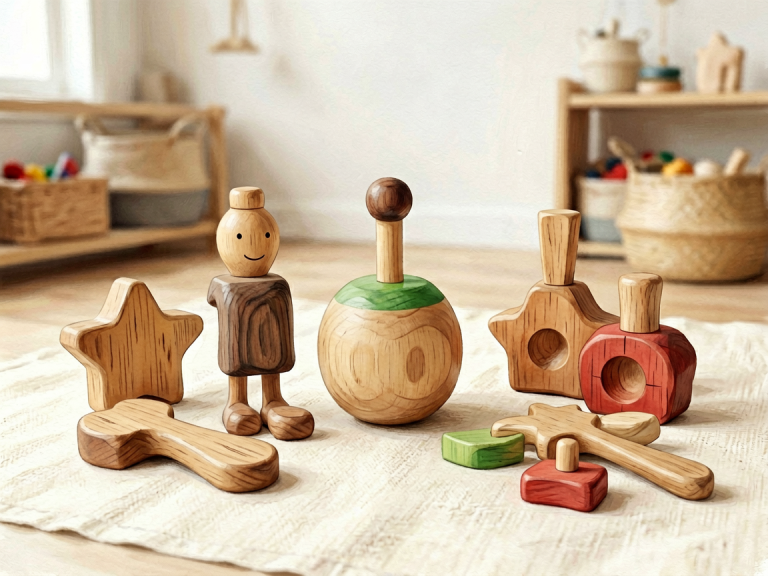
Parents need not abandon the second-hand market entirely. With caution, certain types of toys are relatively safer. Solid wood toys without painted surfaces (e.g., unfinished beech blocks) are less likely to contain lead than painted ones, provided they are free from splinters and crevices. Silicone teethers and rubber balls that are dishwasher-safe can be adequately sanitized. Second-hand children’s books (board books) are generally low-risk, as they are not mouthed as frequently. When buying online, ask the seller for detailed photos of all sides, including the battery compartment and any labels. Request the original packaging if possible. Always prioritize buying from reputable sources like certified second-hand baby stores that claim to test for lead and phthalates, rather than random garage sales or unverified Facebook Marketplace listings.
Another wise approach is to focus on “consumable” second-hand toys—items that are single-use or easily replaceable—rather than long-term investments. For example, a second-hand play mat that can be machine washed and then discarded after a few months poses less risk than a vintage rocking horse that cannot be cleaned and may have been stored in a shed for decades. Furthermore, parents can participate in toy swaps within trusted communities where the history of the toy is known. Knowing that the previous owner was a careful parent who kept toys in good condition significantly lowers the risk.
The Role of Regulation and Community Awareness
Ultimately, protecting 18-month-olds from unsafe second-hand toys requires a multi-stakeholder approach. Governments could strengthen regulations by requiring second-hand toy sellers—including online platforms—to certify that items meet current safety standards, similar to the requirements for new toys. Some countries already ban the sale of certain hazardous second-hand items (like cribs and car seats), but toys are often excluded. Advocacy groups should launch public awareness campaigns specifically targeting second-hand markets, with simple visual guides on what to avoid. Community organizations could organize “safety verification” events where parents can bring second-hand toys for free testing of lead, phthalates, and choking hazards. Educational materials in multiple languages, distributed through daycare centers and pediatricians’ offices, would help overcome cultural and language barriers.
On an individual level, parents must adopt a mindset shift: a bargain is only a bargain if it is safe. The dollar saved is not worth the potential health crisis. By treating every second-hand toy with skepticism and conducting thorough inspections, caregivers can enjoy the financial and environmental benefits of the second-hand market without compromising their child’s well-being. The small effort of checking a toy before purchase is a powerful act of love—one that can prevent a choking emergency, a poisoning case, or a long-term developmental issue. As the circular economy grows, so must our vigilance.
Conclusion
Buying second-hand toys for an 18-month-old is a practice filled with good intentions—saving money, reducing waste, and often preserving nostalgia. Yet the hidden threats of lead, phthalates, small parts, and biological contamination turn that noble act into a high-stakes gamble. The unique developmental stage of a toddler—their mouthing, their fragile immune system, their lack of risk awareness—demands a heightened standard of scrutiny. By understanding the chemical, physical, and biological hazards, applying a systematic safety checklist, and engaging with the broader community for education and advocacy, parents can navigate the second-hand market responsibly. The goal is not to eliminate thrift but to transform it into an informed, cautious practice. Every parent deserves the peace of mind that comes from knowing the toy in their child’s hands is not a hidden danger but a source of safe, joyful exploration. After all, a toy should be a bridge to learning, not a gateway to harm.