The Hidden Dangers of Small Parts: A Safe Toy Buying Guide for 1-Year-Olds
Introduction
Walking into a toy store for a 1-year-old can be overwhelming. Bright colors, flashing lights, and shelves of adorable plush animals compete for attention. Yet amid this visual feast, one of the most critical decisions a parent or caregiver makes involves a seemingly simple question: should you buy toys with small parts for a child who just learned to walk? The answer, from pediatricians, safety experts, and developmental psychologists alike, is a firm and resounding "no." For a 1-year-old, toys with small parts are not just a poor choice—they are a serious choking, ingestion, and injury hazard. One-year-olds are at a unique developmental stage: they are curious, mobile, and driven by an oral exploration that puts everything in their mouths. Understanding why small parts are dangerous, what safety standards exist, and how to choose appropriate alternatives is essential for keeping these young explorers safe while still supporting their rapid cognitive and motor development. This article provides a comprehensive guide to navigating the toy aisle for a 1-year-old, emphasizing that safe toys are not boring toys—they can be just as stimulating and fun when chosen wisely.
Why Small Parts Are Dangerous for 1-Year-Olds
The Oral Stage and Choking Risks
At 12 to 24 months, children experience what developmental psychologist Jean Piaget called the sensorimotor stage. One of their primary ways of learning about objects is through mouthing. A 1-year-old will instinctively put a toy car, a doll’s shoe, or a loose button straight into their mouth to explore its texture, taste, and shape. This natural behavior is why small parts are particularly hazardous. According to the U.S. Consumer Product Safety Commission (CPSC), over 50% of choking incidents in children under three years old involve small toys or toy parts. The trachea of a 1-year-old is roughly the diameter of a drinking straw, meaning any object that can fit through a standard toilet paper roll (about 1.25 inches in diameter) can easily obstruct the airway. Small parts—such as beads, wheels, eyes from stuffed animals, or detachable pieces—are often precisely the size that can get lodged, leading to choking, asphyxiation, or aspiration into the lungs.
Beyond Choking: Ingestion and Internal Injury
Even if a child does not choke immediately, swallowing a small part can cause serious internal problems. Batteries, magnets, and sharp plastic shards are especially dangerous. Button batteries, for example, can burn through the esophagus within hours, leading to life-threatening internal injuries. Magnets, if swallowed separately, can attract each other through intestinal walls and cause perforations, blockages, or fistulas. While many toys marketed for older children include such components, a 1-year-old lacks the impulse control to avoid putting them in the mouth. The danger is not only about size but also about material composition: some cheap small parts may contain lead, phthalates, or bisphenol A (BPA), which are toxic when chewed. Given that a 1-year-old can easily bite off small pieces from a toy that appears safe, parents must scrutinize every toy for potential hazards.
Regulatory Standards and Warning Labels
Understanding Safety Certifications
To help parents make informed decisions, governments and international bodies have established strict safety standards for toys intended for children under three. In the United States, the CPSC enforces the Consumer Product Safety Improvement Act (CPSIA), which requires that any toy for children under 12 months cannot have small parts that fit into a small-parts cylinder (a test tool shaped like a child’s throat). In Europe, the CE marking with the EN 71 standard ensures similar requirements. However, these regulations apply to toys specifically labeled for that age group. The problem arises when parents purchase toys marked "3+" or "for ages 36 months and up" for a 1-year-old because they look appealing. The "3+" warning is not a suggestion—it is a legal safety designation meaning the toy contains small parts that pose a choking hazard to younger children. One-year-olds simply do not have the airway size or developmental ability to handle such toys safely.
How to Read Labels
When buying toys for a 1-year-old, always look for explicit age recommendations. Reliable brands clearly state "0-12 months" or "12-24 months" on the packaging. Additionally, look for certification marks: ASTM (American Society for Testing and Materials), CPSC, and for European toys, the CE mark with the age indicator. Beware of vague labels like "magnetic building set" without an age range, or toys that come in colorful bags from discount stores with no clear manufacturer information. A good rule of thumb is that if the toy has any component that is smaller than a ping-pong ball, it is too small for a 1-year-old. To be even more cautious, test the toy yourself: if any part can pass through a standard empty toilet paper roll, it is a choking hazard.
How to Identify Safe Toys for 1-Year-Olds
The "Toilet Paper Roll Test" and Other Safety Checks
Beyond reading labels, parents can perform simple home safety checks. The toilet paper roll test is a quick and reliable tool: if a toy or any removable part of it can fit entirely inside the roll, it is too small for a 1-year-old. In addition, ensure that the toy is durable and cannot be easily broken into smaller pieces. Squeeze, twist, and pull at the toy to see if any parts come off. Stuffed animals should have embroidered eyes and noses rather than glued or plastic ones. Wooden toys should be sanded smooth with no splinters, and all paint should be non-toxic and lead-free. For plastic toys, look for the "phthalate-free" label, as phthalates are often used to soften plastics but can interfere with hormone development. Electronic toys should have a secure battery compartment that requires a screwdriver to open—no button battery compartments that a child can access with small fingers.
Material Matters: What to Choose and What to Avoid
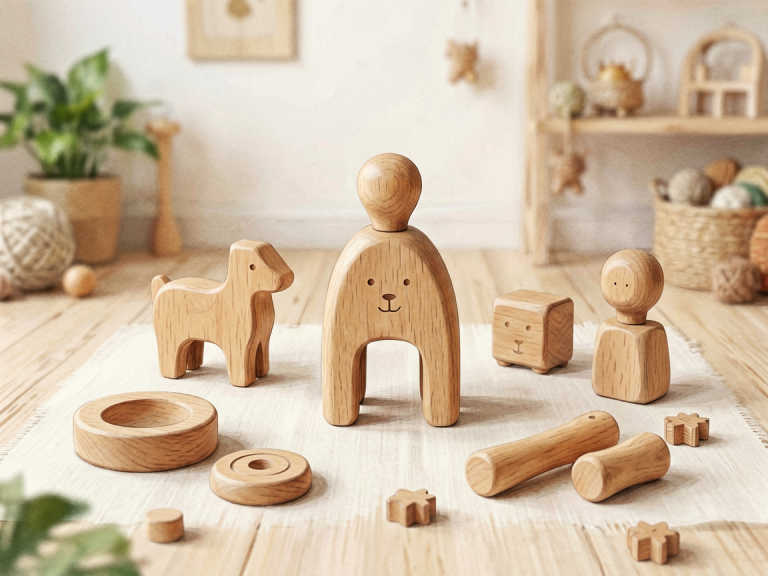
Safe materials for 1-year-olds include soft, washable fabric (cotton, fleece, or polyester without loose threads), natural untreated wood, silicone (food-grade, BPA-free), and heavy-gauge plastic without sharp edges. Avoid toys made from brittle plastic that can crack and splinter, cheap foam that can be bitten into small pieces, or toys with small magnets, beads, or loose sequins. A favorite safe option is the classic "stacking cups" set—large, colorful cups that a 1-year-old can stack, knock down, and chew on without risk. Other excellent choices include soft blocks (larger than 2 inches in every dimension), board books with thick cardboard pages, and simple shape-sorters with large, chunky shapes that cannot fit into the mouth. Always verify that the shape-sorter has a solid base and that the shapes are as large as the base openings.
Alternative Toy Options That Promote Development
Sensory and Motor Skill Toys
Some parents worry that avoiding small parts means missing out on developmental benefits. In reality, the best toys for 1-year-olds focus on gross motor skills, sensory exploration, and cause-and-effect learning without relying on tiny components. For example, a soft push-and-pull wagon (like a small wooden cart with large wheels) encourages walking. A silicone teething ring with varied textures satisfies oral exploration while being too large to swallow. Musical instruments such as maracas or drums designed for toddlers (with sealed beads or noise makers inside that cannot be removed) provide auditory stimulation. Play mats with colorful patterns, crinkly textures, and mirrors let babies explore while lying down or sitting. Even simple household items like a clean, empty plastic water bottle (with the cap securely glued or removed) can become a fascinating rattle when partially filled with a few large dried beans—provided the bottle is too wide to fit in the mouth.
Books and Language Development
Board books are fantastic for 1-year-olds. They are durable, easy to hold, and the pages are thick enough that a child cannot tear off small chunks. Choose books with high-contrast images, simple faces, or textures to touch. Avoid books that have flaps that can be torn off and become a choking hazard. If the book has any movable parts, ensure they are attached securely and cannot be pulled off by a determined toddler. Reading together also strengthens bonding and language skills without any risk of small parts.
Large Building Blocks and Stacking Toys
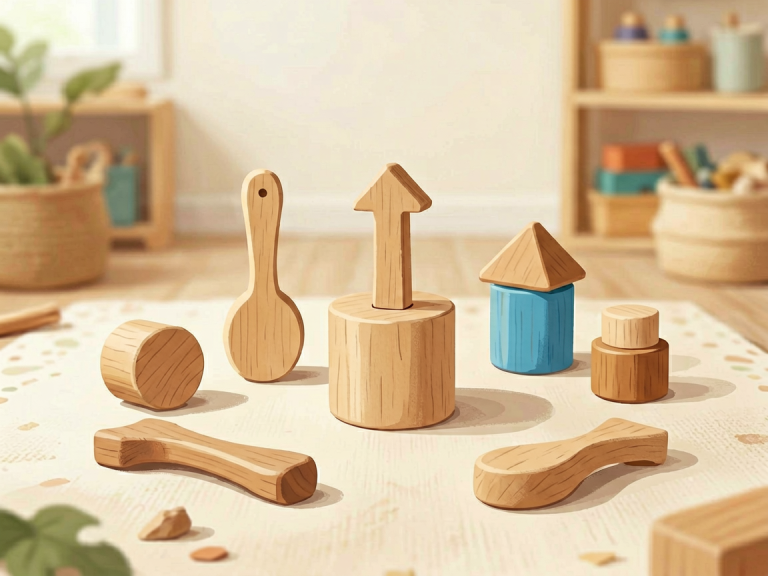
One-year-olds love stacking, knocking down, and nesting. Large wooden blocks (at least 2 inches on each side) are perfect. They are heavy enough to feel substantial but too big to fit in a child’s mouth. Some eco-friendly brands offer blocks made from recycled milk jugs, which are soft and lightweight. Stacking rings with a central post are also excellent, provided the rings are at least 3 inches in diameter and the post is wide. Avoid stacking toys with a small central peg that could break off. The act of stacking and knocking down helps develop hand-eye coordination, spatial awareness, and understanding of cause and effect—all without any small parts.
Tips for Parents and Caregivers
Supervision Is Non-Negotiable
Even with the safest toys, no substitute exists for adult supervision when a 1-year-old is playing. A child can surprise you by biting off a piece of a "safe" wooden toy or discovering a loose thread on a stuffed animal. Set up a safe play area on a clean floor, free from older siblings' toys that may have small parts. If you have an older child at home, keep their toys in a separate container out of the 1-year-old’s reach. Many choking incidents occur when a younger child gets hold of an older sibling’s toy with small parts like LEGO bricks, doll accessories, or toy car wheels.
Check Regularly for Wear and Tear
Toys that were safe when new can become hazardous over time. Inspect all toys weekly for cracks, splinters, loose threads, or fading paint. If a toy shows any signs of deterioration, retire it immediately. Soft toys can be machine-washed to prevent the buildup of dust mites and bacteria, but check the care label first. Wooden toys may need occasional sanding and repainting with non-toxic paint if they get rough. Also, be mindful of toys from second-hand stores or garage sales: they may not meet current safety standards and could have been recalled. Always check the CPSC website for recall lists before giving a used toy to a 1-year-old.
Avoid Toy "Sets" with Mixed Age Ranges
Many toy manufacturers sell sets that are labeled "ages 1 to 5" or "multi-age." These sets often contain a few large pieces suitable for a younger child mixed with many small pieces intended for older children. The danger is that the older child may scatter the small pieces, and the 1-year-old can quickly grab one before anyone notices. If you have children of different ages, it is wise to keep their toys completely separate and to ensure that playtime for the 1-year-old happens in a place where the older child’s toys are put away. Alternatively, buy only age-specific sets for each child.
Conclusion
The decision to buy toys with small parts for a 1-year-old is not merely a matter of preference—it is a matter of safety. At this age, a child’s natural tendency to explore with the mouth, combined with an underdeveloped swallowing reflex and a small airway, makes any object that can fit into a toilet paper roll a serious choking hazard. Regulatory standards and warning labels exist precisely to help parents avoid these dangers. Instead of tiny beads, detachable wheels, or magnetic pieces, choose toys that are large, soft, and durable: stacking cups, board books, large building blocks, and sensory toys that stimulate development without posing risks. Always perform a simple size test, read labels carefully, and supervise playtime actively. By making informed choices, parents can create a safe, enriching environment where a 1-year-old can learn, grow, and play without unnecessary danger. The joy of watching a toddler explore the world should never come at the cost of a trip to the emergency room. Choose wisely, choose safely, and let the adventure of discovery begin on the right foot—with toys that are built for one-year-old hands, mouths, and minds.