The Creativity Conundrum: Science Toys vs. Engineering Toys
Introduction
In an age where innovation is the currency of progress, parents and educators constantly seek tools that can unlock a child’s creative potential. Among the most debated categories of playthings are science toys and engineering toys. Science toys—chemistry sets, microscopes, planetarium projectors—invite children to observe, question, and theorize about the natural world. Engineering toys—LEGO, K’Nex, marble runs, robot-building kits—challenge youngsters to design, build, and optimize functional structures. At first glance, both seem to nurture creativity, but do they cultivate it in the same way? The answer is a nuanced no. Science toys primarily stimulate *divergent* creativity—the generation of many possible explanations or experiments—while engineering toys tend to foster *convergent* creativity—the iterative refinement of a single solution. Understanding this distinction is crucial for designing an environment that develops the whole creative child. This article explores the unique creative mechanisms each type of toy activates, compares their strengths, and argues that true creative brilliance emerges when science and engineering play are integrated.
Science Toys: Fostering Curiosity and Divergent Thinking
Science toys are portals to the unknown. A child peering through a microscope at pond water sees a universe of microorganisms; a budding astronomer with a telescope traces the rings of Saturn; a junior chemist mixes baking soda and vinegar to produce an effervescent eruption. These experiences ignite *wonder*—the raw emotional engine of creativity. According to cognitive psychologist Teresa Amabile, intrinsic motivation (driven by curiosity) is a cornerstone of creative output. Science toys excel at provoking open-ended questions: “Why does the liquid turn blue?” “What would happen if I added more yeast?” “Is there life on that moon?”
This line of questioning is the essence of divergent thinking—the ability to generate a wide variety of ideas, possibilities, and hypotheses. A child with a weather station might record daily temperatures and then dream up a hundred different ways to predict a storm, from observing ant behavior to measuring barometric pressure. No single “correct” answer exists; creativity here lies in the *breadth* of exploration. Moreover, science toys often require patience and tolerance for ambiguity. A failed experiment (the crystal didn’t form, the battery wouldn’t light the bulb) is not a failure but a clue—a prompt to generate a new hypothesis. This iterative cycle of “ask, test, observe, re-ask” trains the brain to hold multiple possibilities simultaneously, a cognitive skill vital for original thinking in any field.
However, the creativity fostered by science toys has a limitation: it can remain purely theoretical if not grounded in material constraints. A child may imagine a dozen ways to extract DNA from a strawberry, but without the practical skills to build a extraction kit, those ideas never materialize. This is where engineering toys step in, offering a complementary pathway.
Engineering Toys: Cultivating Design Thinking and Convergent Solutions
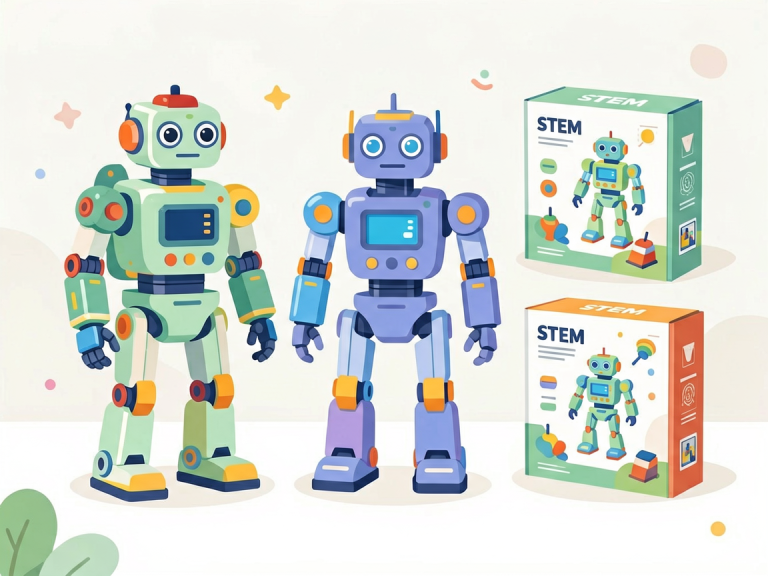
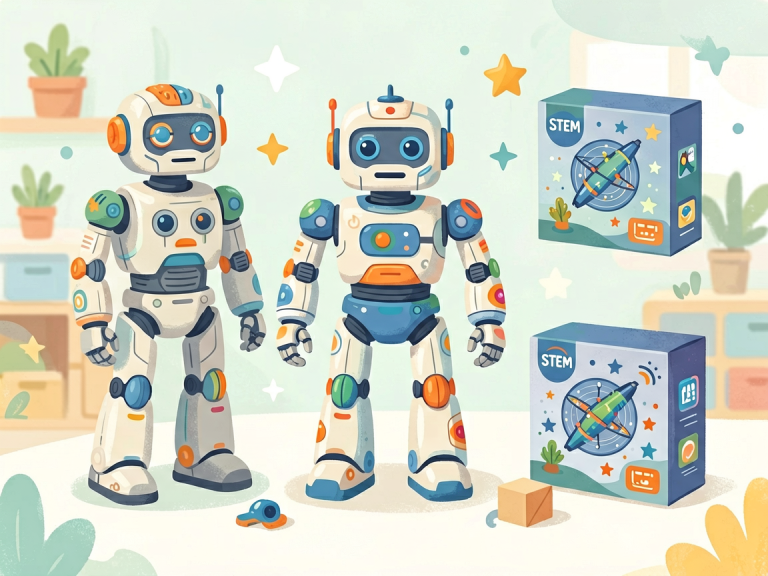
Engineering toys are built for *making*. LEGO bricks allow a child to construct a castle, a suspension bridge, or a working gear train. A K’Nex roller coaster demands that loops be high enough for gravity to pull the car through. A robotics kit requires coding and wiring to make a motor spin at the right moment. These toys emphasize function and constraint—the twin pillars of design thinking. Unlike the “anything goes” spirit of pure scientific inquiry, engineering play forces the child to ask: “Does it work? Does it stay upright? How can I make it stronger?”
This process hones convergent creativity—the ability to narrow down options and arrive at a single, effective solution. While divergent thinking spreads outward like ripples, convergent thinking focuses inward like a funnel. A child building a bridge from popsicle sticks must evaluate multiple truss designs (divergent), but then commit to one, test it, and incrementally improve it (convergent). Each failure (the bridge collapses under a weight of 200 grams) becomes a precise piece of data: “The joint at the center is too weak.” The creative act here is not discovering a new phenomenon but *optimizing* a system within real-world limitations.
Engineering toys also teach resilience through iteration. In a classic LEGO challenge (e.g., build a car that travels three meters), a child may try five different wheel configurations before succeeding. Each attempt is a micro-cycle of creativity: problem identification, idea generation, prototype construction, testing, and revision. This mirrors the engineering design process used by professionals at NASA or Tesla, making these toys a powerful apprenticeship in productive persistence. Yet, an overemphasis on convergent thinking can sometimes stifle wild imagination. A child focused solely on making a stable tower may never ask, “What if I made it spin?” or “Could I use magnets instead?” That question belongs to the domain of science.
The Synergy of Science and Engineering: A Holistic Creativity Framework
The most profound creative achievements in human history—from the Wright brothers’ airplane to the CRISPR gene-editing system—have emerged from a dance between science and engineering. Science asks, “What are the laws of aerodynamics?” Engineering asks, “How can we shape wood and canvas to harness those laws?” A child who only plays with science toys may become a brilliant theorist but struggle to prototype a working model. A child who only builds with engineering toys may become a skilled maker but lack the daring to imagine radically new possibilities.
This is why the dichotomy of “science toys vs. engineering toys” is ultimately misleading. They are not rivals but partners. Consider a marble run: the child must understand gravity (science) and then design slopes, curves, and obstacles (engineering) to control the marble’s path. A robotics kit demands knowledge of circuits (science) and structural assembly (engineering). The most creative outcomes arise when children are encouraged to *move fluidly* between the two mindsets. For instance, a child might start with a science question (“How does a lever multiply force?”), then build a catapult to test it, then systematically adjust the fulcrum to hit a target (engineering optimization), and then ask, “What if I changed the projectile material?” (new science question). This cycle—from divergent curiosity to convergent crafting and back again—is where true creativity thrives.
Research supports this integrated approach. A 2019 study in the *Journal of Creative Behavior* found that children who engaged in both open-ended scientific exploration and structured engineering design tasks scored higher on measures of creative problem-solving than those exposed to only one type. The reason is that creativity is not monolithic; it is a set of complementary cognitive muscles. Science toys strengthen the “what if” muscle; engineering toys strengthen the “how to” muscle. Both are necessary for a child to transform a spark of imagination into a tangible innovation.
Conclusion
In the debate over science toys versus engineering toys for creativity, the winner is not one or the other—it is the deliberate *combination* of both. Science toys open the door to infinite possibilities, training children to ask bold questions and tolerate uncertainty. Engineering toys provide the tools to walk through that door, teaching children to craft elegant solutions under the pressure of reality. A child’s creative potential is best nurtured not by an exclusive allegiance to one category, but by a balanced play diet that includes astronomy kits alongside LEGO Technic, chemistry sets alongside marble runs. When we give children permission to be both the scientist who wonders and the engineer who builds, we are not just fostering creativity—we are equipping them with the thinking skills to shape the future, one hypothesis and one prototype at a time.