Are LEGO-Style Bricks Worth It for 2-Year-Olds? A Developmental, Safety, and Cost-Benefit Analysis
Introduction
The toddler years are a whirlwind of curiosity, motor development, and the first tentative steps toward symbolic play. As parents, caregivers, and educators, we are constantly bombarded with toys that promise to boost cognitive skills, fine motor control, and creativity. Among the most iconic of these is the humble interlocking plastic brick, epitomized by LEGO and its many competitors. But when a child is just two years old—still prone to mouthing objects, experiencing temper tantrums over frustration, and lacking the manual dexterity to align tiny studs precisely—are these bricks really worth the investment?
The question “Are LEGO-style bricks worth it for 2-year-olds?” is deceptively simple. On the surface, the answer seems obvious: LEGO bills itself as a toy for ages 1½ to 99, but the small classic sets carry a choking hazard warning for children under three. Meanwhile, the larger DUPLO line is explicitly designed for preschoolers. Yet millions of parents have introduced standard LEGO bricks to two-year-olds with varying degrees of success. This article examines the evidence from developmental psychology, occupational therapy, product safety standards, and family economics to provide a nuanced, evidence-based answer. We will explore the potential benefits, the real risks, practical alternatives, and the conditions under which these bricks might—or might not—be worthwhile for a two-year-old.
Developmental Appropriateness: Can a Two-Year-Old Actually Play with Them?
Fine Motor Skills and the Pincer Grip
At age two, most children have developed a crude pincer grasp (using thumb and forefinger) and can manipulate larger objects with reasonable accuracy. However, the precise action required to place a standard LEGO brick (approx. 8 mm wide stud) onto another with exact alignment is challenging. A study published in the *Journal of Occupational Therapy, Schools, and Early Intervention* noted that successful block stacking with small blocks typically emerges around 30–36 months, with significant variability. Two-year-olds often resort to random pressing, lateral dragging, or simply gripping the bricks and banging them together. While frustration is a natural part of learning, excessive failure can lead to tantrums that outweigh any joy.
Cognitive Demands: Spatial Reasoning vs. Overwhelm
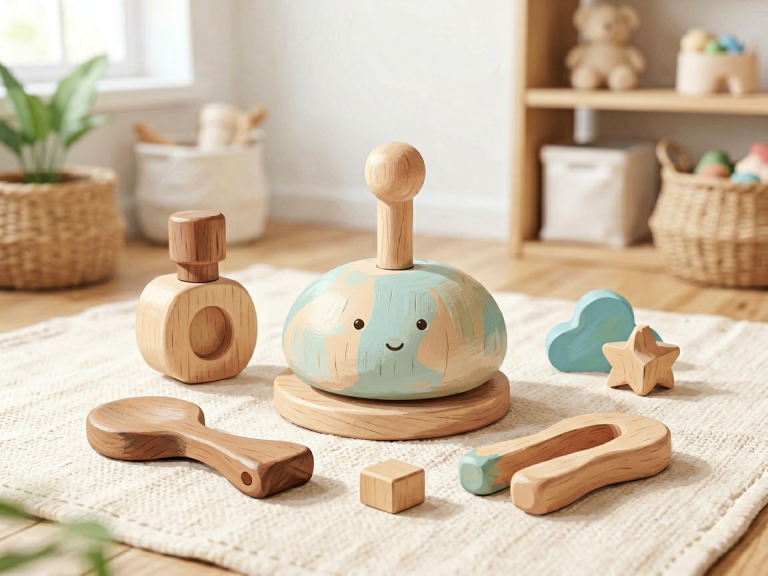
Constructive play at two years is predominantly sensorimotor—the child explores how objects feel, sound, and move. True structured building (e.g., following a picture of a house) is beyond most two-year-olds. They may enjoy knocking down towers, sorting bricks by color, or stacking a few high. These activities do promote spatial awareness, cause-and-effect understanding, and early math concepts like size comparison. However, the same benefits can be achieved with larger wooden blocks, Duplo bricks, or even cardboard boxes, which are less frustrating. The key cognitive advantage of LEGO-style bricks—their ability to create intricate, stable structures through interlocking—is largely lost on a two-year-old who cannot yet align the studs.
Attention Span and Persistence
A typical two-year-old’s attention span for a single activity is around four to six minutes. LEGO play, even with large bricks, requires sustained effort and problem-solving. Many toddlers lose interest quickly, leading parents to feel the investment was wasted. Conversely, some children exhibit remarkable persistence. The variance is enormous, meaning the decision must be child-specific. Observing your own toddler’s play style with other construction toys (such as stacking cups or pegboards) can provide clues.
Safety Considerations: The Elephant in the Playroom
Choking Hazards: Standard LEGO vs. DUPLO
The most pressing concern for any toy marketed to children under three is choking. Standard LEGO bricks, while large enough to not fit entirely into a toddler’s mouth, pose a risk because they can be broken into smaller pieces (especially bricks with sharp corners or pieces like minifigure accessories). The U.S. Consumer Product Safety Commission (CPSC) mandates that toys for children under three must be larger than 3.175 cm (1.25 inches) in diameter and 5.7 cm (2.25 inches) in length. Standard LEGO bricks measure about 1.6 cm in height and are therefore technically a choking hazard. LEGO itself labels its Classic sets for ages 4+ precisely because of small parts. While some parents assume that bricks alone are safe, the reality includes other elements: wheels, axles, plastic trees, and especially the 1×1 studs, which are the most common choking incidents.
DUPLO: The Safer Alternative
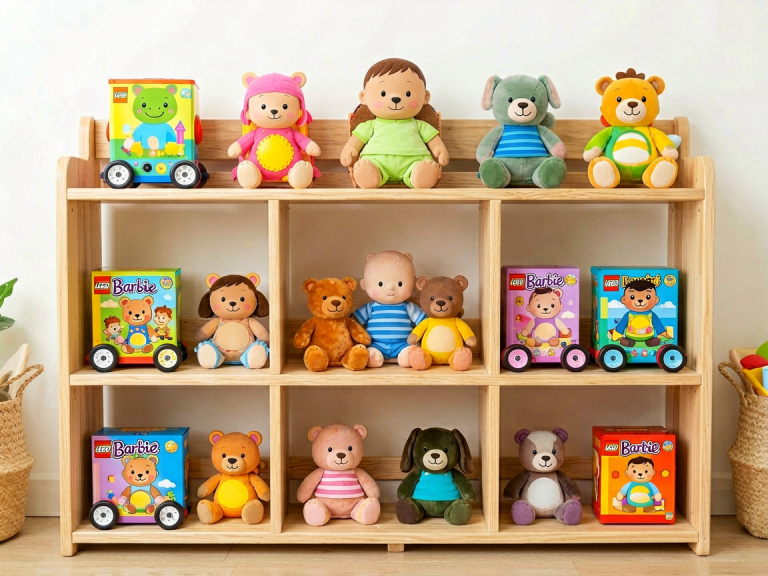
LEGO’s Duplo line (bricks that are twice the size—approx. 4 cm tall) is the officially recommended system for ages 1½ to 5. Duplo bricks meet all safety standards: they are too large to swallow, they snap together with less force, and they have rounded edges. Many parents wonder whether Duplo is “worth it” compared to standard LEGO. From a safety perspective, the answer is unequivocally yes for a two-year-old. The cost difference is significant—Duplo sets are often more expensive per piece—but the peace of mind and age-appropriate play are invaluable. Moreover, Duplo bricks are fully compatible with standard LEGO (they fit onto standard baseplates), so the investment can bridge into older childhood.
Mouthing, Biting, and Bacterial Concerns
Two-year-olds still explore orally. Even if a brick is not a choking hazard, it will be slobbered on, dropped on the floor, and possibly gnawed. LEGO plastic is non-porous and can be cleaned, but parents should be aware that used bricks might retain bacteria if not regularly sanitized. The sharp edges of standard bricks (especially older, worn ones) can also cause gum injury. Duplo bricks are softer and more forgiving in this regard.
Educational Value: What Do Two-Year-Olds Actually Learn from LEGO-Style Bricks?
STEM Precursors: Math and Engineering
Proponents argue that bricks teach early engineering concepts—balance, symmetry, structural integrity. A two-year-old who spends ten minutes trying to snap two Duplo bricks together is learning about force, alignment, and cause and effect. When they succeed, they experience a dopamine reward that reinforces perseverance. However, research shows that open-ended building with any blocks—including simple wooden cubes—provides nearly identical cognitive benefits at this age. The specific “interlocking” mechanism does not become crucial until the child can plan multi-step constructions (around age 3½–4). For a two-year-old, the most valuable skill is practicing the pincer grip and hand-eye coordination, which Duplo achieves as well as any other large block.
Language and Social Development
Playing with a caregiver can enhance vocabulary (“on top,” “under,” “red block,” “big tower”). Bricks also encourage parallel play (two toddlers building side by side). These benefits are not unique to LEGO-style bricks, but the high popularity means that many playgroups and daycare centers have them, increasing social opportunities. A two-year-old who enjoys bricks may also develop narrative skills by pretending the brick is a phone or a car—a form of symbolic play that is crucial at this stage.
Creativity vs. Instruction-Following
One hidden pitfall of branded LEGO sets (e.g., a specific fire station or farm) is that they often come with instruction booklets. Two-year-olds cannot read diagrams, and parents may feel pressure to build the model “correctly.” This can lead to adult-dominated play, which diminishes the child’s autonomy. The best approach for toddlers is to ignore the instructions and treat the bricks as raw material. However, parents who buy expensive themed sets may feel compelled to use them as intended, creating unnecessary frustration for both parties. Therefore, for two-year-olds, a bulk box of basic Duplo bricks is far more valuable than any themed set.
Cost-Benefit Analysis: Is the Price Tag Justified?
Initial Investment vs. Longevity
A 60-piece box of Duplo bricks retails for around $20–$30. A standard LEGO Classic set (smaller bricks) with 120 pieces may cost $15–$20. On the surface, LEGO seems cheaper per piece. But if the child cannot use the small bricks safely until age 4, and if those bricks will be lost, chewed, or scattered, the effective cost per month of appropriate use is much higher. Additionally, many parents end up buying Duplo anyway when the toddler swallows a wheel or jams a brick up their nose. The wisest strategy is to start with a modest Duplo collection (around 40–80 pieces) and then graduate to standard LEGO at age 4–5. This double purchase can be costly, but Duplo retains high resale value.
Alternative Brands: A Viable Option?
Brands like Mega Bloks (by Mattel) offer larger, toddler-friendly bricks that are slightly less expensive than Duplo. They also produce “First Builders” blocks that are oversized and soft. These alternatives are often perfectly compatible with Duplo (though not always perfect). For a two-year-old, the brand name matters less than the brick size and safety. Off-brand bricks may have slightly inferior clutch power (the force needed to snap together), which can be frustrating for small hands, but some toddlers actually prefer looser bricks. Parents should test a small set before investing. In general, for two-year-olds, the recommendation is: choose bricks that are at least 3 cm in any dimension, avoid sets with small accessories (wheels, flags, etc.), and ensure the bricks are free of sharp edges.
Practical Recommendations: How to Make LEGO-Style Bricks Work for a Two-Year-Old
- Start with Duplo (or Mega Bloks First Builders). Do not buy standard LEGO for a two-year-old. The frustration and safety risk outweigh the benefits. If you already own standard LEGO, keep them out of reach and use only Duplo for supervised play.
- Supervision is Non-Negotiable. Even with Duplo, a two-year-old may try to stack bricks so high that they fall and cause minor head bumps. Always sit with your child, model building, and narrate your actions. This turns play into a bonding activity.
- Ignore the Instructions. Dump all the bricks into a bin. Let your child explore freely. Build simple towers, bridges, or animals together. The goal is process, not product.
- Incorporate Other Sensory Materials. Use bricks in sensory bins (with rice or sand) to expand play. This keeps the bricks versatile and prevents boredom.
- Prepare for Cleanup. Two-year-olds can help sort bricks by color (a great fine-motor and math activity), but they will inevitably scatter them everywhere. Set up a contained play area, such as a large mat or a low table with raised edges, to minimize lost pieces.
- Know When to Move On. If your child shows no interest in bricks, do not force it. Some two-year-olds prefer push toys, puzzles, or art. The “worth” of bricks depends entirely on the child’s current developmental stage and temperament.
Conclusion: The Verdict
Are LEGO-style bricks worth it for a two-year-old? The answer is yes, but only under strict conditions. The bricks must be age-appropriate in size (Duplo or equivalent), play must be supervised, and expectations must be set low. The benefits—fine motor development, spatial reasoning, language enrichment, and social play—are real, but they are not exclusive to this toy. For a two-year-old, a set of high-quality wooden blocks or soft foam bricks can provide comparable advantages with fewer frustrations and risks.
However, if a parent is already invested in the LEGO ecosystem and plans to continue buying sets as the child grows, starting with Duplo is a smart long-term investment. The bricks can be used for years, handed down to siblings, and eventually combined with classic LEGO. The cost per year of use then becomes negligible.
Ultimately, the most valuable plaything for a two-year-old is an engaged, patient adult. Whether that adult is holding a Duplo brick or a cardboard box, the child’s world is expanded through interaction. So if you decide to buy LEGO-style bricks, do so with the understanding that they are a tool, not a miracle. And if you decide to skip them entirely, your toddler will still flourish—provided you offer a rich environment of simple, safe, and open-ended materials. The bricks themselves are not worth the hype; the shared moments of discovery are.