Choosing Toys for Two-Year-Olds: Building a Foundation for Reading Readiness
Introduction: Why Toys Matter at Age Two
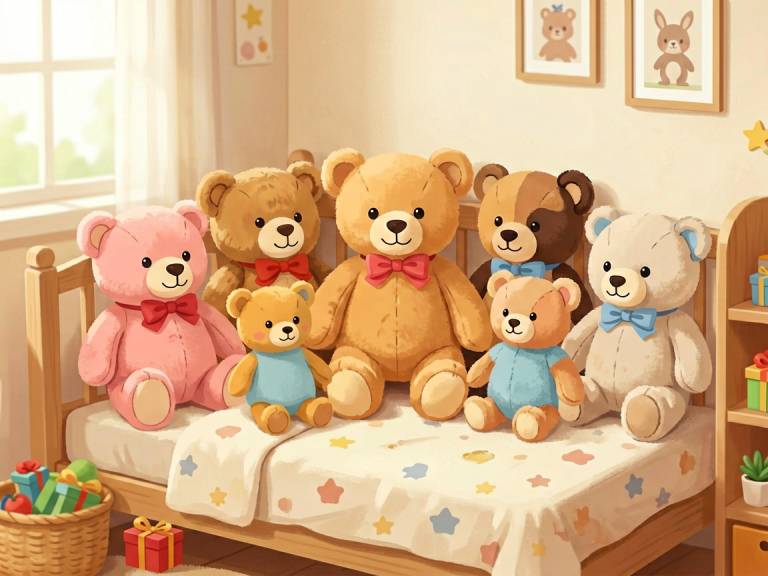
At the age of two, a child’s brain is developing at an astonishing rate. Every day, toddlers are absorbing language, patterns, emotions, and the physical rules of the world around them. Play is not merely a way to pass time; it is the primary vehicle through which a two-year-old learns. The toys we choose for this age group can either enrich or limit that learning. One of the most overlooked connections in early childhood development is the link between toy selection and reading readiness. While a toy may not look like a book, the skills it builds—such as focusing attention, recognizing symbols, sequencing actions, and expanding vocabulary—are the very same skills that prepare a child to decode and comprehend text later on. Therefore, understanding how to choose toys for two-year-olds with reading readiness in mind is both a practical and visionary task for parents and educators.
The Developmental Profile of a Two-Year-Old
Before selecting any toy, it is crucial to understand what a typical two-year-old can do and where they struggle. At this age, children are developing fine motor control, which allows them to grasp small objects, turn pages, and manipulate blocks. Their gross motor skills are growing too, leading to running, jumping, and climbing. Cognitively, they are moving from simple cause-and-effect thinking to simple symbolic representation—they may pretend a banana is a phone or a block is a car. Language explodes during this year: many toddlers know 50 to 300 words and are starting to combine two or three words into short phrases. They also have a short attention span, typically no more than five to ten minutes for a single activity, unless it is deeply engaging.
Reading readiness does not mean teaching a two-year-old to read. Rather, it means building the pre-literacy skills that make reading possible: phonological awareness (hearing sounds in words), print awareness (noticing that text carries meaning), vocabulary breadth, narrative skills (understanding a sequence of events), and motivation. A good toy can nurture each of these areas through play.
Key Principles for Toy Selection
1. Prioritize Open-Ended Toys Over Single-Use Gadgets
Open-ended toys are those that can be used in multiple ways, with no fixed outcome. Blocks, stacking cups, playdough, and simple figurines are perfect examples. A two-year-old can stack blocks, knock them down, sort them by color, or use them as “food” in a pretend kitchen. This kind of play stimulates divergent thinking and symbolism, both of which are essential for understanding that written symbols (letters and words) represent real objects and ideas. In contrast, a battery-operated toy that only lights up and plays a song when a button is pressed offers a much narrower range of cognitive engagement. It may entertain for a moment, but it does not invite the child to construct meaning, which is the core of reading comprehension.
2. Choose Toys That Encourage Language Interaction
Reading readiness thrives on conversation. Look for toys that prompt a two-year-old to name things, ask questions, or describe actions. Toy animals, dolls, and vehicles are excellent because they encourage dramatic play, during which the child will naturally talk to the toys or to a playmate. Also consider toys that include simple printed words or letters, but in a playful context. Wooden alphabet blocks, magnetic letters, and puzzle boards with letters are ideal—not because they force a child to learn the alphabet, but because they allow the child to become familiar with letter shapes and names through repeated handling. When you play with your child and these toys, name each letter and its sound casually: “This is the letter B. B says /b/. This block is blue, like a blueberry.” This kind of oral language modeling is a powerful pre-reading booster.
3. Look for Toys That Develop Fine Motor Skills and Hand-Eye Coordination
Being able to turn pages of a book without tearing them, to point to a picture accurately, and to track a line of text from left to right—all of these depend on fine motor control and visual tracking. Toys that support these skills include large bead threading sets, pegboards, simple jigsaw puzzles with chunky pieces, crayons, and finger paint. At two years old, children are still using a palmar grasp, but they gradually move toward a pincer grasp. Provide thick, triangular crayons that are easy to hold. Let them scribble freely; those scribbles are early writing attempts and are linked to later reading success. Puzzles also teach visual discrimination—the ability to notice differences in shapes and details—which is exactly what a child needs to tell “b” from “d” later on.
4. Incorporate Books and Book-Like Toys Into the Environment
Toys and books should not be separate worlds. For a two-year-old, a toy that resembles a book—such as a cloth or board book with movable flaps, textures, and sounds—can bridge play and reading. Interactive books that feature buttons to press for animal sounds or simple words are highly engaging and help children associate printed letters with spoken language. Additionally, consider “talking” toys that repeat words or short phrases when the child presses a picture. While these should not replace human interaction, they can reinforce vocabulary when used wisely. The goal is to make reading feel like play, not like a chore.
5. Avoid Overstimulation and Frustration
Two-year-olds can easily become overwhelmed by toys that are too busy or too complex. A toy with too many flashing lights, loud noises, or a confusing interface actually hinders reading readiness because it fragments attention. Reading requires sustained focus, even if only for a few minutes. Choose toys that have a calm, manageable aesthetic—natural wood, soft fabrics, and muted colors are often better than harsh plastic and strobe-like effects. Similarly, avoid toys that are too far beyond the child’s developmental level. If a toy has tiny pieces that pose a choking hazard, or if it requires a level of dexterity the child has not yet attained, the child will feel frustrated and may lose interest in exploration. Frustration kills motivation, and motivation is a key component of becoming a reader.
Practical Toy Suggestions for Reading Readiness
Now we come to the concrete question: what specific toys should you buy or make for a two-year-old? Here is a categorized list that combines fun with foundational literacy skills.
Building and Construction Sets
Large, lightweight cardboard blocks or wooden unit blocks are superstars. They can be used to build a tower, a house, or a bridge. As the child builds, narrate the actions: “You are putting the big block on top. Now the tower is tall.” This builds narrative skills and domain-specific vocabulary. Also, blocks with letters printed on them can be used later to spell simple words. But at age two, the primary benefit is spatial reasoning and symbolic thinking.
Pretend Play Kits
Play kitchens, tool benches, dolls, and dress-up clothes encourage role-playing. When a child pretends to cook a meal or put a doll to bed, they are creating a story in their head. This is the earliest form of narrative comprehension—understanding that events happen in order, that characters have needs, and that objects have functions. To enhance the reading connection, add simple “labels” to play items: put a card that says “table” on the toy table, or “cup” on the toy cup. Point to the word as you say it. This is a relaxed, play-based way to introduce print awareness.
Art Supplies
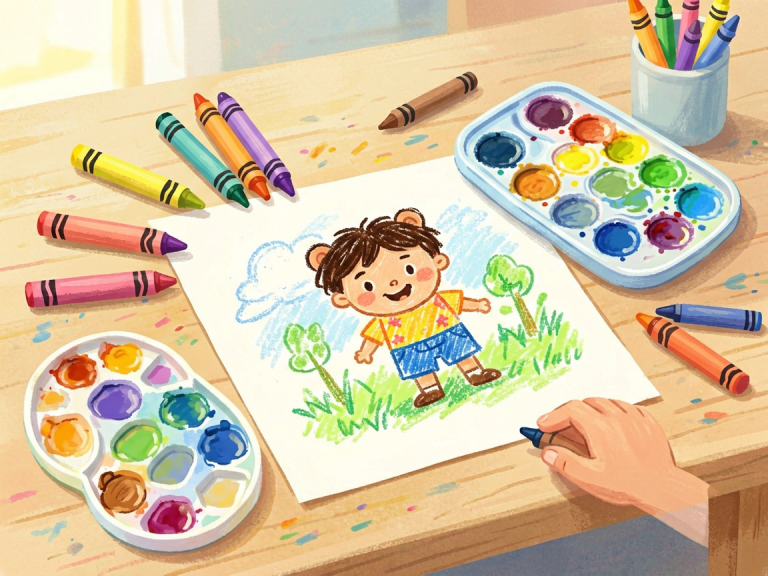
Crayons, markers, sidewalk chalk, finger paint, and large sheets of paper are essential. Drawing and scribbling are the physical precursors to writing, which is inseparable from reading. When a child scribbles, they are learning that marks can carry meaning. Encourage your child to tell you about their drawing, and write down their words on the same paper. This demonstrates that speech can be turned into written text—a powerful insight for a toddler.
Simple Puzzles and Shape Sorters
Puzzles with large pieces that fit into matching cutouts are fantastic for visual discrimination and problem-solving. A shape sorter with a square, circle, and triangle teaches that each shape has a name and a specific slot. Similarly, an alphabet puzzle where each letter fits into its own space helps the child become familiar with letter shapes, even if they cannot yet name them all. The act of turning a piece to match the opening is the same mental operation as recognizing that a particular squiggle on a page is a distinct letter.
Music and Rhyme Toys
Songs, nursery rhymes, and rhythm instruments are often forgotten when we think of reading, but they are critical. Phonological awareness—the ability to hear and manipulate sounds in words—is one of the strongest predictors of later reading success. Toys that encourage singing, clapping, and rhyming (such as simple drums, shakers, and songbooks) teach a child to notice the beat and the individual sounds in spoken language. You can also use a musical toy to play “pairs” games: say a word and then a word that rhymes, clapping for each syllable. This is fun, silly, and deeply educational.
The Role of Adult Interaction
No toy, no matter how perfectly chosen, can replace a caring adult who talks, listens, and plays with a child. A two-year-old learns best through guided play. When you sit on the floor and roll a ball back and forth, you can label the action (“roll”), count the turns (“one, two”), and use descriptive words (“fast, slow, high, low”). When you do a puzzle together, you can use positional language (“the piece goes on top,” “turn it around”), which enriches vocabulary. When you read a book together, point to the words as you read, run your finger under the text, and pause to ask simple questions (“What is the dog doing?”). The child learns that reading is an interactive, enjoyable activity.
Creating a Reading-Rich Play Space
Consider how you arrange the toys and books in your home. Place a low bookshelf with a few board books next to a basket of blocks or a toy kitchen. This visual pairing suggests that books are as much a part of play as toys. Rotate toys every week or two so that the child does not become bored. A smaller set of toys that are deep and open-ended is better than a huge collection that overwhelms. Also, ensure that books are always accessible—not just on a high shelf. A toddler who can pull out a book and flip through it on their own is developing print awareness and independence.
Avoiding Common Pitfalls
It is tempting to buy educational toys that promise to teach reading through screens or flashcards. Many of these are hyped and do more harm than good. A two-year-old does not need screen-based apps that flash letters or quizzes. The American Academy of Pediatrics recommends avoiding screen media for children under 18 months, and even for older toddlers, interactive play with real objects is far superior. Flashcard drilling may produce a child who can recognize letters mechanically, but it does not build the love of language or the conceptual understanding that matters. Similarly, avoid battery-operated talking toys that repeat sentences in a robotic voice; they can become background noise rather than meaningful communication.
Another pitfall is underestimating the value of repetition. A two-year-old will want to read the same book or play the same game hundreds of times. This may bore adults, but repetition is exactly how toddlers solidify neural pathways. Choosing toys that are durable and not annoying (in your opinion) is wise—you will be engaging with them many times. For example, a simple set of animal figures can be used to reenact the same story over and over, but each time the child may add a new word or action. That is the essence of learning.
Conclusion: Play Today, Read Tomorrow
Choosing toys for a two-year-old is not about finding the newest gadget or the most “educational” brand. It is about finding materials that invite exploration, language, creativity, and fine motor practice. A cardboard box, a set of wooden blocks, a few chunky puzzles, and a lap full of board books are arguably more powerful than any expensive electronic toy. The skills of focusing on a task, recognizing shapes and symbols, hearing the rhythm of language, and using words to describe a story—all of these are the building blocks of reading. And they are best built not through drills, but through joyful, meaningful play. So when you search for toys for your two-year-old, ask yourself: Does this toy invite conversation? Does it allow multiple uses? Does it support fine motor skills? Does it have a calm, engaging feel? If the answer is yes, you are not just buying a toy; you are laying the foundation for a lifelong love of reading. And that is one of the greatest gifts any adult can give.