A Comprehensive Guide on How to Choose Building Blocks for 3-Year-Olds
Introduction
At the age of three, children enter a remarkable phase of cognitive, motor, and social development. Their imagination blossoms, their fine motor skills improve rapidly, and they begin to understand basic concepts of cause and effect, spatial relationships, and problem-solving. Building blocks are one of the most classic and beneficial toys for this age group. They offer endless opportunities for open-ended play, creativity, and learning. However, not all building blocks are created equal, and choosing the right set for a 3-year-old requires careful consideration. A poor choice can lead to frustration, safety hazards, or limited developmental benefit. This article provides a detailed, research-backed guide to selecting the perfect building blocks for a 3-year-old, covering safety, material, size, educational value, and more.
Safety First: Non-Toxic Materials and No Choking Hazards
When it comes to toys for toddlers, safety is the absolute priority. Three-year-olds are still prone to putting objects in their mouths, and they also tend to throw or drop blocks frequently. Therefore, any building blocks you choose must meet strict safety standards.
Non-Toxic Materials
Look for blocks made from non-toxic, BPA-free, phthalate-free materials. Wooden blocks are often a top choice because they are natural, durable, and free from harmful chemicals if they are finished with water-based, non-toxic paints or varnishes. For plastic blocks, ensure they are labeled as food-grade or certified by recognized safety organizations (e.g., ASTM, EN71, or CPSIA). Avoid blocks with strong chemical odors, as this may indicate harmful volatile organic compounds.
Choking Hazards
The size of the blocks is critical. For a 3-year-old, all pieces should be larger than the child’s mouth to prevent accidental swallowing. As a general rule, any block smaller than 1.5 inches (about 3.8 cm) in diameter can be a choking hazard. Many wooden unit blocks are large and chunky, making them safe. If you choose a set with small decorative elements (like wheels or eyes), ensure they are securely attached and cannot be pulled off. Always check the manufacturer’s age recommendation—if it says “3+,” it should be safe, but inspect the actual pieces yourself.
Edge Safety
Blocks should have smooth, rounded edges to avoid cuts or splinters. High-quality wooden blocks are sanded and polished, while plastic blocks should have no sharp burrs. Magnetic blocks, which are popular, must have magnets securely encased so that they cannot break free and be swallowed.
Material Matters: Wood, Plastic, Foam, or Magnetic?
The material of the building blocks influences durability, weight, tactile experience, and noise level. Each has pros and cons for a 3-year-old.
Wooden Blocks
Wooden blocks are a timeless classic. They are sturdy, provide a satisfying weight, and teach children about gravity and balance. Natural wood textures stimulate sensory exploration. Look for hardwoods like maple, beech, or birch, which resist chipping. Avoid softwoods that may dent easily. Wooden blocks are quieter than plastic and often have a more organic feel. However, they can be expensive and may break if dropped from a height. For a 3-year-old, a set with a variety of shapes (squares, rectangles, arches, cylinders) is ideal.
Plastic Blocks
Plastic blocks, such as those from major brands like LEGO Duplo, are lightweight, easy to clean, and come in vibrant colors. They often interlock, allowing children to build stable, complex structures. Duplo bricks are specifically designed for toddlers—they are twice the size of standard LEGO bricks, making them safe and easy to handle. Plastic blocks are durable and waterproof. The downside is that they can be noisy and may not offer the same tactile warmth as wood. Also, some cheap plastic blocks may contain toxins or break into sharp pieces.
Foam Blocks
Foam building blocks are soft, lightweight, and safe for active play. They are excellent for a 3-year-old who is still unsteady or likes to knock down towers without hurting themselves or others. Foam blocks are quiet and can be used in water play. However, they have limited structural integrity—tall towers may collapse easily, which can frustrate some children. They also tend to collect dust and may degrade over time. Foam is a good choice for early construction play but might be outgrown quickly.
Magnetic Blocks
Magnetic building blocks (e.g., Magna-Tiles, PicassoTiles) have become extremely popular. They consist of plastic squares and triangles with magnets inside the edges. They allow children to build 3D structures easily because the magnets snap together. They are excellent for teaching geometry, symmetry, and magnetism. For a 3-year-old, ensure the magnets are fully enclosed and the plastic is shatter-resistant. Some sets have large pieces that are safe. However, magnetic blocks can be expensive, and if a child drops them, the magnets might break free over time, so inspect regularly.
Recommendation for 3-Year-Olds
The best material depends on your child’s preferences and your environment. A combination is often ideal: start with a set of large wooden unit blocks for free-form construction, and add a set of plastic interlocking blocks (like Duplo) for guided building. Avoid small magnetic sets with many tiny pieces until the child is older.
Size and Shape: What Works Best for Tiny Hands?
Three-year-olds have developing fine motor skills. Their hands are small, but they can grasp and manipulate objects with increasing dexterity. The size and shape of the blocks should support their developmental stage.
Block Size
Blocks should be large enough to be grasped comfortably but not so large that they are difficult to handle. A standard unit block size for toddlers is about 1.5 to 2 inches (4–5 cm) thick and 4–6 inches (10–15 cm) long. This is manageable for a 3-year-old. Blocks that are too small may cause frustration, while blocks that are too heavy or bulky may be dropped frequently. For plastic interlocking blocks, the Duplo brick size (about 1.25 x 1.25 x 0.75 inches) is perfect.
Shape Variety
A good set should include basic geometric shapes: squares, rectangles, triangles, arches, half-circles, and cylinders. This variety teaches children about different forms and how they fit together. For a 3-year-old, avoid sets with too many complex or specialized shapes (like people or animals) initially, as they may distract from pure construction play. However, a few specialized pieces (like a roof block or a wheel base) can spark imaginative play. The key is balance: about 70% basic shapes and 30% specialty pieces.
Weight
Blocks should not be too heavy. Lightweight foam or hollow wooden blocks are easier for a 3-year-old to lift and stack. Heavy solid wood blocks are durable but may be too challenging for a child who is just learning to balance. If using heavy blocks, start with fewer pieces and supervise play.
Educational Value: Developing Skills Through Play
Building blocks are not just toys; they are powerful learning tools. When choosing blocks, consider how they support your child’s development in multiple domains.
Fine Motor Skills
Picking up, stacking, and aligning blocks strengthens the small muscles in the hands and fingers. Look for blocks with textured surfaces or slight grooves that help grip. Interlocking blocks require precise alignment, which is excellent for hand-eye coordination.
Spatial Awareness and Problem-Solving
As children try to build towers, bridges, or enclosures, they learn about balance, symmetry, and spatial relationships. They experiment with cause and effect: “If I place this block here, the tower falls. If I put it there, it stays.” Choose blocks that allow for trial and error. Avoid sets that are too prescriptive (like a single-purpose mold). Open-ended blocks encourage creative problem-solving.
Language and Mathematical Concepts
While playing with blocks, you can introduce vocabulary: “bigger,” “smaller,” “taller,” “shorter,” “on top,” “under,” “next to.” Blocks also teach basic math: counting, sorting by size or color, and understanding geometric shapes. Some sets include numbers or letters, which can be a bonus, but not essential at this age.
Social and Emotional Development
Building with a parent or sibling teaches cooperation, sharing, and turn-taking. Blocks also provide a safe outlet for frustration—knocking down a tower can be cathartic. Choose blocks that are easy to stack and unstack so that failure is not too discouraging. Blocks that are too difficult to connect (like some magnetic sets with weak magnets) may cause tantrums.
Encouraging Creativity: Open-Ended vs. Themed Sets
For a 3-year-old, creativity is best nurtured by open-ended play. Themed sets (e.g., a castle set, a farm set) can be fun but may limit imagination because they come with a specific building plan. Open-ended blocks allow children to invent their own worlds.
Open-Ended Block Sets
Look for sets that contain a variety of basic shapes without instructions or predetermined models. The classic wooden unit block set is the epitome of open-ended play. A child can build a tower, a road, a house, a rocket, or anything else they dream up. Plastic interlocking blocks like Duplo also allow open-ended play if you buy a large “classic” box rather than a themed set.
Themed Sets in Moderation
That said, a themed set can be a good starting point. For example, a set with blocks that have animal faces or car wheels can spark a narrative. Just make sure the set still contains many generic blocks. Avoid sets that are only a few pieces with a single complex shape—those are better for older children.
Including Accessories
Small figures, like people or animals, enhance imaginative play. However, ensure these accessories are appropriately sized and safe. For a 3-year-old, figures should be at least 1.5 inches tall and made of soft plastic or wood. Avoid tiny accessories that could be swallowed.
Age-Appropriate Sets: What to Look for on the Shelf
When shopping, you will see many products labeled for ages 3+. Here’s how to evaluate them specifically for a 3-year-old.
The “Just Right” Challenge
The best blocks offer a moderate level of challenge. If the blocks are too easy (all identical squares), the child may get bored. If they are too difficult (small interlocking bricks that require precise pressure), the child may become frustrated. Look for sets that mix large basic shapes with a few interlocking pieces. For example, Duplo bricks with both standard bricks and large baseplates are great.
Number of Pieces
For a 3-year-old, a set with 40–80 pieces is usually sufficient. Too many pieces can overwhelm a child and create a mess. Too few pieces limit what they can build. You can always add more sets later. Quality over quantity—a smaller set of well-made blocks is better than a huge bucket of cheap, flimsy ones.
Color and Aesthetics
Bright, primary colors (red, blue, yellow, green) are attractive to young children and help with color recognition. However, some children prefer neutral wood tones. Both are fine. Avoid sets with overly busy patterns that may distract from the building process.
Storage
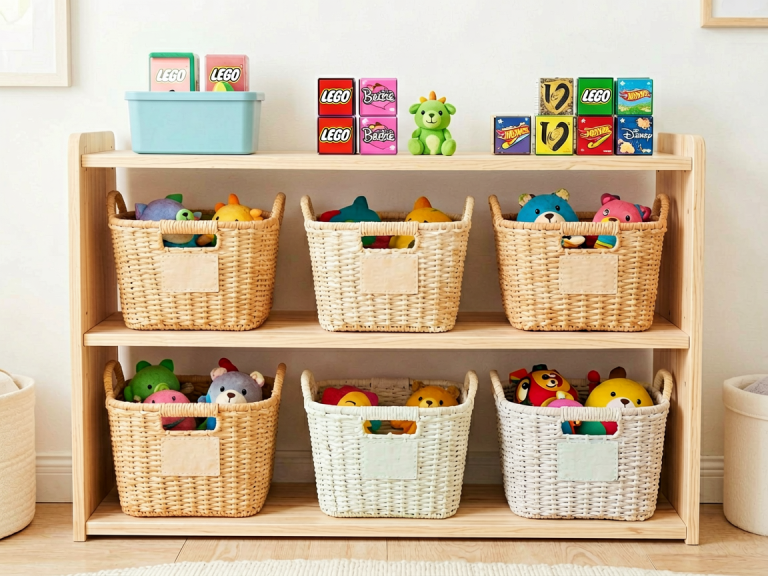
Many block sets come with a storage bag, bucket, or tray. This is important for teaching your child to clean up. A box with a lid or a cloth bag makes storage easy. Blocks that are easy to stack and store also encourage independent play.
Tips for Parents: How to Maximize the Building Block Experience
Choosing the right blocks is only half the battle. How you introduce and use them matters greatly.
Play Together Initially
Sit with your 3-year-old and demonstrate how to stack blocks. Show them basic techniques like placing a larger block at the bottom. But let them take the lead. Ask open-ended questions: “What do you want to build?” “How can we make this tower taller?” “What happens if we put this block here?”
Rotate Toys
If you have multiple block sets, rotate them every few weeks to keep interest high. A child who plays with the same blocks every day may eventually lose interest. By putting some away and bringing them out later, you renew their novelty.
Create a Building Space
Designate a flat, carpeted area (or use a large mat) for block play. This reduces noise and prevents blocks from rolling under furniture. A low table can also be useful. Make sure the area is free from distractions.
Embrace the Mess
Toddlers love to knock down towers. That is part of the learning process. Instead of discouraging it, celebrate it. Say, “Wow, look how high it went! Let’s build it again.” This builds resilience.
Safety Checks
Regularly inspect blocks for damage. Wooden blocks can splinter; plastic blocks can crack; magnetic blocks can leak. Discard any broken pieces immediately. Wash plastic blocks with warm soapy water; wipe wooden blocks with a damp cloth and dry thoroughly.
Conclusion
Choosing building blocks for a 3-year-old is a decision that can significantly influence their early learning and development. The ideal set prioritizes safety, uses non-toxic materials, offers large enough pieces to prevent choking, and provides a variety of shapes that challenge without frustrating. Whether you opt for classic wooden unit blocks, colorful Duplo bricks, soft foam blocks, or magnetic tiles, the key is to select a set that encourages open-ended, creative play. Remember that a three-year-old’s needs may change rapidly—what works today may be too simple in six months. Therefore, consider purchasing a few different sets over time, starting with the most basic and adding complexity as your child grows. With thoughtful selection and active parental involvement, building blocks will become a beloved tool for countless hours of joyful learning and discovery.