Beyond Bricks: Parent-Approved Alternatives That Build More Than Towers
Introduction
Every parent knows the classic wooden building block set: a timeless toy that promises hours of constructive play, spatial reasoning, fine motor skills, and quiet afternoons. But what happens when your child has outgrown the standard square, or when you’re looking for something that stretches creativity even further without sacrificing the developmental benefits? The answer lies not in abandoning the concept of building, but in exploring parent-approved alternatives that offer fresh challenges, deeper engagement, and—most importantly—peace of mind for mom and dad. These alternatives go beyond simple stacking; they foster problem-solving, collaboration, STEM foundations, and even artistic expression. In this article, we’ll dive into six categories of parent-approved building-block substitutes, each carefully evaluated for safety, educational value, durability, and the ability to captivate children from toddlerhood through the elementary years. Whether your little architect is three or thirteen, there’s an option here that will keep the imagination soaring—without the mess of scattered wooden cubes underfoot.
—
1. Magnetic Tile Systems: The Modern Classic
If there is one alternative that has earned near-universal approval from parents, educators, and pediatric therapists alike, it is the magnetic tile set. Brands like Magna-Tiles, PicassoTiles, and Playmags have become household names, and for good reason. Unlike traditional wooden blocks, which rely solely on gravity and careful balancing, magnetic tiles click together with satisfying snaps, allowing even very young children to create three-dimensional structures that would otherwise require advanced dexterity.
Why parents approve: The magnets are safely encased inside the plastic tiles, eliminating the risk of swallowing small magnets—a common concern with cheaper magnetic toys. The tiles are transparent, colorful, and large enough to pose no choking hazard for children over three. Plus, they are incredibly durable; many families report sets lasting through multiple children and years of rough play.
Educational benefits: Magnetic tiles introduce basic principles of magnetism, geometry, and symmetry. Children learn that opposite poles attract and like poles repel, which becomes a tactile lesson in physics. Building a cube or a pyramid requires an understanding of how edges and faces connect, strengthening spatial visualization. Many parents also use magnetic tiles to teach fractions (a square divided into four smaller squares), color mixing (overlapping transparent tiles), and even early literacy (forming letters with the pieces).
Creative expansion: Unlike blocks that stack only vertically, magnetic tiles can be used to build horizontally, diagonally, and even upside down. A child can construct a bridge that spans two tables, a castle with a working drawbridge, or a geodesic dome. The ability to create enclosures—like a house with real walls and a roof—adds a level of pretend play that traditional blocks often miss. For older kids, magnetic tiles become components for marble runs (by adding special tubes and ramps), or they can be used as a light table overlay for sensory play.
Age range: Typically recommended for ages 3 and up, but many 2-year-olds can handle larger magnetic tiles with supervision. The sets grow with the child: a 3-year-old might stack simple towers, while a 10-year-old can design intricate 3D puzzles.
Parent tip: Invest in a set with at least 100 pieces, including squares and triangles in multiple sizes. The more pieces, the more complex the creations—and the fewer arguments over “who gets the last blue square.”
—
2. Interlocking Plastic Bricks (With a Twist): Beyond LEGO Basics
LEGO bricks are the undisputed king of building toys, but not all LEGO-like products are created equal. For parents seeking an alternative that is both parent-approved and developmentally appropriate, the key is to choose interlocking systems that offer flexibility without overwhelming small fingers or budgets. Of course, official LEGO Duplo bricks are an obvious choice for toddlers—they are larger, easier to handle, and impossible to swallow. However, many families discover that generic interlocking blocks from brands like Mega Bloks or Coko are equally durable and significantly cheaper, a factor that parents appreciate when pieces inevitably get lost under the sofa.
Why parents approve: Interlocking bricks promote fine motor control as children press pieces together and pull them apart. They teach patience and persistence—a tower that falls is a chance to try again. Importantly, because these bricks are made from non-toxic ABS plastic, they are safe for mouthing (up to a point), and they clean easily with soap and water. Parents also love that they can be combined with existing block collections, so creativity isn’t limited by brand loyalty.
Beyond the basic brick: The real genius of interlocking bricks lies in the endless specialized pieces: wheels, windows, doors, hinges, gears, and even motorized components. A child who masters basic stacking can move on to building a car that rolls, a windmill with spinning blades, or a robot with movable arms. Parent-approved alternatives often come in theme-based sets (farm animals, space stations, pirate ships) that spark narrative play. Alternatively, open-ended “classic” tubs encourage free building—a parent’s dream for fostering independent play.
Educational bonuses: Building with bricks strengthens hand-eye coordination and following instructions (if using a set with a guide). But the greater value lies in unstructured design: children must plan, estimate, and correct errors. A recent study from the University of Chicago found that children who played with interlocking bricks designed their own patterns before age 5 demonstrated stronger mathematical reasoning later on.
Parent caution: For children under 3, stick to Duplo-sized bricks (which are larger than standard LEGO). Avoid mini-figures with detachable parts until the child is past the mouthing stage. And invest in a storage system—those tiny bricks multiply like rabbits when left to their own devices.
—
3. Natural and Eco-Friendly Construction Materials
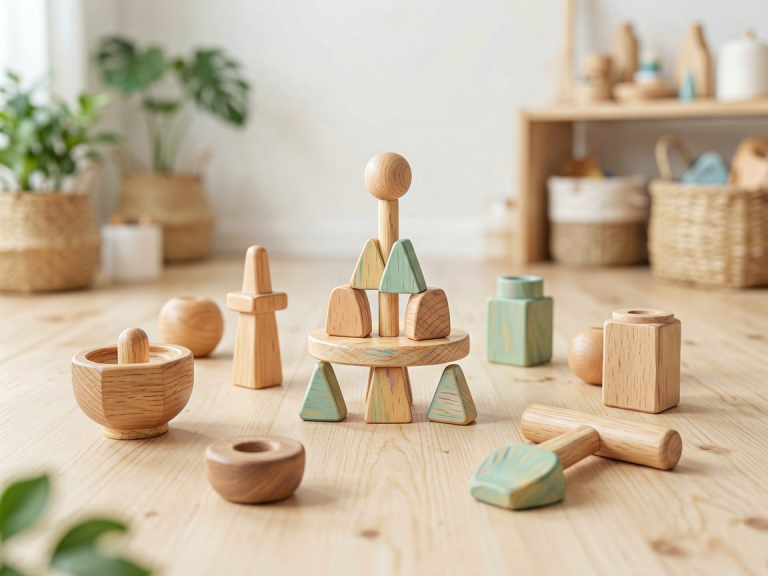
For the environmentally conscious parent, wooden building blocks remain a beloved classic. But “alternatives to building blocks” doesn’t have to mean abandoning natural materials; rather, it can mean reimagining them. The parent-approved alternative here is a loose-parts collection of natural objects—items that are not manufactured as toys but become building components through a child’s imagination. Think smooth river stones, pinecones, slices of tree branch, seashells, bamboo sticks, and cork disks.
Why parents approve: These materials are free of plastic, batteries, and chemical dyes. They are inherently sustainable, often foraged from nature or bought from craft stores. They also encourage a different kind of building—one that requires patience, balance, and an appreciation for irregular shapes. A stone tower will never be as stable as a LEGO tower, and that’s the point: children learn to adapt, to test limits, and to accept that some structures topple. This builds resilience and a scientific mindset.
Safety first: Parents must, of course, supervise to ensure that small objects are not swallowed. Choose stones that are too large to fit in a child’s mouth (at least 2 inches in diameter for toddlers). Avoid sharp edges or splintered wood. For younger children, use felted wool balls, large wooden rings, and fabric scraps as a soft alternative.
Creative possibilities: A set of natural loose parts can be used to build fairy houses, animal dens, bridges across a “river” (a blue scarf), or abstract sculptures. The irregularity of the pieces forces children to think about balance and center of gravity in ways that uniform blocks do not. Many Montessori schools and Waldorf kindergartens rely heavily on natural construction materials precisely because they encourage open-ended, imaginative play.
Parent tip: Create a “nature building kit” in a small basket. Include 10–15 pieces of varying shapes: flat stones, short sticks, pinecones, cork slices, and a few small fabric squares. Rotate the contents seasonally—collect acorns in autumn, smooth shells after a trip to the beach, or interesting driftwood. The novelty will keep your child engaged for years.
—
4. Cardboard Construction Systems: Affordable and Endlessly Recyclable
Perhaps the most overlooked parent-approved alternative to traditional building blocks is one that is already sitting in your recycling bin: cardboard. Modern cardboard construction kits, such as Makedo, Tinker Cardboard, or even simple cardboard tubes and boxes, turn humble corrugated fiber into a robust building material.
Why parents approve: Cardboard is free (if you recycle packages), lightweight, and completely safe—no sharp edges, choking hazards, or toxic fumes. It is also incredibly forgiving: if a child makes a mistake, they can cut a new piece or tape the old one. Parents appreciate that cardboard projects can be as simple or as complex as the child desires, and that the finished product is often large enough to become a playhouse, a spaceship, or a car.
How it works: Most cardboard construction systems use plastic screws, hinges, or slot-together connectors that allow children to join flat panels into three-dimensional structures. Without any adhesive, a child can build a fort, a costume helmet, or a marble run that covers the entire living room floor. The process of measuring, slotting, and reinforcing teaches engineering principles in a hands-on way. Moreover, when the project is finished, it can be broken down and recycled—or saved as a favorite plaything.
Educational depth: Cardboard building involves mathematics (measuring lengths, calculating angles), physics (load-bearing walls, balance), and art (decorating with markers, paint, or decoupage). It also fosters perseverance: a cardboard castle that sags in the middle prompts a child to add a support beam, a lesson in structural integrity that no worksheet can teach.
Parent tip: Start with a simple kit that includes a safe cardboard saw (like the Makedo Safe-saw) and a handful of connectors. Supervise young children during cutting. For a truly zero-cost alternative, collect cardboard boxes of various sizes and provide duct tape (colorful washi tape is easier for little hands to tear). Children will invent their own connectors using folded tabs and slots.
—
5. Digital and Augmented Reality Building Apps
In an era where screens are an unavoidable part of childhood, savvy parents have discovered that not all digital play is passive. Parent-approved alternatives to physical building blocks can actually be digital—provided they are carefully selected. Apps like Tinkercad (for older kids), Minecraft (Creative Mode), or even the simple building sandbox of “The Tiny Bang Story” allow children to design and construct virtual structures with unlimited resources.
Why parents approve: When used with time limits and active parent involvement, digital building apps offer benefits that physical blocks cannot: undo buttons (no tears over a collapsed tower), infinite variety of shapes and colors, and the ability to simulate physics (e.g., adding water, gravity, or redstone circuits in Minecraft). Many apps are used by schools to teach 3D modeling, computer-aided design (CAD), and basic coding.
Screen-time management: The key to parental approval is setting clear boundaries. Use the app together—ask your child, “What do you want to build today? How about a house with a pool?” This turns screen time into collaborative creativity. Choose apps that are ad-free and do not include in-app purchases. A good rule is to balance each hour of digital building with an equal hour of physical building, so the child’s sensory development is not neglected.
Educational value: Minecraft, for example, requires planning, resource management, and geometric thinking. Children learn about area, perimeter, and volume as they lay blocks. Tinkercad teaches precision and scaling; children can export their designs for 3D printing, bridging the digital and physical worlds.
Parent caution: Avoid apps that are purely consumptive (watching others build) or that reward mindless collecting. The best apps allow the child to start from a blank canvas. For young kids (ages 4–7), look for “digital sandbox” apps like “LEGO Duplo World” or “Pepi Builds.” For ages 8 and up, “Minecraft Education Edition” or “Roblox Studio” (with parental controls) can be excellent.
—
6. Soft and Large-Scale Building Sets: Roll, Stack, and Climb
Finally, for children who need gross motor movement—toddlers and preschoolers especially—traditional small blocks can be frustrating. Enter the parent-approved alternative of oversized, soft building blocks. Foam blocks, giant cardboard bricks (like the “Big Builders” sets), or even inflatable building pillows allow children to construct life-sized forts, walls, and towers that they can then knock over safely or even climb on.
Why parents approve: Soft building sets eliminate the risk of injury from thrown blocks or tripping. They are also lightweight, making them easy for a 2-year-old to carry and stack. Many are water-resistant and easy to wipe clean. For active play, these blocks encourage whole-body movement—lifting, balancing, crawling—which is crucial for developing core strength and coordination.
Learning through movement: When a child stacks giant foam blocks, they must judge distances, coordinate their arms and legs, and adjust their body position. This is a form of kinesthetic learning that complements fine-motor building. Some sets include interlocking features (Velcro strips or snap-together connectors) that add an extra layer of challenge.
Parent tip: Look for sets made from high-density foam that does not compress easily. Avoid cheap foam that dents or tears. For outdoor use, consider “pool noodle” building—cut pool noodles into various lengths and use them with bamboo skewers (with blunted ends) to create frame structures. This is a cheap, reusable alternative that turns the backyard into a construction zone.
—
Conclusion: Building the Future, One Alternative at a Time
The phrase “parent-approved alternatives to building blocks” is not about replacing a beloved toy, but about enriching the construction experience. Each of the six categories presented here—magnetic tiles, interlocking bricks, natural loose parts, cardboard systems, digital apps, and oversized soft blocks—offers a unique blend of safety, developmental benefit, and creative freedom. The best choice depends on your child’s age, interests, and your family’s values. A toddler may thrive on soft foam blocks, while a 7-year-old may be ready for the complexities of a cardboard construction kit or a Minecraft world.
What unites all these alternatives is the core principle that made building blocks a staple in the first place: the joy of creating something from nothing, the satisfaction of solving a structural problem, and the pride of saying “I built that.” By choosing parent-approved options, you ensure that the play is not only fun but also nourishing—for the mind, the body, and the imagination. So go ahead: put away the dusty wooden cubes for a season, and watch your child discover a whole new universe of construction.