Building a Foundation for Literacy: How to Choose Toys for 1-Year-Olds That Foster Reading Readiness
—
Introduction
The first year of life is a whirlwind of discovery, and the transition from infancy to toddlerhood at around twelve months marks an extraordinary leap in cognitive, motor, and language development. At this age, children begin to understand simple words, imitate sounds, recognize familiar objects, and show curiosity about the world around them. While many parents focus on choosing toys that entertain or soothe, there is a profound opportunity to select playthings that also nurture reading readiness—the set of pre-literacy skills that pave the way for later reading success.
Reading readiness is not about teaching a one-year-old to read. Rather, it encompasses skills such as vocabulary building, phonological awareness (recognizing sounds and rhythms), print awareness (understanding that text carries meaning), narrative comprehension, and fine motor control for eventually holding a book. The toys we offer can serve as powerful tools to develop these abilities naturally through play. This article explores how to choose toys for one-year-olds with deliberate attention to fostering early literacy, providing practical guidance for caregivers who want to lay a strong foundation for language and reading.
—
Understanding Reading Readiness in Toddlers
Before diving into toy selection, it is essential to understand what reading readiness looks like at the age of one. At this stage, children are typically:
- Building receptive vocabulary: They comprehend far more words than they can say. For example, they may point to a ball when asked, even if they cannot yet say “ball.”
- Developing phonological awareness: They enjoy rhymes, songs, and repetitive sounds. Babbling often takes on melodic patterns.
- Exploring cause and effect: They learn that actions produce reactions—a key cognitive skill for later understanding story sequences.
- Strengthening fine motor skills: Grasping, turning pages, and manipulating small objects prepare them for handling books.
- Engaging in social interaction: Joint attention—sharing focus on an object with a caregiver—is critical for later reading comprehension.
Toys that support these emerging abilities will naturally contribute to reading readiness. The goal is not to rush academic learning but to create a playful environment rich in language, sensory input, and interactive experiences.
—
Key Principles for Selecting Toys for One-Year-Olds
When evaluating toys for a one-year-old with reading readiness in mind, four guiding principles can help caregivers make informed choices:
1. Safety and Age-Appropriateness
Any toy must be free of small parts that could pose a choking hazard, made of non-toxic materials, and durable enough to withstand drops and mouthing. One-year-olds explore primarily with their hands and mouths—so safety is non-negotiable.
2. Open-Ended Play Potential
Toys that encourage multiple uses and creative exploration are far more valuable than those with a single, predetermined function. A set of stacking blocks, for instance, can be used to build towers, knock them down, sort by color, or even represent characters in a story. This flexibility supports language development because it invites adults to describe actions, ask questions, and narrate play.
3. Rich Language and Sensory Input
Toys that introduce new vocabulary, sounds, textures, and visual patterns engage a toddler’s developing brain. Books with textured pages, puzzles with animal names, or musical instruments that produce different pitches all provide rich linguistic and sensory stimulation.
4. Opportunities for Interaction, Not Isolation
A toy that passively entertains (e.g., a flashing, singing device that the child simply watches) does less for reading readiness than a toy that requires active participation and, ideally, a caregiver’s involvement. Interactive play—where the adult labels objects, asks questions, and responds to the child’s sounds—builds the conversational back-and-forth that underlies literacy.
—
Top Toy Categories That Promote Early Literacy
With these principles in mind, here are the most effective toy categories for one-year-olds—and specific ways each supports reading readiness.
Board Books and Textured Books
The single most important “toy” for reading readiness is a book. For one-year-olds, board books with thick, sturdy pages are ideal. Look for:
- High-contrast illustrations that attract visual attention.
- Textured or lift-the-flap features that engage touch and curiosity.
- Simple, repetitive text (e.g., “Brown bear, brown bear, what do you see?”).
- Realistic images of familiar objects (animals, food, vehicles) to build vocabulary.
When reading with a one-year-old, point to pictures, name them, and make corresponding animal sounds. Let the child turn pages (even if they skip many at once) to develop fine motor control. This builds print awareness—the understanding that the squiggly lines on the page represent words.
Puzzles and Shape Sorters
Simple wooden puzzles with large knobs or shape sorters with chunky pieces help develop cognitive categorization and language labeling. As a child tries to fit a piece into the correct slot, the caregiver can narrate: “Where does the circle go? Yes, in the round hole! That’s a star—twinkle, twinkle!” This reinforces vocabulary, spatial reasoning, and the concept of matching—an early form of pattern recognition that later aids letter identification.
Musical Toys and Rhyming Games
Instruments like tambourines, maracas, or xylophones introduce rhythm and sound variation. Clap along to nursery rhymes, sing songs with hand motions, or use a toy drum to mimic the beat of a poem. Phonological awareness—the ability to hear and manipulate sounds—is a strong predictor of reading success. Simple rhyming games (e.g., saying “cat” and then “hat” while banging a drum) help tune a child’s ear to sound patterns.
Pretend Play Toys
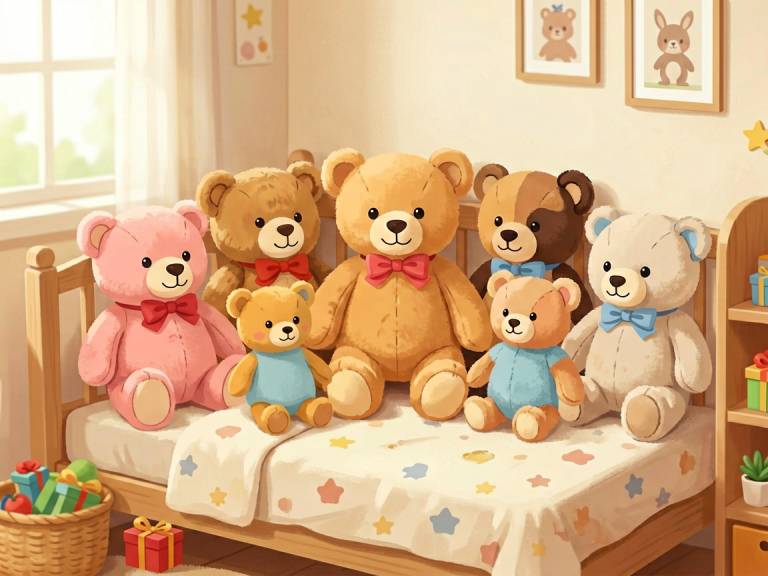
Dolls, stuffed animals, toy phones, and play food invite narrative play. A one-year-old may not engage in elaborate pretend scenarios yet, but they can imitate actions like feeding a teddy bear or pretending to talk on the phone. Caregivers can extend the play by asking, “Is your bear hungry? What does he want to eat?” This builds oral language and an understanding of story structure (beginning, middle, end). Toy phones also encourage conversational turn-taking, a foundational social skill for reading comprehension.
Building Blocks and Stacking Toys
Classic wooden or soft blocks are literacy gold. Stacking and knocking down teaches cause and effect and spatial vocabulary (up, down, on top, next to). As the child builds, describe the process: “You put the red block on top of the blue one. Now let’s count—one, two, three… crash!” This introduces sequencing, counting (early numeracy often parallels literacy), and rich descriptive language.
Sensory Toys (Textured Balls, Fabric Squares, Play Dough)
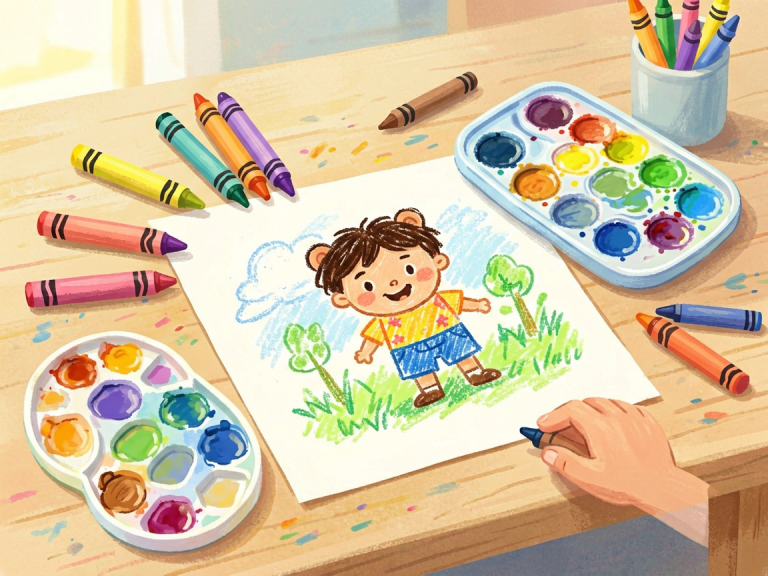
Sensory exploration strengthens neural connections. Playing with differently textured balls or squishing play dough helps develop the fine motor muscles needed for holding a crayon and eventually a pencil. Moreover, sensory play can be paired with language: “This ball is bumpy. This one is smooth. Can you feel the fuzzy one?” Such descriptive language builds a child’s lexicon and prepares them to understand descriptive passages in books later on.
—
Avoiding Common Pitfalls
While selecting toys with intention, caregivers should also be aware of potential missteps:
- Overstimulating electronic toys with flashing lights and loud noises often capture a child’s attention but do little to promote language. Research suggests that children learn words best through live, responsive interactions—not from a screen. Prioritize simple, low-tech options.
- Toys that are too advanced frustrate a one-year-old. For example, a puzzle with many small pieces or an alphabet chart with tiny letters will not foster learning; it will simply be ignored. Stick to age-appropriate challenges.
- Passive entertainment such as watching toy demonstrations on tablets replaces active play. Even educational videos are no substitute for hands-on manipulation and caregiver conversation.
—
Creating a Literacy-Rich Environment Beyond Toys
Toys are a powerful piece of the puzzle, but they work best within a broader literacy-rich environment. Surround your one-year-old with:
- Books within easy reach in a low basket or on a shelf.
- Labels on everyday objects (e.g., a photo of a “chair” taped to the actual chair).
- Daily routines filled with language—talk through diaper changes, bath time, and meals. Describe what you are doing, what the child is seeing, and how things feel, smell, or sound.
- Consistent storytime before naps or bedtime, even if the child only stays engaged for two minutes.
The most effective “toy” of all is a loving caregiver who talks, reads, sings, and plays alongside the child.
—
Conclusion
Choosing toys for a one-year-old is not merely about amusement; it is an investment in the cognitive and linguistic foundations that will one day blossom into reading. By selecting board books, puzzles, musical instruments, pretend play items, building blocks, and sensory toys, caregivers can create a playful learning environment that naturally nurtures vocabulary, phonological awareness, narrative skills, and fine motor dexterity.
Remember that reading readiness at this age is not a race—it is a slow, joyful unfolding. The best toy is one that sparks curiosity, invites conversation, and leaves room for the child to explore at their own pace. With thoughtful choices and patient interaction, every play session becomes a building block for a lifelong love of reading.