Building Blocks of Literacy: Are LEGO Style Bricks Good for Reading Readiness?
Introduction
In the landscape of early childhood education, few toys have achieved the iconic status of LEGO bricks. These colorful, interlocking plastic blocks have been sparking creativity and engineering curiosity in children for decades. But as parents and educators increasingly focus on academic readiness—particularly reading—a provocative question arises: can something as seemingly simple as a LEGO brick genuinely prepare a child for the complex journey of literacy? The connection might not be immediately obvious; after all, reading involves letters, sounds, and words, while LEGO involves snapping together plastic shapes. Yet a growing body of research and practical classroom experience suggests that the hands-on, constructive play offered by LEGO-style bricks can indeed lay a strong foundation for reading readiness—not by directly teaching the alphabet, but by cultivating the cognitive, motor, and linguistic skills that underpin successful reading. This article explores the multifaceted relationship between LEGO-style brick play and reading readiness, examining both the evidence for and the limitations of using these beloved toys as literacy tools.
The Foundations of Reading Readiness
Reading readiness is not a single skill but a constellation of abilities that typically develop between ages three and six. These include phonological awareness (the ability to hear and manipulate sounds in words), print awareness (understanding that text carries meaning), vocabulary and oral language skills, alphabet knowledge, and fine motor control necessary for holding a book or later writing. Importantly, reading readiness also demands executive functions such as attention, working memory, and self-regulation—the ability to focus on a task and persist through challenges.
Traditional approaches to fostering reading readiness often involve alphabet flashcards, phonics worksheets, and storybook reading. However, developmental psychologists emphasize that young children learn best through active, meaningful, and multisensory experiences. Play-based learning, particularly constructive play, engages children’s natural curiosity and allows them to experiment with symbolic representation—a skill that is cognitively analogous to understanding that written symbols (letters) represent spoken sounds. LEGO bricks, with their endless possibilities for creation, offer a unique medium through which children can practice these foundational skills without the pressure of formal instruction. The key question is: how exactly does snapping bricks together translate to academic readiness for reading?
How LEGO Bricks Encourage Prereading Skills
One of the most direct ways LEGO bricks support reading readiness is through symbolic play. When a child builds a tower and calls it a “castle,” she is engaging in symbolic thinking: the physical object stands for something else in her imagination. This is precisely the same cognitive leap required to understand that the squiggle “C” stands for the /k/ sound, or that the word “castle” represents a real or imagined structure. In other words, LEGO bricks help children internalize the concept that one thing can represent another—a fundamental precursor to decoding text.
Furthermore, many LEGO sets come with printed elements: signs, windows with words, or even bricks with letters and numbers. Children who build a “police station” may encounter a printed sign that says “POLICE” or a brick with a traffic symbol. While they may not read the word, they begin to associate written symbols with specific meanings and functions. This incidental exposure to print in a motivating context strengthens print awareness. Educators refer to this as “environmental print” literacy—the ability to read signs, logos, and labels in the real world. LEGO bricks create a miniature version of that environment, making print natural and purpose-driven.
Another critical prereading skill is sequencing and spatial awareness. Reading requires tracking text from left to right, top to bottom, and understanding that sentences follow a logical order. Building with LEGO bricks requires following visual instructions—often a sequence of steps—which trains children to attend to order and directionality. A child who follows a diagram to build a helicopter is practicing the same visual scanning and sequential processing skills she will later apply when following a line of text. Moreover, the fine motor manipulation of bricks strengthens the hand muscles needed for holding a pencil, turning pages, and eventually writing letters.
The Role of Fine Motor Development
The link between fine motor skills and reading readiness is often underestimated. Yet research consistently shows that children with strong fine motor abilities in preschool tend to perform better on early literacy measures. Why? Because reading tasks—turning pages, pointing to words, tracking lines with a finger, and eventually writing—all require precise hand control. LEGO bricks are an excellent tool for developing this dexterity. The act of aligning two studs, applying the correct pressure to snap them together, and then separating them demands bilateral coordination, finger strength, and pincer grip refinement.
Consider a child struggling to hold a book steady while pointing to words. That coordination is built through countless repetitions of handling small objects. LEGO bricks, with their standardized size and moderate resistance, provide the perfect resistance training for small hands. Moreover, different types of LEGO elements—from tiny 1×1 plates to larger baseplates—challenge children to adapt their grip and force. This variety builds the motor flexibility that helps a child transition from crayon to pencil to keyboard without frustration. While LEGO play alone cannot replace targeted fine motor activities, it offers a highly engaging, self-directed way for children to practice these essential movements.
Beyond manual dexterity, LEGO building also fosters bilateral coordination—using both hands together in a coordinated way. Reading involves tracking a line of text while sometimes using a finger or ruler; this requires the eyes and hands to work in synchrony. Brick construction naturally encourages children to hold a piece in one hand while snapping another with the other hand, or to stabilize a structure with one hand while adding bricks with the other. These seemingly mundane actions wire the brain for the integrated eye-hand movements that literacy demands.
Symbolic Play and Narrative Building
Perhaps the most profound contribution of LEGO bricks to reading readiness lies in their ability to support narrative construction and oral language development. Reading comprehension, after all, is not just about decoding words; it is about constructing meaning from text. Children who can create and recount stories demonstrate higher levels of reading comprehension later on. LEGO bricks are a powerful medium for storytelling. A child can build a scene—a farm, a spaceship, a castle—and then invent a story about the characters living there. This process involves planning, sequencing events, and using descriptive language.
Teachers who use LEGO bricks in early literacy classrooms often report that reluctant speakers become animated when describing their creations. The concrete object serves as a scaffold for verbal expression. A child might say, “This is the dragon, and he is guarding the treasure, but the knight comes with a sword…” This kind of narrative play directly exercises vocabulary, syntax, and story structure—all pillars of reading readiness. Moreover, when children narrate their builds to peers or adults, they practice turn-taking, listening, and responding—skills essential for classroom discussions and following directions during reading instruction.
Some educators take this a step further by integrating LEGO bricks with explicit literacy activities. For example, after building a scene, children can write or dictate a sentence about it, or match word cards to objects in their creation. LEGO bricks can also serve as manipulatives for teaching phonics: children can build a “word wall” using bricks labeled with letters, physically blending sounds to form words. This hands-on, kinesthetic approach resonates with young learners who might struggle with abstract phonics drills. The tactile nature of the bricks makes the abstract concept of “blending” concrete and memorable.
Potential Limitations and Considerations
While the benefits are compelling, it is important to acknowledge that LEGO bricks are not a panacea for reading readiness, and their use should be balanced with other approaches. One limitation is that LEGO play, in its purest form, does not directly teach phonemic awareness—the ability to isolate and manipulate individual sounds. A child can build elaborate structures for years without ever hearing that “cat” starts with /k/. Therefore, parents and educators must intentionally pair LEGO play with explicit language interactions: talking about the building, asking open-ended questions, and introducing new vocabulary.
Another consideration is the nature of commercially available LEGO sets. Many modern sets come with highly specific instructions and pre-designed models, which can actually limit creativity and narrative construction. Children who follow step-by-step diagrams may focus on replicating a helicopter rather than inventing their own story. To maximize reading readiness benefits, experts recommend a mix of free play with basic bricks and themed sets that include open-ended elements like minifigures, animals, and scenery pieces. Additionally, sets that include printed words or symbols (like the LEGO DUPLO town series with road signs and shop labels) are particularly valuable for building print awareness.
Time constraints in modern classrooms also pose a challenge. With increasing pressure to meet academic benchmarks, some teachers allocate less time to constructive play. Yet research from the LEGO Foundation and various developmental studies suggests that sacrificing play for direct instruction may be counterproductive in the long run. A balanced approach that integrates purposeful play with intentional teacher scaffolding can optimize reading readiness outcomes. It is also worth noting that children with fine motor delays or sensory processing differences may find LEGO bricks frustrating rather than facilitating; in such cases, larger DUPLO bricks or alternative building toys might be more appropriate.
Practical Tips for Parents and Educators
To harness the power of LEGO-style bricks for reading readiness, consider these evidence-based strategies:
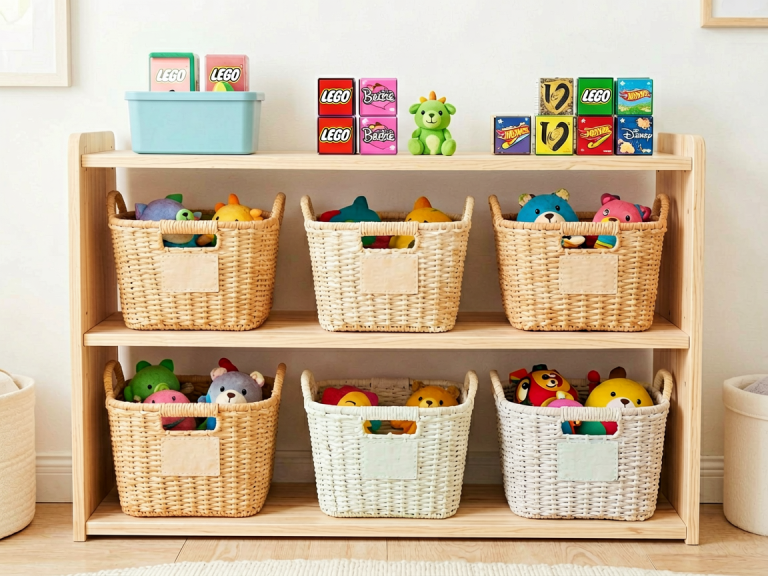
First, create a print-rich building environment. Place letter and number bricks in a separate container, and encourage children to label their creations. A child who builds a “garage” can add a sign that says “CAR REPAIR” using letter bricks or a written card taped to the structure. This integrates print into the play experience naturally.
Second, use LEGO bricks as story starters. Build a simple scene—a boat on water, a house in a forest—and ask the child to tell you what is happening. Write down their story as they speak, then read it back to them. This reinforces the connection between spoken language and written text. Over time, children may begin to recognize repeated words or even attempt to “write” their own labels using bricks.
Third, incorporate building challenges that target specific prereading skills. For example, ask the child to build a model that starts with the same sound as their name (e.g., Sam builds a snake). Or ask them to build a structure with exactly three bricks of the same color, reinforcing counting and classification—skills that underlie phonological awareness.
Fourth, encourage collaborative building. When two or more children build together, they must negotiate, describe, explain, and listen. These verbal interactions are invaluable for oral language development and vocabulary acquisition. An adult can extend this by asking open-ended questions: “What happens next in your story?” or “How did you make that bridge stay up?” Such questions prompt children to use more complex sentence structures and reasoning.
Finally, remember that the goal is not to turn every LEGO session into a literacy lesson. The power of the bricks lies in their ability to make learning feel like play. Over-structuring the experience can kill joy and motivation. Instead, follow the child’s lead, provide rich verbal commentary, and gradually introduce literacy-enhancing prompts when the child is receptive.
Conclusion
Are LEGO-style bricks good for reading readiness? The evidence suggests a resounding yes—but with important caveats. LEGO bricks do not teach a child to decode words or recognize letters in isolation. However, they are a remarkably effective tool for building the cognitive, motor, and linguistic foundations upon which literacy is constructed. Through symbolic play, fine motor development, narrative creation, and incidental print exposure, these humble plastic blocks prepare the brain and body for the complex task of reading. When combined with intentional adult interaction and a balanced early literacy curriculum, LEGO bricks can become a powerful ally in the journey toward reading readiness. In a world increasingly dominated by screens and passive entertainment, the simple act of snapping bricks together may be one of the most undervalued literacy builders of all. The next time you see a child lost in a world of colorful blocks, remember: they are not just building a tower—they are building the architecture of their future reading mind.