Beyond the Rattle: Navigating the Toy Trends for 18-Month-Olds in a Rapidly Changing World
Introduction: The Uniqueness of the 18-Month Milestone
The 18-month mark is a magical and often tumultuous frontier in early childhood development. At this age, toddlers are no longer passive infants but spirited explorers, teetering between babyhood and the dawn of the "terrible twos." They walk with newfound confidence, babble in two-word phrases, and exhibit a fierce curiosity that demands constant engagement. For parents, caregivers, and educators, selecting the right toys at this stage is not merely about entertainment—it is about scaffolding cognitive leaps, motor skills, emotional regulation, and social interaction. The toy industry has responded with a dizzying array of products, yet not all are created equal. Understanding the trends that genuinely serve the developmental needs of an 18-month-old requires a deeper look into neuroscience, Montessori principles, sensory integration, and even digital ethics.
In this article, we will dissect the most significant toy trends for 18-month-olds, evaluating their educational merit, safety considerations, and alignment with the child’s rapidly evolving brain. From open-ended wooden blocks to high-tech interactive gadgets, we will explore what works, what is merely marketing hype, and how parents can curate a toy environment that fosters independence, creativity, and joy.
Trend 1: Open-Ended and Loose-Part Play – The Montessori and Reggio Emilia Influence
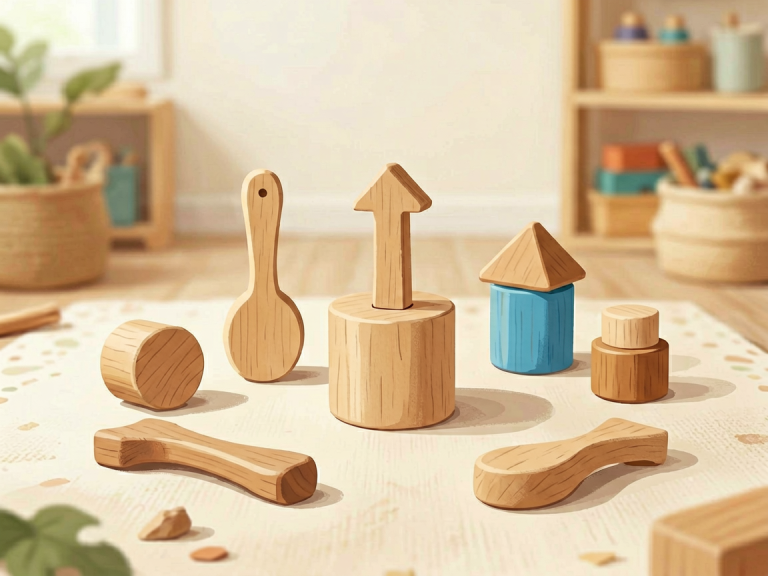
Perhaps the most enduring and research-backed trend for 18-month-olds is the shift toward open-ended toys. Unlike battery-operated plastic gadgets that perform one pre-programmed function, open-ended toys invite the child to decide how to use them. Think of stacking cups, nesting bowls, wooden blocks, fabric scarves, and simple shape sorters without electronic feedback.
Why It Matters for an 18-Month-Old
At 18 months, the toddler’s prefrontal cortex is undergoing a growth spurt, enabling early problem-solving and divergent thinking. An open-ended block can become a tower, a car, a phone, or a pretend sandwich. This fluidity exercises the brain’s ability to imagine, plan, and adapt. Moreover, loose parts—such as pom-poms, pebbles, or rings—allow for fine motor refinement, hand-eye coordination, and cause-and-effect understanding without the constraints of a fixed play script.
Real-World Examples and Safety Considerations
Popular open-ended toys include the Grimm’s Rainbow stacker (wooden, colorful arcs that can be arranged in infinite ways), the PlanToys Geo Stacker, and simple wooden puzzles with knobs. For 18-month-olds, size matters: pieces must be larger than a toilet paper roll to prevent choking hazards, and edges should be sanded smooth. The trend also extends to “sensory bins” filled with rice, kinetic sand, or water-safe objects, provided adult supervision is constant.
Critique: Is Open-Ended Always Better?
While open-ended play is strongly recommended, it is not a panacea. Some toddlers at 18 months still crave repetitive cause-and-effect reactions—like pressing a button that makes a sound—which can be soothing and help with pattern recognition. The key is to offer a balanced diet: about 70% open-ended, 30% simple, cause-and-effect toys. Also, parents should resist the urge to direct the play; the child needs to lead.
Trend 2: Sensory and Tactile Exploration – Toys That Engage Multiple Senses
The sensory trend has exploded in recent years, and for good reason. An 18-month-old’s brain is wirelessly connecting neural pathways through every sensory input: touch, sight, sound, smell, and movement. Toys that stimulate multiple senses simultaneously create richer learning experiences.
The Appeal of Texture, Sound, and Movement
Manufacturers now produce toys with varying textures—crinkly fabrics, silicone teethers, bumpy balls, and wooden rattles. The “Baby’s Very First Touchy-Feely” series by Usborne remains a classic, but newer alternatives like “Sensory Genius” squishy balls and silicone stacking toys are trending. Musical instruments designed for tiny hands—such as egg shakers, maracas, and handbells—also fall into this category, as they combine auditory feedback with gripping and shaking.
Incorporating Natural Elements
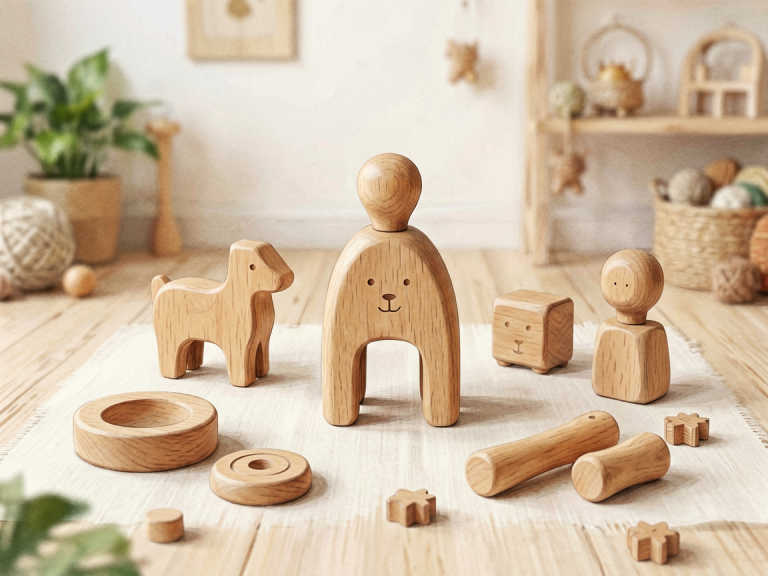
A notable sub-trend is the return to natural materials. Toys made from organic cotton, untreated wood, beeswax, and natural rubber are favored over plastic because they offer varied textures (smooth, grainy, warm) and are often safer if mouthed. Crayons made from soy or beeswax are also recommended for early scribbling. However, parents must check for ASTM or CE safety certifications, especially for items that could break into small pieces.
The Role of Water and Sand Play
Water tables and sand bins are increasingly popular for both indoor and outdoor play. At 18 months, pouring, scooping, and splashing teach volume, gravity, and viscosity. Yet the trend has evolved: modern water tables include ramps, wheels, and cups that attach to create small waterfalls. The key is to manage mess and ensure water temperature is lukewarm. Always supervise near water—a toddler can drown in just two inches.
Trend 3: Imitative and Pretend Play – The Rise of “First Role-Play”
At 18 months, children begin to imitate adult behaviors with striking accuracy. This is the dawn of symbolic play, where a toy phone becomes a real phone, and a stuffed bear becomes a baby that needs feeding. Toy manufacturers have capitalized on this with “first role-play” kits.
Mini-Kitchens, Tool Benches, and Doll Care
The trend includes child-sized wooden kitchens with knobs that click, pretend food that can be “cut” with Velcro, and doll strollers. For 18-month-olds, the complexity must be low: a kitchen with just a sink and a stovetop that turn is more engaging than one with dozens of plastic accessories. Similarly, tool benches with a few chunky wooden screws and a hammer allow for pounding and twisting, which strengthen wrist muscles crucial for future writing.
Gender-Neutral Play and Its Social Impact
A progressive trend is the marketing of role-play toys without rigid gender stereotypes. Toy companies like Lovevery and Melissa & Doug now offer “cleaning sets,” “doctor kits,” and “tea party sets” in neutral colors with depictions of children of all genders. This aligns with developmental psychology research suggesting that 18-month-olds are forming early gender identity but benefit from exposure to diverse activities. Girls and boys alike should have access to both nurturing dolls and active building toys.
Caution: Avoid Over-Scripting
One pitfall is the “scripted toy”—for instance, a cash register that says “That will be five dollars!” on its own. While entertaining, such toys can limit creativity by providing a fixed narrative. Better are “silent” props that invite the child to invent their own dialogue. A wooden ice cream cone that can be stuck together with magnets encourages sequencing and counting without dictating a story.
Trend 4: Movement and Gross Motor Toys – Beyond the Ball Pit
By 18 months, most toddlers are walking independently, climbing onto couches, and beginning to run. Gross motor development is a top priority, and toy trends have embraced this with innovative designs that encourage balance, coordination, and risk-managed exploration.
Push-and-Pull Toys with a Twist
The classic pull-along duck is now joined by wooden animal wagons that can be filled with blocks, and push carts with steering wheels. The trend is toward stability: wide bases, non-slip rubber wheels, and easy-grip handles. Some come with activity panels that include bead mazes or spinning gears, adding a cognitive dimension to physical play.
Ride-Ons and Balance Bikes
Ride-on toys—like three-wheeled scooters or small cars that the toddler propels with their feet—are extremely popular. However, experts caution that conventional pedal tricycles are often too advanced for 18-month-olds whose legs cannot yet rotate a pedal cycle. Instead, “balance bikes” (two-wheeled bikes without pedals) are trending for older toddlers, but for 18 months, a sturdy, low-to-the-ground four-wheeled ride-on that the child pushes with their feet is safest. Look for models with a low center of gravity and no pinch points.
Climbing Structures and Soft Play
Indoor climbing arches, foam blocks, and tiny slides are increasingly common in homes and gyms. The trend reflects a broader societal awareness that toddlers need opportunities to challenge their muscles and sense of risk. The “pickler triangle”—a wooden climbing ladder with a removable ramp—has become a staple of Montessori-inspired homes. At 18 months, the child can climb, crawl under, and use the triangle as a fort. Supervision is essential; no toy is 100% safe from falls, but a soft mat underneath can mitigate injury.
Trend 5: Digital and Tech-Integrated Toys – A Double-Edged Sword
No discussion of toy trends is complete without addressing the growing presence of technology. For 18-month-olds, tablets and smartphones have been explicitly discouraged by the American Academy of Pediatrics for children under 18 months (except for video chatting). Nonetheless, the market is flooded with “smart toys” that connect to apps, play recorded messages, or feature LED lights.
Educational Apps and Screen-Free Tech
Some “tech toys” are screen-free: interactive cubes that change sound when tilted, or light-up dancing robots that respond to touch. The trend includes “programmable” toys like the Fisher-Price Code-a-Pillar, where toddlers connect segments to change movement patterns. While these can teach sequencing and cause-and-effect, experts recommend limiting such toys to short, adult-guided sessions. The true danger lies not in the toy itself but in the displacement of real-world interaction. A toddler learns more from rolling a real ball with a parent than from tapping a glowing button on a plastic device.
The Rise of “i-Toys” for Early Learning
Vocabulary-building toys that say words or play songs are popular. For instance, the LeapFrog Learning Friends 100 Words Book lets toddlers touch pictures to hear words in English or Spanish. Research indicates modest benefits for vocabulary acquisition when used interactively with a caregiver. However, passive listening without engagement—what researchers call “video deficit”—yields minimal learning. The trend is evolving toward more adaptive toys that respond to the child’s actions, such as the “Mochi” robot that encourages movement by laughing when the toddler approaches.
Safety and Ethical Concerns
Privacy is a growing issue: many smart toys collect data or have microphones. For an 18-month-old, any device with a camera or audio recording should be avoided unless strictly controlled. The best “high-tech” toy for this age remains a simple voice recorder that the toddler can press, hear their own voice, and begin to understand the concept of self—a milestone around 18 to 20 months.
Trend 6: Sustainability and Eco-Friendly Toys – Conscience-Driven Parenting
Another significant trend is the movement toward sustainable, eco-friendly toys. Millennial and Gen Z parents are increasingly aware of the environmental impact of plastic waste and the potential toxicity of cheap materials. This has created a market for toys made from bamboo, recycled rubber, organic cotton, and FSC-certified wood.
Biodegradable and Non-Toxic Materials
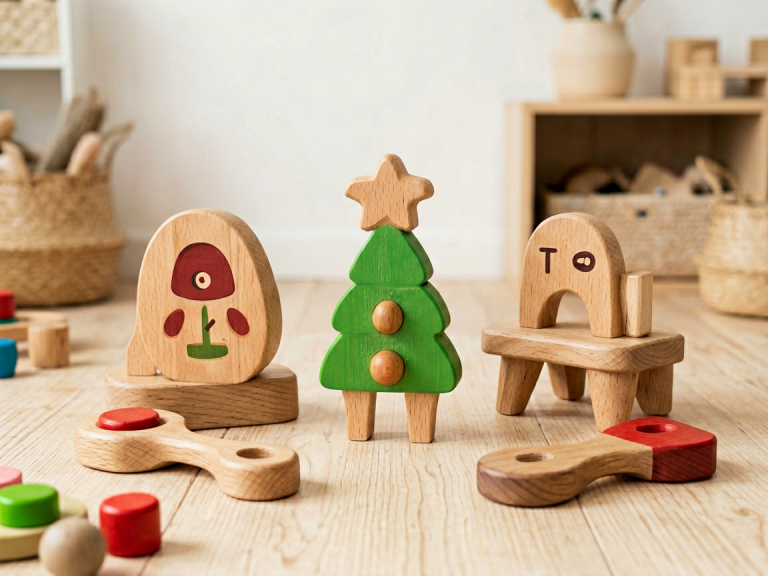
Toys like the “Green Toys” line (made from recycled milk jugs) are BPA-free, phthalate-free, and dishwasher safe. Similarly, wooden toys are often coated with water-based, non-toxic paints. For 18-month-olds who mouth everything, this is crucial. The trend also includes packaging-free toys or those shipped in recycled cardboard.
The “Slow Toy” Movement
Parallel to “slow food,” the “slow toy” trend advocates for fewer, higher-quality toys that last for years. Instead of buying a dozen plastic cars that break, parents invest in a single, beautifully crafted wooden car that can be passed down. This aligns with Montessori principles of simplicity and beauty. However, the higher cost can be prohibitive; second-hand markets and toy libraries are growing as alternatives.
What About Plastic? A Balanced View
Not all plastic toys are evil. Some, like LEGO Duplo (designed for ages 1.5+), are extremely durable and educational. The key is to choose plastics that are certified as food-grade and avoid single-use or battery-operated plastic toys that are “throwaway.” The trend encourages parents to be mindful consumers, asking: “Will this toy be played with in six months? Can it be repaired? Is it safe if chewed?”
Conclusion: Curating a Toy Environment for the Whole Child
Following toy trends for an 18-month-old requires a discerning eye. The market is saturated with colorful, noisy, and often short-lived products. Yet the most meaningful trends—open-ended play, sensory richness, imitative play, gross motor challenge, thoughtful technology integration, and sustainability—all point to a deeper understanding of early childhood. The best toys are those that respect the child’s innate drive to explore, to imagine, and to connect with others.
Parents should remember that the child is the best toy. A cardboard box, a wooden spoon, and a caregiver’s undivided attention can outperform any sophisticated gadget. Trends come and go, but the developmental needs of an 18-month-old remain constant: safety, challenge, love, and the freedom to discover at their own pace. By being intentional about toy choices, we not only entertain our toddlers but also lay the foundation for a lifelong love of learning.