The Art of Toy Selection: How to Buy Toys Without Reading Reviews
In an age where online reviews dominate purchasing decisions, choosing a toy without consulting a single opinion might seem reckless. Yet there are many valid reasons to bypass the review ecosystem: a last-minute birthday present, a child’s sudden obsession with a new character, a desire to avoid spoilers, or simply a personal preference for trusting your own judgment. Whether you are browsing a crowded toy store, scrolling through an online marketplace, or picking up a second-hand gem at a flea market, the ability to assess a toy on its own merits is a skill worth mastering. This guide will equip you with a systematic framework to evaluate toys without reading a single review, ensuring that your purchase is safe, stimulating, and genuinely delightful for the child who will receive it.
—
Understanding the Toy’s Purpose and Age Appropriateness
Before you even pick up a toy, ask yourself: what is this toy meant to do? Toys serve various functions—entertainment, education, motor skill development, social interaction, or pure imaginative play. Without reviews to tell you if a toy “works as advertised,” you must decode its intended purpose from the packaging and design.
Age labeling is your first and most reliable filter. Manufacturers are legally required to display age recommendations, and these are based on safety standards and developmental milestones. For infants under three, avoid small parts, long cords, or anything that could be a choking hazard. For preschoolers, look for toys that encourage gross motor skills or simple problem-solving. For older children, consider complexity and interest alignment—a toy that is too simplistic will bore a ten-year-old, while one that is too advanced will frustrate a five-year-old. Even without reviews, the age range on the box gives you a strong signal about the toy’s appropriateness.
Examine the toy’s intended play pattern. Does it require batteries? Is it a passive toy (like a plushie) or an active one (like a building set)? Passive toys are comforting and durable; active toys often require parental involvement or replacement parts. If the toy has multiple pieces, consider how easily they can be lost. A puzzle with 100 tiny pieces is wonderful for a focused child but a nightmare for a family with a toddler who puts everything in her mouth. Trust your intuition: if the toy’s purpose aligns with the child’s current interests and your own tolerance for cleanup, it’s likely a good fit.
—
Evaluating Safety and Materials
Reviews can warn you about flimsy construction, sharp edges, or toxic materials. Without them, you must become your own safety inspector. Start by physically examining the toy whenever possible. Run your fingers along edges and seams. If it’s plastic, is it thin and brittle, or does it feel solid? If it’s fabric, are the stitches tight and the stuffing well-distributed? Squeeze the toy: does it make a crinkly sound that might indicate thin plastic inside? Avoid toys with strong chemical odors—a “new plastic smell” is normal, but anything pungent or solvent-like suggests low-quality materials.
Check for certifications and markings. In the United States, look for the ASTM F963 (American Society for Testing and Materials) label, which indicates compliance with safety standards. In the European Union, the CE mark is mandatory. Many reputable brands also display the “Green Dot” or “Recyclable” symbols. If you are buying online and cannot touch the toy, read the product description for material lists. Avoid toys with vague terms like “high-quality plastic” and prefer specific information such as “ABS plastic” or “100% cotton.”
Beware of small parts and magnets. Even for older children, loose magnets can be dangerous if swallowed. Shake the toy gently: if you hear rattling, there may be loose pieces inside. For dolls or action figures, check if the limbs are securely attached. If the toy has batteries, ensure the compartment is secured with a screw—not just a sliding tab, which a determined child can open. These quick checks replace hours of reading reviews.
—
Assessing Educational and Developmental Value
A toy that teaches nothing can still be fun, but toys that combine play with learning tend to hold a child’s attention longer and justify their purchase price. Without reviews, you can estimate educational value by considering the toy’s mechanics.
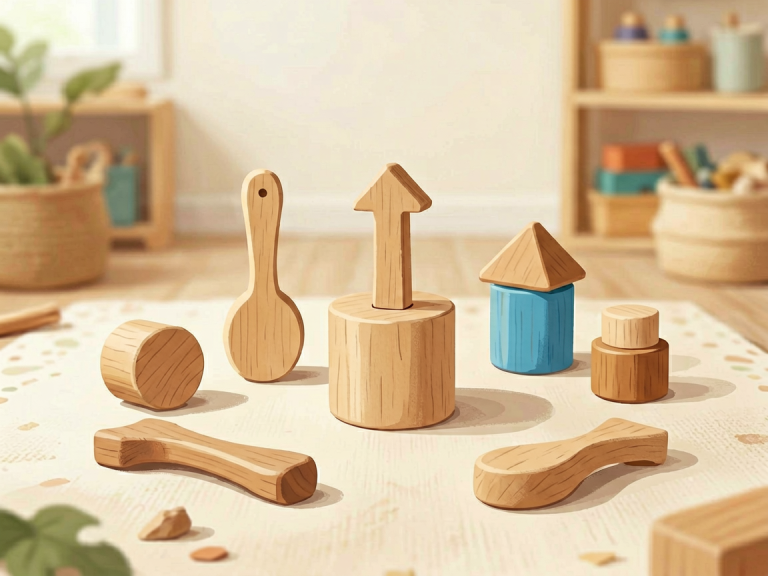
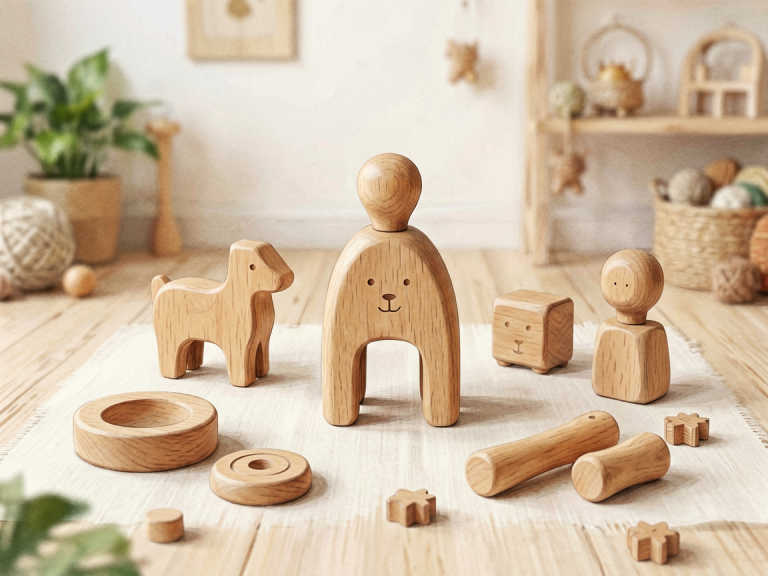
Open-ended toys offer the best return on investment. A set of wooden blocks, modeling clay, or a plain dollhouse encourages creativity and can be used in thousands of ways. In contrast, a battery-operated toy that only makes one sound or moves one way is quickly discarded. Open-ended toys often have simpler designs and fewer electronic components—signs you can spot immediately.
Look for toys that require problem-solving or skill-building. Puzzles, board games, construction sets, and arts-and-crafts kits all develop cognitive and motor abilities. Even without reading the instructions, you can assess the challenge level by the number of steps or pieces. A toy that requires sorting, matching, or sequencing is inherently more educational than one that merely lights up.
Consider the toy’s potential for social interaction. Toys that can be shared—like a card game, a ball, or a set of action figures—encourage cooperation and language development. Solitary toys are fine too, but if the child already spends a lot of time alone, a socially oriented toy might be a better choice. You can infer this from the packaging: if it shows multiple children playing together, the toy is designed for group use.
—
Recognizing Brand Reputation and Quality Signals
Brand names are not infallible, but they offer a shorthand for quality when reviews are unavailable. Established brands like LEGO, Melissa & Doug, Fisher-Price, and Ravensburger have decades of experience in safety standards and durable design. Their toys may cost more, but the premium often reflects better materials and stricter quality control.
How to spot a reputable brand without prior knowledge? Look for the brand’s history on the packaging. “Since 1932” or “Family-owned” hints at long-term investment. Also, check if the brand has its own website or customer service number listed. Legitimate companies will provide a clear contact method. Be wary of brands with misspelled names, generic logos, or no copyright information.
Pay attention to packaging quality. A toy that comes in a sturdy, well-designed box with clear graphics and multilingual instructions is usually made by a company that cares about its product. Conversely, a toy in a flimsy, wrinkled box with blurry images and no Chinese or English safety warnings may be a cheap knock-off. This visual inspection is your best defense against counterfeit or low-quality goods.
—
Using Your Senses and Intuition
Your five senses are powerful tools when you cannot rely on written opinions. Begin with sight: observe the toy’s symmetry, color application, and overall finish. Are the paint lines clean or sloppy? Is the mold seam visible? A rough finish can indicate poor manufacturing.
Touch is crucial. Pick up the toy. Does it feel balanced? Is it too light (suggesting hollow plastic) or too heavy (suggesting metal or thick plastic)? For plush toys, feel the firmness of the stuffing. A lumpy or uneven feel suggests poor assembly. For action figures or dolls, bend the joints—do they move smoothly or catch? If the toy has wheels, spin them; do they roll silently or wobble?
Sound can also tell a story. Gently tap the toy. A hollow, cheap sound might indicate thin walls. For electronic toys, if you can press a button (in the store, with permission), listen to the quality of the sound. Harsh, distorted audio suggests cheap speakers; clear, pleasant tones indicate higher quality. Also, note the volume—toy sounds should not be annoyingly loud, as that could overstimulate a child.
Finally, trust your gut. If something feels off—an odd smell, an asymmetrical design, or a suspiciously low price—listen to that instinct. You are not being paranoid; you are using the same pattern recognition that experienced shoppers rely on. The absence of reviews does not mean you are blind; it means you must sharpen your other senses.
—
Practical Tips for In-Store and Online Shopping
When Shopping in a Physical Store
- Look for the “Try Me” button. Many toys have a demo mode; activate it to see how the toy works. Does it do what it promises? Does the action look smooth?
- Weigh the toy in your hand. As a rule of thumb, heavier toys (for their size) tend to be more durable. Lift several similar toys to compare.
- Check the return policy. Even without reviews, a generous return policy is a safety net. If the store allows returns within 30 days, you can buy with less anxiety.
- Observe other customers. If you see another parent holding the same toy and smiling, or a child refusing to put it down, that is a real-time “review” you can trust.
When Shopping Online
- Zoom in on product photos. Look for high-resolution images from multiple angles. If the listing only has one generic photo, be cautious. Also, look for photos that show the toy next to a common object (like a coin or ruler) to gauge size—a classic trick that reviews often mention.
- Read the product description thoroughly. Pay attention to dimensions, materials, and included parts. If the description says “some assembly required,” estimate how complex that assembly might be. A toy that requires a screwdriver and thirty minutes of work might not be suitable for a last-minute gift.
- Use the “Questions & Answers” section. Even if you skip reviews, you can see if other customers have asked about safety, compatibility, or missing parts. This is a mini-review system without the subjective opinions.
- Beware of incredibly low prices. If a toy is 80% cheaper than all other similar products, it is likely counterfeit or dangerously made. Do not risk a child’s safety for a bargain.
—
Conclusion
Buying a toy without reading reviews is not a leap of faith—it is an exercise in observation, common sense, and trust in your own judgment. By focusing on age appropriateness, safety, educational value, brand signals, and sensory evaluation, you can make confident choices that delight both you and the child. The next time you find yourself at a toy aisle without a smartphone in hand, remember this guide. You already have all the tools you need to become a savvy toy hunter. The joy of giving a toy that sparks pure, unmediated surprise is worth the effort. Happy selecting!