The Art of Letting Go: A Parent’s Guide to Fostering Independent Play
In the whirlwind of modern parenting, we often find ourselves acting as full-time entertainers, hovering over every block tower, puzzle piece, and imaginary tea party. Yet one of the most valuable gifts we can offer our children is the freedom to play alone. Independent play is not merely a break for tired parents; it is a crucial developmental tool that nurtures creativity, problem-solving, resilience, and self-regulation. This guide will walk you through the why, when, and how of fostering independent play, helping you create an environment where your child can thrive while you reclaim a few precious moments of your own.
Why Independent Play Matters
Before diving into practical strategies, it is essential to understand why independent play deserves a permanent spot in your family’s routine. Research in child development consistently shows that unstructured, self-directed play strengthens a child’s executive function skills—the cognitive processes that enable planning, focus, and impulse control. When a child plays alone, they must decide what to build, how to resolve a conflict between two toy animals, or what story to act out. There is no adult swooping in to suggest the next step, which forces the child to rely on their own imagination and decision-making.
Moreover, independent play cultivates a sense of mastery and confidence. A toddler who successfully stacks five blocks without help experiences a genuine sense of accomplishment. An older child who spends an hour constructing a castle from cardboard and tape learns that they are capable of creating something from nothing. This internalized belief in their own competence is far more lasting than any praise we can offer.
Psychologists also note that solitary play provides a necessary emotional reset. In a world filled with constant stimulation—screens, scheduled activities, peer interactions—children need quiet time to process their experiences. Independent play acts as a buffer against overstimulation and helps children learn to self-soothe. They discover that boredom is not a crisis but a doorway to invention.
Setting the Stage: Creating an Inviting Play Environment
The environment is the silent teacher in independent play. If a child’s play space is cluttered, overwhelming, or filled with distractions, they will struggle to engage deeply. Conversely, a thoughtfully arranged space invites exploration and sustained focus.
1. Limit the Number of Toys
Less is more. A mountain of toys often leads to shallow, scattered play as children flit from one item to the next. Instead, rotate toys on a weekly or biweekly basis. Keep out a manageable selection—perhaps five to eight categories of open-ended materials. Open-ended toys, such as blocks, dollhouses, art supplies, play-dough, and dress-up clothes, offer limitless possibilities. A single set of wooden blocks can become a tower, a bridge, a castle, or a spaceship depending on a child’s whim.
2. Create Defined Zones
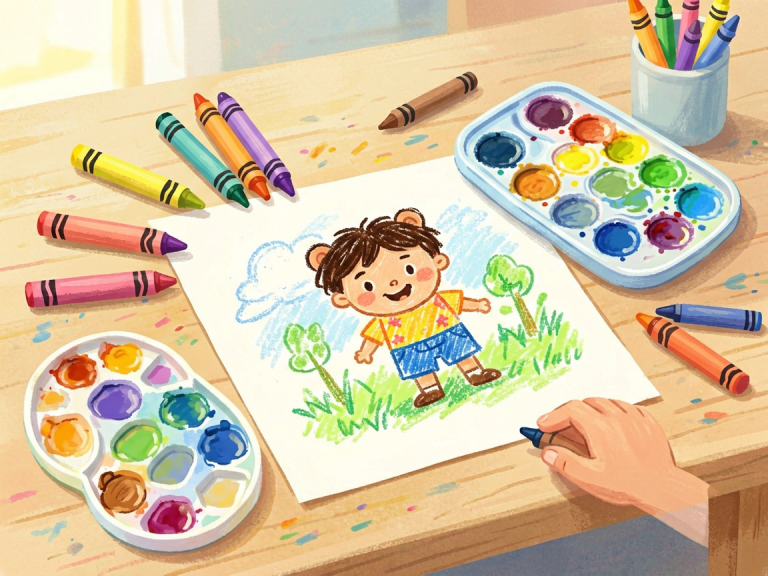
If space allows, designate areas for different types of play: a quiet reading corner with a soft rug and pillows, a building zone with blocks and loose parts, an art table with paper and crayons, and a dramatic play area with costumes and props. These visual cues help children transition into a specific mode of play without your guidance.
3. Make Materials Accessible
Store toys on low, open shelves so children can see and reach everything independently. Clear bins with labels (use pictures for pre-readers) enable them to choose and return items on their own. The goal is to empower your child to set up and clean up their play without relying on you.
4. Minimize Screen Distractions
Keep televisions and tablets out of the play area. Screens are the enemy of deep, imaginative play because they provide passive entertainment that requires no creative effort. If you want your child to develop a habit of independent play, the environment should signal that play is a hands-on, active pursuit.
Age-Appropriate Strategies for Fostering Independence
Independent play looks very different for a one-year-old than for a six-year-old. Below are developmentally tailored approaches for each stage.
Infants and Toddlers (0–2 Years)
At this age, independent play is measured in minutes, not hours. A baby can happily explore a safe play mat with a few textured toys while you sit nearby reading a book. The key is proximity: you do not need to interact constantly, but your presence provides security. As the child becomes mobile, create a baby-proofed zone where they can crawl, pull up, and examine objects freely. Set a timer for short bursts—three to five minutes initially—and gradually extend the duration as your child shows interest.
Avoid interrupting their focus. If your toddler is intently staring at a rolling ball or trying to fit a shape into a sorter, resist the urge to show them the “correct” way. Let them discover through trial and error. Your quiet presence is enough.
Preschoolers (3–5 Years)
This is the golden age of imaginative play. Preschoolers can engage in solo play for 15 to 30 minutes if the conditions are right. Introduce “play invitations” by leaving a small setup on the table: a farm set with animals and a fence, a tray of colored rice with scoops, or a basket of puppets. These gentle prompts spark ideas without dictating the outcome.
Establish a “special play time” each day—perhaps after lunch or before bath—when your child knows you will not interrupt. Use a visual timer so they can see how much longer they have. If they call for you, respond calmly but delay your arrival: “I’ll finish folding this towel and then I’ll come see your creation.” This teaches patience and reinforces that your attention is not immediate but will come.
School-Age Children (6–12 Years)
Older children are capable of longer solitary play sessions, but they may need help rediscovering the joy of unstructured time after years of structured activities. Encourage hobbies that require sustained attention: building models, sewing, coding simple games, writing stories, or drawing elaborate comics. Provide resources such as craft supplies, books, or a science kit, and then step back.
For children who are accustomed to constant screens, independent play can feel uncomfortable at first. You may need to endure complaints about boredom. My advice: do not rush to fill the void. Boredom is the raw material of creativity. Let them sit with the feeling, and eventually they will find something to do—often something far more inventive than what you could have suggested.
Overcoming Common Challenges
Even with the best intentions, parents encounter obstacles. Here is how to tackle the most frequent ones.
“My child always wants me to play with them.”
This is natural, especially for only children or those with high social needs. Start by setting a clear boundary: “I will play with you for ten minutes, and then I need to make dinner. After that, you can keep playing on your own.” During your ten minutes, be fully present. Then transition by saying, “Now it’s your turn to play while Mommy works. I’ll check on you when the timer goes off.” Consistency is key—if you cave every time, your child learns that whining works.
“The house gets messy.”
Mess is a sign of engagement. However, establish a cleanup routine. Use a five-minute warning before the end of playtime, then a cleanup song or a race against the clock. Involve your child in the process so they learn responsibility. Remember that the value of an hour of deep play far outweighs the inconvenience of fifteen minutes of tidying.
“My child is too attached to screens.”
Replace screen time with independent play gradually. Do not yank the tablet away without offering an alternative. Instead, create a “no-screen zone” in the play area and a designated time each day when screens are off. Model your own independent activities—reading, gardening, knitting—so your child sees that adults also engage in solo pursuits.
The Parent’s Role: Being Present Without Intervening
Perhaps the hardest part of fostering independent play is learning when to stay silent. Our instinct is to praise, correct, or extend our child’s play: “Great tower! Now try adding this block.” But such interventions, however well-meaning, disrupt the child’s internal flow. The child’s attention shifts from their own ideas to your approval.
Instead, adopt the role of a quiet observer. Sit nearby with your own book or notebook. If your child glances at you, offer a warm smile but do not initiate conversation. Your calm presence signals safety without stealing their autonomy. If they show you something, respond briefly: “I see you made a long train.” Then look away. Avoid giving suggestions or asking leading questions. The goal is for the child to own their play experience completely.
It is also important to manage your own anxiety. Some parents worry that independent play means neglecting their child, but quite the opposite is true. When you give your child space to explore alone, you are communicating trust: “I believe you are capable. You don’t need me to solve everything.” This message builds lifelong confidence.
Conclusion: A Gift That Keeps Giving
Teaching a child to play independently is not about checking a box on a parenting to-do list. It is about nurturing a relationship with oneself. In a world that constantly demands external stimulation and validation, the ability to sit quietly with one’s own thoughts and imagination is a rare and precious skill. By providing the right environment, setting reasonable expectations, and learning to step back, you give your child the tools to become a self-reliant, creative, and resilient individual.
And yes, you also give yourself the gift of a few uninterrupted minutes—to drink a hot cup of coffee, finish a chapter, or simply breathe. That is not selfishness; it is sustainability. When you honor your own needs, you model balance for your child. So start small. Five minutes today. Ten tomorrow. Over time, independent play will become a natural rhythm in your household—a quiet revolution that transforms both your child’s world and your own.