A Parent’s Complete Guide to Buying Chemistry Kits for Babies: Safety, Science, and Sensory Play
Introduction: Why Chemistry Kits for Babies?
When most parents hear the phrase “chemistry kit,” they picture bubbling beakers, colorful liquids, and warning labels aimed at older children. But in recent years, a new category of educational toys has emerged: chemistry kits designed specifically for babies and toddlers. These kits are not about mixing dangerous chemicals or conducting volatile experiments. Instead, they introduce the youngest minds to the principles of cause and effect, volume, texture, color mixing, and non‑toxic sensory play through carefully curated, baby‑safe materials. As a parent, you might wonder: Is this just a marketing gimmick, or is there genuine developmental value? The answer lies in understanding that early exposure to science—even in its simplest forms—can foster curiosity, fine motor skills, and foundational problem‑solving abilities.
However, buying a chemistry kit for a baby requires far more scrutiny than buying one for a school‑aged child. Infants and toddlers explore the world primarily through mouthing, touching, and dropping objects. Any kit that claims to be for babies must meet extraordinarily strict safety standards. This guide will walk you through every critical factor: from material composition and age recommendations to the types of activities that actually engage a baby’s developing brain. By the end, you will be equipped to choose a kit that delights your child without compromising their health or your peace of mind.
The Golden Rule: Safety Above All
Non‑Toxic Materials – The Absolute Minimum
The first and most non‑negotiable criterion for any chemistry kit intended for babies is that every single component must be completely non‑toxic. This includes not only the obvious liquids or powders but also the containers, tools, and any packaging that might end up in a baby’s mouth. Look for certifications such as ASTM F963 (the U.S. standard for toy safety) or the CE mark (European conformity). Additionally, seek out products that explicitly state “food‑grade” or “edible‑safe” ingredients. Some high‑end kits use cornstarch, baking soda, vegetable‑based dyes, and even edible gums like xanthan gum to create textures and reactions that are safe if ingested in tiny amounts.
Avoid kits that contain small beads, magnets, batteries, or any detachable pieces smaller than a toilet paper roll (the standard “choke hazard” test). Even if the kit is marketed for “ages 0–3,” you must double‑check that no part can be swallowed or lodged in the airway. Remember: babies are notorious for putting everything in their mouths, so if the kit includes a tiny measuring spoon, it should be too large to pose a risk, or it should be tethered.
Supervision – It’s Still Chemistry
No matter how safe the ingredients are, a chemistry kit for a baby is never a “leave‑them‑alone” activity. You, the parent, must be present for the entire play session. Many kits encourage water‑based “experiments” like mixing colored vinegar with baking soda to create a fizzy reaction. While these are non‑toxic, the baby could still inhale fine powder, tip over a container of liquid, or slip on a wet surface. The kit should include clear instructions for the adult about appropriate supervision and cleanup. If a product claims that a baby can use it completely independently, that is a red flag—no responsible manufacturer would make such a claim.
Age and Developmental Appropriateness
Understanding “For Babies” vs. “For Toddlers”
Not all babies are the same. A 6‑month‑old who is just learning to grasp objects has very different needs from an 18‑month‑old who can pour, stir, and imitate actions. Reputable brands often specify a narrower range, such as “6–12 months” or “12–24 months.” Here is a breakdown of what to look for at each stage:
- 6‑12 months: At this stage, babies primarily explore with their mouths and hands. The best “chemistry” for them involves simple cause‑and‑effect toys that do not require mixing. For example, a water‑filled “sensory bottle” with glitter and oil (sealed permanently) can demonstrate how liquids separate. Some kits offer non‑toxic play dough made from flour and salt, which is technically a chemical mixture but is safe and squishy. Avoid any kit that requires the baby to add ingredients or manipulate small parts.
- 12‑18 months: Toddlers begin to imitate adult actions. They love to scoop, pour, and stir. A good kit for this age might include large, soft‑edged containers, a big wooden spoon, and a bag of edible “sand” (like crushed cereal or salt‑free chickpea flour). Activities could involve adding water to a powder and watching it change texture. The key is that everything remains edible‑grade; if the baby tastes the mixture, it should be harmless (though not necessarily delicious).
- 18‑24 months: This is the sweet spot for simple chemistry activities. Kits can include baking soda and vinegar (with parent‑supervised mixing), colored water, and large pipettes (with no sharp tips). The baby can learn to squeeze a pipette to transfer liquid, observe color changes, and see fizzing. Even at this stage, the amounts should be tiny, and the parent should handle the actual mixing of reactive substances.
Matching Activities to Motor Skills
A chemistry kit for babies should not frustrate a child. The actions required—grasping, squeezing, pouring—should be within the child’s ability. If the kit includes a dropper that is too stiff for a baby’s hand to squeeze, the experience becomes a source of frustration rather than wonder. Similarly, any container lids should be easy to remove by an adult only, but the containers themselves should be wide‑mouthed and stable so they do not tip over easily. Look for kits that include oversized tools with comfortable grips.
What’s Inside: Key Components to Evaluate
Powders and Liquids: What to Avoid
Avoid any kit that contains:
- Borax, boric acid, or sodium tetraborate – common in slime‑making but harmful if ingested.
- Artificial fragrances or essential oils – these can cause skin irritation or allergic reactions in sensitive babies.
- Colorants that are not food‑grade – some “washable” paints contain pigments that are safe on skin but not for ingestion. For babies, only food‑grade colorings, such as those used in cake decorating, are acceptable.
- Small, hard beads or glitter – even if labeled “biodegradable,” these can pose choking hazards and may be inhaled.
What to Look For
Safe and engaging ingredients include:
- Baking soda and cream of tartar – these are common kitchen staples and are non‑toxic.
- Cornstarch – makes a wonderful “oobleck” (a non‑Newtonian fluid) when mixed with water.
- White vinegar – in small amounts, it is safe if tasted, though sour.
- Vegetable oil – for density experiments in sealed containers.
- Edible play dough – made from flour, salt, water, and food coloring.
- Large, smooth stones or wooden blocks – for texture exploration, not chemical reaction.
- Water‑based, washable paint made from food ingredients (e.g., beetroot powder, turmeric).
Always check the ingredient list, even if the package says “non‑toxic.” Some brands use the term loosely. When in doubt, contact the manufacturer.
Activity Types: What a Baby’s Chemistry Kit Should Offer
Sensory Bins and Texture Exploration
The simplest “chemistry” for a baby is exploring how different materials feel and behave. A high‑quality baby chemistry kit might include a plastic bin filled with edible “sand” (finely ground oats or chickpea flour) and a set of scoops. When water is added, the texture changes—this is a real chemical change (hydration). The baby learns that solids and liquids interact. Look for kits that provide a variety of textures: dry, wet, sticky, smooth, and grainy.
Color Mixing and Fizzing Reactions
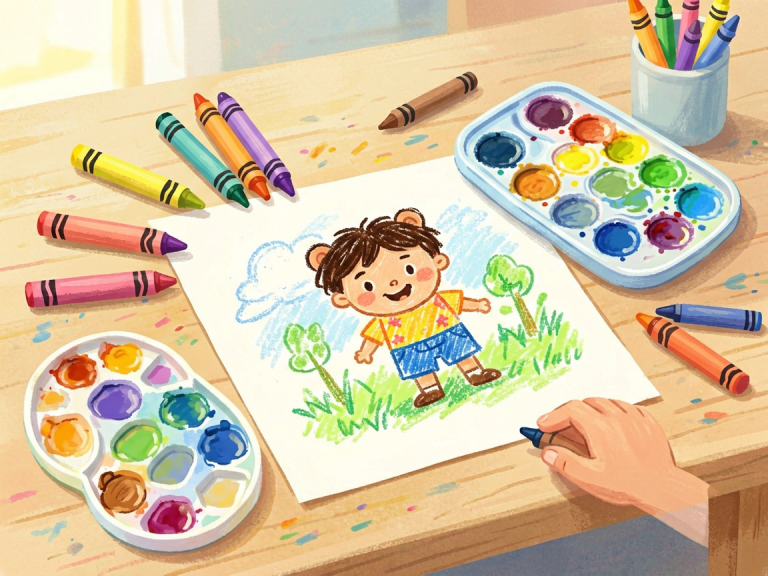
For older babies (18+ months), supervised color mixing is a magical introduction to chemistry. The kit might include three small cups of colored water (red, yellow, blue) and an empty cup. The parent adds a few drops of two colors, and the baby watches the new color appear. Similarly, a “volcano” made with baking soda and vinegar, done in a shallow tray with a baby‑safe container, creates a harmless fizz that delights most toddlers. The key is that the baby never handles the raw vinegar or baking soda alone; the parent adds them while the child watches or helps by holding a large spoon.
Cause‑and‑Effect Water Play
Many baby chemistry kits are essentially water‑play sets with an educational twist. For example, a kit might include a water wheel, a funnel, and some floating objects. While not strictly chemistry, these activities teach concepts like flow, displacement, and buoyancy—all foundational to physical science. The best kits integrate these with a small “experiment” where the baby can add a “magic” tablet (made of baking soda and citric acid) to water to make it bubble. The tablet should be large enough that it cannot be swallowed whole.
Brand and Product Recommendations (with Caution)
While I avoid endorsing specific brands, I can offer general guidance. Look for companies that specialize in STEM toys for very young children and have a clear safety policy. Some well‑known names in the baby education space include:
- Lovevery – They offer “sensory science” kits for different age stages. Their materials are rigorously tested and typically use natural wood, organic cotton, and non‑toxic paints. However, their kits are more focused on sensory play than explicit chemistry.
- KiwiCo – Their “Koala Crate” line for ages 0–24 months includes simple science projects like making a water wall or a texture board. They provide detailed parent guides.
- Hape – This brand offers wooden “science” toys like a water play table, but not a typical chemistry kit. Still, their products are well‑made and non‑toxic.
- DIY Kits from Etsy – Many small shops make custom chemistry‑themed sensory bins with edible ingredients. Read reviews carefully; ask the seller about safety testing.
Avoid generic kits from unknown sellers on Amazon that lack ingredient lists or safety certifications. If a kit costs less than $15 and claims to be for babies, be very skeptical.
How to Use the Kit: A Parent’s Role
Setting Up a Safe Environment
Before you even open the box, prepare a space where the baby can explore freely. Use a floor mat or a large plastic tablecloth that is easy to clean. Have a bowl of warm water and a towel nearby. Dress the baby in old clothes (or simply a diaper if the weather is warm). Keep a phone number for poison control handy—not because you expect trouble, but because responsible parents always have it.
Narrating the Experience
A chemistry kit becomes truly educational when you talk to your baby about what is happening. Use simple language: “Look, the white powder is disappearing into the water! It’s becoming a liquid.” Or “You squeezed the dropper and the blue water went into the cup. Now it’s green!” This builds vocabulary and concept formation. Do not expect the baby to understand the words, but the tone and repetition create neural connections.
Limiting Time and Focusing on Process
A baby’s attention span is short—perhaps 5 to 15 minutes. That is perfectly fine. Do not rush through the activities. Let the baby lead: if they want to just bang the scoop against the bin, that is also a kind of exploration. The goal is not to complete a “science experiment” but to foster curiosity. Never force a baby to participate if they are tired, hungry, or fussy.
Potential Pitfalls and How to Avoid Them
The “All‑in‑One” Trap
Some kits come with dozens of small vials, bags of powder, and multiple tools. For a baby, visual overload can be overwhelming and unsafe. Choose kits that offer just a few components at a time. You can always rotate activities from the same kit over several days.
Over‑Promise, Under‑Deliver
Marketing language like “grow your baby’s genius” or “raise a future Nobel laureate” is a red flag. No toy can guarantee intellectual outcomes. A chemistry kit for babies should be primarily about fun, bonding, and safe sensory stimulation. Keep your expectations realistic.
Cleanup and Storage
After play, wash all tools with soap and water. Do not reuse powders that have been mixed with water or saliva—they can grow bacteria. Store dry components in airtight containers labeled and kept out of reach. Some kits include resealable bags, but you may prefer your own glass jars with child‑proof lids.
Conclusion: The Joy of Tiny Reactions
Buying a chemistry kit for your baby is not about teaching chemical formulas—it’s about opening a door to wonder. The fizz of baking soda, the swirl of color, the feel of cornstarch turning from solid to liquid under tiny fingers—these are the building blocks of scientific thinking. As a parent, your most important job is to ensure that the materials are safe, the activities are age‑appropriate, and the time spent together is joyful. With careful selection and active supervision, a chemistry kit can become a treasured part of your child’s early learning journey. So go ahead, embrace the mess, and watch your baby’s eyes light up at the magic of simple science.