The Crafty Toddler: A Parent’s Guide to Buying Craft Kits for 2-Year-Olds
As a parent of a two-year-old, you’ve likely witnessed the magic—and the mess—of tiny hands exploring crayons, playdough, and glue sticks. The urge to encourage creativity is natural, but walking into a toy store or scrolling online can be overwhelming. Craft kits for toddlers are everywhere, promising everything from “Montessori-friendly” to “mess-free,” yet not all of them are appropriate for a child who may still put things in their mouth, lose interest in five minutes, or treat every activity as a full-body experience. This guide will help you cut through the noise and choose craft kits that are safe, developmentally suited, and genuinely fun for your two-year-old—without turning your kitchen counter into a disaster zone.
Why Two-Year-Olds Need Different Kits
At age two, children are not creating masterpieces. They are learning through sensory exploration, cause and effect, and repetitive motions. A craft kit designed for a five-year-old might require scissors, small beads, or intricate instructions—none of which suit a toddler’s developing fine motor skills. The right kit for a two-year-old focuses on process over product. It allows your child to squeeze, poke, stick, tear, and smear. These actions build hand strength, coordination, and cognitive connections. Moreover, a good kit respects your child’s attention span. A two-year-old may spend three minutes on an activity, wander off, and return later. The kit should be easy to stop and restart, with materials that can be stored without drying out or becoming unsafe.
Safety First: The Non-Negotiable Checklist
Before considering colors or themes, always prioritize safety. For a two-year-old, the biggest risks are choking, toxicity, and sharp edges. Look for the following:
- Large parts only. Any piece smaller than a toilet paper roll inner tube is a choking hazard. Avoid kits with googly eyes, tiny pom-poms, or small buttons. If you can fit the piece inside a toilet paper tube, it’s too small.
- Non-toxic and washable. Children at this age often explore with their mouths. Every crayon, paint, glue, or dough should be labeled “non-toxic” and, ideally, “edible” or “taste-safe.” Washable markers and paints are also essential, because they will end up on your child’s face, clothes, and living room sofa.
- No strings, cords, or loose ribbons. Long strings can be a strangulation hazard. Some kits include yarn for “tissue paper crafts”—skip those.
- Rounded, blunt tools. Stampers, rollers, and brushes should have short, thick handles. Avoid kits with any pointed or sharp tools, even if they are plastic.
If a kit’s packaging does not clearly list age recommendations and safety certifications, do not buy it. Trustworthy brands put their warnings and ingredient lists front and center. Also, remember that no kit replaces adult supervision. You are the ultimate safety feature.
What to Look For: Developmentally Appropriate Features
Once safety is confirmed, evaluate whether the activity actually matches your toddler’s abilities. The best craft kits for two-year-olds share common features:
- Easy grip tools. Fat crayons, chunky chalk, large stampers, and thick paint brushes allow small hands to hold and manipulate with little frustration. A two-year-old’s grip is still a whole-hand grasp, not a mature pincer grip. Kits with regular-sized pencils or thin markers will just end up thrown across the room.
- Simple one-step actions. Peeling a sticker, pressing a stamp into ink, dipping a brush into paint, or rolling a ball of playdough—these are perfect. Kits that require threading, lacing, or following a multi-step instruction will only lead to meltdowns.
- Open-ended materials. The best kits provide raw materials like modeling clay, large paper sheets, washable finger paint, or big tissue paper squares. These allow your child to make whatever they want, not a specific “owl ornament.” Avoid kits that require following a template or matching a finished example. Your toddler’s abstract scribbles are the point.
- Sensory variety. Toddlers learn through touch, smell, and sight. A good kit might combine smooth paper, fluffy cotton balls, bumpy corrugated cardboard, and squishy foam stickers. This sensory richness keeps little brains engaged.
- Compact and portable. Look for kits that come in a sturdy box or a resealable container. You will want to pack the remaining materials quickly when your child loses interest or when dinner needs cooking.
Red Flags: Kits to Avoid
Not every product labeled “for ages 2+” is actually appropriate. Watch out for these common pitfalls:
- The “sticker mosaic” trap. Many kits claim to be toddler-friendly but contain hundreds of tiny foam stickers. Peeling tiny stickers is too hard for most two-year-olds, and the stickers become choking hazards if they fall on the floor. Instead, choose kits with large stickers (at least two inches wide) that have a peel-off backing made for little fingers.
- Glue bottles and glue sticks. Standard glue sticks require twisting, capping, and precise application—skills that come much later. Liquid glue bottles inevitably create a pool of glue on the table. If a kit includes glue, make sure it is a “glue pen” with a sponge tip, or better yet, look for kits that use double-sided tape or contact paper, which are easier for toddlers.
- “Mess-free” claims that are too good to be true. Water-based, washable paints are wonderful. But some “mess-free” kits use sealed markers that only work on special paper—these are actually fine. Others claim to be mess-free but still include loose glitter or tiny beads. Read the fine print.
- Kits with a single project. A kit meant to create one elaborate craft, like a paper mache piggy bank, will frustrate your toddler and you. Look for kits that last through multiple sessions, with enough material for repeated play.
How to Make the Most of Any Craft Kit
Buying the right kit is only half the battle. How you introduce it matters just as much. Set up the activity in a contained area, like a highchair tray or a washable table, and cover the floor with a vinyl mat. Dress your child in an old t-shirt or a smock. Then, let them lead. Resist the urge to “fix” their artwork or show them the “right” way. Narrate what they are doing (“You are pressing the stamp! So many circles!”) but do not quiz them. Keep the session short—ten to fifteen minutes is plenty. When they lose interest, pack the kit away in a visible, accessible spot so they can request it again later.
Also, do not feel you must always follow the kit’s theme. If the kit came with paper plates and paint, but your toddler just wants to dip their hands in the paint and clap, let them. The process is the product. The best outcome is not a framed picture; it is a happy child who has learned that making art feels good.
Final Recommendations for Smart Shopping
When you are in the store or online, look for these types of kits as your go-to choices:
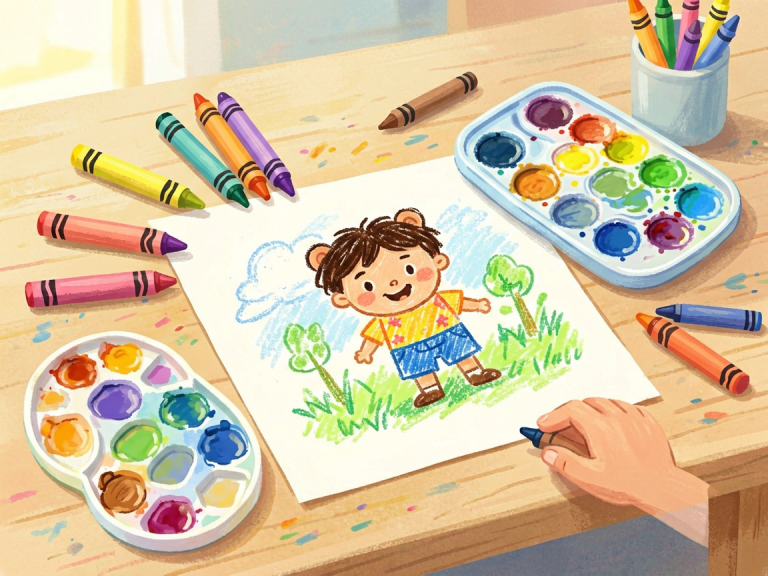
- Chunky crayon and paper sets with a few large sheets and a giant paper pad.
- Jumbo stampers with washable ink pads and large, easy-to-hold handles.
- Playdough kits with big plastic tools (rolling pins, cookie cutters) that have no sharp edges. Make sure the dough is non-toxic and store it in airtight containers.
- Large foam sticker sets where the stickers are peel-and-stick and the size of your palm.
- Finger paint kits with washable, non-toxic paints in squeeze bottles, paired with extra-large paper.
Avoid kits packaged with thin markers, scissors, tiny beads, or lace and string. Also, be wary of “luxury” craft sets filled with dozens of small accessories—more pieces simply means more mess and more danger.
Buying craft kits for a two-year-old is not about finding the most elaborate or educational product. It is about finding materials that are safe, chunky, washable, and wonderfully boring in their simplicity. A cardboard box, some tissue paper, and a pot of finger paint will always beat a robotic kit that promises to teach your child to draw a perfect cat. Trust your toddler’s curiosity. Give them the tools to explore. Then step back, camera ready, and let the beautiful mess begin.