The Empty Box Syndrome: Why We Keep Choosing Toys with Limited Play Value for Toddlers
Walk into any big-box toy store, and you will be greeted by glowing screens, blinking lights, and shelves stacked with plastic gadgets that promise to “teach,” “stimulate,” and “entertain” your toddler. Yet after the batteries run out, the novelty fades, and the landfill grows. The irony is profound: parents today have access to more toys than any generation in history, but many of those toys possess astonishingly limited play value—devices that perform one or two scripted actions, leaving toddlers as passive spectators rather than active creators. This phenomenon, which I call the “empty box syndrome,” deserves closer scrutiny. We must ask why we keep choosing such toys, what they do to our children, and how we can break free from a cycle of waste, frustration, and missed developmental opportunities.
The Misleading Allure of Passive Entertainment
The most common toys with limited play value are those engineered to do the playing for the child. A singing, dancing robot that says a dozen phrases and lights up when a button is pressed is not a toy in any meaningful sense—it is a performance. The toddler’s role is reduced to pressing that button repeatedly, watching the same spectacle, and eventually losing interest within days. Marketers exploit this by targeting parental anxieties: the toy claims to teach the alphabet, numbers, or “STEM skills.” But what does the child actually do? She observes. She listens. She may press a button. Yet true learning in early childhood arises from manipulation, experimentation, and imaginative transformation—none of which a pre-programmed electronic toy encourages.
Consider the contrast with a cardboard box. A toddler can turn it into a car, a house, a rocket, a cave, a drum, a sled, or a canvas. The box morphs to fit the child’s current interests, and its possibilities are limited only by imagination. The plastic robot, by comparison, is rigid. It has one function, one soundtrack, one set of moves. Its “play value” is exhausted when the child has memorized every trigger. This is the central problem: limited play value means a toy has a fixed ceiling of engagement. The child quickly hits that ceiling, then moves on, often leaving parents to buy yet another disposable distraction. The cycle repeats, not because toddlers are fickle, but because we have handed them objects that cannot grow with them.
The Economics of Disposable Joy
Why do parents continue to purchase such toys? The answer lies in a combination of social pressure, convenience, and clever advertising. Toy manufacturers understand that a parent buying a gift wants immediate gratification—a bright, attractive item in a colorful box. They also understand that the child’s initial reaction is happiness, which feels like success. But initial happiness is not sustained play. The toy industry profits from repeat purchases; a toy that remains engaging for years is a financial failure. Thus, many products are deliberately designed to be replaced: cheap plastic, fragile parts, one-time gimmicks. In this sense, limited play value is not an accident—it is a business model.
Moreover, the rise of digital technology has normalized screen-based play, but it has also blurred the line between toys and media. A toddler might receive a tablet with “educational games,” but these games are often nothing more than digital worksheets with bright animations. The interactive features are mostly artificial: the child taps, the app responds, another tap, another response. This is not open-ended play. It is consumption. And while a parent may justify it by saying “my child loves it,” love is not a measure of developmental value. A child loves candy, too, but we do not feed them candy three meals a day. We must apply the same judgment to toys: does this object invite the child to wonder, to construct, to pretend, to solve, to collaborate, or to move? If not, its play value is severely limited, no matter how much the child stares at it.
What Limited Play Value Does to a Toddler’s Developing Mind
The consequences of choosing such toys are deeper than mere boredom. During the toddler years, the brain is rapidly forming neural connections based on experiences. Play is the primary engine of that development. When toddlers engage in open-ended play—building blocks, sorting objects, pretend cooking, drawing, climbing—they are not just having fun; they are developing executive function, spatial reasoning, language skills, and emotional regulation. They learn to plan, to modify their actions, to negotiate with peers, and to persist through frustration. Limited-play-value toys hijack this rich process. They offer a scripted interaction that requires little problem-solving. The child’s role is overwhelmingly reactive: press, watch, repeat. Over time, this can lead to shorter attention spans, diminished creativity, and a preference for external stimulation over internal invention.
Equally concerning is the impact on social play. Many high-tech toys are designed for solo use. A toddler with a flashing drone-like toy is not likely to share it with a sibling or collaborate on a storyline. Meanwhile, a set of wooden blocks or a basket of plastic animals invites joint play: two toddlers can build a zoo, create a family, argue about which animal eats what. These negotiations are the stuff of social competence. Toys with limited play value often rob children of these interactions because they are not flexible enough to be incorporated into shared fantasies. The toy dictates the action, leaving no room for the children to co-author their own narrative. In this way, the toy becomes a silo, isolating the child in a loop of solitary, repetitive stimulation.
Another hidden danger is the creation of a “disposable mindset.” When toddlers repeatedly receive toys that break, lose their charm, or are simply thrown aside, they learn that objects—and by extension, interests—are transient. They may grow up with a habit of expecting novelty and discarding items quickly, undermining their capacity for deep concentration, sustained curiosity, and, later, genuine expertise. The parent who buys endless cheap toys to keep a toddler calm is inadvertently training that toddler to become an adult who cannot sit still without a screen buzzing. The problem is not that toys are bad; it is that toys with limited play value teach children to be passive consumers of entertainment rather than active agents of their own play.
Reclaiming Play: How to Choose Better
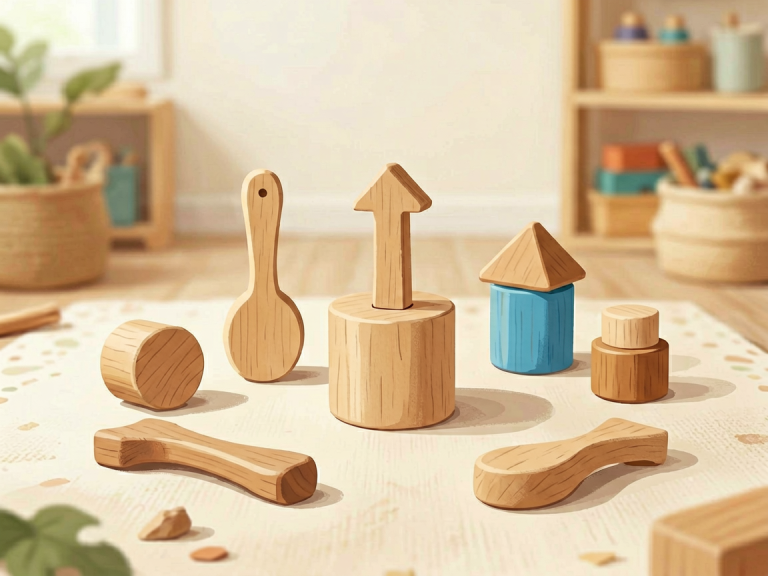
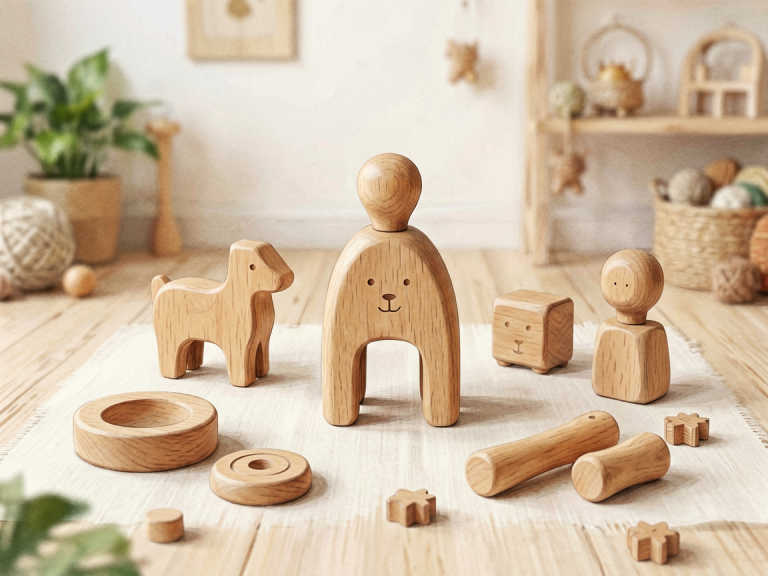
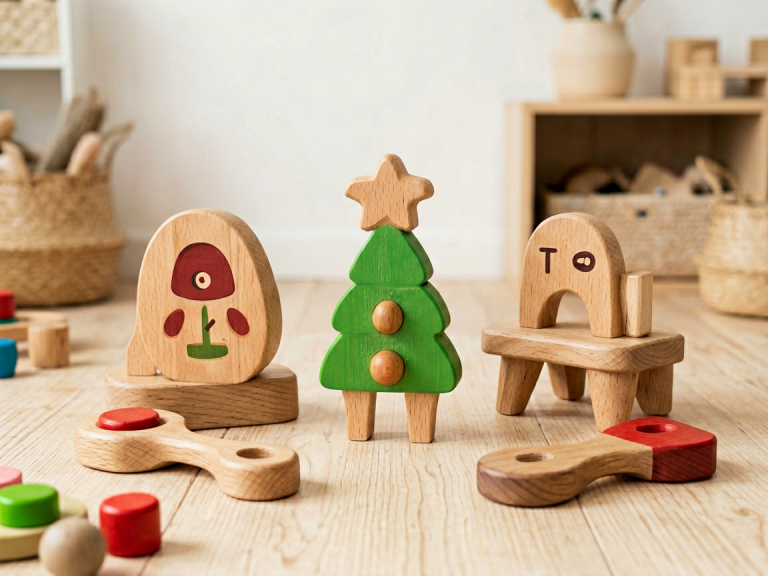
The good news is that we can change our habits. The first step is to recalibrate our definition of a “good toy.” Instead of asking “Will this keep my child busy?” we should ask “Will this allow my child to do the thinking?” A great toy is 90 percent child and 10 percent toy. Simple, open-ended materials—wooden blocks, nesting cups, fabric scraps, cars that can be pushed, dolls that can be hugged, water, sand, cardboard—score incredibly high on play value because they are infinitely reconfigurable. They do not have a predetermined endpoint. A toddler can stack blocks into a tower, then line them up as a train, then sort them by color, then use them as ingredients in a soup. Each play session is different because the child brings new ideas to the same materials.
Second, we should learn to resist the technological siren song. Not all electronic toys are harmful, but parents must scrutinize them carefully. A toy with a button that plays a song when pressed offers almost no play value. A toy that records the child’s voice and plays it back deformed might spark laughter and imitation, which could be useful—but even that becomes repetitive quickly. The best electronic toys for toddlers are those that allow open-ended creativity, such as a simple camera for taking pictures or a music player that lets the child play along with homemade instruments. But as a general rule, the more the toy can do, the less the child does. Choose toys that sit quietly, waiting for a child’s imagination to bring them to life.
Third, we need to embrace “boredom” as a gift. When a parent worries that a toddler is bored and rushes to offer a flashing toy, they interrupt a valuable internal process. Boredom is the mother of invention. It is in those moments of unstructured time that toddlers discover the crack in the floor is a river, the blanket is a cape, and the collected pebbles are a treasure hoard. By immediately providing high-stimulation toys, we cheat our children out of these imaginative leaps. Let toddlers occasionally be bored. Let them fuss a little. That discomfort often sparks the most creative play of all.
Finally, we should adopt a mindful purchasing routine. Before buying any toy, ask: Will this still be played with in six months? Does it require my child to actively manipulate, construct, or pretend? Can it be used in multiple ways? Does it have detachable pieces that will likely be lost or broken? Is it made from materials that feel satisfying to touch and hold? Many parents find that the best toys are the simplest—and often the cheapest. A cardboard box from the recycling bin consistently outplays a forty-dollar electronic gadget. Because we live in a culture that equates spending with love, we must consciously remind ourselves that our attention, our time, and our willingness to join our child’s imaginative world are the true gifts. A toy is merely a tool; the play is the treasure.
Conclusion
Choosing toys with limited play value for toddlers is a pervasive and understandable mistake, but it is not inevitable. By recognizing that passive, rigid, and disposable toys undermine deep engagement, we can make better choices for our children’s developing brains and hearts. Let us not fall for the empty box syndrome—the seductive packaging that promises enchantment but delivers disappointment. Instead, let us fill our homes with simple, malleable objects that invite a thousand stories. Let us trust our toddlers to create, to imagine, to explore, and to grow. The best toy is not the one that does everything; it is the one that inspires the child to do everything. And in that exchange, the child discovers something far more valuable than a feature list: the unending power of their own mind.