The Enduring Magic of Play Kitchens and Dollhouses: Nurturing the Whole Preschooler
Introduction
In the bustling landscape of early childhood education and parenting advice, one question frequently surfaces: what are the most beneficial toys for a preschooler? Amidst a sea of flashing screens and automated gadgets, two classic playthings have stood the test of time—the play kitchen and the dollhouse. These seemingly simple objects are far more than mere sources of entertainment. They are microcosms of the real world, deliberately scaled down to fit small hands and big imaginations. For children aged three to five, a play kitchen or a dollhouse is not just a toy; it is a laboratory for life. Through these miniature environments, children experiment with social roles, practice language, process emotions, and develop cognitive and motor skills in a way that few other toys can replicate. This article delves into the profound, research-backed benefits of these beloved play items, offering a comprehensive guide for parents and educators who wish to harness the full developmental potential of imaginative play.
The Cognitive Benefits of Imaginative Play
At first glance, a child pretending to bake a wooden cake in a play kitchen might seem like idle fun. However, cognitive scientists and early childhood experts have long recognized that such activities are foundational to executive function development. When a preschooler engages in pretend play with a kitchen or dollhouse, they must hold multiple scenarios in mind simultaneously: “I am the chef, this block is the chicken, and now I need to put it in the oven for five minutes.” This type of symbolic thinking—where one object stands for another—is a crucial precursor to abstract reasoning. The ability to create and sustain a narrative, to remember the sequence of steps in a recipe, or to assign roles to dolls requires working memory, cognitive flexibility, and self-regulation. These are exactly the skills that predict later academic success, far more than early literacy or numeracy drills. Moreover, play kitchens introduce foundational concepts of mathematics and science. Counting out plates, measuring pretend ingredients, and observing cause-and-effect (e.g., turning a knob to “heat” the stove) provide hands-on, intuitive learning that no worksheet can offer. Dollhouses, similarly, encourage spatial reasoning as children arrange furniture, decide which room belongs to which character, and understand scale and proportion. Every rearrangement is a quiet geometry lesson; every story a narrative logic problem.
Social and Emotional Development Through Role-Playing
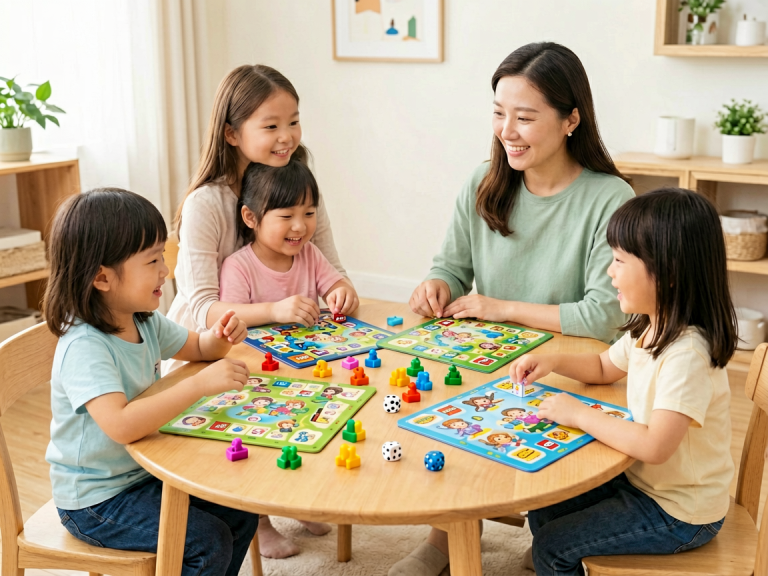
Perhaps the most visible impact of play kitchens and dollhouses lies in the social and emotional domain. These toys are inherently relational. A dollhouse is not a solitary object; it is a stage for countless interpersonal dramas. When children act out scenes—a family dinner, a sick baby being cared for, a conflict over a toy—they are rehearsing social scripts. They learn to negotiate, share, and take turns. More importantly, they explore the emotional lives of others. A child who puts a doll to bed with a gentle “goodnight” is practicing empathy. One who makes a pretend meal for a friend is learning caregiving and cooperation. The safe, low-stakes environment of play allows preschoolers to process complex emotions that might otherwise overwhelm them. For instance, a child who recently experienced a move to a new house might use a dollhouse to replay the event, thereby gaining a sense of control over the unfamiliar. Similarly, a child who feels frustration about a new sibling can act out jealousy or rivalry with dolls, then resolve it through play. The play kitchen offers analogous opportunities: re-creating family meals helps children understand routine and belonging, while cooking for others fosters generosity. Research has shown that children who engage in rich socio-dramatic play are better able to regulate their emotions, understand others’ perspectives, and build friendships. In an age where social skills are increasingly challenged by screen time, these toys serve as essential training grounds for human connection.
Language and Communication Skills
The linguistic richness generated by imaginative play is extraordinary. In a play kitchen, a child might declare, “I am making a big, delicious pizza with extra cheese!” That sentence contains adjectives, nouns, verbs, and the beginning of complex syntax. Dollhouses, too, spark dialogue: “The daddy bear is going to work now. The baby bear is sad. Can you help him?” These spontaneous utterances are far more varied and sophisticated than the language prompted by many electronic toys, which tend to elicit only simple responses. When children play with others—siblings, peers, or even adults—they must negotiate meaning, explain their ideas, and clarify misunderstandings. This requires them to use language for a purpose: to persuade, to describe, to question, or to comfort. For bilingual or multilingual children, play kitchens and dollhouses offer a natural context to practice both languages, as they often switch between codes based on the role they are playing. Furthermore, these toys provide a rich vocabulary scaffolding. A child learns words like “refrigerator,” “stove,” “sink,” “furniture,” “bedroom,” “kitchen,” and “bathroom.” They learn action verbs: “pour,” “stir,” “bake,” “tuck in,” “feed.” And they encounter abstract concepts like “hungry,” “tired,” “sick,” or “happy” in a context that makes them meaningful. Speech-language pathologists frequently recommend play involving miniature worlds for children with language delays, precisely because the motivation to communicate is so high. The pretend context lowers anxiety and encourages verbal risk-taking. For typically developing preschoolers, it simply provides an endless well of conversation.
Physical and Fine Motor Skills
While cognitive and social benefits often take the spotlight, the physical demands of play kitchens and dollhouses should not be overlooked. Consider the fine motor tasks involved: turning a tiny faucet knob, placing a small cup on a miniature shelf, dressing a doll with snap closures, or lifting a tiny plastic skillet. These actions require the development of the small muscles in the hands and fingers, which are essential for later skills like writing, buttoning clothing, and using tools. The pincer grasp—using the thumb and forefinger—is repeatedly practiced when children pick up play food items or manipulate dollhouse accessories. Bilateral coordination, or the ability to use both hands together for a task, is also honed: one hand holds a doll while the other brushes its hair; one hand holds a pot while the other stirs. Gross motor skills come into play as well. A play kitchen that is at the right height requires a child to stand, reach, and sometimes bend—all movements that build strength and balance. Dollhouses, especially larger ones, encourage children to move around, carry pieces, and arrange them. This active, hands-on engagement is a welcome counterbalance to sedentary screen time. Moreover, the open-ended nature of these toys means that children can adjust their physical play according to their current abilities, gradually increasing in complexity as they grow. A two-year-old might simply bang pots, while a five-year-old might meticulously arrange a table setting, demonstrating a progression in motor control.
Choosing the Right Play Kitchen or Dollhouse: A Parent’s Guide
Given the overwhelming benefits, it is no surprise that many parents wish to invest in a play kitchen or dollhouse. However, the market is flooded with options ranging from cheap plastic sets to elaborate wooden structures. How does one choose? The first consideration is safety. Look for toys made from non-toxic materials, with rounded edges and no small parts that could pose a choking hazard for children under three. Solid wood play kitchens and dollhouses tend to be more durable and have a classic aesthetic, but they are also heavier and more expensive. Plastic versions are lightweight and easier to clean, but may not hold up to years of enthusiastic play. Size matters, too. A play kitchen should be proportionate to the child—not so tall that they cannot reach the stovetop, nor so low that they must crouch. Dollhouses should be sturdy enough to withstand frequent rearrangement; a flimsy cardboard model will frustrate rather than inspire. Open-ended design is key. Avoid sets that come with highly specific, predetermined attachments. Instead, opt for simple, neutral pieces that can be used in multiple ways—a wooden block can be a loaf of bread, a table, or a building. This encourages creativity rather than rote following of instructions. Also consider gender neutrality. While marketing often steers play kitchens toward girls and dollhouses toward girls, boys benefit equally from these toys. Choose color schemes and themes that appeal to all children. Finally, think about storage and space. A large dollhouse with multiple floors can dominate a playroom; a foldable or stackable model might be better for smaller homes. Similarly, a play kitchen with ample shelves and hooks can keep accessories organized, teaching children about tidiness as a natural part of their play.
Safety Considerations and Material Quality
No discussion of toys for preschoolers is complete without addressing safety. Play kitchens and dollhouses are often made of wood or plastic, and both materials have potential hazards. For wooden items, ensure that the paint or finish is water-based, lead-free, and non-toxic. Check for splinters by running your hand over all surfaces. For plastic products, look for symbols indicating they are BPA-free, phthalate-free, and free from other toxic additives. Avoid anything with a strong chemical smell, which often indicates off-gassing. Small parts—such as tiny spoons, doll shoes, or plastic food items—must be larger than the diameter of a standard toilet paper roll to prevent accidental ingestion. The Consumer Product Safety Commission (CPSC) in the United States and similar bodies in other countries provide guidelines; it is wise to buy from reputable brands that adhere to these standards. Another often overlooked safety aspect is stability. Dollhouses with heavy furniture that can topple over or play kitchens with sharp edges should be avoided. Look for models that have a wide base and are not top-heavy. Additionally, consider the cords or batteries if the toy has any electronic features (e.g., a play kitchen with a light-up stove). Low-voltage, enclosed battery compartments are preferable to avoid electric shock. The best approach is to supervise play initially and to periodically inspect the toy for wear and tear. A loose screw or a cracked piece should be repaired or discarded immediately. By prioritizing safety, parents can ensure that the developmental benefits are not overshadowed by preventable accidents.
Encouraging Inclusive and Unbiased Play
While play kitchens and dollhouses offer immense potential, the way they are presented to children can either reinforce stereotypes or break them down. Traditional marketing often shows girls playing with miniature ovens and boys with construction sets, but this is a cultural construct with no basis in child development. In reality, children of all genders benefit equally from nurturing play. A boy who learns to “cook” in a play kitchen is developing life skills and empathy; a girl who builds and rearranges a dollhouse is engaging in spatial reasoning and design. Parents and educators can actively counter stereotypes by offering diverse accessories: dolls of various races, abilities, and family structures; play food from different cuisines; and furniture that represents a range of home types—apartments, houses, even tents. Invite children to role-play professions beyond traditional gender lines: a female firefighter doll, a male nurse doll. Use the play kitchen to discuss food origins and healthy eating. Use the dollhouse to talk about different family configurations—single parents, same-sex parents, multi-generational homes. This not only enriches the play experience but also fosters a worldview of acceptance and curiosity. Moreover, allow children to direct their own narratives. If a child wants the dollhouse to have a “monster living in the basement,” embrace that creative turn. The goal is not to direct play toward a specific adult agenda but to provide a rich, open-ended stage where children can explore all facets of human experience without limitation.
Conclusion
The play kitchen and the dollhouse are far from outdated relics of a pre-digital era. On the contrary, they are among the most powerful developmental tools available for preschoolers. They cultivate cognitive flexibility, social competence, emotional resilience, language fluency, and physical coordination—all within the joyful context of play. In a world that increasingly prioritizes measurable outcomes and early academic pressure, these toys remind us that the most profound learning often happens when children are given the freedom to imagine, to pretend, and to create their own worlds. For parents and educators seeking to foster holistic development, investing in a high-quality, safe, and inclusive play kitchen or dollhouse is not merely a purchase; it is an investment in a child’s future capacity to think, feel, connect, and thrive. So the next time you see a preschooler earnestly serving a wooden pizza or tucking a doll into a tiny bed, recognize that you are witnessing the work of a young mind building the foundation for a lifetime. And perhaps, join in—the soup is delicious, and the dollhouse door is always open.