The Perils of Piece-Heavy Playthings: Why Buying Toys with Too Many Pieces for Toddlers Can Backfire
—
Introduction
Walk into any toy store today, and you will be confronted by an overwhelming avalanche of options, many of them proudly advertised as “educational,” “interactive,” or “designed to stimulate creativity.” Among these, a particularly seductive category is the multi-piece set: building blocks with 200 interlocking parts, puzzle mats with 50 foam tiles, or pretend‑play kitchen sets that come with dozens of miniature utensils and plastic food items. For parents of toddlers—children aged one to three—the temptation is strong. We imagine our little ones sitting calmly, sorting colorful shapes, assembling towers, and quietly developing fine motor skills. But what happens when reality collides with that dream?
The truth is, buying toys with too many pieces for toddlers is often a recipe for frustration, safety concerns, and developmental mismatch. While a large number of parts might seem to promise endless possibilities, the cognitive, motor, and emotional capacities of toddlers are still very much in formation. This article explores why such toys can be counterproductive, reveals hidden dangers, and offers practical guidance for choosing playthings that truly support a toddler’s growth—without requiring a PhD in clean‑up.
—
The Developmental Mismatch: Why Toddlers Are Not Mini Preschoolers
Toddlers are in a unique stage of rapid brain development, but their ability to process complexity is far from mature. At around 12 to 24 months, children typically engage in sensorimotor play—they explore by touching, mouthing, banging, and dropping objects. They are not yet capable of sustained goal‑directed activities like following a multi‑step building plan. A toy with dozens of pieces demands attention span, working memory, and sequencing skills that simply aren’t available.
For example, a 30‑piece jigsaw puzzle may be marketed as “for ages 2+,” but most two‑year‑olds cannot grasp the concept of interlocking edges or matching shapes to corresponding slots. Instead, they will likely scatter the pieces, put one in their mouth, and then move on to something else. The toy then becomes a source of parental frustration (“He won’t even try!”) and child distress (“You want me to do what?”).
Moreover, toddlers’ brains are wired for repetition and routine. A simple stacking cup set (with perhaps six cups) allows a toddler to practice the same action over and over—placing a cup inside another, then dumping it out—which reinforces neural connections. In contrast, a 100‑piece set of magnetic tiles offers too many variables. The child may become overwhelmed by choice, leading to what developmental psychologists call “choice overload” —a phenomenon that can trigger tantrums or withdrawal.
In short, the cognitive load imposed by too many pieces far exceeds what a toddler’s developing executive functions can handle. The result is not learning but confusion, not creativity but chaos.
—
Safety Hazards and Choking Risks: The Hidden Dangers
One of the most pressing reasons to avoid excessive pieces is physical safety. The American Academy of Pediatrics warns that toys with small parts are a leading cause of choking incidents in children under three. While many manufacturers label products with age recommendations, the reality is that toddlers explore the world orally. A brightly colored plastic cherry from a pretend‑fruit set can easily be swallowed. A magnetic sphere from a building kit can block an airway.
But the danger does not end with choking. Small pieces can also pose ingestion hazards if they contain toxic materials like lead or phthalates—still found in some cheap imported toys. Furthermore, pieces with sharp edges, long strings, or detachable components can cause cuts, strangulation, or internal injuries.
Consider also the clutter factor. When a toy has 80 pieces, it is nearly impossible for a parent to keep track of every one. A lost piece under the sofa becomes a hidden hazard waiting for a curious toddler to discover. Even if the original toy is age‑appropriate, the sheer number of parts increases the likelihood that some will be misplaced, broken, or turned into unintended tools (e.g., using a plastic rod to poke a sibling).
The common parent retort—“I’ll just supervise closely”—is flawed because supervision, especially during busy household moments, is never perfect. The safer choice is to minimize the number of small, loose pieces altogether.
—
The Overstimulation Trap: Less Is More for Developing Brains
Recent research in early childhood education emphasizes the importance of “less is more.” A toddler’s sensory system is still learning to filter and organize incoming information. A toy with too many pieces bombards the child with visual, tactile, and sometimes auditory stimuli—different colors, varied shapes, multiple textures, and perhaps even sounds. Instead of fostering focused attention, such overstimulation can lead to sensory overload.
Signs of sensory overload in toddlers include irritability, crying, refusing to engage, or suddenly “shutting down.” A child who is presented with a giant bucket of Lego Duplo might initially be excited, but within five minutes he might sweep the entire collection onto the floor in frustration. This is not misbehavior; it is a neurological response to an environment that demands more integration than the brain can currently manage.
In contrast, a simple wooden train with just three carriages encourages deep, repetitive engagement. The toddler can push it, line it up, knock it over, and then start again. Each repetition builds neural pathways without overloading the system. The same principle applies to playdough with a few cookie cutters, or a single shape‑sorter with only three shapes. These toys respect the child’s developmental stage by offering just enough complexity—not too much.
There is also a phenomenon known as “throwing behavior.” When toddlers are overwhelmed, they often express their stress by throwing objects. A toy with many pieces can quickly transform into a hail of projectiles, which may hurt others or damage property. The parent then spends more time policing the play than participating in it.
—
Practical Challenges for Parents: The Clean-Up Nightmare
Let us be honest: the parent who buys a 150‑piece magnetic building set for a two‑year‑old is likely the same parent who will later lament the state of the living room floor. Clean‑up becomes a daily battleground. Toddlers, by nature, lack the organizational skills and motivation to sort and store dozens of small items. A 10‑piece puzzle can be returned to a box in seconds. A 60‑piece train track set requires patience, spatial reasoning, and time—all of which are in short supply for a busy parent and a wiggly toddler.
The loss of pieces is another chronic issue. Within a week, several parts will inevitably disappear under furniture, into the vacuum cleaner, or out the door. The toy becomes incomplete, diminishing its play value. The child may then become frustrated because “the red piece is missing” and the intended construction cannot be completed. This can spark tears and meltdowns.
Moreover, the financial cost adds up. Parents may invest in a large set only to find that the child loses interest quickly. The toy ends up in the donation bin or—more likely—collecting dust in a corner. In contrast, a few high‑quality, low‑piece‑count toys that rotate between play sessions often hold attention longer and offer better return on investment.
Storage is another hidden challenge. Homes with toddlers are already cluttered with sippy cups, diapers, wipes, and stuffed animals. Adding large bins of tiny parts can turn a cozy living space into a tripping hazard. The mental load of constantly picking up, sorting, and cleaning small pieces adds stress to parents who already have enough on their plates.
—
The Case for Simple, Open-Ended Toys
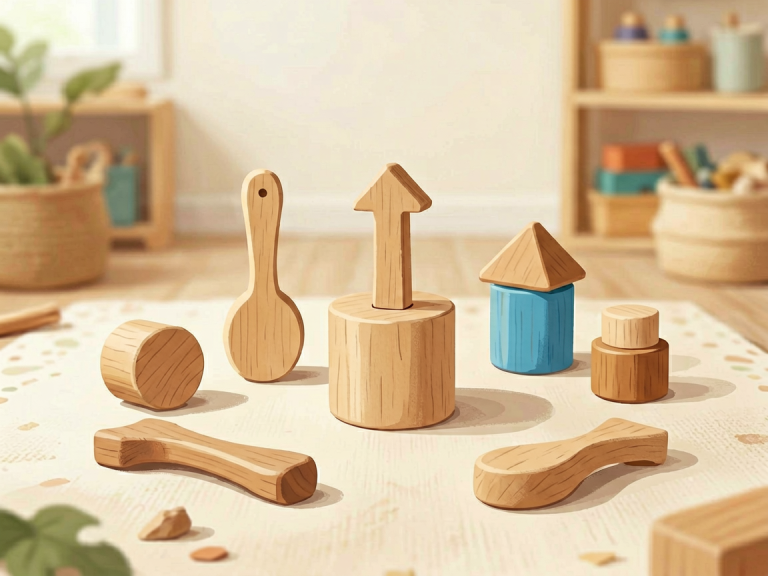
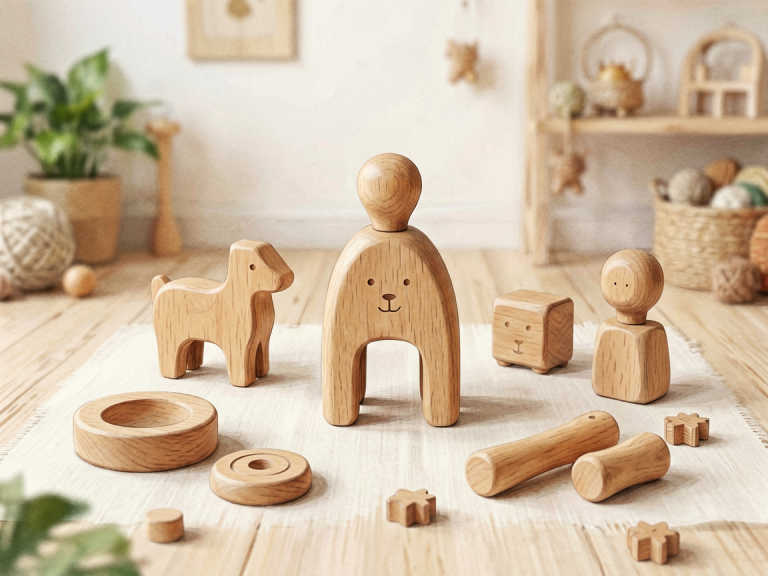
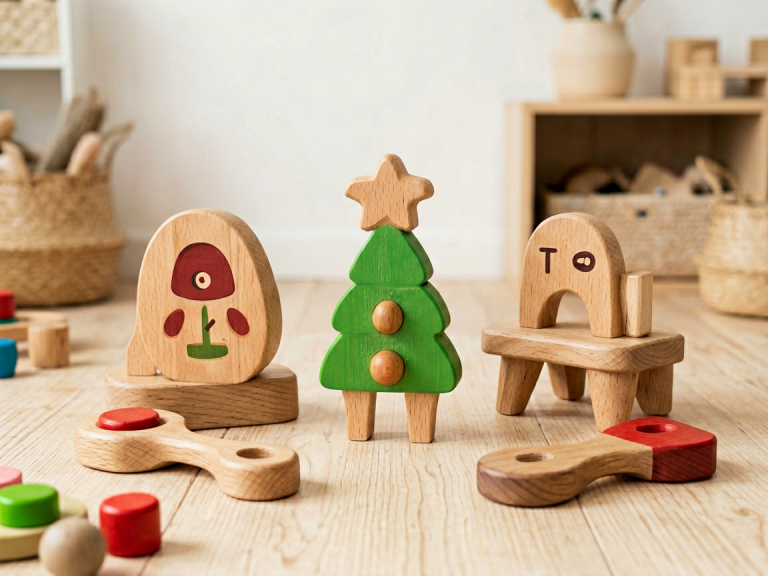
What should parents choose instead? The answer lies in open‑ended toys that encourage creative, flexible play without overwhelming numbers of pieces. Classic examples include:
- A set of 4–6 stacking cups (simple, safe, and endlessly combinable)
- A wooden push cart with a few blocks (promotes gross motor skills and imagination)
- A single ball (great for rolling, throwing, chasing, and social play)
- Simple cloth dolls or stuffed animals (encourage nurturing play)
- Large, chunky puzzles with only 2–4 pieces
- Play scarves or fabric squares (can be used for peek‑a‑boo, building nests, or pretend games)
These toys align with the developmental principle of “loose parts” —a concept from early childhood education that suggests young children benefit most from objects that can be moved, combined, and transformed in many ways. But note: the key is *limited quantity*. A few loose parts spark creativity; many loose parts cause chaos.
For example, a cardboard box can become a spaceship, a car, a house, or a fort. It has zero pieces and infinite possibilities. A simple ball can be used for rolling games, hide‑and‑seek, or target practice with a laundry basket. These toys do not require parents to sort, store, or worry about choking hazards. They also foster stronger parent‑child interaction, because the parent can actively engage without being distracted by a mess.
—
How to Choose Age-Appropriate Toys: Practical Guidelines
To avoid the trap of buying toys with too many pieces, follow these evidence‑based guidelines:
- Follow the “10‑piece rule” for toddlers under 2.5 years. Limit the number of distinct parts to about 10 or fewer. This includes pieces in a set, not counting the main body. A 12‑piece puzzle is acceptable; a 48‑piece set is not.
- Check the label, but be skeptical. Many manufacturers label toys as “ages 3+” for safety reasons, but some “2+” toys still contain small pieces. Always ask: Can this piece fit inside a toilet paper roll? If yes, it is a choking hazard.
- Prioritize size over number. Large, chunky pieces (e.g., large wooden blocks, soft foam bricks) are safer and easier for small hands to manipulate. They also encourage whole‑body play.
- Observe your child’s current play patterns. If your toddler prefers dumping and filling containers, choose nesting cups or a simple bucket with a few large objects. If they like pushing and pulling, choose a wagon or a pull‑along animal.
- Introduce complexity gradually. As your child approaches three years old, you can slowly increase the piece count, but always monitor for signs of frustration. A good benchmark: the child should be able to play with the toy independently for 10–15 minutes without needing help.
- Rotate toys. Instead of offering many toys at once, rotate a small selection every week. This reduces stimulation and makes each toy feel new again. It also prevents the accumulation of pieces from multiple sets.
- When in doubt, choose one multi‑function item. For example, a single shape‑sorter with three shapes is far better than a shape‑sorter with 12 shapes, even if the latter is more “educational” on paper. Simplicity supports mastery, and mastery builds confidence.
—
Conclusion
Buying toys with too many pieces for toddlers is an easy mistake to make. It seems logical that more pieces equal more learning, more fun, and more value for money. But the developmental reality tells a different story. Toddlers are not miniature engineers or puzzle pros; they are sensory explorers who need environments that match their cognitive, motor, and emotional capacities. Too many pieces can overwhelm their brains, threaten their safety, exhaust their parents, and ultimately dampen the very joy of play that toys are meant to inspire.
The next time you are tempted by that giant box of plastic parts, pause. Ask yourself: *Will my child engage deeply, or will this become a scatter‑fest? Will I enjoy playing together, or will I spend most of my time picking up pieces?* The most loving gift you can give a toddler is not the most complex toy, but the simplest tool for discovery—a few blocks, a ball, a box, and your undivided attention. That, after all, is the real building block of a happy childhood.
*Word count: approximately 1,560 words.*