The Pitfall of Plethora: Why Buying Toys with Too Many Pieces Is a Parental Mistake
Introduction
Every parent has been there: standing in a brightly lit toy aisle, staring at a gigantic box plastered with promises of “1,000+ pieces!” or “Build your own city!” The child’s eyes are wide with excitement, and the parent’s heart swells with the hope that this toy will provide hours of educational, creative fun. Retailers know exactly how to market these mega-piece sets—they appeal to our deep desire to give our children the best possible developmental tools. Yet, beneath the glossy packaging and the rainbow of plastic components lies a hidden trap. The decision to buy toys with an excessive number of pieces is one of the most common, and most damaging, mistakes parents make. It is not merely a matter of clutter or lost parts; it is a choice that can inadvertently undermine a child’s focus, creativity, and even their emotional resilience. This article explores the multifaceted reasons why such toys are a poor investment, and offers practical guidance for making wiser, more meaningful choices.
The Illusion of Educational Value
Quantity Does Not Equal Quality
The first and most seductive fallacy is that more pieces automatically translate into more learning. Toy manufacturers frequently label their multi-piece sets as “STEM” or “educational,” implying that the sheer number of components will boost problem-solving skills, spatial reasoning, or fine motor development. In reality, there is little evidence to support this. Research in developmental psychology suggests that the complexity of a toy’s *structure* and *open-endedness* matters far more than the number of its constituent parts. A simple set of wooden blocks with thirty pieces, for example, can inspire countless architectural creations because its simplicity allows the child to impose their own narrative. A massive plastic castle with 500 specialized bricks, by contrast, often comes with a pre-determined blueprint. The child’s role is reduced to that of a machine following instructions—not a free-thinking creator. The educational value thus becomes hollow, a form of assembly-line labor rather than genuine cognitive exploration.
The Paradox of Choice
Moreover, an abundance of pieces can induce what psychologist Barry Schwartz calls “the paradox of choice.” When a child is confronted with hundreds or even thousands of similar-looking components, decision fatigue sets in. Instead of feeling empowered, they become overwhelmed. They may start building but quickly abandon the project because the sheer volume of options paralyzes their imagination. Instead of learning to plan and execute a coherent idea, they learn to jump from one unfinished attempt to another. This pattern, if repeated often, can foster a short attention span and a superficial approach to problem-solving—the exact opposite of what parents hope to achieve.
The Cognitive Overload on Children
Attention and Executive Function
Children’s brains are not miniature adult brains; they are still developing the neural pathways that govern attention, planning, and self-regulation. A toy with dozens of tiny pieces—each demanding to be sorted, counted, and placed—places an enormous strain on these immature executive functions. Studies have shown that when children play in an environment cluttered with excessive stimuli, their ability to sustain focus decreases significantly. They are more likely to flit between activities, never achieving the deep, immersive state of “flow” that is critical for true learning and satisfaction. In contrast, a toy with fewer, larger pieces encourages slower, more deliberate play. The child must think carefully about each move because the resources are limited—a constraint that actually boosts creativity and concentration.
Frustration and Emotional Regulation
Another hidden cost is the emotional toll. Young children, especially those under six, have limited fine motor skills and patience. When a tiny piece refuses to snap into place, or when the entire tower collapses because a crucial connector was misplaced, the frustration can be intense. Many parents have witnessed the tears and tantrums that follow the failure of a complex construction. Instead of learning resilience, the child may learn that play is a source of stress. Over time, they may develop an aversion to challenging tasks, preferring simpler, more gratifying activities like passive screen time. The toy that was supposed to build character ends up breeding defeat.
The Practical Burden on Parents
The Endless Clean-Up and Lost Parts
Let us be honest: the parent is the one who ultimately manages the aftermath. A toy with hundreds of pieces means an inevitable stream of small components migrating under sofas, into vacuum cleaners, and into the mouths of younger siblings or pets. The daily ritual of sorting, counting, and searching for missing pieces is exhausting. Lost parts render the toy incomplete and often unusable, leading to more frustration for the child and more expense for the parent. The financial waste is significant: a broken or incomplete set is rarely repurchased; it simply becomes landfill.
The Hidden Time Cost
Time is perhaps the most precious resource for modern parents, yet these toys devour it mercilessly. Consider the hours spent assembling a large set according to instructions—hours that could have been spent reading, playing outside, or having a genuine conversation. And when the set is finally built, it often functions as a decorative object rather than a plaything. Children may admire it for a day or two, then move on. The parent is left wondering why they spent so much energy on a one-time construction. This pattern reinforces a consumerist mindset: the goal becomes completion and acquisition, not ongoing enjoyment.
The Environmental and Financial Cost
Unsustainable Consumption
From an ecological perspective, the proliferation of plastic pieces is a nightmare. Most multi-piece toys are made from non-biodegradable polymers, and their short lifespan—often ending in the trash after a few weeks—contributes to the global plastic crisis. The packaging alone is frequently excessive, with layers of cardboard and plastic blisters that are impossible to recycle. By choosing such toys, parents inadvertently teach their children that products are disposable and that novelty is more important than sustainability. This is a worrying lesson in an era of climate change.
The True Cost Per Play
Economically, the cost-per-play ratio of a massive-piece toy is often abysmal. A high-end construction set may cost $80 or more, yet it might be used intensively for only a few days before being abandoned. In contrast, a $20 set of high-quality wooden blocks or a simple doll can provide years of repeated, imaginative play. The price tag of the multi-piece toy buys a brief, intense experience, not lasting value. Parents who calculate the real return on investment will find that simpler toys are far more economical in the long run.
A Better Approach: Quality over Quantity
What to Look for Instead
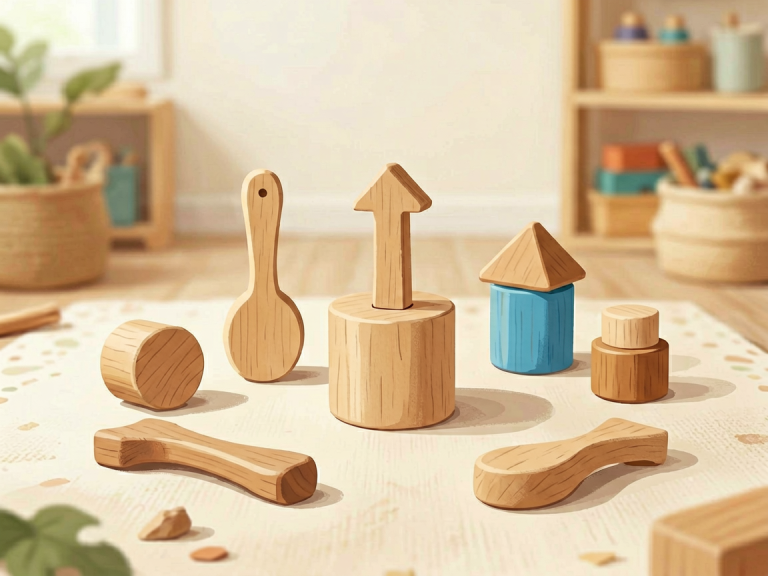
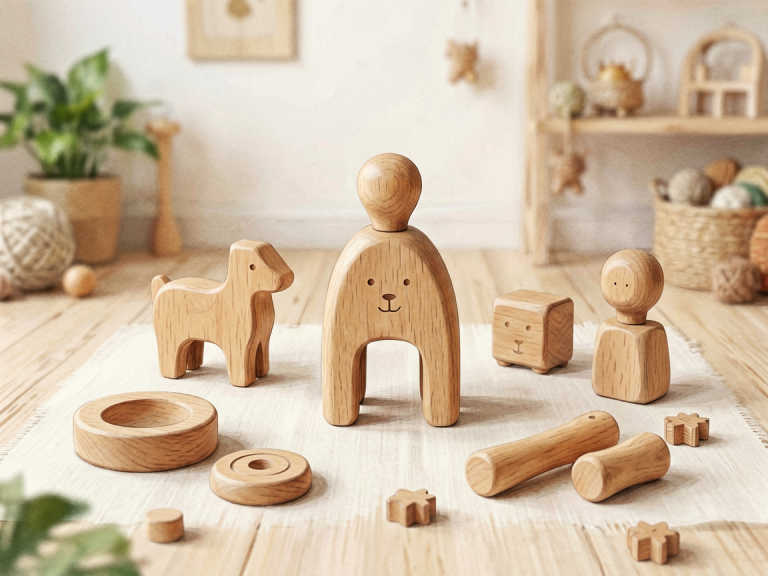
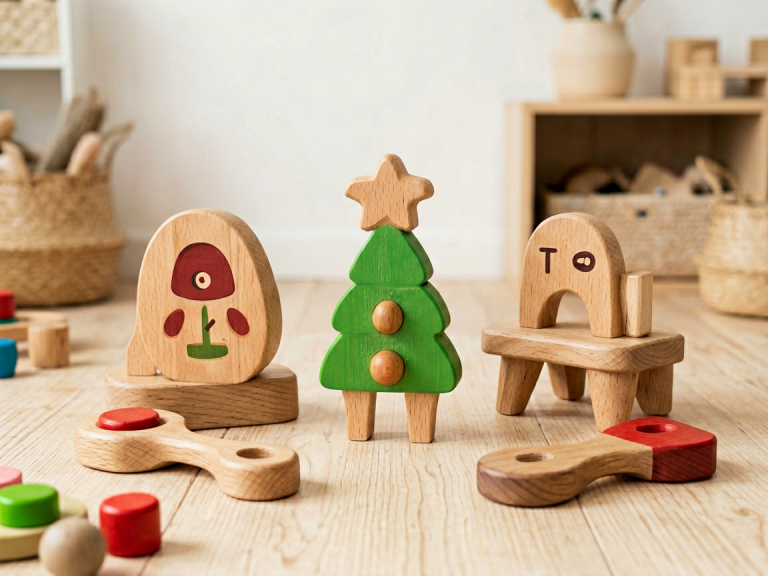
The alternative is not to avoid toys altogether, but to choose wisely. Look for toys that are open-ended, meaning they can be used in many different ways without a fixed outcome. Examples include simple building blocks, magnetic tiles (which often come in moderate quantities), play silks, art supplies like clay and paint, and dolls or action figures that invite storytelling. These toys respect the child’s developmental stage: they limit cognitive load while maximizing creative potential.
The Role of Parental Involvement
Ultimately, no toy can replace the parent’s presence. The most valuable “toy” a child can have is an engaged adult who joins in their play, asks questions, and extends their ideas. A parent who sits on the floor and builds a simple tower with their child, narrating the process and encouraging problem-solving, provides far more educational benefit than the most elaborate kit ever could. When we buy fewer pieces, we free up time—time to be present, time to play together, and time to cultivate the deep bonds that are the real foundation of childhood development.
Conclusion
The mistake of buying toys with too many pieces is understandable—it is driven by love, hope, and the seductive marketing of “more is better.” But as we have seen, more is often less: less focus, less creativity, less joy, and more frustration, waste, and clutter. The next time you find yourself reaching for that giant box in the toy aisle, pause. Ask yourself: Will this toy encourage my child to think, imagine, and engage deeply? Or will it simply occupy them for a short while, only to become another source of mess and disappointment? Choose a toy that respects your child’s mind, your time, and the planet. Choose fewer pieces, and discover the richness of simplicity.