The Art of Giving the Worst Gifts: Why Parents Secretly Hate What You Choose for Their 1-Year-Old
Introduction: The Hidden Battlefield of Baby Gifts
Every parent of a one-year-old knows the unspoken truth: there is a special place in emotional purgatory reserved for the well-meaning friend or relative who shows up with the “perfect” gift—a gift that, within minutes, transforms a peaceful living room into a war zone of noise, mess, and parental exasperation. Choosing a gift for a one-year-old seems deceptively simple. After all, babies are delighted by almost anything: a cardboard box, a wooden spoon, the crinkly sound of wrapping paper. Yet the gap between what delights a child and what delights a child’s parents is often a chasm of frustration, exhaustion, and passive-aggressive thank-you notes.
The problem is not malice; it is a fundamental mismatch between the giver’s desire to be memorable and the parent’s desperate need for survival. Parents of one-year-olds are running on caffeine fumes and a prayer. They do not need another toy that requires 47 batteries and emits a song that will haunt their dreams. They do not need a gift that takes ten minutes to assemble and thirty seconds to break. They do not need a “learning” gadget that makes their child cry because it doesn’t let them chew on it. What they need is sanity. But what they often receive is a ticking time bomb of parental annoyance.
Understanding why certain gifts are universally dreaded by parents—and why these gifts keep being bought—reveals a fascinating dynamic of social expectations, generational differences, and the simple fact that many people have never spent 72 consecutive hours with a one-year-old. This article dissects the most hated gift categories, explaining exactly why they make parents cringe, and why you should avoid them at all costs unless your real goal is to be quietly resented for the next six months.
The Gift That Never Stops: Musical Instruments and Noise-Making Toys
Ask any parent of a one-year-old to name the worst gift they have ever received, and 9 out of 10 will describe something that makes sound. Not just any sound, but the kind of sound that drills into the brain like a tiny, plastic demon. We are talking about the miniature drum set, the electronic keyboard with pre-recorded “children’s classics” played at a pitch that only dogs and furious neighbors can hear, the plastic maracas that seem to have been engineered to produce a frequency that makes adults irrationally angry.
Why do parents hate them? Because one-year-olds have no concept of “volume control.” They do not play these instruments; they weaponize them. A one-year-old with a toy xylophone does not gently tap the keys—they grab the mallet and beat the instrument (and the coffee table, and your shin) with the savage enthusiasm of a tiny Viking. More insidious is the electronic toy that activates automatically. You know the one: it has a motion sensor, so every time the baby crawls past it, the toy shrieks, “LET’S COUNT TO TEN!” at 110 decibels. By day three, parents have considered “accidentally” dropping it into the bathtub.
Beyond the noise itself, these gifts rob parents of precious quiet moments. A one-year-old’s nap schedule is a fragile ecosystem. One unexpected blast from a toy siren can derail an entire afternoon. The parent who receives a drum set is not grateful; they are calculating how to “misplace” it without offending the giver. The best-case scenario is that the toy gets hidden in a closet until the child is old enough to have a concept of “gentle playing,” which is roughly age 8. So before you buy that adorable mini guitar, ask yourself: Do I want to be remembered as the person who gifted a migraine? The answer is no.
The Mess-Makers: Art Supplies, Slime, and “Sensory Play” Kits
On paper, art supplies for a one-year-old seem like a wonderful idea. They foster creativity, fine motor skills, and sensory exploration. In reality, they are a biohazard. Parents universally dread gifts that include washable markers, finger paints, Play-Doh, glitter, slime, or any substance that can be smeared, ingested, or stamped into the carpet. The keyword is “washable”—and parents know that “washable” is a marketing lie. Washable paint washes off a baby’s skin, yes, but it does not wash off the white couch, the dog, or the grandmother’s upholstered dining chairs.
One-year-olds are not artists; they are chaos agents. Hand them a finger-painting kit, and they will paint their face, the floor, the cat, and then eat a glob of paint before you can blink. The parent then spends the next 20 minutes trying to extract blue pigment from a tiny nostril while the baby screams because they wanted to keep painting. Sensory play kits—those expensive boxes full of colored rice, kinetic sand, and water beads—are even worse. The rice gets everywhere. The sand attracts dust. The water beads look like candy to a one-year-old and pose a choking hazard that sends parents into a panic.
Moreover, these gifts impose a cleanup burden that the giver never has to shoulder. The parent is the one who will wash paint out of tiny clothes, vacuum up sand from the living room rug for a week, and scrub glitter off the baby’s high chair. The one-year-old loves the mess for exactly 15 minutes. The parent will hate it for the next 15 hours. If you want to give a gift that supports creativity, give a pack of sturdy board books or a simple set of stacking cups. Leave the mess kits for parents who have explicitly asked for them—and even then, reconsider.
The Space Invaders: Giant Playsets, Ride-On Toys, and Multi-Component Clutter
The one-year-old’s home is already a battlefield of baby gear: a high chair, a playpen, a bouncer, a diaper station, a mountain of stuffed animals, and a pile of plastic blocks. Space is the most precious resource in any house with a toddler. So what does the well-meaning gift-giver do? They buy a colossal toy that takes up half the living room. The classic offender is the ride-on car—the kind that is too heavy for the baby to pedal, too large to fit through doorways, and too ugly to keep in sight. It sits in the middle of the room for months, a monument to poor planning, until the parents finally muster the courage to donate it.
Another category is the “activity table” with dozens of little attachments: beads to slide, buttons to press, doors to open, gears to spin. On the surface, it is an educational wonderland. In practice, it is a dust-collector with 47 tiny parts that will eventually break off and become a choking hazard. The baby will play with it for three days, then ignore it forever, leaving the parents to stare at a bulky piece of plastic that they cannot give away because the giver might visit again.
Even large soft blocks or foam play mats can be problematic if they are the kind that come with hundreds of interlocking pieces. One-year-olds love to pull them apart; parents hate putting them back together. The gift that requires perpetual reassembly is not a gift—it is an unpaid part-time job. Before buying anything that cannot fit in a closet, ask yourself: Do these parents have a dedicated playroom? Do they have storage space? Or are they already tripping over a bouncy chair? The answer usually dictates that smaller is better. A simple set of stacking rings or a soft fabric ball takes up negligible space and provides just as much joy.
The Safety Hazards: Choking Risks, Sharp Edges, and Toxic Materials
No parent will admit out loud that they hated a gift because it was dangerous, because that would make them sound ungrateful or paranoid. But behind closed doors, every parent inspects a new toy with the critical eye of a bomb disposal expert. The worst gifts are those that are technically age-appropriate but designed with reckless disregard for the realities of a one-year-old’s behavior. For example, toys with small detachable parts that a baby can pop off and swallow. The packaging says “Ages 1+” but the toy includes button eyes or tiny plastic wheels that come off with a good chew. Parents immediately confiscate these parts, turning the toy into a sad, incomplete version of itself.
Another hazard is toys with long strings or cords that pose a strangulation risk. One-year-olds love to wrap things around their necks, wrists, or the crib rail. A pull-along toy with a 24-inch cord is a lawsuit waiting to happen. Similarly, toys with sharp edges, rough plastic seams, or magnetic pieces that can be swallowed are instant deathtraps in the eyes of a wary parent. Even seemingly innocent items like balloons are dangerous—a popped balloon becomes a rubber choking hazard.
Then there are the toxic materials. Some cheap toys off the internet contain lead, phthalates, or BPA. A one-year-old puts everything in their mouth, so any toy that is not certified non-toxic is a liability. Parents will not use it. They will throw it away or re-gift it with a shudder. The giver might think they are being generous, but if the toy ends up in the trash bin before the birthday cake is finished, the gift was not a gift—it was a burden.
The Overly-Complicated “Educational” Gadgets
There is a special category of gifts that promise to make the baby a genius: light-up tablets that teach the alphabet, talking robots that quiz toddlers on shapes, electronic books that read themselves. These toys are expensive, flashy, and utterly useless for a one-year-old. The reality is that a one-year-old does not have the attention span for a step-by-step educational program. They will press one button, hear a sound, press another, and then lose interest. The toy will flash lights and play melodies that the baby cannot process, and the parent will have to endure the relentless audio loop—e.g., “The circle is red! The circle is red!”—for weeks.
Moreover, these toys often require batteries that die within hours, or they have finicky sensors that only work if the baby presses the exact right spot with the exact right pressure. A one-year-old does not have fine motor control. They mash buttons with their fists and gums. The toy quickly becomes a source of frustration for both child and parent: the child gets upset because the toy isn’t doing what they want, and the parent has to step in to “help,” which defeats the purpose of an independent play toy.
The ultimate irony is that these educational gadgets often inhibit the very learning they claim to promote. Research shows that one-year-olds learn best through direct human interaction, simple cause-and-effect toys (like a ball that rolls when pushed), and open-ended play. A plastic robot that yells “GOOD JOB!” when the baby touches the wrong button is not educational—it’s confusing. Parents know this. They read the studies. They do not want a $60 toy that teaches their baby to be annoyed. They want a $6 wooden puzzle that their child can chew on, drop, and eventually figure out at their own pace.
Conclusion: The Gift That Keeps on Giving—But Not in a Good Way
The common thread among all these hated gifts is that they prioritize the giver’s desire to seem thoughtful, fun, or impressive over the parents’ daily reality. A musical toy shows that you wanted to delight the child, but it ignores that the parent will have to hear that melody during every diaper change, every meal, every bedtime routine. A huge playset shows that you wanted to be generous, but it ignores that the family might live in a small apartment with no storage. An educational tablet shows that you value learning, but it ignores that a one-year-old’s brain is not wired for flashy digital feedback.
The best gifts for a one-year-old are the ones that make the parents’ life easier, not harder. A gift card for a diaper delivery service, a subscription to a book club that sends soft-board books each month, a set of silicone bibs with a crumb catcher, or even a heartfelt offer to babysit for an afternoon—these are the presents that parents genuinely celebrate. Yes, they lack the “wow factor” of a shiny, noisy, or gigantic toy. But they also lack the hidden cost of cleanup, noise, clutter, and safety anxiety.
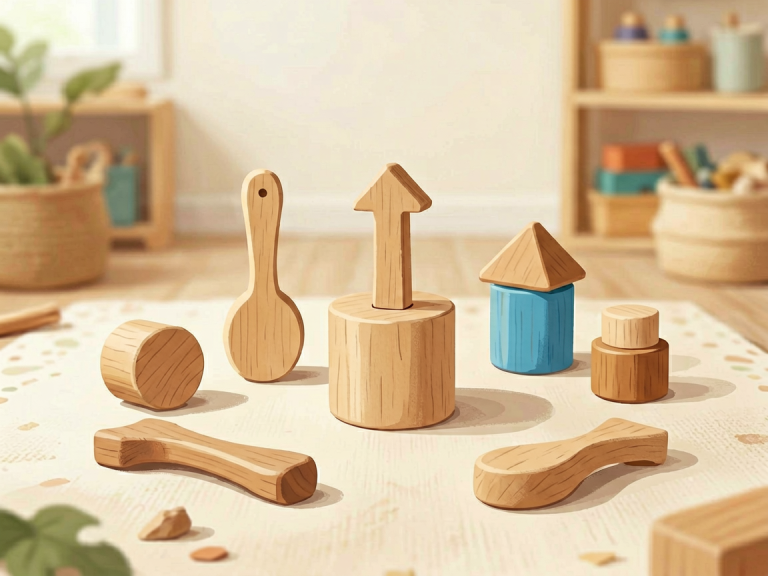
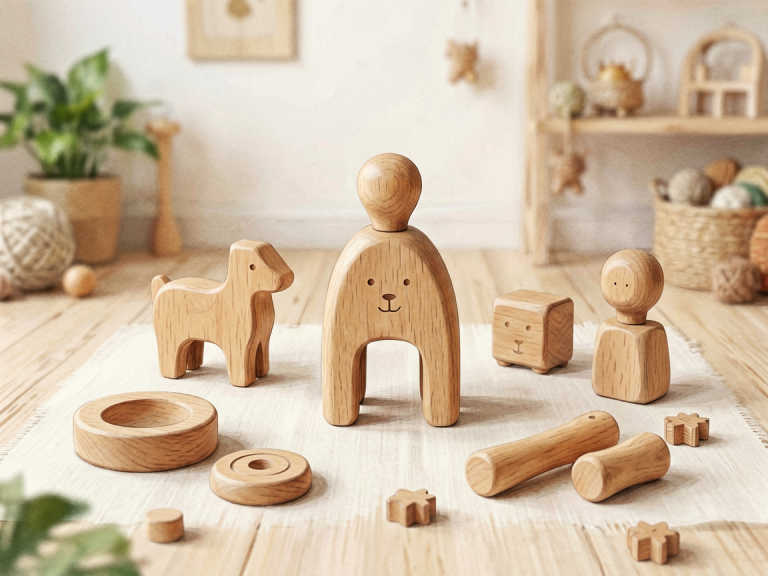
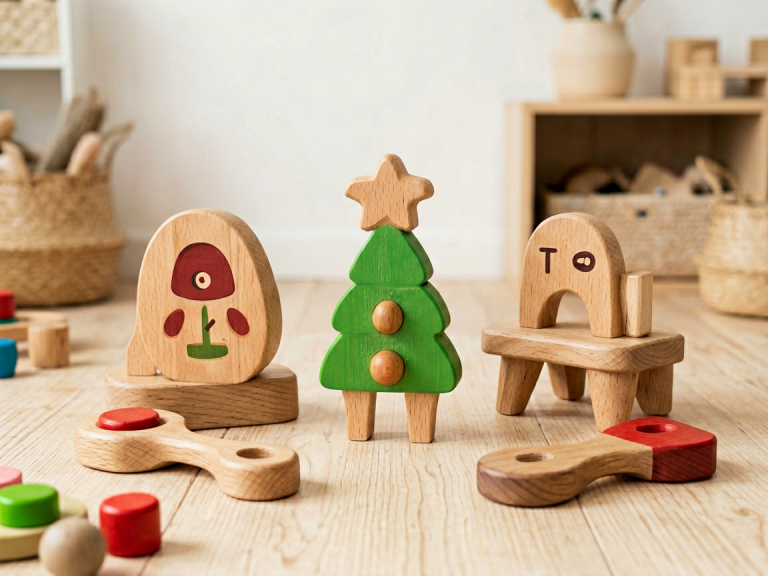
When you choose a gift for a one-year-old, ask yourself not “Will the baby love this?” but rather “Will the baby’s parents still love me after the baby plays with this?” If the answer is no, put it back on the shelf. The best gift you can give is the gift of being a friend who actually sees the exhaustion behind the grateful smile. And if you absolutely must buy a physical toy, buy something simple, quiet, and washable—a soft block, a wooden car, a fabric book. That is the kind of gift that does not end up hidden in the back of a closet, waiting for the day when the toddler turns into a teenager and the parents can finally burn it in a ceremonial fire.