From Blocks to Bytes: The Rise of Coding Robots and Games for Toddlers
Introduction
In an era where digital literacy is as fundamental as reading and writing, the question of when to introduce computational thinking has moved from preschools to nurseries. The image of a toddler—barely able to articulate complete sentences—programming a robot might seem absurd at first glance. Yet a growing movement in early childhood education argues that the foundational skills of coding, such as sequencing, pattern recognition, and cause-and-effect reasoning, can be nurtured long before a child encounters a text-based programming language. This article explores the landscape of coding robots and coding games designed specifically for toddlers, examining their pedagogical value, developmental appropriateness, and the delicate balance between screen time and hands-on play. By dissecting the features that make these tools effective—or merely trendy—we aim to provide parents and educators with a clear framework for integrating computational thinking into the earliest years of learning.
Understanding "Coding" for Toddlers: A Primer
Before evaluating specific products, it is crucial to define what "coding" means in the context of a two- or three-year-old. For adults, coding involves writing syntax, debugging errors, and managing complex logic. For toddlers, coding is stripped down to its most elemental form: giving a sequence of instructions to achieve a desired outcome. This is often called *unplugged coding* or *tangible programming*. Instead of typing commands on a keyboard, toddlers interact with physical objects—blocks, cards, or toy robots—that represent directions (forward, turn left, stop). The cognitive leap is not about mastering a programming language but about internalizing the idea that actions follow a planned order. For instance, a toddler who arranges three colored blocks to make a toy car move forward, then turn, then stop, is engaging in the essence of algorithmic thinking. This conceptual foundation is far more important than any technical skill at this age.
Coding Robots: Tangible Learning for Tiny Hands
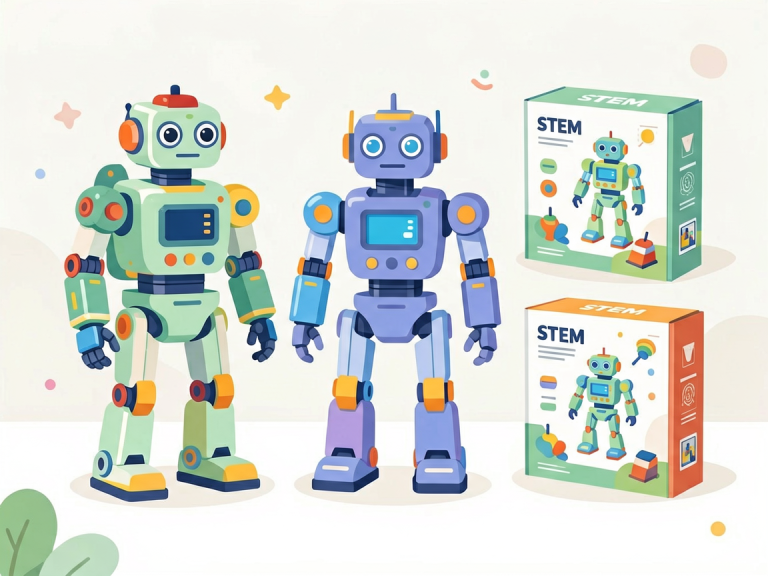
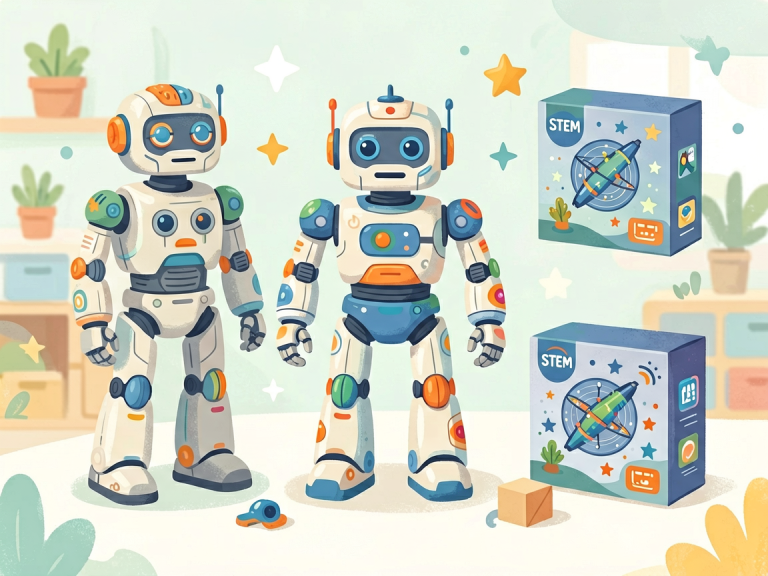
One of the most captivating categories of early coding tools is the physical robot. Unlike screen-based games, robots offer a multisensory experience: a child can see, touch, and hear the immediate consequence of their commands. Popular examples include Fisher-Price’s Code-a-Pillar, Bee-Bot, and Cubetto. Code-a-Pillar, for instance, consists of interchangeable segments that each represent a command (go straight, turn left, make a sound). A toddler connects the segments in a sequence, presses a button, and watches the caterpillar-like robot move accordingly. This tactile interaction is invaluable because it aligns with the developmental stage of toddlers, who learn best through concrete, hands-on exploration. The robot becomes a playmate, not an abstract concept. Research in developmental psychology suggests that when children manipulate physical objects, they engage multiple brain regions simultaneously, strengthening neural connections related to spatial reasoning and executive function. Moreover, the immediate visual feedback—seeing the robot follow (or fail to follow) their instructions—teaches cause and effect in a way that a static puzzle cannot. For toddlers still developing fine motor skills, the chunky, easy-to-connect parts of these robots are ideal, reducing frustration and encouraging repeated trial and error.
Coding Games: Screen-Based or Screen-Free?
The debate over screen time for toddlers is fierce, and coding games are not exempt. Many coding apps and games claim to be "educational" for children as young as two, but the American Academy of Pediatrics recommends avoiding all screen media for children under 18 months (except video calls) and limiting high-quality programming to one hour per day for ages 2 to 5. In this context, screen-based coding games for toddlers must be scrutinized carefully. Some well-designed apps, such as ScratchJr (which is actually aimed at ages 5–7) or simpler versions like Kodable’s pre-reader mode, use drag-and-drop icons instead of text. For a toddler, however, even a tablet interface may be too abstract. The lack of proprioceptive feedback—the sense of where one’s body is in space—can make learning less embodied. On the other hand, screen-free coding games, such as wooden coding boards with arrow tiles or story-based card games (e.g., Robot Turtles), offer the benefits of physical interaction without the risks of blue light exposure or passive consumption. Robot Turtles, a board game designed for children as young as three, uses cards to move turtle pawns toward a jewel. The game requires no reading and relies on a parent or "turtle mover" to execute the commands, turning coding into a playful social ritual. This hybrid approach—using physical cards with a human interpreter—bridges the gap between tangible and digital, allowing toddlers to experience sequencing without a screen. Ultimately, the most developmentally appropriate coding games for toddlers are those that prioritize active, hands-on engagement over passive screen watching.
Cognitive Benefits: Beyond the Buzzwords
Critics sometimes dismiss early coding toys as a gimmick, arguing that toddlers are too young to grasp logic. However, a growing body of evidence suggests that the cognitive skills practiced through coding play are transferable to broader academic domains. Sequencing, for instance, is directly linked to narrative comprehension: understanding that stories have a beginning, middle, and end mirrors the structure of a program. Pattern recognition—identifying that "forward, forward, turn left" repeats—strengthens mathematical thinking. Furthermore, debugging, or fixing a mistake when the robot does not reach its target, teaches perseverance and emotional regulation. A toddler who sees their Code-a-Pillar bump into a wall must rethink the sequence, a process that builds flexible thinking. One study published in the *Journal of Educational Psychology* found that preschoolers who engaged in structured coding activities showed significant improvements in working memory and inhibitory control compared to a control group. These executive functions are predictive of later academic success, more so than early literacy or numeracy. Of course, the key word is "structured." Free-form play with coding toys, while valuable, yields the greatest cognitive gains when an adult scaffolds the experience—asking questions like "What will happen if you add a turn here?" or "Why did the robot stop early?" This adult interaction transforms play into a learning dialogue.
Social and Emotional Development Through Collaborative Play
Coding for toddlers is rarely a solitary activity. Most coding robots and games are designed for group or parent-child interaction. When a toddler works with a sibling or a caregiver to plan a robot’s path, they practice language skills ("Put the green block next!") and social negotiation ("No, I want it to go left!"). This collaborative aspect is perhaps the most underappreciated benefit. In a world increasingly dominated by individual screen time, coding toys that require two or more participants foster turn-taking, listening, and empathy. For example, the game Cubetto, a wooden robot controlled by a set of colored blocks placed on a board, often involves one child as the "programmer" and another as the "navigator" who describes where the robot should go. This division of roles teaches leadership and cooperation. Additionally, when toddlers encounter a bug—the robot crashes or goes in the wrong direction—the shared frustration and subsequent problem-solving build resilience. Parents often report that their children become more willing to ask for help and accept suggestions during coding play. Emotionally, the joy of seeing a robot successfully execute a sequence provides a powerful sense of agency and accomplishment. For toddlers who are just beginning to assert their independence, this feeling of "I made it happen" is a cornerstone of healthy self-esteem.
Practical Considerations for Parents and Educators
Selecting the right coding robot or game for a toddler requires careful thought. First, prioritize safety: all parts should be large enough to prevent choking hazards, and electronic devices should have reinforced battery compartments. Second, consider the level of abstraction. A toy that demands too much symbolic thinking (e.g., remembering that a blue block means "turn right") may overwhelm a two-year-old. Look for products that use immediate, clear cues, such as colored lights or audible sounds, to reinforce commands. Third, evaluate the role of the adult. The best tools are not "set and forget" but require meaningful interaction. A parent who simply hands a toddler a robot and walks away will not see the same benefits as one who sits down and plays together. Fourth, balance variety. No single toy can teach all aspects of computational thinking. Some children thrive with robots, while others prefer board games or even simple unplugged activities like "Simon Says" with coding twists (e.g., "Take two steps forward, then clap"). Finally, be wary of marketing. Many products labeled "for ages 2+" are actually more suitable for 4-year-olds. Read reviews from early childhood educators and test the toy yourself before introducing it to a toddler. Remember that the goal is not to produce a junior software engineer but to foster a love of problem-solving and logical thinking.
Conclusion: The Future of Early Coding Education
Coding robots and games for toddlers are not a panacea, nor are they a replacement for traditional play with blocks, sand, and water. But they represent a thoughtful evolution in how we introduce abstract concepts to very young minds. By grounding computational thinking in tangible, social, and playful experiences, these tools unlock cognitive and emotional skills that serve children for a lifetime. The best approach is one of moderation: use coding toys as one of many tools in a rich play environment, always with an emphasis on human interaction. As technology continues to permeate every aspect of life, giving toddlers a gentle, joyful introduction to the logic of code may be one of the most valuable gifts we can offer. After all, the toddler who learns to sequence a robot’s moves today is laying the neural pathways that, years later, will help them sequence a scientific argument, write a compelling story, or debug a line of Python. In the end, coding for toddlers is not about code at all—it is about cultivating a curious, resilient, and logical mind.