The Enduring Value of Wooden Blocks: Are They Worth It for Elementary School Kids?
Introduction
In an age dominated by flashing screens, interactive apps, and AI-driven educational toys, a simple, unassuming set of wooden blocks might seem almost archaic. Yet, these humble cubes, cylinders, and arches have been a staple of childhood for centuries. When parents and educators ask, “Are wooden blocks worth it for elementary school kids?” the answer is not a simple yes or no. It requires a nuanced look at child development, learning objectives, and the unique challenges of the digital era. Wooden blocks are not merely nostalgic playthings; they are powerful tools for cognitive, social, and physical growth. However, their value depends on how they are used, the age of the child, and the goals of the learning environment. This article explores the multifaceted benefits, potential drawbacks, and practical considerations that determine whether wooden blocks are a worthwhile investment for elementary-aged children.
1. Cognitive Development: Building Minds One Block at a Time
One of the most compelling arguments for wooden blocks is their capacity to foster higher-order thinking skills. Unlike many electronic toys that provide instant feedback and guided outcomes, wooden blocks are open-ended. There is no “right” way to stack them, no correct pattern to match, and no screen to dictate the next step. This open-endedness is precisely what makes them so powerful for cognitive development in elementary school kids.
1.1 Spatial Reasoning and Mathematical Thinking
Research consistently shows that block play directly enhances spatial reasoning—the ability to visualize and manipulate objects in two and three dimensions. For elementary students, who are beginning to grasp geometry, fractions, and basic physics, blocks become a tangible medium for abstract concepts. A child trying to balance a block on a narrow edge is intuitively learning about center of gravity and stability. Building a symmetrical castle involves understanding reflection and proportion. Counting blocks, grouping them by size, or comparing volumes all lay the groundwork for mathematical fluency. Unlike worksheets or digital drills, blocks allow children to “think with their hands,” making learning kinesthetic and memorable.
1.2 Problem-Solving and Creativity
When a tower collapses, the child must analyze why—was the base too small? Was the weight unevenly distributed? This iterative process of trial and error is the essence of scientific reasoning. Wooden blocks encourage persistence and resilience because the child is the sole architect of both the problem and the solution. There are no pre-set levels or hints, which forces the child to develop internal motivation and executive function skills. Moreover, because blocks are neutral in color and shape, they can become anything: a spaceship, a medieval fortress, a city skyline, or a simple zoo enclosure. This symbolic play nurtures creativity far more effectively than a toy that comes with predetermined narratives.
2. Social and Emotional Growth: Learning to Collaborate and Self-Regulate
Beyond individual cognition, wooden blocks offer rich opportunities for social interaction, which is especially valuable during the elementary years when friendships and group dynamics become central.
2.1 Cooperative Play and Communication
A group of children working on a large block structure must negotiate, share resources, and compromise. “I’ll build the tower base if you make the walls.” “Let’s use the big blocks for the foundation and the small ones for the roof.” Such conversations are not merely cute; they are exercises in verbal communication, perspective-taking, and conflict resolution. Unlike competitive digital games that often isolate children, block play naturally fosters collaboration. Teachers and parents can observe how children assign roles, how they handle disagreements, and how they celebrate shared achievements. These are life skills that no app can teach as authentically.
2.2 Patience, Frustration Tolerance, and Self-Esteem
Block building can be frustrating. A structure may fall seconds before completion. A desired piece may be taken by another child. Learning to tolerate these frustrations without a meltdown is a crucial emotional milestone. Wooden blocks provide a safe environment to experience failure and to try again. For elementary school kids who are increasingly exposed to high-stakes testing and performance pressure, block play offers a low-risk arena for developing a growth mindset. The satisfaction of finally achieving a stable six-story tower is a powerful boost to self-esteem—especially when the achievement is entirely self-directed.
3. Physical Development: Fine Motor Skills and Sensory Integration
In an era where children spend increasing hours gripping keyboards and swiping screens, the tactile and motor demands of wooden blocks are a welcome antidote.
3.1 Fine Motor Control and Hand-Eye Coordination
Picking up a block, rotating it to the correct orientation, and placing it precisely on top of another requires a level of fine motor control that many digital activities do not. For elementary students, whose hands are still developing strength and dexterity, block play helps refine the same muscles used for writing, drawing, and using scissors. The varying sizes and weights of blocks also provide proprioceptive feedback—the sense of how much force to apply—which is essential for handwriting and everyday tasks.
3.2 Sensory Regulation
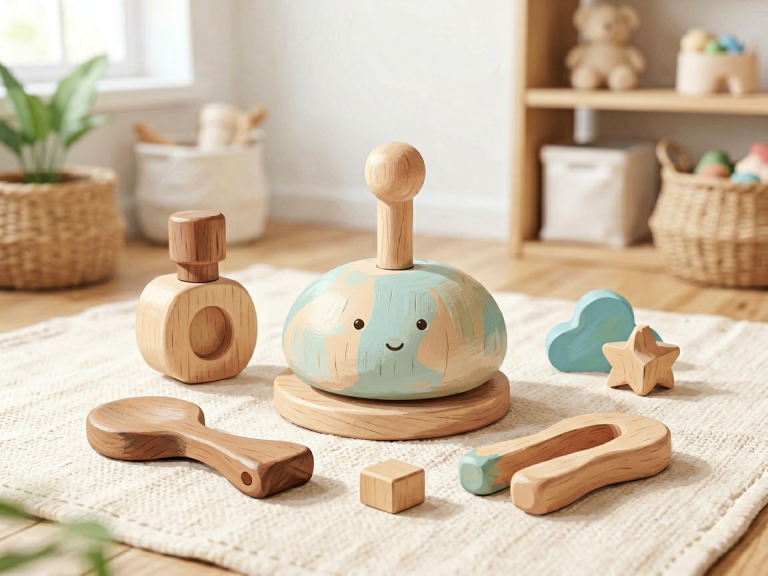
Wooden blocks offer a pleasing, natural texture and a satisfying weight. Unlike plastic toys that can feel hollow and cheap, or screens that emit harsh light, wood provides a calming sensory experience. For children with sensory processing differences or attention deficits, the act of handling blocks can be grounding. The simple, repetitive motion of stacking can be meditative, helping children regulate their arousal levels before more demanding academic tasks.
4. Economic and Practical Considerations: Are They a Good Investment?
The question of “worth” inevitably involves cost. High-quality wooden block sets are not cheap; a substantial set of hardwood blocks can easily cost $50 to $150 or more. In comparison, plastic building sets or digital subscriptions may be cheaper. However, several factors tilt the cost-benefit analysis in favor of wooden blocks.
4.1 Durability and Longevity
A well-made wooden block set can last for decades, surviving multiple children, countless drops, and even accidental kicks. They don’t break, their colors don’t fade, and they don’t require batteries or software updates. In contrast, many electronic toys become obsolete or break within a year. From a purely economic standpoint, wooden blocks offer an exceptional cost-per-use ratio. They can be passed down from sibling to sibling, friend to friend, or even to the next generation.
4.2 Versatility Across Ages
While marketed for preschoolers, wooden blocks are indeed valuable for elementary school kids. The complexity of play evolves: a kindergartner might simply stack, a second-grader might build symmetrical patterns, and a fifth-grader might design complex architectural models complete with arches and cantilevers. Some sets even include curved pieces, ramps, and pulleys that allow for experiments in physics. Because blocks are age-agnostic, they don’t become “babyish” as the child grows; rather, the child’s imagination matures.
4.3 Screen-Free Benefits
In an age of mounting concerns about screen time, wooden blocks provide a compelling alternative. They require no Wi-Fi, no charging, and no parental controls. They encourage face-to-face interaction and outdoor carry (they can be taken to a sandbox or a park). For parents seeking to limit digital exposure, blocks are a tangible, low-tech solution that actually promotes attention span—a resource that is increasingly scarce in the digital age.
5. Potential Drawbacks: When Blocks Might Not Be Worth It
No educational tool is perfect. Wooden blocks do have limitations, and acknowledging them helps in making an informed decision.
5.1 Limited Appeal for Some Kids
A child who is heavily oriented toward narrative play, drama, or technology might find plain blocks boring. Without adult facilitation, some children may simply tip over blocks or ignore them. The value of blocks often depends on an adult who models play, asks questions, and extends the activity. (“What if you add a bridge? How many animals can fit in your zoo?”) In a home where parents are too busy to engage, blocks may gather dust.
5.2 Safety and Space Concerns
Wooden blocks are heavy. A dropped block on a toe can be painful. For families with very young toddlers alongside elementary children, supervision is necessary. Additionally, a substantial block set requires storage space. Loose blocks scattered on the floor can become tripping hazards. While these are minor issues, they are worth considering.
5.3 Competition with High-Tech Alternatives
In school settings, teachers may feel pressure to use “innovative” digital tools that align with curriculum standards. A set of blocks, being analog, may not obviously map onto a specific learning objective like “understand fractions” in the way that an iPad app can. This perception can lead to blocks being undervalued in favor of more flashy, but perhaps less effective, resources.
6. How to Maximize the Worth of Wooden Blocks
To truly determine if wooden blocks are worth it, one must consider implementation. Here are key strategies:
- Integrate blocks into academic subjects. Use them for math (fractions, area, symmetry), science (levers, balance, force), and language arts (storytelling, sequencing, descriptive writing).
- Encourage unstructured playtime. Resist the urge to direct every block-building session. Let children explore independently.
- Rotate block sets with other open-ended materials. Combine blocks with toy animals, people, cars, or natural materials like sticks and stones to keep play fresh.
- Resist over-commercialization. You don’t need a special “STEM block kit.” A basic set of unit blocks is sufficient. Complexity emerges from the child’s imagination, not from hundreds of specialized shapes.
- Model enthusiasm. When adults sit on the floor and build alongside children, it sends a powerful message that low-tech play is valued.
Conclusion
So, are wooden blocks worth it for elementary school kids? The evidence overwhelmingly suggests yes—provided that parents and educators understand their role as facilitators, not directors. Wooden blocks are not a magic bullet that will single-handedly make a child smarter or more creative. They are, however, an exceptionally rich, durable, and developmentally appropriate resource that supports cognitive growth, social skills, motor development, and emotional regulation. In a world that pushes children toward faster, more efficient, and more structured learning, blocks offer a sanctuary of slowness, imagination, and genuine discovery. For families and schools willing to invest time in active play, a set of wooden blocks is not just worth it—it is one of the most valuable learning tools a child can own. The only real question is not “Should I buy them?” but “Where will we make space for all the towers?” Let the building begin.