Beyond the Brick: The Best Alternatives to LEGO-Style Blocks for One-Year-Olds
Introduction
Every parent knows the joy of watching a child’s first attempts at stacking, balancing, and creating. LEGO bricks—with their iconic studs and endless possibilities—are a staple in many households. But when it comes to one-year-olds, those tiny, hard plastic bricks pose a very real problem: choking hazards, sharp edges, and frustration from pieces that are too small for chubby little fingers to manipulate. The classic LEGO brick (even the larger Duplo line, which technically starts at age 1.5) can still be too complex or unsafe for a child who is still mouthing everything in sight.
Fortunately, the toy market has responded with a wealth of creative, developmentally appropriate alternatives that match—and often surpass—the benefits of LEGO-style bricks for toddlers. These alternatives emphasize safety, sensory stimulation, gross motor skill development, and open-ended play. In this article, I will explore the best substitutes for LEGO-style bricks for one-year-olds, examining why they work, what features to look for, and how each option supports early learning. By the end, you will have a clear roadmap for choosing building toys that are not only safe but also deeply engaging for your little builder.
—
Why Standard LEGO-Style Bricks Are Not Ideal for One-Year-Olds
Before diving into alternatives, it is important to understand the specific hazards and limitations of traditional LEGO bricks and even Duplo blocks for children under 18 months.
Choking and Swallowing Risks
One-year-olds explore the world orally. Standard LEGO bricks (the classic 2×2 or 2×4 size) are small enough to lodge in a child’s airway. Even Duplo blocks, which are larger, have small protruding studs that can break off or become detached if chewed vigorously. The American Academy of Pediatrics recommends avoiding any toy with parts smaller than 1.25 inches in diameter for children under three. Many LEGO-compatible bricks fall below this threshold.
Frustration and Motor Skill Mismatch
A one-year-old’s fine motor control is still emerging. Pushing two LEGO bricks together requires precise alignment and a surprising amount of force. For a toddler, this can lead to repeated failures, tears, and a loss of interest. LEGO bricks are designed for children aged 4 and up, and even Duplo (marketed for ages 1.5 to 5) often expects a level of hand strength and coordination that many one-year-olds lack.
Hard Edges and Sharp Points
The sharp corners and rigid plastic of LEGO bricks can hurt when stepped on or thrown—and believe me, one-year-olds love to throw. A misaimed toss could cause a painful bump or a scratch. Soft or rounded alternatives eliminate this risk entirely.
Limited Sensory Variety
While LEGO bricks are visually stimulating, they offer only one texture: smooth, hard plastic. One-year-olds benefit immensely from toys that provide different tactile experiences—soft, squishy, bumpy, or textured surfaces that stimulate neural development.
—
What to Look for in a Building Toy for a One-Year-Old
When choosing an alternative to LEGO-style bricks, keep these criteria in mind:
- Size and Safety: Pieces must be too large to swallow (at least 1.5–2 inches in all dimensions). No small detachable parts. Materials should be non-toxic (BPA-free, phthalate-free, lead-free) and preferably washable.
- Ease of Connection: Blocks should click together with minimal force, or simply stack without needing to interlock. Many one-year-old building sets use a “gravity-stack” or “snap” design that requires only downward pressure.
- Softness and Durability: Soft foam, silicone, or fabric blocks are gentle on gums, floors, and little heads. They also silence the noise of collapsing towers.
- Open-Ended Play: The best alternatives encourage creativity without a prescribed outcome. Blocks that can be stacked, knocked down, sorted, or chewed offer more long-term value.
- Sensory Appeal: Bright colors, varied textures, sounds (rattles, crinkles), and even mirrors or squeakers can captivate a one-year-old longer than plain plastic.
—
Top Alternatives to LEGO-Style Bricks for One-Year-Olds
Below are seven outstanding categories of building toys, each with specific recommendations and explanations of why they work for one-year-olds.
—
1. Soft Fabric and Plush Building Blocks
Why They Work
Fabric blocks are the ultimate first building toy. They are completely safe for mouthing, lightweight, and easy for tiny hands to grasp. Many sets include different textures, crinkle paper, squeakers, and bright patterns that stimulate multiple senses. Because they are soft, they never cause injury when falling or thrown.
Top Picks
- Taf Toys Crinkle Blocks: A set of six soft blocks with crinkle sounds, a rattle, and a mirror. They are machine-washable and sized perfectly for little fingers.
- Manhattan Toy Wimmer-Ferguson Infant Block – This block features high-contrast black-and-white patterns with a touch of red, ideal for visual development, and a soft, chewable surface.
- Fisher-Price Rock-a-Stack Blocks – While not exactly blocks, these stacking rings are made of soft plastic and can be stacked on a wobbling base, teaching cause and effect.
Developmental Benefits
Soft blocks build hand-eye coordination as babies reach, grasp, and release. The different textures encourage tactile exploration, and the act of stacking (even if it ends in a topple) teaches early physics—gravity, balance, and spatial relationships.
—
2. Large Foam Building Blocks
Why They Work
Foam blocks are lightweight, silent, and often come in giant sizes that allow toddlers to build towers as tall as themselves. They are easy to stack because they have a slight grip due to the material’s friction. Foam blocks rarely hurt if stepped on, and they can double as seating or padding for rough-and-tumble play.
Top Picks
- Educational Insights Foam Magnetic Building Blocks: These blocks have magnets embedded inside the soft foam, so they connect effortlessly without alignment struggles. Perfect for one-year-olds who can’t yet press bricks together.
- Toddleroo by North American Bear Soft Foam Blocks: A set of 26 colorful, 3-inch foam cubes with numbers and pictures. They are oversized, non-toxic, and easy to clean with a damp cloth.
- Melissa & Doug Jumbo Dinosaur Blocks: These oversize foam blocks feature dinosaur prints and are great for imaginative play as children grow older.
Safety Considerations
Ensure the foam is high-density and does not shed particles. Avoid cheap foam that crumbles. Also, check that the blocks are free of small magnets that could be ingested—choose blocks with encased magnets that are securely sewn or molded inside the foam.
Developmental Benefits
The size of foam blocks encourages gross motor movement—bending, reaching, carrying, and balancing. Toddlers also practice problem-solving as they decide how to make a tower stand. The soft surface reduces fear of failure, so children experiment more freely.
—
3. Silicone Stacking and Building Toys
Why They Work
Silicone is the perfect material for teething one-year-olds. It is soft, flexible, and safe to chew. Silicone blocks often have bumps, ridges, and hollow shapes that make them easy to grip. Many sets are dishwasher-safe and come in bright, food-grade colors.
Top Picks
- Tiny Land Silicone Stacking Blocks: A set of twelve blocks in rainbow colors, each with a different texture on the side. They stack easily and can also be used as bath toys because silicone is waterproof and mold-resistant.
- Boon Building Pipes: These flexible silicone pipes connect end-to-end or stack vertically. They are incredibly easy to connect—just push together—and can be twisted, bent, and chewed.
- Mushie Stacking Rings: Not traditional blocks, but the rings’ soft, grippy texture makes them a great alternative for babies learning to stack.
Why Silicone Beats Plastic
Silicone does not contain BPA, BPS, phthalates, or PVC. It is non-porous, so it resists bacteria. And when a teething baby gnaws on a silicone block, it soothes sore gums instead of scratching them.
Developmental Benefits
Silicone toys strengthen oral motor skills and provide sensory relief. Stacking silicone pieces requires less force than LEGO bricks, so success comes more quickly. The varied textures also help develop the sense of touch, which is closely tied to cognitive growth in the first year.
—
4. Magnetic Building Tiles (Large-Scale)
Why They Work
Magnetic tiles have become wildly popular for older toddlers, but for one-year-olds, you need extra-large magnetic pieces that cannot be swallowed. These tiles snap together with a satisfying click, require almost no pressure, and allow children to build 2D and 3D structures immediately.
Top Picks
- Picasso Tiles 48-Piece Set (but only the 3-inch squares) – Make sure you choose the “magna-tiles” style with oversized pieces. Smaller tiles are a choking hazard. The larger 3-inch squares are safe for 12-month-olds when supervised.
- Magnet Build Magnetic Blocks (Large Size): These blocks have magnetic edges inside a sturdy plastic shell, but the pieces are 2.5 to 3 inches across, and the magnets are securely riveted.
- Huilewa Large Magnetic Blocks: Intended for ages 1–3, these are thick, rounded plastic blocks with strong magnets.
Critical Safety Warning
Never give a one-year-old small magnetic tiles (the common 2-inch squares or triangles). Multiple small magnets, if swallowed, can cause life-threatening intestinal perforations. Only purchase sets explicitly marked for ages 12+ months and verify that each piece is larger than a toilet paper roll tube opening.
Developmental Benefits
Magnetic tiles teach polarity and cause-and-effect (the magnets either attract or repel). They also allow for vertical and horizontal construction, encouraging spatial reasoning. The see-through plastic adds a visual element of color mixing and light play.
—
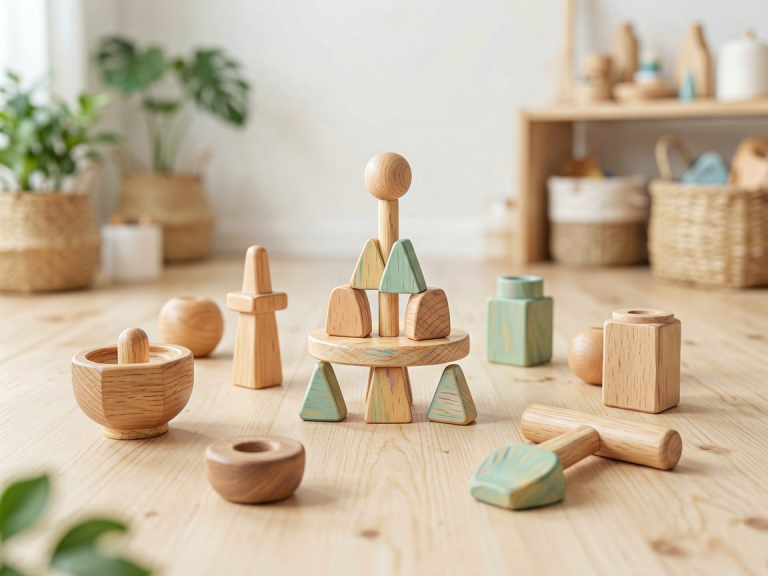
5. Wooden Building Blocks—Oversized and Smooth
Why They Work
Wooden blocks are a classic for good reason. They are durable, natural, and have a satisfying weight. For one-year-olds, choose blocks that are at least 2 inches in each dimension and have rounded edges. Avoid painted blocks that may chip or contain lead; instead, opt for unpainted or certified non-toxic finishes.
Top Picks
- Melissa & Doug Standard Unit Blocks (24-Piece Set): The smallest block in this set is 1.5 inches thick, but the larger rectangular blocks are ideal. Supervise use, as even these can be a risk if your child mouths them excessively.
- Hape Wonder Wagon Block Set: These blocks are larger than standard unit blocks and come in a wooden wagon. They have a smooth, water-based lacquer that is safe for chewing.
- Uncle Goose Nursery Rhyme Blocks: These are 1.75-inch cubes with embossed letters and illustrations. The edges are slightly beveled, making them easier for little hands to grasp.
Wood vs. Plastic
Wooden blocks naturally warm to the touch and provide a different sensory experience than plastic. They also make a pleasant clacking sound when stacked. However, they can be heavy—if dropped on a foot, they hurt. Always play on a soft mat or carpet.
Developmental Benefits
Wooden blocks encourage problem-solving (which shape fits where?), balance, and spatial awareness. The variety of shapes—cubes, cylinders, arches—introduces basic geometry. Stacking them also reinforces the concept of size hierarchy, a precursor to math skills.
—
6. Stacking Nesting Cups and Bowls
Why They Work
While not strictly “blocks,” nesting cups are arguably the most effective building toy for one-year-olds. They can be stacked into a tower, nested inside each other for storage, or used in the bath or sandbox. Many sets have holes in the bottom that let water spray out, adding a delightful cause-and-effect surprise.
Top Picks
- The First Years Stacking Cups: A set of eight colorful cups with numbers and textured ridges. They are dishwasher safe and virtually indestructible.
- Green Toys Stacking Cups: Made from 100% recycled milk jugs, these cups are BPA-free, phthalate-free, and have no sharp edges. Perfect for eco-conscious families.
- Munchkin Bath Stacking Cups: These cups have suction cups on the bottom so they stick to the tub wall, allowing vertical building in the bath.
Why They Beat LEGO Bricks
Nesting cups require no force to stack—gravity does the work. They teach the concept of inside/outside, big/small, and order. The simple act of dumping cups out and putting them back in is a powerful learning activity for a one-year-old.
Developmental Benefits
Stacking cups enhance hand-eye coordination, fine motor control, and cognitive sequencing. They also introduce early math language (bigger, smaller, top, bottom). Because they are open-ended, they grow with the child—a one-year-old knocks them down, a two-year-old stacks them, a three-year-old uses them for pretend tea parties.
—
7. Interlocking Ring and Snap-Together Toys
Why They Work
Some toys use a simple “snap” mechanism that requires minimal pressure—much like Duplo but even easier. These sets often have large, chunky pieces that connect via a ball-and-socket or a push-button lock. They are designed specifically for toddlers who are not yet ready for traditional interlocking bricks.
Top Picks
- B. toys One Two Squeeze Blocks: These are soft plastic blocks that snap together with a gentle push. They are BPA-free, come in a bucket, and have textured surfaces.
- K’NEX TINKERTOY Super Building Set (but only the largest rods and spools): The basic Tinkertoy pieces are too small. Look for the “Jumbo” version that includes 1-inch-diameter spools and long plastic rods that push into the spools easily.
- LEGO Duplo (but only the “First Bricks” sets for ages 1.5+): While technically a LEGO product, Duplo blocks are larger than standard bricks, and the “First Bricks” sets include simple figures and a baseplate. However, many one-year-olds still struggle to press them together. A better alternative is the Mega Bloks First Builders line, which has a looser fit and larger pieces.
Mega Bloks vs. Duplo
Mega Bloks are slightly larger and have a more forgiving connection mechanism. They are also cheaper. For a one-year-old, the 80-piece Mega Bloks bag is a great starter set. Just be aware that the plastic is hard and the corners are slightly sharp—supervise playtime.
—
How to Choose the Right Alternative for Your Child
No single building toy is perfect for every one-year-old. Consider your child’s temperament and developmental stage:
- For the heavy chewer: Silicone blocks or soft fabric blocks are best.
- For the active mover: Large foam blocks that can be kicked, thrown, and knocked down without injury.
- For the problem-solver: Magnetic tiles (larger ones) or nesting cups that teach cause and effect.
- For the sensory seeker: Soft blocks with crinkle paper, mirrors, and varied textures.
- For the future engineer: Oversized wooden blocks or easy-snap plastic bricks.
It is also wise to rotate toys every few weeks to maintain novelty. A one-year-old’s attention span is short, but a fresh set of blocks can rekindle interest for hours.
—
Safety Tips for All Building Toys with One-Year-Olds
Regardless of which alternative you choose, follow these golden rules:
- Supervision is non-negotiable. Even “safe” blocks can become projectiles or be chewed into pieces if your child has unusually strong teeth. Always sit with your baby during play.
- Inspect regularly. Check for cracks, loose magnets, peeling paint, or broken edges. Discard any damaged pieces immediately.
- Clean frequently. One-year-olds drool on everything. Soft blocks should be machine washed (or wiped) weekly. Plastic and silicone blocks can go in the dishwasher.
- Limit the number of pieces. A one-year-old can be overwhelmed by 80 blocks. Start with 5–10 pieces and add more as their skills improve.
- Avoid any toy with small parts—even if they are “accessories.” A LEGO Duplo flower or a tiny magnetic ball can be deadly. Stick to simple, one-piece blocks.
—
Conclusion: Building a Foundation for Lifelong Learning
The best alternatives to LEGO-style bricks for one-year-olds are those that prioritize safety, sensory richness, and success. Soft fabric blocks, large foam blocks, silicone stackers, magnetic tiles (in oversized form), wooden