Beyond Bricks: The Best Alternatives to LEGO-Style Toys for 9-Month-Olds
Introduction: The Importance of Safe and Stimulating Play for Infants
At nine months old, babies are in a remarkable phase of rapid cognitive, motor, and sensory development. They are eager to explore the world with their hands, mouths, and eyes, and play is their primary vehicle for learning. While LEGO-style bricks are iconic building toys that foster creativity and fine motor skills in older children, they pose significant safety hazards for infants. The small size of standard LEGO bricks (typically 8–16 mm) presents a serious choking risk, and their sharp edges can hurt tender gums. Furthermore, the recommended age for classic LEGO sets is almost universally 18 months or older, with many sets labeled for ages 4+. For a 9-month-old, the goal is to provide toys that are safe, graspable, and developmentally appropriate while still offering the same tactile and exploratory benefits that building toys deliver. This article explores the best alternatives to LEGO-style bricks for 9-month-olds, focusing on safety, sensory stimulation, and motor skill development. We will examine five categories of toys that mimic the building and stacking experience without the risks, and we will provide practical recommendations for parents and caregivers.
Why LEGO Bricks Are Not Suitable for 9-Month-Olds
Before diving into alternatives, it is essential to understand why traditional LEGO bricks fail the safety test for infants. At nine months, babies are in the oral stage of development, meaning they naturally put everything in their mouths. A standard 2×2 LEGO brick has a diameter of approximately 16 mm, which is small enough to become lodged in a baby’s airway. According to the American Academy of Pediatrics, any object that can fit inside a toilet paper roll (about 4 cm in diameter) is a choking hazard. While LEGO bricks are smaller than that, their shape and rigidity make them particularly dangerous. Moreover, the plastic used in LEGO is hard and can cause injury if thrown or chewed on. The interlocking mechanism requires a level of pincer-grip precision and hand strength that most 9-month-olds have not yet developed—attempting to force pieces together can lead to frustration and even pinched fingers. For these reasons, parents must seek alternatives that are larger, softer, and designed specifically for the sensorimotor needs of infants.
Criteria for Safe Alternatives to LEGO Bricks
To qualify as a suitable alternative for a 9-month-old, a toy must meet several critical criteria. First and foremost, it must be large enough to prevent choking. The general rule is that any toy or part should be at least 1.25 inches (about 32 mm) in diameter. Second, the material should be soft or pliable to protect tender gums and reduce injury risk if the toy is dropped or thrown. Third, the toy should be easy to grasp—chunky shapes that fit small hands promote independent play and boost confidence. Fourth, it should offer sensory variety, such as different textures, colors, or sounds, to engage an infant’s developing senses. Finally, the toy must be non-toxic and free of small parts that could break off. With these benchmarks in mind, we can now evaluate the best contenders on the market.
Top Alternatives to LEGO-Style Bricks for 9-Month-Olds
1. Large Soft Building Blocks (Foam or Fabric)
The most direct and popular alternative to LEGO bricks for infants is a set of large, soft building blocks. These are typically made from high-density foam, EVA foam, or padded fabric, and they are designed to be lightweight, squeezable, and completely safe for mouthing. Unlike hard plastic bricks, soft blocks are often sized 4 to 6 inches per side, making them impossible to swallow. Many sets come with a variety of textures—some have crinkle paper inside, others have squeakers or mirrored panels sewn into the fabric. For a 9-month-old, these blocks encourage early stacking (even if the tower is only two blocks high), knocking down, and grasping. The softness means that even if a baby falls onto a pile of blocks, there is no risk of injury. Brands such as Melissa & Doug (their Soft Block Set), Bright Starts, and Fisher-Price offer excellent options. The tactile feedback from squeezing and pressing helps develop hand muscles, while the bright colors and patterns stimulate visual tracking. Furthermore, these blocks can be used for tummy time: placing a few in front of the baby encourages reaching and crawling. For parents seeking a direct substitute for the "building" experience, soft blocks are the top recommendation.
2. Interlocking Plastic Links (Jumbo-Sized)
Another valuable alternative is the classic interlocking plastic link—often called "link toys" or "ring chains." These toys consist of large, C-shaped plastic links that can be snapped together and pulled apart. For 9-month-olds, jumbo-sized links (typically 3 to 4 inches in diameter) are perfectly safe. The links are made from soft, flexible, BPA-free plastic that is gentle on gums. Unlike LEGO bricks, which require precise alignment, links require only a simple push-and-pull motion. This gross motor activity strengthens a baby’s whole-hand grip and helps develop hand-eye coordination. Babies love the satisfying click sound when links connect, and they can be linked to form a short chain that a baby can shake, rattle, or even wear as a bracelet (with supervision). Links are also easy to clean—simply toss them in the dishwasher. Because they are hollow and lightweight, they pose no danger if thrown. Many brands produce link sets with different colors and textures, such as teething bumps or ridges. The First Years and Sassy are well-known manufacturers. For a 9-month-old, links offer a superior introduction to cause-and-effect (connecting and disconnecting) without the frustration of tiny bricks.
3. Wooden Stacking Blocks with Soft Edges
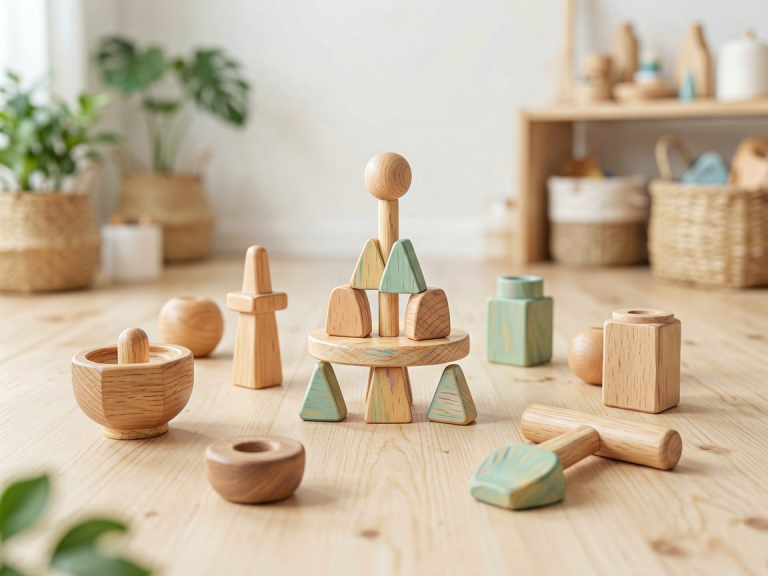
While wooden blocks might seem more traditional, they can be an excellent alternative if chosen carefully. For a 9-month-old, the key is to select large, lightweight wooden blocks with rounded edges and non-toxic, water-based paint. Standard wooden unit blocks (like those from Melissa & Doug or Grimm’s) often come in sets with blocks that are 1.5 to 4 inches in width. However, many infants still find them too heavy or hard. The best option is to look for “baby blocks” specifically designed for the 6–12 month range—these are often made of sustainably sourced wood, sanded smooth, and painted with natural dyes. Wooden blocks provide a different sensory experience from plastic or foam: they have a slight weight, a smooth surface, and a pleasant natural scent. Stacking even two blocks is a major cognitive achievement for a 9-month-old, requiring spatial awareness and impulse control. Additionally, wooden blocks can be used for lateral movement: pushing them along the floor, or knocking them over. The downside is that wood is hard, so parents should always supervise play and avoid throwing. Nevertheless, as a long-term investment (these blocks can be used well into the toddler years), a set of high-quality baby wooden blocks is a wonderful companion to softer alternatives. Choose blocks that are at least 2 inches in each dimension and free of any small appendages or paint chips.
4. Silicone Teething Blocks (BPA-Free)
A modern and highly hygienic alternative comes in the form of silicone teething blocks. These are essentially soft, flexible, food-grade silicone blocks that are designed specifically for mouthing and chewing. Many popular brands, such as Mini Tudou, Bright Starts, and Fisher-Price, offer sets of silicone blocks that have raised textures, ridges, and even hollow centers that can hold small rattles. Silicone is non-toxic, dishwasher-safe, and naturally antibacterial. For a 9-month-old who is actively teething, these blocks provide dual purpose: they double as a teether and a building toy. The blocks are usually 2 to 3 inches wide, with a softness that allows a baby to squeeze them, bite them, and gnaw on the corners without damaging gums. Some silicone block sets include different hardnesses, and some have small beads inside that rattle when shaken. While silicone blocks do not interlock like LEGO, they stack reasonably well due to their slight stickiness. The tactile variety—smooth sides versus bumpy tops—encourages exploration. Because silicone is so easy to clean, these blocks are perfect for germ-conscious parents. They are also lightweight and buoyant, making them great for bath time play. If you want a truly zero-risk alternative that supports both oral motor development and early building skills, silicone teething blocks are an excellent choice.
5. Sensory Fabric Blocks with Activities
Finally, a category that combines softness with multifunctionality: sensory fabric blocks. These are often plush or quilted blocks that incorporate multiple sensory elements into one toy. For example, a fabric block might have a crinkly side, a squeaker inside, a teething ring attached to one corner, a mirror panel, and a textured ribbon. Brands like Lamaze, Tiny Love, and Manhattan Toy create sophisticated fabric blocks that are designed to engage an infant’s curiosity. For a 9-month-old, these blocks are exceptionally engaging because they offer variety without requiring any building skill. The baby can grasp the block with both hands, shake it, listen to the sounds, and explore the different fabrics by mouthing them. Fabric blocks are also very forgiving: they are soft enough to be used as pillows during tummy time, and they can be tossed without fear of damage. The major advantage over LEGO is that fabric blocks are not limited to a single function—they stimulate auditory, visual, tactile, and even social development. Many sets come with multiple blocks, each with a unique activity, so a baby can rotate between them. Some blocks have hidden pockets with a small rattle inside, encouraging problem-solving as the baby investigates. The only downside is that fabric blocks can be harder to clean (most are machine-washable, but require air drying). Nonetheless, for parents who prioritize sensory variety and safety above all, fabric blocks are a fantastic alternative that will grow with the child into the first birthday.
How to Choose the Best Option for Your Baby
With so many excellent alternatives, how does a parent decide? The best approach is to consider your baby’s individual preferences and developmental stage. If your 9-month-old is very oral and loves to chew, prioritize silicone teething blocks or soft fabric ones with teethers attached. If your baby is already pulling up to stand and enjoys grasping and banging, large foam blocks or interlocking links might be more stimulating. Many parents find that offering a rotation of two or three different types keeps playtime fresh. Always check product labels for age recommendations and safety certifications such as ASTM F963 (the U.S. safety standard for toys). Avoid any set that includes small detachable parts, even if the main blocks are large. And remember: no toy replaces adult supervision. Even the safest alternative can become a hazard if a baby manages to break a piece off over time.
Conclusion: Building a Strong Foundation Without the Bricks
LEGO-style bricks are a beloved staple in many households, but for 9-month-olds, they are simply not safe or developmentally appropriate. Fortunately, the market offers a wealth of alternatives that deliver the same core benefits—building, stacking, grasping, and sensory exploration—in forms that prioritize infant safety. Large soft building blocks, interlocking plastic links, wooden baby blocks, silicone teething blocks, and sensory fabric blocks each provide unique advantages tailored to the needs of a growing baby. By choosing one or more of these alternatives, parents can encourage fine motor skills, hand-eye coordination, and creative play without worrying about choking hazards or frustration. The first year of life is a precious window for learning through touch and movement; by selecting toys that are safe, engaging, and developmentally aligned, we give our babies the best possible start. So, put away those tiny bricks for now—your 9-month-old will thrive with blocks that are big, soft, and full of discovery.