How to Choose Building Blocks for Toddlers: A Complete Parent’s Guide
Introduction
Building blocks are among the most timeless and versatile toys for early childhood development. They entertain, educate, and engage toddlers in ways that few other playthings can. However, with the vast array of options available on the market—from wooden sets to magnetic tiles, from soft foam cubes to interlocking plastic bricks—parents often feel overwhelmed when trying to decide which building blocks are best for their little ones. Choosing the right building blocks for toddlers is not merely about picking the brightest colors or the largest box; it involves careful consideration of safety, developmental stage, material quality, and educational value. This guide will walk you through every essential factor, ensuring that you make an informed decision that supports your toddler’s growth, creativity, and safety.
Why Building Blocks Matter for Toddlers
Before delving into the selection criteria, it is important to understand why building blocks are so beneficial for toddlers. Between the ages of one and three, children undergo rapid cognitive, motor, and social development. Building blocks provide hands-on experiences that foster:
- Fine motor skills: Grasping, stacking, and aligning blocks strengthen the small muscles in hands and fingers.
- Spatial awareness: Toddlers learn how objects relate to one another in space, which is foundational for later math and engineering concepts.
- Problem-solving and creativity: Figuring out how to balance a tower or create a specific shape encourages trial-and-error thinking.
- Language development: Describing colors, shapes, and actions during play builds vocabulary.
- Social skills: When playing with siblings or peers, toddlers practice sharing, cooperation, and negotiation.
Given these profound benefits, choosing the right set of blocks becomes a critical parenting decision.
Key Factors to Consider When Choosing Building Blocks
1. Safety First: Materials and Construction
Safety is the paramount concern for any toy intended for toddlers. At this age, children explore the world by putting objects in their mouths, so blocks must be free of harmful chemicals, sharp edges, and small parts that could pose choking hazards.
- Non-toxic materials: Look for blocks made from natural wood finished with water-based, non-toxic paints or stains. Avoid products that contain BPA, phthalates, or lead. For plastic blocks, ensure they are labeled as “BPA-free” and “phthalate-free.”
- Smooth surfaces and rounded corners: Toddlers’ skin is sensitive, and sharp edges can cause cuts. Run your fingers along the blocks to check for splinters or rough spots, especially on wooden sets.
- Size and choking hazard: The general rule is that any block smaller than 1.25 inches in diameter or length can be a choking hazard for children under three. Opt for larger blocks that are too big to fit entirely into a toddler’s mouth. Many reputable brands specify age recommendations on the packaging.
- Durability: Blocks that chip, crack, or splinter easily become dangerous. High-quality wooden blocks are typically sanded and coated with durable finishes. Plastic blocks should be thick enough not to break when dropped.
2. Age Appropriateness: Matching Blocks to Developmental Stage
Building blocks are not one-size-fits-all. A set designed for a 12-month-old will be very different from one for a 3-year-old.
- For toddlers 12–18 months: At this stage, babies are just beginning to grasp and release objects intentionally. Choose lightweight, soft blocks (such as foam or fabric) that are easy to hold and cannot hurt if thrown. Simple stacking cups or large chunky wooden blocks are ideal. Bright colors and contrasting patterns help capture attention.
- For toddlers 18–24 months: Toddlers become more adept at stacking and knocking down towers. They also start to enjoy simple sorting activities. Look for blocks in a variety of shapes (cubes, rectangles, cylinders) and colors. Sets with numbers or letters painted on them can introduce early literacy and numeracy. Blocks that interlock loosely, like wooden unit blocks, are perfect.
- For toddlers 2–3 years: Older toddlers have improved hand-eye coordination and begin to engage in pretend play. They can handle smaller blocks (but still larger than choking hazard size) and may enjoy themed sets (e.g., farm animals, vehicles). Magnetic building tiles are excellent at this age because they allow for more complex structures without requiring precise alignment. Also, consider blocks that can be connected, such as Duplo (larger Lego bricks), to encourage more intricate creations.
3. Material Options: Wood, Plastic, Foam, or Magnetic?
Each material has its own pros and cons, and the best choice depends on your toddler’s age, play style, and your household priorities.
- Wooden blocks: Classic and durable, wooden blocks offer a natural feel and aesthetic. They are typically heavier, which helps toddlers develop strength, but they can be noisy when dropped. High-quality wooden blocks can last for generations. They are also more environmentally friendly than plastic. However, be cautious of painted wooden blocks that might chip; choose blocks with non-toxic, sealed finishes.
- Plastic blocks: Lightweight, colorful, and often easy to clean, plastic blocks are a popular choice. Many plastic sets come with interlocking features, like Duplo or Mega Bloks, which allow for more stable constructions. The downside is that cheap plastic may contain harmful chemicals, and the blocks can be less satisfying to manipulate than wood. Always check for safety certifications.
- Foam blocks: Soft and squishy, foam blocks are ideal for very young toddlers who are still unsteady on their feet. They reduce injury risk if a child falls onto them. Foam blocks also make very little noise. However, they are less durable and can be chewed, potentially posing a choking hazard if pieces break off. Choose high-density foam that doesn’t crumble easily.
- Magnetic building tiles: These are translucent plastic tiles with magnets embedded in the edges. They allow toddlers to build 2D and 3D structures with ease. The magnetic connection helps children create stable towers, houses, and even simple geometric shapes. Magna-Tiles and similar brands are popular. Ensure the magnets are securely enclosed and cannot be removed. Magnetic tiles are best for children 2 years and older.
4. Size and Weight of the Blocks
The size and weight of individual blocks affect a toddler’s ability to handle them comfortably. Oversized blocks might frustrate a small child who cannot lift them, while tiny blocks can be frustrating to manipulate and dangerous if swallowed.
- For younger toddlers (12–24 months): Blocks should be at least 2–3 inches in each dimension. They should be light enough that a toddler can pick them up with one hand but heavy enough to provide sensory feedback.
- For older toddlers (2–3 years): Blocks can be slightly smaller (1.5–2 inches) to allow for more detailed building. However, avoid sets that include blocks smaller than a toddler’s fist unless they are specifically supervised.
- Weight: Wooden blocks are naturally heavier; plastic blocks are lighter. If your child tends to throw toys, consider lighter blocks to minimize injury. Conversely, if you want to teach cause and effect, the weight of wooden blocks can be beneficial.
5. Variety and Educational Value
The best building block sets offer more than just stacking. They can introduce concepts like colors, shapes, numbers, letters, and even basic physics.
- Color and shape variety: A set with multiple colors and geometric shapes (squares, rectangles, triangles, arches) encourages sorting, matching, and pattern recognition.
- Themed sets: Some blocks come with images of animals, fruits, or vehicles. These can spark imaginative play and vocabulary building. For instance, a set with animal blocks might lead to a “zoo” creation.
- Number and letter blocks: Blocks with engraved or painted numbers and letters help toddlers become familiar with symbols. While they may not learn to read yet, they start to recognize shapes and associate them with sounds.
- Connecting mechanisms: Blocks that snap together (like Duplo) or stick magnetically introduce basic engineering principles. They also require a bit more dexterity, which is excellent for fine motor development.
Types of Building Blocks Recommended for Toddlers
Based on the factors above, here are specific categories of building blocks that meet safety and developmental standards:
- Unit blocks: Classic wooden blocks in standard ratios (e.g., the length of a block is twice its width). These are open-ended and encourage endless creativity. Brands like Melissa & Doug or Hape offer well-made sets.
- Duplo or Mega Bloks: Larger versions of Lego bricks designed for small hands. They are plastic, interlocking, and come in many themes. Great for ages 18 months and up.
- Magnetic tiles: Transparent, colorful shapes with magnets. Very popular for 2-year-olds and up. Brands like Magna-Tiles and PicassoTiles are widely trusted.
- Soft foam blocks: Large, lightweight cubes or geometric shapes. Ideal for babies and young toddlers. Look for BPA-free foam with a washable cover.
- Cardboard building bricks: Large, lightweight cardboard blocks that mimic real bricks. They are inexpensive and safe, but not as durable. Good for indoor creative play.
Tips for Parents: Making the Most of Building Block Play
Once you’ve chosen the perfect set, here are ways to maximize the experience:
- Play alongside your toddler: Model how to stack, sort, and build. Narrate your actions (“I’m putting the red square on top of the blue rectangle”). This enhances language learning.
- Encourage open-ended play: Avoid directing every move. Let your child experiment, even if the tower falls repeatedly. Failure is part of learning.
- Rotate sets: If you have multiple block sets, rotate them every few weeks to maintain interest.
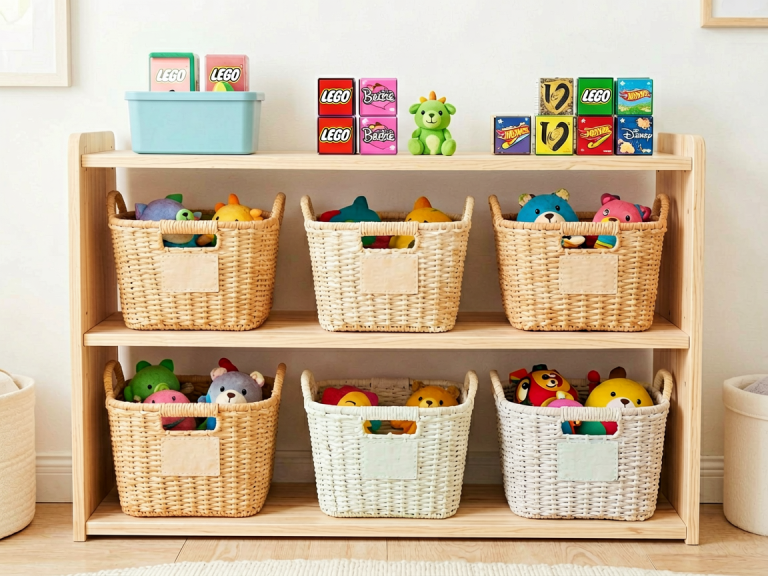
- Clean and store properly: Wooden blocks should be wiped with a damp cloth; plastic blocks can be washed with mild soap. Store in a low, accessible bin so your toddler can choose their own play.
- Supervise initially: Especially with magnetic tiles or smaller sets, supervise to ensure no pieces are swallowed. Remove any damaged blocks immediately.
Conclusion
Choosing building blocks for toddlers is a rewarding decision that can influence cognitive and motor development for years to come. By prioritizing safety, age-appropriateness, material quality, and educational value, you can select a set that will not only entertain your child but also lay the groundwork for essential life skills. Remember that the best blocks are those that grow with your child—starting with simple stacking and evolving into complex structures. Whether you opt for classic wood, interlocking plastic, or magnetic tiles, the key is to provide a safe, stimulating environment where your toddler can explore, imagine, and build. The blocks you choose today may become the foundation of your child’s love for learning tomorrow.