How to Choose Building Blocks for 6-Year-Olds: A Comprehensive Guide for Parents and Educators
Introduction: Why Building Blocks Matter at Age Six
At six years old, children are at a remarkable developmental crossroads. They have outgrown the simple, oversized blocks of toddlerhood, yet they are not quite ready for the intricate, small-piece construction sets designed for older children. Six-year-olds are bursting with curiosity, developing fine motor skills at an accelerated pace, and beginning to understand concepts like symmetry, balance, and cause-and-effect. Building blocks, far from being mere toys, are powerful tools for cognitive, social, and emotional growth. Choosing the right building blocks for a six-year-old is therefore a decision that can profoundly influence their learning trajectory. This article will walk you through every factor you need to consider—from safety and material to complexity, thematic appeal, and long-term value—so that you can make an informed, thoughtful choice.
1. Safety First: Non-Toxic Materials and Age-Appropriate Design
1.1 Material Safety Standards
The first and most non-negotiable criterion is safety. At six, children still occasionally put objects in their mouths, especially when they are deeply focused or tired. Therefore, all building blocks should be made from non-toxic materials. Look for certifications such as ASTM (American Society for Testing and Materials), EN71 (European safety standard for toys), or CPSIA (Consumer Product Safety Improvement Act) compliance. Wooden blocks should be finished with water-based, lead-free paints or natural oils. Plastic blocks should be free of BPA, phthalates, and other harmful chemicals. Avoid blocks with strong chemical odors, as they often indicate low-quality manufacturing.
1.2 Size and Shape Considerations
For six-year-olds, the blocks should be large enough to prevent choking hazards but small enough to allow for detailed construction. Generally, blocks that are at least 1.5 inches (about 4 cm) in their smallest dimension are safe. However, if you are purchasing a set that includes very small decorative pieces (like tiny wheels or flags), ensure they are securely attached or clearly labeled for children over three. Also, check for sharp edges or splinters in wooden sets—smoothly sanded and rounded corners are essential.
1.3 Durability and Breakage
Six-year-olds can be enthusiastic builders—and enthusiastic destroyers. Blocks that crack, chip, or splinter easily pose a safety risk and frustrate the child. Test the blocks by applying moderate pressure; they should not deform or break. High-quality plastic blocks (like those from reputable brands) are designed to interlock firmly without cracking. Wooden blocks should be made from hardwoods such as maple, beech, or birch, which resist denting.
2. Developmental Appropriateness: Matching Blocks to a Six-Year-Old’s Skills
2.1 Fine Motor Skills and Hand-Eye Coordination
By age six, most children can manipulate small objects with increasing precision. However, their hand strength and dexterity vary widely. Choose blocks that require a reasonable amount of force to connect or stack, but not so much that the child becomes frustrated. Classic interlocking blocks (like LEGO Duplo or standard LEGO) are excellent, but note that Duplo may be too easy for some six-year-olds, while standard LEGO may be too challenging for others. A middle ground is found in sets with medium-sized bricks (e.g., LEGO Classic or MEGA Bloks First Builders). Magnetic building blocks (like Magna-Tiles or PicassoTiles) are also ideal because they connect easily with a satisfying click, reducing finger fatigue.
2.2 Cognitive Complexity: From Simple Stacking to Structured Play
At six, children are moving from purely imaginative play to more rule-based, goal-oriented construction. They can follow simple step-by-step instructions, but they also love free-form creativity. Therefore, the best building block sets offer a balance: a few guided models (e.g., a house, a car, or an animal) plus plenty of generic pieces for original designs. Avoid sets that are overwhelmingly complex (e.g., 1000+ pieces with intricate mechanisms) unless the child has already demonstrated advanced building skills. A good starting point is 200–400 pieces with a variety of shapes: squares, rectangles, triangles, arches, wheels, and connectors.
2.3 Problem-Solving and Spatial Reasoning
Building blocks naturally teach spatial awareness, geometry, and basic physics. To maximize these benefits, choose sets that include asymmetrical pieces (like wedges, curves, or right-angle connectors) that force the child to think about how shapes fit together. Some blocks are designed specifically to teach symmetry, patterns, and fractions (e.g., Pattern Blocks or Cuisenaire Rods). For six-year-olds, sets that incorporate pulleys, gears, or simple levers can introduce early engineering concepts without overwhelming them.
3. Educational Value: STEM, Creativity, and Language Development
3.1 STEM-Focused Building Sets
Many modern building blocks are explicitly designed to promote STEM (Science, Technology, Engineering, and Math) learning. For example, sets that include gears, axles, and connectors allow children to build simple machines like a windmill or a crane. Others incorporate magnetic rods and balls (e.g., Geomag or Magformers) to teach magnetic polarity and structural stability. For six-year-olds, these sets should come with clear, colorful instruction booklets that show the assembly process step by step. Avoid sets that require reading comprehension beyond the child’s level—pictorial instructions are best.
3.2 Encouraging Creativity and Storytelling
Blocks are not just for engineering; they are also for storytelling. Sets that include themed pieces—such as windows, doors, trees, people, and animals—invite children to create entire worlds. This type of play enhances narrative skills, vocabulary, and social-emotional development when played with peers. For a six-year-old, choose themes that align with their interests: dinosaurs, outer space, fairy tales, or city life. However, be cautious of overly rigid themes (e.g., “only build this castle”) that stifle creativity. The best sets allow the child to combine pieces from different themes.
3.3 Language and Collaboration
When children build together, they negotiate, describe, ask questions, and explain their ideas. To foster this, consider sets that are large enough for two or three children to play simultaneously. Blocks that are all the same size and shape (e.g., unit blocks) encourage cooperative building because no single child “owns” a unique piece. Additionally, sets that come with challenge cards or prompts (e.g., “Build a bridge that can hold a toy car”) spark conversation and problem-solving.
4. Material and Durability: Wood, Plastic, Magnetic, or Foam?
4.1 Wooden Building Blocks
Wooden blocks are timeless. They are durable, sustainable, and have a natural feel that many educators prefer. For six-year-olds, look for sets that include a variety of shapes beyond basic cubes—cylinders, arches, triangles, ramps, and half-circles. High-quality wooden blocks are often sold in “unit block” sets (standardized sizes like 1x, 2x, 4x units) that teach proportional relationships. The downsides: wooden blocks can be heavy, noisy when dropped, and less versatile for intricate connections (no interlocking mechanism). They are best for free-form, open-ended building.
4.2 Plastic Interlocking Blocks
Plastic blocks (like LEGO, MEGA Bloks, or K’NEX) offer precision and compatibility. They allow for detailed, stable constructions that can be taken apart and rebuilt. For six-year-olds, standard LEGO bricks (not the tiny Technic or micro-scale) are ideal. Look for sets with a high proportion of basic bricks (2×2, 2×4) rather than too many specialty pieces. Plastic blocks can be cleaned easily, but they can also be lost or stepped on. They also tend to be more expensive per piece.
4.3 Magnetic Building Blocks
Magnetic tiles and rods have surged in popularity, and for good reason. They are easy to connect (great for children with weaker fine motor skills), visually stunning, and excellent for teaching 2D-to-3D transformation. Magna-Tiles, Picasso Tiles, and similar products are safe because the magnets are enclosed. For six-year-olds, sets with squares, triangles, and windows allow the construction of houses, rockets, and geometric shapes. However, magnetic blocks are generally limited to planar surfaces and cannot create the same variety as interlocking bricks. They are best as a supplement to other sets.
4.4 Foam Blocks
Foam blocks are lightweight, quiet, and safe for younger children, but by age six, they may be too “babyish.” However, large foam blocks (like those used in playrooms for building forts) can still be engaging for gross motor play. They are not recommended as a primary building set for six-year-olds because they lack the precision and durability needed for complex projects.
5. Thematic and Interest-Based Selection
5.1 Aligning with the Child’s Passions
A six-year-old who loves dinosaurs will be far more motivated to build if the blocks can form a volcano or a prehistoric landscape. Similarly, a child fascinated by space exploration will engage deeply with a set that includes rocket ship pieces, astronaut figurines, and a moon base. Thematic sets can spark hours of focused play. However, be careful: some theme-based sets are essentially “build it once and display it” kits with little reusability. Look for sets that offer multiple build possibilities within the same theme, or that allow mixing with other generic blocks.
5.2 Gender-Neutral Options
Avoid blocks that are overtly gendered (e.g., only pink princess castles or only blue race cars). Six-year-olds are still exploring their identities, and blocks should be a tool for self-expression, not limitation. Opt for sets with neutral colors (primary colors, natural wood tones, or bright rainbow palettes) and themes that appeal to a broad range of interests, such as city builders, farm sets, or animal habitats.
6. Budget, Brand, and Long-Term Value
6.1 Price vs. Quality
You do not need to buy the most expensive brand to get a good set. Many generic or store-brand blocks are perfectly safe and functional. However, compatibility matters: if you already own LEGO bricks, buying off-brand bricks that do not fit properly will cause frustration. Test the clutch power (how tightly they hold together) of any generic blocks. For magnetic tiles, cheaper brands may have weaker magnets or thinner plastic that cracks easily. Read reviews specifically from parents of six-year-olds.
6.2 Expandability and Compatibility
The best building block sets are those that can grow with the child. LEGO, for example, has a vast ecosystem—you can add sets from different themes and they all work together. Similarly, wooden unit blocks from different manufacturers often follow the same size standards (based on the 1×1 unit of about 1.375 inches). Magnetic tiles from different brands are mostly compatible, but check magnet polarity. Choose a system that allows you to add pieces over time without starting over.
6.3 Storage and Organization
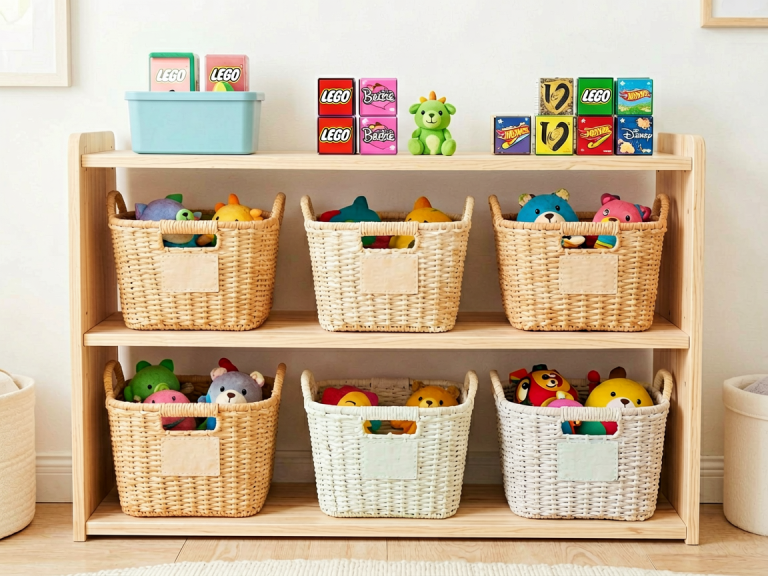
Six-year-olds can learn to clean up, but only if the storage system is simple. Avoid sets that come in flimsy cardboard boxes that fall apart. Instead, look for sets that include a sturdy plastic bin with a lid, or a reusable tote bag. Some brands offer sorting trays or compartment boxes. Clear, labeled containers help children find the pieces they need and develop organizational habits.
7. Practical Tips for Choosing and Using Blocks with a Six-Year-Old
7.1 Start with a Variety Pack
If you are unsure what your child will enjoy, buy a “starter” set that includes a mix of shapes and sizes. Observe which types of blocks they gravitate toward—do they prefer stacking tall towers, building symmetrical patterns, or creating vehicles? Then you can buy specialized sets accordingly.
7.2 Incorporate Challenges and Games
To extend the play value, introduce simple building challenges: “Can you build a bridge that is at least 10 inches long?” or “Design a house with three rooms.” You can also use building blocks for math practice: sort by color, count pieces, or create repeating patterns. This turns play into stealth learning.
7.3 Encourage Collaboration
Building blocks are even more powerful when children play together. Arrange playdates with a shared block set, or build with your child yourself. Ask open-ended questions like “What would happen if we put this piece here?” or “How can we make this tower stronger?” These conversations deepen the learning.
7.4 Rotate and Refresh
Children can get bored with the same set after weeks of use. Consider rotating blocks with other construction toys (like magnetic tiles one month, wooden blocks the next). You can also introduce “loose parts” such as cardboard tubes, bottle caps, or fabric scraps to transform the building experience.
Conclusion: The Right Blocks Unlock a World of Discovery
Choosing building blocks for a six-year-old is not about picking the flashiest box or the most expensive brand. It is about understanding the child’s developmental stage, interests, and learning style. The ideal set is safe, durable, appropriately challenging, and open-ended enough to inspire creativity for years to come. Whether you choose classic wooden unit blocks, versatile plastic bricks, or magnetic tiles, the most important factor is that the blocks become a catalyst for exploration, problem-solving, and joy. Invest the time to select wisely, and you will give a six-year-old not just a toy, but a tool for building their future—one block at a time.