A Parent’s Guide to Selecting Building Blocks for 18-Month-Olds: Safety, Development, and Fun
Choosing the right building blocks for an 18-month-old can feel like a puzzle in itself. At this age, toddlers are bursting with curiosity and a newfound sense of independence, yet they are still extremely vulnerable to choking hazards, sharp edges, and materials that might not be safe for mouthing. Building blocks are a classic toy for good reason: they support fine motor skills, spatial awareness, creativity, and even early problem-solving. But not all blocks are created equal, and what works for a three-year-old can be disastrous for an 18-month-old. This guide will walk you through every critical factor to consider—from safety standards and material choices to developmental benefits and practical tips—so you can confidently choose blocks that will delight your child while keeping them safe and engaged.
Understanding the Developmental Stage of an 18-Month-Old
Before you dive into shopping, it helps to understand what an 18-month-old is physically and cognitively capable of. At this stage, most toddlers are walking independently (or just starting to), they can squat and pick up objects, and they are refining their pincer grasp—the ability to pick up small items between thumb and forefinger. However, their hand-eye coordination is still developing, and they are likely to drop, throw, or mouth everything they hold. Their attention span is short, often just a few minutes, and they are driven by cause-and-effect experiments: what happens if I knock this tower down? What if I put this block in my mouth?
Cognitively, 18-month-olds are beginning to understand object permanence (things exist even when out of sight) and simple sorting. They enjoy stacking but are not yet capable of complex construction. The blocks you choose should cater to these emerging abilities rather than frustrate them with pieces that are too small, too difficult to connect, or too abstract. The key is to provide blocks that are large enough to be grasped safely, lightweight enough to be lifted, and made of a material that can withstand being thrown, chewed, and dropped repeatedly.
Safety First – Material, Size, and Design
The single most important consideration for any toy given to an 18-month-old is safety. At this age, everything goes into the mouth, and the risk of choking is real. Here are the non-negotiable safety criteria:
Material. Wooden blocks are a popular choice, but ensure they are made from solid, untreated or non-toxic finished wood. Avoid blocks with paint that chips or peels easily. Many wooden blocks on the market today use water-based, non-toxic paints and finishes. Plastic blocks can also be safe if they are BPA-free, phthalate-free, and labeled for infant use. Soft fabric blocks or foam blocks are excellent alternatives for the youngest toddlers—they are lightweight, silent when knocked over, and completely safe for mouthing. Foam blocks with a high density provide enough stability for stacking without being hard enough to cause injury if thrown.
Size. The golden rule: the block must be large enough that it cannot fit entirely inside a toilet paper roll (approximately 1.75 inches in diameter). For an 18-month-old, blocks should ideally measure at least 2 inches on the smallest side. Avoid any block that could be swallowed or lodged in the throat. Also, avoid blocks with detachable small parts like knobs or magnets that might come loose. Even if the block itself is large, if it has a small wheel or a plastic peg that can be pried off, it becomes a hazard.
Design. Look for blocks with rounded edges—sharp corners can cause injury during falls or when the child is learning to walk near the play area. The surface should be smooth, with no splinters (in wooden blocks) or rough seams (in plastic blocks). Blocks that are too lightweight may not stack well, causing constant frustration, while blocks that are too heavy could hurt if dropped on toes or thrown. A good rule is to choose blocks that weigh no more than a few ounces each, such that a child can lift with one hand without strain.
Cleanliness. Toddlers drool and drop blocks on the floor, so choose materials that can be wiped clean or washed. Fabric blocks should be machine-washable. Plastic blocks can be cleaned with mild soap and water. Wooden blocks that are sealed with a smooth, waterproof finish are easier to sanitize than raw wood, which can absorb bacteria.
Types of Building Blocks Suitable for Toddlers
Not all building blocks are designed for the same age group. For 18-month-olds, the following categories are most appropriate:
Classic wooden stacking cubes. These are simple, square or rectangular blocks in various sizes. Look for sets that include a variety of colors and perhaps a few with simple patterns or animals painted on them. The best sets have blocks that are all large—no tiny cubes. Some sets come with a tray or a carrying bag, which helps with organization and prevents pieces from scattering.
Soft foam or silicone blocks. These are often used in early intervention and daycare settings because they are completely safe, silent, and gentle. Many are designed with texture on the surface to stimulate tactile exploration. Some foam blocks have numbers or letters printed on them, though don’t expect your toddler to learn them yet—the value is in the sensory input and stacking practice. Silicone blocks are also chewable, making them ideal for teething toddlers.
Magnetic wooden blocks. Some brands offer blocks with embedded magnets that allow them to stick together easily. For an 18-month-old, choose sets where the magnets are securely encased (not loose) and where the blocks are again large enough to be safe. The magnetic feature helps reduce frustration because blocks don’t topple as easily, encouraging longer play.
Interlocking blocks (like Duplo or Mega Bloks). These are the larger versions of traditional interlocking bricks. They are designed for toddlers ages 1.5 and up. The pieces are big, easy to grip, and snap together with light pressure. They are excellent for developing hand strength and coordination. However, always supervise play because the small connection points (though not small enough to be a choking hazard) can sometimes be pried off by determined toddlers. Stick to sets that contain only large blocks and no specialized pieces like wheels or people that might be swallowable.
Nesting cups and stacking rings. While technically not traditional building blocks, these toys serve a similar purpose: stacking, nesting, and knocking down. They are often safer for the youngest toddlers because they are inherently large and cannot be easily put in the mouth. Many nesting cup sets have holes in the bottom or textured patterns that also work as bath toys.
Educational Benefits and Features to Look For
Building blocks are not merely entertainment; they are a foundation for cognitive and physical development. When choosing a set, consider what educational features align with your toddler’s growth:
Color and contrast. At 18 months, many children are beginning to distinguish basic colors. Blocks with bright primary colors—red, blue, yellow, green—and high contrast patterns help reinforce color recognition. Look for sets that have solid colors rather than complex patterns that might be visually overwhelming.
Shape variety. While traditional cubes are fine, introducing blocks in different shapes (cylinders, triangles, arches) challenges your child to understand how different forms fit together. Early spatial reasoning develops as they try to place a round block on top of a square one—and watch it roll off! Simple geometry through play is incredibly valuable.
Texture and weight variation. Blocks with different surface textures (smooth, bumpy, ridged) stimulate tactile senses. Some sets include blocks that are heavier or lighter, teaching your toddler about weight and balance. For example, a foam block might be very light, while a wooden block of the same size feels heavier. This contrast helps develop proprioception.
Cause-and-effect. The best blocks reward simple actions: when you stack one, it stays; when you push a tower, it falls. This is one of the first lessons in physics. Blocks that have a slight friction or “stickiness” (like silicone or magnetic blocks) make success more likely, which builds confidence. Avoid blocks that are too slippery—constant toppling can lead to frustration and tears.
Number and letter exposure. Many sets have numbers or letters printed on the blocks. While your 18-month-old will not learn to read, seeing these symbols in context of play normalizes them. You can narrate, “Let’s find the ‘A’ block!” or “Can you stack the number 2?” This builds pre-literacy skills through casual exposure.
Practical Tips for Introducing Blocks to Your Toddler
Once you’ve chosen the perfect set, the way you introduce blocks can make a big difference in how your child engages with them. Here are some practical strategies:
Start small. Present only a few blocks at a time—5 to 10 pieces. Too many can overwhelm an 18-month-old. As your child becomes more interested, you can gradually add more.
Model but don’t take over. Sit on the floor and build a small tower yourself. Your toddler will likely imitate you or knock it down. Allow both. Knocking down is a valid form of play—it teaches cause and effect and gives a sense of mastery. Resist the urge to correct or direct play. Let your child explore freely.
Narrate the action. Talk about what you are doing: “I’m putting the blue block on top of the red block. Look, it’s steady!” or “You knocked it over! Boom!” This language exposure helps develop vocabulary and reinforces concepts like up/down, on/off, and colors.
Rotate toys. Toddlers get bored quickly. If your child loses interest in the blocks after a few days, put them away for a week and then bring them back. They will feel fresh again. Alternatively, combine blocks with other toys: you can place a small doll on top of a block stack or use blocks as “beds” for stuffed animals.
Supervise always. Even with the safest blocks, a toddler can find a way to misuse them—climbing on a wobbly tower, throwing blocks at a sibling, or trying to bite off a chunk of foam. Always stay within arm’s reach during play.
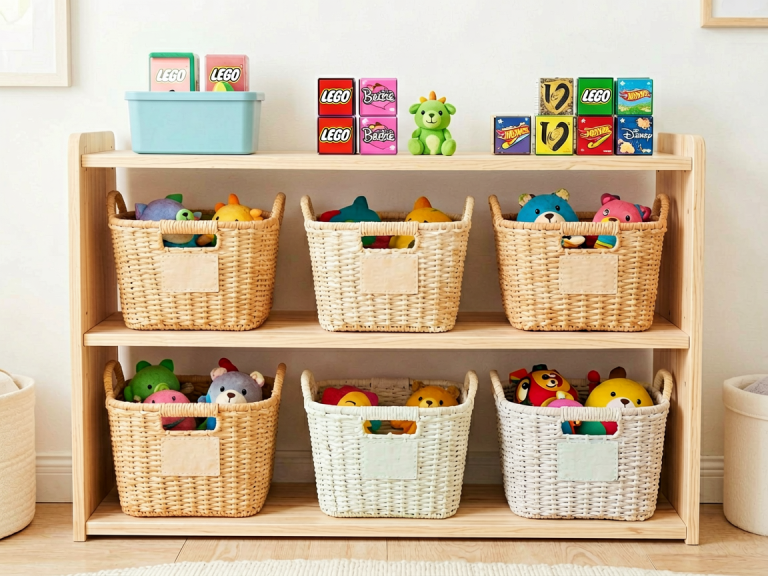
Encourage clean-up. At 18 months, children can begin to help with simple clean-up. Sing a clean-up song and place a bucket or basket nearby. Let your toddler drop the blocks inside. This teaches responsibility and categorizing skills.
Conclusion
Choosing building blocks for an 18-month-old is about balancing safety with developmental opportunity. Prioritize blocks that are large, lightweight, made of non-toxic materials, and have rounded edges. Opt for sets that offer a range of colors, shapes, and textures, and consider magnetic or interlocking options if you want to reduce frustration. Remember that your toddler is not trying to build a masterpiece—they are experimenting, mouthing, throwing, and knocking down. Embrace that messy, joyful process. By selecting blocks that match their current abilities and interests, you will provide a toy that grows with them, supporting their journey from stacking two blocks to creating imaginative structures in the months and years ahead. Always supervise, play alongside them, and let them lead the way. The blocks are just tools; the real magic is in the interaction.