The Complete Wooden Toys Guide for Parents: Why, What, and How to Choose
As a parent, you’ve probably stood in a toy aisle overwhelmed by flashing lights, buzzing sounds, and plastic packaging that seems to multiply overnight. In the midst of this consumer chaos, wooden toys stand out like a quiet, timeless whisper. They don’t blink, they don’t beep, and they won’t run out of batteries. But beyond their nostalgic charm, wooden toys offer profound developmental benefits that modern electronic alternatives often miss. This comprehensive guide will walk you through everything you need to know about selecting, using, and caring for wooden toys—so you can make informed, confident choices for your child’s playtime.
Why Choose Wooden Toys Over Plastic?
The first question most parents ask is simple: *Why bother?* The answer lies in three core areas: child development, environmental impact, and longevity.
Developmental Richness. Wooden toys are often simpler in design, which ironically makes them more complex in function. A set of plain wooden blocks, for example, can become a castle, a bridge, a rocket ship, or a counting tool—all in one afternoon. This open-ended play encourages creativity, problem-solving, and independent thinking. Unlike electronic toys that dictate a single way to play, wooden toys invite the child to be the director of their own imagination. Fine motor skills are naturally honed as little hands grasp, stack, and balance. The tactile warmth of wood also provides a sensory experience that plastic cannot replicate—each grain, each slight variation in texture offers a subtle lesson in natural diversity.
Environmental and Health Considerations. Most plastic toys are made from petroleum-based materials and may contain harmful chemicals like BPA, phthalates, and lead—especially in cheaper, unregulated products. Wooden toys, when sourced responsibly from sustainable forests and finished with non-toxic paints or oils, are far safer for your child’s mouth (because we all know where those toys will end up). They are biodegradable and, with proper care, can last for generations. This reduces the staggering amount of plastic waste that ends up in landfills each year.
Durability and Heirloom Quality. Think about how many plastic toys have cracked, broken, or lost parts in your home. Wooden toys, by contrast, are built to withstand energetic play. A well-made wooden train set can survive being dropped, stepped on, and even chewed—without shattering into sharp shards. Many wooden toys become family heirlooms, passed from sibling to sibling, or even from parent to child, carrying with them the warmth of shared memories.
How to Identify Safe, High-Quality Wooden Toys
Not all wooden toys are created equal. The market has seen a surge in cheap, mass-produced wooden toys that may look appealing but hide safety risks. Here is a practical checklist for parents.
Check for Smooth Edges and Finishes. Run your fingers along every edge, corner, and surface. The toy should be silky smooth, with no splinters, rough patches, or sharp points. High-quality manufacturers sand and seal their products meticulously. If you feel any roughness, put it back.
Verify the Paint and Finish. The toy should be finished with water-based, non-toxic paints, stains, or natural oils (like beeswax or linseed oil). Avoid toys that smell strongly of chemicals or have a shiny, plastic-like coating. Look for certifications like ASTM (American Society for Testing and Materials) or EN71 (European safety standard). In the United States, the CPSC (Consumer Product Safety Commission) also sets guidelines. Reputable brands will proudly display these certifications.
Examine the Construction. Check how pieces are joined. The best wooden toys use wooden dowels, screws, or sturdy glue—not staples or flimsy nails that can come loose. Moveable parts should be secure but not too tight. For toys with small pieces, verify that they are large enough to prevent choking hazards. A general rule: any part that can fit inside a toilet paper tube (about 1.25 inches in diameter) is too small for a child under three.
Know the Wood Species. Solid hardwoods like maple, beech, birch, and rubberwood are dense, durable, and resistant to denting. Softer woods like pine are lighter and more affordable but may dent or splinter more easily. Avoid toys made from MDF (medium-density fiberboard) or particleboard, as these can contain formaldehyde-based glues that off-gas over time.
Age-by-Age Guide: Selecting the Right Wooden Toys
Every child develops at their own pace, but certain types of wooden toys are especially suited to specific developmental stages.
0–12 Months: Sensory Exploration and Grasping
At this stage, babies explore the world through their mouths and hands. Look for toys that are large, smooth, and easy to hold. Excellent choices include:
- Rattles and teethers made from single pieces of solid wood, with no small parts. Natural, unfinished wood is ideal because it is safe to chew.
- Grasping beads on a sturdy, waxed cotton cord—never a string that could loosen.
- Simple stacking rings with a central post. The rings should be large enough that they cannot be swallowed.
- Wooden activity arches attached to a play mat or gym, featuring dangling objects that encourage reaching and batting.
Avoid any toy with a long cord that could pose a strangulation risk, or with small, detachable pieces.
12–24 Months: Cause and Effect, and First Problem-Solving
Toddlers begin to understand that their actions produce results. They love pushing, pulling, and fitting things together. Great options include:
- Shape sorters with chunky wooden pieces. The classic cube sorter is timeless, but look for one where the lid is attached to prevent frustration.
- Pounding benches with a wooden mallet. These develop hand-eye coordination and release energy in a positive way.
- Pull-along toys (a wooden duck on wheels, for example). Make sure the string is short (under 12 inches) to avoid tripping hazards.
- Simple wooden puzzles with large knobs and only 3–6 pieces. Themes like animals, vehicles, or fruits work well.
At this age, watch for splintering if the toy is chewed excessively. Inspect weekly.
2–4 Years: Imaginative Play and Building
Preschoolers blossom into storytellers and builders. Their play becomes more complex and social. Invest in:
- Unit blocks – a set of plain, unpainted wooden blocks in various shapes and sizes. These are the gold standard of open-ended play. Look for blocks made of hardwood, with precise edges that stack well.
- Wooden train sets with magnetic or peg-based connectors. The tracks and trains allow endless configurations, teaching spatial reasoning and planning.
- Dollhouses and furniture – simple, unpainted or minimally painted dollhouses encourage narrative play. Avoid miniature accessories that are choking hazards.
- Lacing beads and threading boards – these build fine motor skills and concentration. Beads should have large holes.
- Wooden kitchen sets or tool benches – these promote role-playing and social interaction.
4–6 Years: Advanced Skills and Cooperative Play
As children approach school age, they enjoy more intricate puzzles, games, and construction challenges. Consider:
- Marble runs made from wooden tracks and supports. These teach gravity, trajectory, and cause-and-effect in a highly engaging way.
- Wooden construction sets (like planks or interlocking beams) that do not require plastic connectors. Brands like Kapla or Grimm’s produce beautiful sets.
- Memory games with wooden tiles, or simple board games using wooden pieces.
- Wooden weaving looms or sewing cards – these prepare small hands for writing.
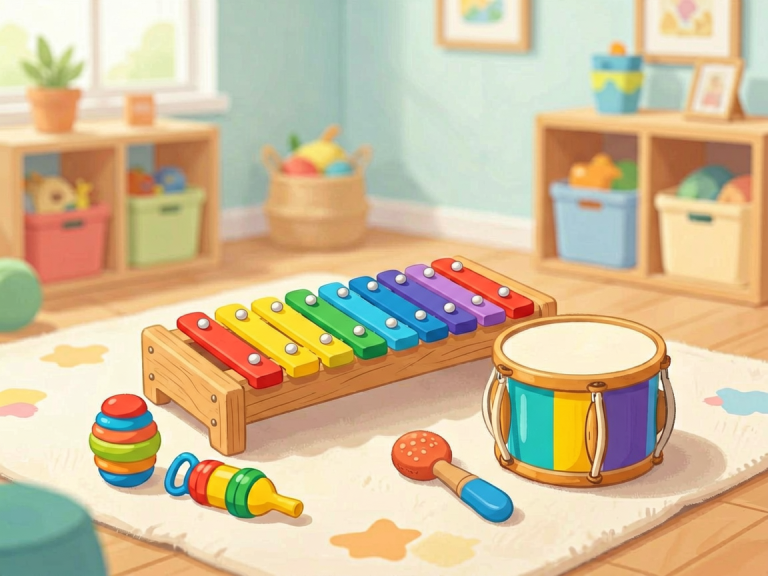
- Musical instruments like xylophones, drums, and shakers made from wood. They produce gentler, more natural sounds than their plastic counterparts.
Caring for Wooden Toys: Simple Maintenance Tips
Wooden toys can last a lifetime, but only if they are properly cared for. Here is how to keep them in top shape.
Cleaning. Use a damp (not wet) cloth with mild soap and water. Never soak wooden toys, as water can cause warping or cracking. For sanitizing, a vinegar-and-water solution (1:4 ratio) works well and is non-toxic. Wipe dry immediately with a clean cloth. Do not use bleach, alcohol, or harsh chemicals.
Storage. Keep wooden toys away from direct sunlight, which can fade paints and dry out the wood. Avoid humid areas like bathrooms. A cotton or fabric toy bin is better than a plastic one, as it allows air circulation. Store puzzles and sets in their original boxes or cloth bags to prevent pieces from getting lost.
Refinishing. If a wooden toy becomes rough over time, you can lightly sand it with fine-grit sandpaper (220 grit) and then reapply a food-grade beeswax or mineral oil. This restores the smooth finish and seals the surface. Always do this in a well-ventilated area and let the toy cure for 24 hours before giving it back to your child.
Repair. Loose joints can be fixed with non-toxic wood glue. A broken piece that creates a sharp edge should be discarded—do not attempt to glue large cracks that could trap fingers or harbor bacteria.
Balancing Wooden Toys with Other Playthings
I am not suggesting you purge every plastic toy from your home. Wooden toys excel in certain areas, while other materials have their own strengths. Plastic toys can be useful for water play, for musical instruments that require precise tuning, or for science kits that need transparent parts. The goal is not perfection but intentionality. Aim for a toy collection that is roughly 60–70% open-ended, natural materials (including wood, fabric, wool, and metal) and 30–40% carefully selected plastic or electronic toys that serve a specific developmental purpose.
The real magic of wooden toys is not in the material itself, but in the kind of play they invite. They slow the world down. They ask a child to imagine, to build, to wait, to try again. In a culture that rushes from one screen to another, a simple wooden block is a quiet rebellion—a reminder that the best toys are not the ones that do the most, but the ones that leave the most room for a child to become the architect of their own wonder.
So next time you walk past that glowing aisle of plastic noise, pause. Pick up a smooth, cool wooden shape. Feel its weight. Imagine the hands that will hold it—today, tomorrow, and perhaps decades from now. That, dear parent, is the kind of toy worth bringing home.